Reading view

There are new articles available, click to refresh the page.

Catapulting Teachers Into School Leadership Positions Too Soon Comes With a Cost

Too often, teachers are rapidly elevated from the classroom to school leadership positions, whether to fill an unexpected vacancy, act as an interim administrator or to take on a permanent leadership role. But ushering teachers into administrator roles before they are prepared and without adequate support poses risk of burnout — or worse, opens up the possibility of causing harm to themselves or their school community, out of sheer lack of experience.

In my work at The Teaching Well, where I support teachers and administrators in wellness and sustainability, I hear about this issue regularly, and in the decade I spent working in schools, I saw it happen to colleagues frequently. I also understand the problem deeply on a personal level because it happened to me.

Early in my teaching career, when I was 26 years old, I was offered and accepted a position as a dean at an elementary school in East Oakland, California. The following school year, I was promoted to assistant principal, and a year into that role, I had to cover our principal while she was on maternity leave. None of these promotions came with special training or additional coaching; I wasn't even told to read any books in preparation. I found myself burning out and I didn’t have the language to advocate for my needs, let alone hold that space for the staff I was responsible for.

It is essential to recognize that the premature placement of teachers into leadership roles comes at a cost. If we’re going to elevate young teachers, the system owes it to them — and to their colleagues and the students they serve — to wrap them with empathy, support and comprehensive training.

When Elevating Teachers, Support Is Key

In the face of recent shortages and staff turnover in schools, I understand why many district leaders quickly move teachers into vacant administrative positions. In fact, I was a district leader who made this recommendation at times. With so many leaders leaving, we are in a hiring crisis and there is no surplus of candidates clamoring for these jobs. What could be a better solution than talent you know personally and can cultivate from within?

A talented teacher is often a natural leader. But there’s a difference between commanding presence with students and leading staff. I know because I’ve lived it.

I was a green educator catapulted into a leadership role. To a certain degree, I was open to the opportunity and maybe I even sought it out. At the time, I was grappling with the decision-making at my school, particularly when it came to serving our Black students, and I wanted to make a change. My proactive nature, my work as a peer observer and my facilitation of a professional learning community at our school is part of what opened up the opportunity to move into an administrator role.

Me in my final year as a teacher, just before becoming an administrator. Courtesy of Lindsey Fuller.

When I became a dean, I was thrust into a demanding position with a tremendous amount of responsibility. I quickly realized that holding space where educators can gather and share in a grade level team meeting isn’t the same as building a strategic professional development scope and sequence. Observing a peer isn’t the same as being able to provide a thorough evaluation. I had never formally supervised anyone, but was required to facilitate difficult conversations regularly. No one told me about the ugly parts of people management, like having to write folks up or design and implement support plans.

Fortunately, relationship-building came easily and when I made mistakes, I did my best to own them. It also helped that I was from the community I was serving, which enabled me to navigate many of the cultural nuances of working in our school. Even with these strengths, my learning curve was steep.

Physically, mentally and emotionally, this was one of the most challenging times of my life. At the time, I was pregnant with my first child and my husband was in law school. Eating balanced meals at work felt impossible. I was fainting regularly and developed insomnia. My inexperience caused ruptures with colleagues that I had to repair. In my role I was often called to support students with intensive needs, sometimes having to physically restrain them while breaking up fights or to prevent self-harm. When I got home, I was tapped out. It was hard to want to hug my partner or have my new baby crawling all over me. I had immense guilt as a parent and partner and overwhelming feelings of failure — and I felt isolated.

My healing work with school leaders today has helped me realize I wasn’t alone. The feelings I had were natural and many in the field experience similar emotions.

Over the years, I’ve worked with school leaders who are excelling and making it work despite unthinkable odds as they’ve unpacked the pressures they feel. I’ve also worked with leaders who have held their role for a few months or years before burning out and leaving as an act of self-preservation. Some have expressed that their reputation was damaged or that they developed an inner narrative of failure. I remind them that they opened their hearts to serve even though no one was serving them — that they are leaders who weren’t led.

We talk about our young people as the future, as liberatory agents, as the ones who will elevate our society. We should invest deeply in those leading our schools, especially new leaders. And when we promote teachers to leadership positions, we owe it to them to provide the support they need to do their jobs effectively.

© Jorm Sangsorn / Shutterstock

Catapulting Teachers Into School Leadership Positions Too Soon Comes With a Cost

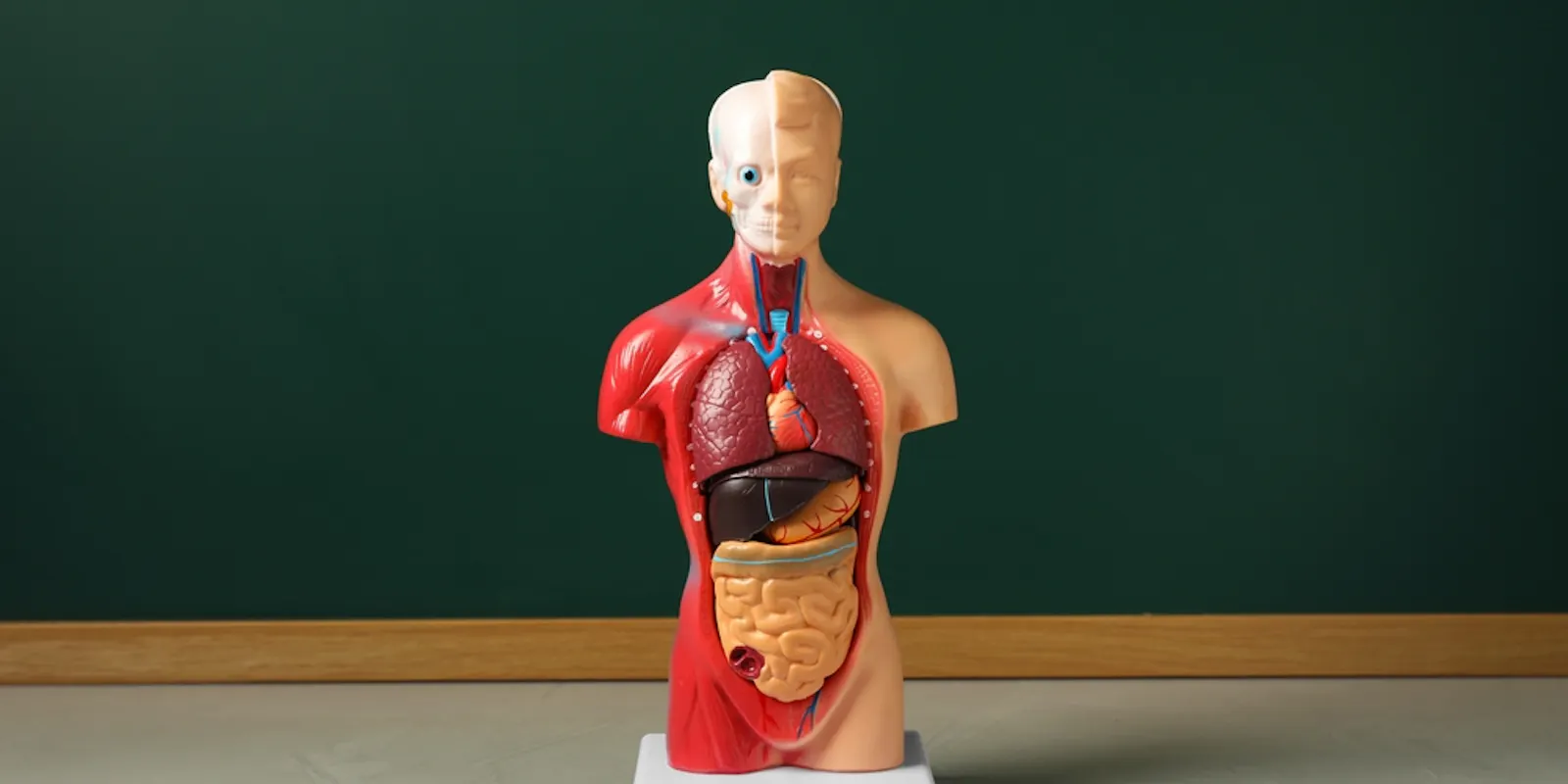
What Schools Tell Us About Our Bodies — and How It Impacts Students

Usually, when I begin writing an essay, I’m hopeful, or at least determined. Not this time. I’m making myself write this essay, even though it scares me. Writing about bodies – about my body – scares me. Our bodies are so sexualized and commodified that talking about them in school or in relation to school feels almost forbidden.

When we talk about our bodies, especially bodies perceived as feminine, many people immediately think about sex. This reductive perspective, indicative of how deep the madonna-whore complex is embedded in our collective psyche, deprives us of the opportunity to discuss our bodies, the site of all contact with the world around us, with the nuance and fullness of our lived experience. Our bodies – and this essay – are about so much more than sex.

For years, decades even, having a body has felt like a burden, a liability. Becoming a teacher has exacerbated this immensely. I am doing the work of building a relationship with my body that is authentic to my values and beliefs and not my conditioning. Doing so within schools and institutions that have been used to uphold and pass on predominant cultural norms and values for centuries has been challenging, to say the least.

I know that the same forces of socialization that warped my perception of and experience in my body are acting on my students every day, inside and outside school. Our bodies carry us from our homes to our classrooms and facilitate the reading, writing, speaking and listening that learning often requires. In essence, our bodies and how they are perceived shape our classroom experience in ways that can support or detract from our learning.

In one-off conversations and acute moments, my students have shared their experiences, struggles and concerns about their bodies with me but rarely is there space made for discussion about these realities in more public, group settings. What are we telling our students when their bodies only come into conversations in sterile anatomy and sex education lessons or punitive dress code conversations? What happens when our students’ perceptions of their bodies come primarily from social media, the feedback of their peers, or their own self-consciousness without guidance from the adults in their lives who care about them? I want more for them, for us all. I want there to be space to discuss our bodies in their fullness, beyond their sexualization and commodification.

Attention Not Invited

Throughout my 29 years of experience in schools, both as a student and a teacher, the volume of societal expectations has consistently drowned out my wants and needs in relation to my body. In my first job interview at a public high school where I would spend my first year teaching, my body and the clothing that covered it were spotlighted from the beginning of our conversation.

There was no air conditioning in the small office where the three staff members of the school and I sat. It was July in New Orleans. After we all finished introducing ourselves, I was visibly sweating in my sleeveless top and blazer. The woman who would become my assistant principal asked if I wanted to take off the blazer. I thought for a moment and declined. She smiled and told me that that was the correct answer and that my outfit would have been inappropriate if I removed it. The sleeveless top in question revealed no cleavage or hint of my undergarments, but, apparently, it would have still been unacceptable in this room or one that contained students. This set the tone for the rest of the interview and my employment at that school. Moving forward, I selected my outfits accordingly.

Despite my desperate attempts since then to hide my body like Billy Eilish so that it would not determine how I’m perceived, I have been sexually harassed at every school I attended or worked at. Sometimes, I reported these incidents, but not all the time. Throughout my career, I mastered the art of firmly and decisively shutting down inappropriate comments from students without damaging relationships, but these moments are much rarer than incidents with adults who regularly make unprovoked remarks about my body shape to this day. The response from school administrations has ranged from wholly supportive to skeptical.

Our Bodies Are More Than Anatomy and Sex Education

There are so many things about my body that I would rather talk about than its shape, attractiveness, or lack thereof. I have been diagnosed with complex PTSD and fibromyalgia that impact my physical capacity and reactions. I am also autistic, which informs my interoception and sensitivity to stimuli. I have been socialized as a woman and many of my experiences with my body reflect this identity, though I have no personal investment in the gender binary. I have finally accepted that I am, relative to most people, short. I have a visceral reaction to touching things that are cold or sticky. Each of these things is more important to me than whether or not I am desirable by heteronormative societal conventions.

I want to talk to my students about how sexualization has impacted them and affirm that their bodies are more than how they are perceived through this lens. I want to provide space for my boys who wear sweatshirts in the heat of New Orleans summer to hide their shape so peers won’t judge them for being too big; for my girls who are sent home from school by administrators who believe the supposedly inappropriate amount of visible skin is a bigger issue than their presence in the classroom; and for my nonbinary students who often find themselves left out of gendered conversations entirely.

I want discussions about our bodies to be more expansive than this. I want to talk about which of our family members we see when we look at our own faces and how we feel about it. I want to talk about how and where emotions, positive and negative, manifest in our bodies and how we can work with them. I want to talk about consent: what it is, what it isn’t and how to navigate it in unclear situations so that everyone feels safe in their own bodies. I want to talk about how what we eat impacts our bodies and how complicated making decisions about our food is. I want to talk about our minds and how they operate and shape how we process and make meaning of what’s happening around us. I want to celebrate how unique our bodies are and interrogate the diversity of experiences we’ve had in them. I want to give my students space to talk about all these things I’ve had to work out on my own, at great personal cost.

Possibilities and Dangers

In my first week of class this year, I asked my seniors if they thought our class theme, “Bodies,” should be discussed in school. They spoke brilliantly and at length about how important doing so was to them and how excited they were that space was provided for them to explore the topic.

I believe there is space in our curriculums to discuss our bodies in their fullness and that teachers can manage these conversations with the grace and expertise we use to address other complex topics. I also believe that students want and need the space to process all the experiences that inform their self-images. I believe these conversations can be held without crossing into a territory that is inappropriate for school.

Luckily, I have my school’s support in conducting discussions, assigning readings and providing writing prompts about our bodies. However, I fear our bodies and discussions about them will continue to be made more taboo, and perhaps illegal, in some cases. Right now, for instance, there are vicious culture wars that demonize life-affirming healthcare for trans children and portray queer educators like me as groomers, despite the overwhelming evidence that dangers to our students often come from more conservative institutions of society and within our children's homes.

I know we can support our students in understanding their bodies, but I am afraid we will bow to pressure to avoid talking about them entirely. Moreover, I’m afraid of what doing so will cost.

© New Africa / Shutterstock

What Schools Tell Us About Our Bodies — and How It Impacts Students

How My School Turned Tragedy Into an Opportunity for Student and Family Engagement

Imagine not only waking up to a pandemic, forced into an isolated space without the physical and emotional support you need for learning, but also discovering that the place you call home has been deemed unlivable. This was the reality for many of the students and their families at Luther J. Price Middle School (LJPMS) families after the city of Atlanta condemned property in the Forest Cove neighborhood in 2021.

There were over 300 families that resided in Forest Cove, and many of the children from these households attended our school. Even worse, we were still in the midst of a pandemic; not only did we have to create innovative ways to teach and reach our children virtually, but we also had to ensure that our children and families were physically safe, nourished and mentally and emotionally sound to cope with the trauma they just experienced.

The irony here was not poor property management that condemned the properties in this community – the homes had been unlivable for many years prior. If anything, the issue shed light on the lack of investment in the local communities where our students live and exposed the gap in mental health resources for students and their families.

As a school, we knew that if our students and families didn’t have the support they needed, student learning and engagement would be severely impacted. Over the last two years, I worked with fellow educators and administrators at LPJMS to strategize ways to put social-emotional learning at the forefront of our curriculum and student and family engagement plan. What started as a daunting task became a mission to reignite the passion and engagement of our students while strengthening our local community.

Developing a Framework for Student Engagement

As the School and Community Engagement Manager and Parent Liaison, I worked with a team of LJPMS teachers and administrators to adopt a framework to re-engage students and families and restore a sense of love and belonging within the surrounding community. We decided that implementing a framework incorporating social-emotional learning (SEL) would help our students and families cope and heal from the inside out. SEL is defined as the process of developing self-awareness, self-control, and interpersonal skills that are vital for school, work, and life success. When individuals are equipped with these skills, they can better cope with everyday challenges and positively improve all aspects of their lives, and given the situation that we were in, there was no better time than the present.

Once our school identified the need for SEL, we were able to re-channel our energy and focus on the inputs that would get our students back on track. Our educational spaces transformed into sessions and platforms where students and their leaders could authentically be themselves and thrive in safe and supportive spaces. Specifically, every classroom included spaces where students could decompress, take a break, or meditate to be productive in the classroom setting. Those spaces included things such as therapeutic herbal diffusers, earphones to listen to calming sounds, books and journals to write their thoughts. Students appreciated these spaces and were able to utilize them to self-regulate their emotions, find healthy ways to process trauma and become more productive and present learners in the classroom setting.

After we reached the pandemic's peak and students could return to the classroom, we also knew it would be important to help them identify the significance of their place in the community. We wanted them to identify positive attributes about themselves and then leverage these attributes to build personal, social and academic goals. Teachers began building lessons centered on identity formation, and soon after, students began to embrace their identity and individuality which transformed our classroom and community culture.
One of the most impactful ways our students exhibited their newfound confidence was by advocating for a new nutrition program in the school. Over the span of a few months, students captured pictures, videos and feedback from fellow students to build their case. When students presented their findings to our district leaders, the data revealed that over 70 percent of the students within the school were not eating breakfast and lunch. Students made the connection between healthy eating habits and student performance and identified choices district leaders and teachers could make to build a better nutrition program for students.

This presentation resulted in the district adopting a new food program for our district that was culturally appropriate, appealing, and good for students. When students saw the results of the work they had done, this affirmed how identity, advocacy and doing the work yields positive results.

For me, it was heartwarming to see students find their confidence after such a tragic event and I’m glad I took advantage of the opportunity to make connections and build trust with students so that we could grow into the community we sought.

Family Engagement and Support

Just as we knew we could not instruct from a one-size-fits-all mentality, we also had to apply that same philosophy to student families. Our parents yearned to build upon their knowledge to support their children's learning journey. Witnessing firsthand the stressors many of our families experienced allowed our teachers and leaders in the learning community to understand how we could better support our children and the families we serve.

This was the beginning of my transition from the classroom to a role as a family engagement liaison. I asked to be a conduit to engage with our families to re-establish trust, ensure families feel welcomed and build a stronger connection between our school community and families in the Forest Cove neighborhood.

First, I started by establishing Parent University, a place where parents could come and access resources to create better conditions for themselves and their children. Parents can access resources such as GED coursework, resume writing, financial literacy and individual and family therapy. During this time, I also leveraged our in-house partnership relationship with Communities in Schools who provided a team of liaisons in LJPMS that could work with students and families one-on-one to understand basic needs and help them secure housing, medical assistance and meals.

We also made it a point to improve our relationship with our external community partners including COR, a non-profit organization that I worked with to provide programming and support to trauma-impacted students and families who are marginalized by poverty and race-based educational inequities. Atlanta Volunteer Lawyers Foundation has been a viable resource to our families displaced by the demolition of Forest Cove, in addition to families who are dealing with landlord/legal issues, or those who are survivors of intimate partner violence. Last but not least, Chris 180 – one of the premier mental health, child welfare and family organizations in the Southeast – has been readily available on-site to meet the mental and emotional needs of our students and staff.

A Community That Heals Together Stays Together

Through this process, we learned to relinquish what power we thought we had in this space and become vulnerable. We depended on one another, loved on one another, and supported each other at a time when so much was uncertain for us all.

This community exemplified resilience at a time when most would have given up. We tapped into our creativity and learned to work outside of the box. We became foot soldiers and fought for the social-emotional learning of our students and the well-being of our families. If they would not come to us, then we came to them. While we celebrate the impact of the work we have done, we know must continue to heal and build our community to keep our students and families engaged.

Of course, things will never be what they once were, but we are building a better school and community – more importantly, we are building leaders. Shifting from a role as an instructional leader to a school and community engagement leader was a blessing. In this role, I am able to do work that creates a bridge from the classroom to students’ homes and communities. While the displacement of our students and families tested our resolve, I am grateful to work with colleagues and peers who care about improving our students’ circumstances just as much as I do.

© Gajus / Shutterstock

How My School Turned Tragedy Into an Opportunity for Student and Family Engagement
❌