Reading view

There are new articles available, click to refresh the page.

Can Interactive Whiteboards Revitalize Online High-Dose Tutoring?

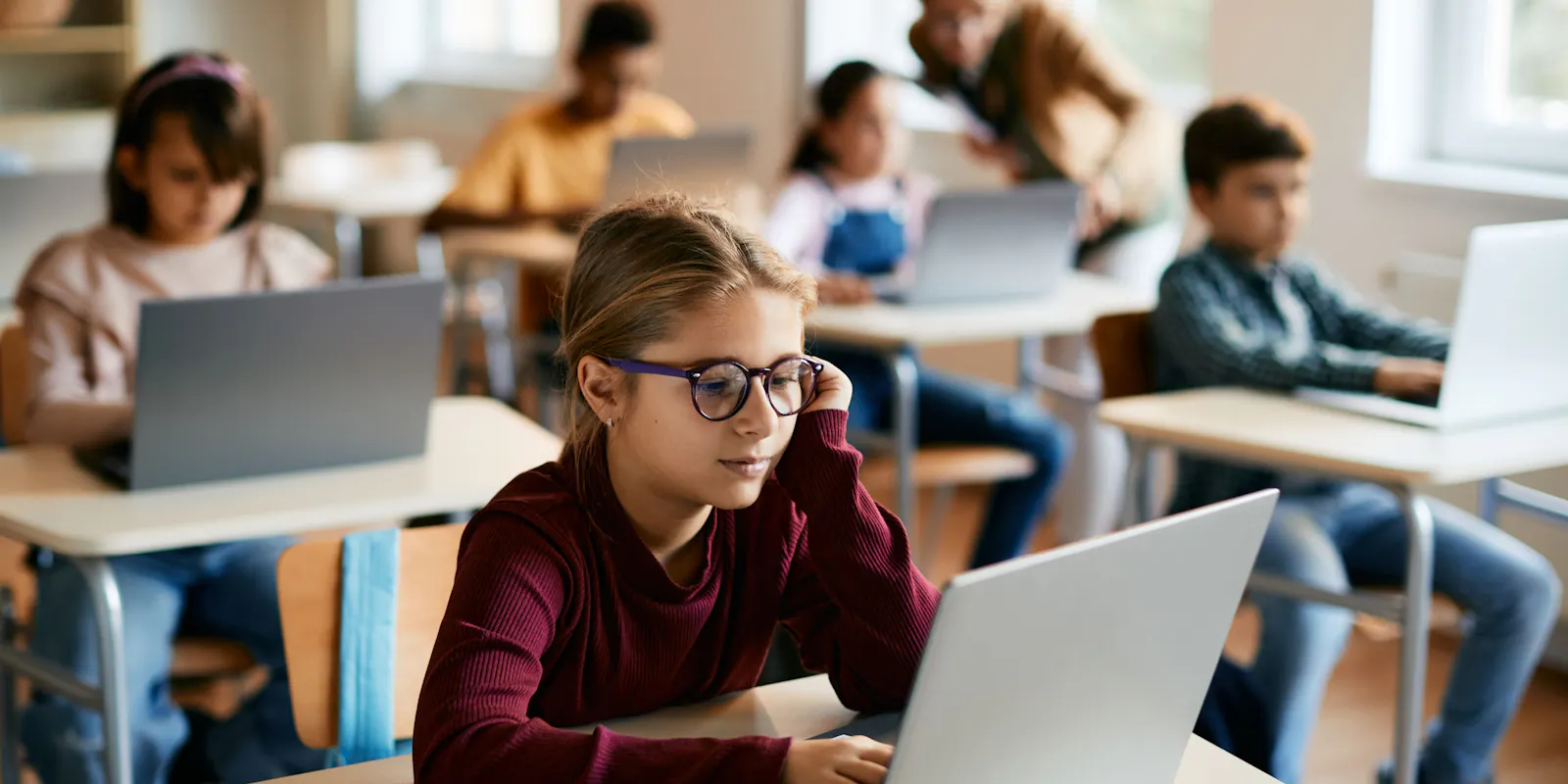
After the pandemic, the nationwide adoption of online high-dose tutoring was expected to address deepening educational disparities. Additionally, it gained attention for its ability to provide high-quality education in regions with inadequate supplies of teachers, especially in higher-grade STEM education.

However, as of 2023, the effectiveness of high-dose tutoring has gradually declined due to low student participation rates and skepticism from education authorities regarding the actual educational impact of online high-dose tutoring. Some school districts have opted for in-person high-dose tutoring. So, is the low effectiveness of high-dose tutoring simply due to its online nature?

To answer this question, examining the conditions enabling online classes and exploring how EdTech technology can help address educational disparities and teacher shortages in our education system is crucial.

To effectively conduct high-dose education, teachers need not only to explain and repeat but also to find novel ways to help students understand difficult concepts, including encouraging students to take a central role, solve various examples themselves and explain their understanding to the instructor to be educationally effective.

Currently, most online high-dose education services do not provide students with the same quality of lessons as in-person classes. To effectively conduct high-dose education, teachers need not only to explain and repeat but also to find novel ways to help students understand difficult concepts, including encouraging students to take a central role, solve various examples themselves and explain their understanding to the instructor to be educationally effective. Especially for students with low achievement, diagnosing what they don't know through various questions is crucial, as students themselves often don't know where they need improvement.

However, attempting to conduct such "high-level communication" with flat-dimensional video alone or showing pre-made lesson slides through screen sharing can deter student engagement and make it challenging to achieve lesson goals. So, what additional elements are needed to attain frequent problem-solving communication in education online?

Throughout history, humans have used various media such as stones, wood, paper and chalkboards to explain and learn abstract concepts and complex knowledge. Chalkboards are often used by teachers to describe concepts, but they can also serve as a medium for students to come forward and try solving problems to ensure their understanding. In one-on-one tutoring, blank notes between the teacher and student serve as a substitute for chalkboards. Even students who do not ask questions because they don't know what they don't know can be encouraged to explain what they just learned to the teacher or classmates or to attempt problem-solving, revealing their true abilities to the teacher. This way, teachers can help students achieve the lesson's goals by providing more diverse examples and problem-solving.

During the recent pandemic, online high-dose tutoring was not embraced by teachers, students and parents for a number of reasons. Teachers had to rely on their voices to capture students’ attention and adapt to unfamiliar remote teaching methods to motivate students who only appeared on video. However, despite teachers’ efforts, students remained passive participants and could not actively engage in lessons as they would in a physical classroom. Observing these unengaged students, parents began to think that offline classes would be more effective.

In other words, to achieve online education of the same quality as offline, the whiteboard function, serving as a substitute for chalkboards, is not optional but essential. This whiteboard should not be a rudimentary feature where you can only draw rough underlines and lines with a mouse. It should provide a writing experience similar to using a pencil on paper or writing graphs and equations with chalk, capturing the feeling of offline note-taking. Only then can online education achieve the same quality as offline.

To achieve online education of the same quality as offline, the whiteboard function, serving as a substitute for chalkboards, is not optional but essential.

You might think popular video conferencing solutions already have a whiteboard function. However, the standard whiteboard function is more geared toward assisting business meetings rather than the feeling of a classroom whiteboard. There are apparent differences between educational and business whiteboards.

According to operational data from Pagecall, which provides whiteboard functions to educational companies, teachers and students input around 20,000 strokes of communication data in an average 60-minute online class. Unlike business whiteboards, which draw simple underlines and circles on presentation materials, educational whiteboards must synchronize a large amount of input data generated quickly among participants in real time and represent it graphically. Moreover, implementing such real-time communication and graphic rendering functions in tablet devices, which have lower hardware capabilities than PCs and suffer from battery drain and heating issues when performance is pushed to the limit, presents a considerable technical challenge. However, only when teachers and students can communicate with each other efficiently in this way, similar to offline teaching, will they feel that the quality of online education has improved.

Recently, in South Korea, one of the most competitive countries in the world for education services, the Seoltab service has grown significantly. It lacks video features and relies solely on audio and whiteboards for communication between teachers and students. Still, it has attracted thousands of users nationwide and continues to grow. Seoltab has grown as a beloved online education service for students and teachers because they have tablet devices with stylus input, allowing them to communicate effectively in a non-face-to-face environment, much like explaining on a practice sheet as if they were meeting in person.

Some school districts that are disappointed with online high-dose tutoring attempt to return to offline methods. As it becomes more difficult to find teachers who can adequately cover the subjects and study hours that students require, the disadvantages of online learning will slowly diminish, leading to a shift in focus toward online education. This transition will be accelerated by advancements in AI technology, the widespread adoption of digital textbooks and the emergence of vertically integrated super apps for edtech solutions. However, the starting point of this change will be the digital transformation of the chalkboard, which has been a core element of the education field for thousands of years.

© Image Credit: Pagecall

Can Interactive Whiteboards Revitalize Online High-Dose Tutoring?

Why Professional Learning Is a Crucial Piece of a 1:1 Program

Paula Stamey, a seventh-grade social studies teacher in Benton, Tennessee, taught for 20 years before her school became a Verizon Innovative Learning School and adopted one-to-one technology in 2017. Initially, she resisted this change, feeling it was unnecessary and distracting. “I felt I had a system that worked, and introducing this ‘nonsense’ wouldn’t add anything to my classroom and would only create more work for me and be a distraction for my students,” she said. She had her students put their devices away when they entered her classroom and continued teaching the same way she had for the last two decades.

But when the COVID-19 pandemic shut down schools in March 2020, Mrs. Stamey realized that everything she had been doing suddenly needed to become digital. She knew she had to prepare herself for what may come, so she thought back on what she had learned during her initial Verizon Innovative Learning Schools learning experiences and began diving into every professional development and certification opportunity she could find. “I wanted to have as many tools in my belt as possible when the new school year rolled around,” she said.

Educators often experience professional development as a patchwork of different providers and formats disconnected from district initiatives, characterized by a mostly passive delivery model with few opportunities to connect learning to the local context or to extend learning into meaningful classroom practice.

Mrs. Stamey is not alone in her initial reluctance to use technology in her classroom. While she had time to change her mindset and be intentional with how she added technology into her teaching, so many teachers have grappled with the rapid influx of technology since districts hastily adopted one-to-one programs in a scramble to offer distance learning solutions for students during the pandemic. The heroic accomplishments of district and school leaders, IT leaders, teachers and parents to keep learning happening amidst the unprecedented events revealed two essential truths about one-to-one programs:

  1. The steady advances in educational technology — including devices, connectivity and software — affirm its tremendous potential to support teachers with powerful tools capable of reaching learners in vast and varied ways.
  2. The challenges for implementing a one-to-one program effectively to maximize that potential are complex, intertwined and not easily solved.

As schools enter their third year post-pandemic, they face challenges like aging devices and the need for robust systems supporting device procurement, connectivity and maintenance. Educators require support in harnessing technology for diverse student needs, emphasizing digital competencies and 21st-century skills. To address this, comprehensive professional learning integrated into one-to-one programs is crucial for sustainable digital transformation. It aligns district and school leaders' vision with systems for implementation, ensures IT support for device access and equips educators for student-centered learning. This comprehensive approach aligns with Digital Promise’s soon-to-be-released Digital Equity Framework, fostering meaningful improvements in student outcomes.

The inconvenient truth, however, is that it is not easy to come by high-impact professional development. Research has shown that investment in professional development yields mixed results. Educators often experience professional development as a patchwork of different providers and formats disconnected from district initiatives, characterized by a mostly passive delivery model with few opportunities to connect learning to the local context or to extend learning into meaningful classroom practice.

Still, empirical research into what makes professional development effective at developing new skills and in changing instructional practices that impact student learning point to several effective practices that can inform the design and delivery of the type of professional learning that is needed for districts and schools to transform their one-to-one programs into high-impact models. Our experiences supporting districts to implement successful one-to-one programs through the Verizon Innovative Learning Schools program over the past 10 years revealed these evidence-based keys to effective professional learning:

Recommended Resources
  • Coherent and Sustained Duration. There is a consensus among researchers that educators benefit from sustained and ongoing professional learning that is connected to both district and school initiatives and grounded in a local context, with some suggesting approximately 50 hours in a specific area. Unlike one-off workshops that may spark interest in the short term, repeated opportunities to engage with concepts and develop related skills over time are essential for educators to transfer what they learn from professional development sessions into new classroom practices. The multi-year professional learning program for Verizon Innovative Learning Schools supports learning for multiple stakeholders responsible for the successful implementation of one-to-one programs. The scope and sequence of professional learning for each stakeholder ensures numerous hours of coherent and connected content intended to spiral the development of the high-leverage knowledge and skills for each role. The numerous touchpoints over time allow concepts to develop, prompting regular opportunities to practice and refine application across all aspects of implementation.
  • Active and Responsive Learning. An active learning model promotes deep cognitive engagement and opportunities to practice while remaining responsive to individual learning needs. Feedback from experts and peers is essential for an active and practice-rich professional learning model. Furthermore, offering learners agency and choice with regard to paths and pace increases active learning and can increase their engagement. We accomplish these goals in a number of ways as part of our instructional design process. First, we lean into designing learning for multiple modalities, both synchronous and asynchronous. Live synchronous sessions are rich in modeling and collaborative meaning-making. Asynchronous sessions are more flexible for learners who can explore concepts and examples based on their interests and areas for growth. Finally, we provide bite-sized practice opportunities in the classroom, enhanced by on-the-ground instructional technology coaching. This adds motivation and enables real-time feedback for reflection and skill improvement. Verizon Innovative Learning Schools coaches are the centerpiece for an active and responsive professional learning model, constantly connecting learning to the local context and supporting ongoing cycles of practice, feedback, reflection and sense-making.
  • Collective Participation. Being intentional about collective participation speaks to the benefit of pursuing professional learning with others from the same school or district, which can increase peer-to-peer support and spur ongoing learning outside of the structured professional development sessions. The cohort model of the Verizon Innovative Learning Schools program means that learners from different roles engage in professional learning tailored to their individual contributions for one-to-one implementation, which supports collective participation. This collaborative approach is heightened through our promotion of online professional learning communities. To this endeavor, we leverage community spaces, both online and through in-person and virtual events, to connect learners within districts, across districts and across cohorts in different stages of implementation.

Mrs. Stamey never went back to her old ways of teaching. “Once I allowed myself to finally give in to technology and I saw how much it increased student engagement, I began to let go of other ‘old school’ notions of what a classroom should look like and how a class should function,” she said. Thanks to insights gained from her professional development, Mrs. Stamey has created a classroom where students have a choice in what they work on and how they work on it. “I don’t think any of this would have been possible without Verizon Innovative Learning Schools… letting me see just how much more I could give to my students,” she said. “I feel more invested and engaged in my career than I have in a long time.”

© Image Credit: Drazen Zigic / Shutterstock

Why Professional Learning Is a Crucial Piece of a 1:1 Program

How Can the Metaverse Transform Learning?

Beata Mirecka-Jakubowska, M.A.
Founder & CEO, Intercultural Education Consulting

The metaverse, a virtual, interconnected, and immersive digital space where users can interact with each other and digital environments, holds tremendous potential to transform education. It can facilitate immersive learning environments, allowing educators to craft virtual classrooms or historical settings so that students engage in interactive and captivating lessons. Collaborative learning thrives in the metaverse, fostering teamwork and cross-cultural communication as students from different locations collaborate on projects. Experiential learning is enhanced, offering a safe platform for hands-on activities like science experiments. AI-driven avatars and virtual tutors enable personalized learning experiences, catering to individual learning styles. Geographical barriers are dissolved, granting global access to high-quality education for students from diverse backgrounds.

Beata Mirecka-Jakubowska, the founder and CEO of Intercultural Education Consulting Group, has 36 years of international classroom experience. She turned to ViewSonic’s 3D immersive platform UNIVERSE with her online graduate students in Indonesia and later tried it with the Connected Learning project team in Iceland. Mirecka-Jakubowska has a contagious passion for learning and urges educators to embrace this new technology. EdSurge had the opportunity to speak with Mirecka-Jakubowska about her exploration of UNIVERSE, its impact on student engagement, the need for open-mindedness among educators and the exciting potential of the metaverse in education.


Watch this video to see what teaching and learning in UNIVERSE looks like!

EdSurge: How did your teaching journey lead you to try UNIVERSE with your college students?

Mirecka-Jakubowska: That’s a very long story that goes back to the 1970s when I attended the United Nations International School in New York. [Laughs]. I learned early to be open to change. I had very good training as a substitute teacher in my first year at TASIS Hellenic International School in Greece. I went to school every morning, and whoever was absent, I replaced that person. So I taught Greek, Arabic, PE, first grade, 12th grade, IB, middle school — anything! How did I teach Arabic when I had no clue what the individual letters even looked like? I tried to be creative, use the resources around me and empower my students. I gave the reins to my students, and they loved it! That got me thinking about student-centered learning — something not well known back then. With that knowledge, when I moved to Jakarta International School in Indonesia, and with the help of several dear colleagues, we began creating student-centered programs.

Recommended Links

When technology evolved in the late 1990s, first with email and then websites, the school’s IT head said, “Trust me, you want to learn all of this.” So, that’s what I did. I trusted him, and I even learned to code. As technology continued to develop, I often thought, Oh, that’s something my students need to know for their future. Who’s going to teach them? And I realized I’m the one who is going to teach them these skills. I integrated project-based learning and technology in all kinds of ways. I asked my English language learners to create films. I asked them to create websites. I asked them to create blogs to interact through blended learning. Did we have failures? Absolutely. There was always something to improve, something that went wrong. But I would tell my students, We will learn from this. What can we do better next time?

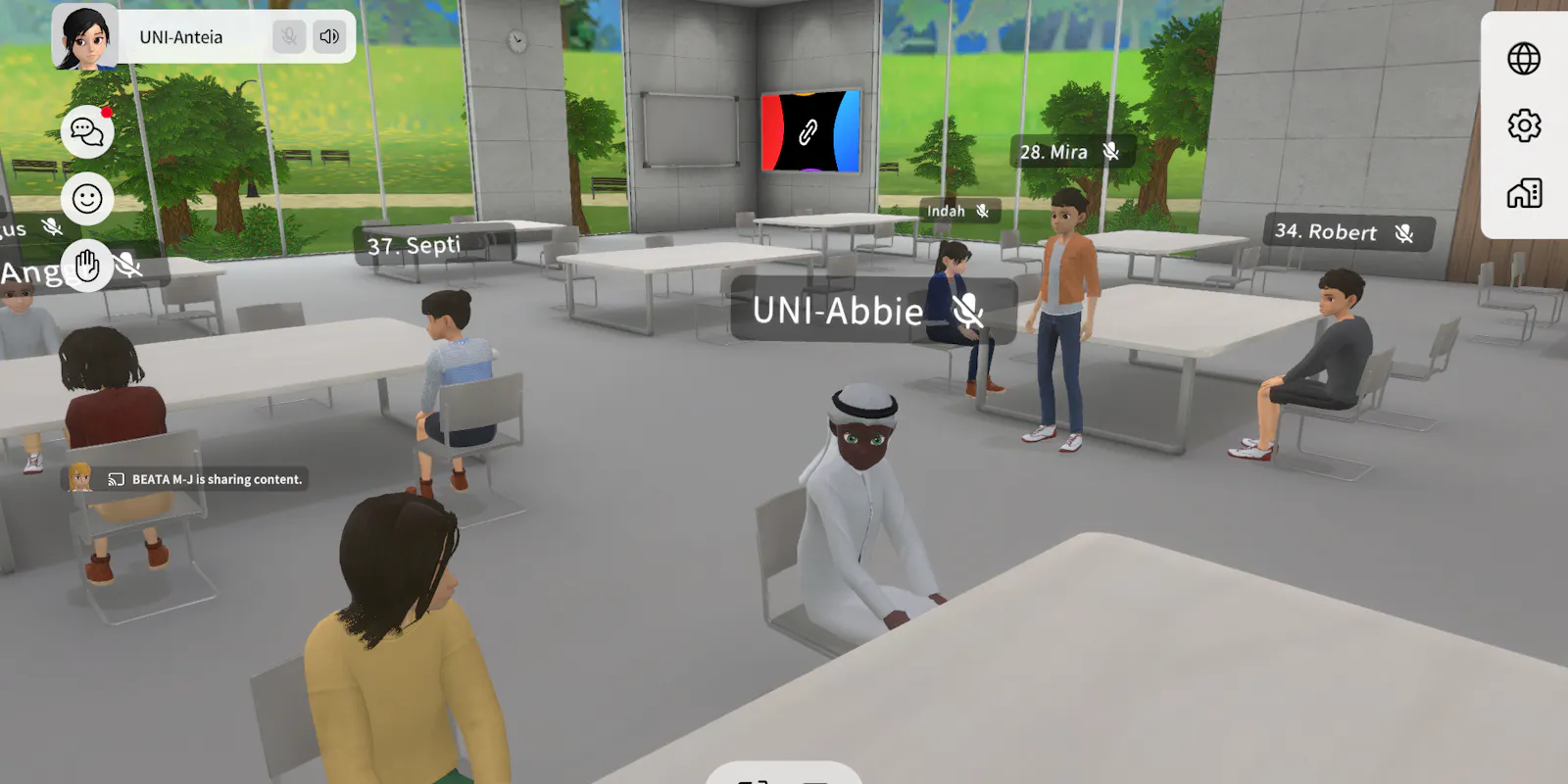
In 2018, I attended a workshop where I talked with a game-app developer. We started talking about gamification and how we could use games in a different way, a more developmental way. I envisioned a classroom with avatars who work on interactive projects together, and students could log in from anywhere. Then, in 2022, I was at the Singapore EDUtech Asia conference, and as I was walking by the booths, I saw my vision had become a reality. I thought, How is it possible that somebody else made my dream come true? I tried UNIVERSE there, and it blew me away. I could walk between student groups and hear all the conversations. I could stop and talk but still hear other groups in the background. It was totally different from [video conferencing]. And I knew I had to use it with students.

How did UNIVERSE help increase student engagement and interactions for learning in a virtual setting?

I noticed during the class that everyone wanted to say something. Even those students who were not usually talkers were super engaged. Those who were normally reluctant to speak seemed to speak up, perhaps because of their fascination with the technology or because they could be avatars. Their shyness was detached; they could try on a different persona and change their interactions in the classroom. They seemed to feel safe speaking among the cacophony of other voices in the background.

The adaptability, flexibility and creativity of the teacher will play a huge role in designing and implementing a lesson in the metaverse to have learning outcomes that surpass those of the traditional classroom.

— Beata Mirecka-Jakubowska

One exercise that worked very well was the interactive Collaboration Board. I placed an image with a question on the board, and all the students responded either with sticky notes or text. That is a great writing and thinking tool. And then there is that fantastic button that the teacher can press, and all of the avatars are seated and muted. I think UNIVERSE has great potential.


Students are circled around the Collaboration Board to share their thoughts on a discussion topic using sticky notes and texts.

What challenges did you work through during the implementation process?

The preparation involves designing the classroom. Teachers need to think about how to set up the flow of the room for the best experience. It takes time to navigate everything and learn the technology. It takes time to teach the technology to students. A teacher probably won’t get everything done on the first try. The adaptability, flexibility and creativity of the teacher will play a huge role in designing and implementing a lesson in the metaverse to have learning outcomes that surpass those of the traditional classroom.

For students who logged in from different islands around Indonesia, sometimes their Wi-Fi wasn’t strong enough to carry their voices without breakage. But the drawbacks of the experience were mainly technical. Once we worked through what we could, students completed several tasks and activities in UNIVERSE for about 50 minutes and didn’t want to leave.

Technology is on a course of its own. We must embrace new technology and improve upon it to enhance learning. This is history in the making, and it is exciting to be a part of it!

— Mirecka-Jakubowska

What guidance can you offer educators who are considering incorporating metaverse experiences into their teaching environments?

My advice is to be open-minded. Embrace the changes and embrace the challenges. Some teachers worry about students using Chat GPT, so they say it is forbidden in their classes. That is similar to 10 or 15 years ago when teachers said phones are forbidden in class; put them on the side. And I said, no, bring the phones in. That's your dictionary. That's your resource. Learn to use it wisely and manage distractions. Learning how to use the metaverse wisely is something to bring to the table with that open-mindedness because we are never going to stop technology. Technology is on a course of its own. We must embrace new technology and improve upon it to enhance learning. This is history in the making, and it is exciting to be a part of it!


To learn more about UNIVERSE by ViewSonic and how it can help support your teaching and learning needs, you can schedule a demo with a solution expert here.

How Can the Metaverse Transform Learning?

More Than a Standard: Getting Back to the Heart of Education

Picture it: Thirty students in your classroom, each at different levels, with varying needs and interests. Yet, there is just one set of learning standards, one big state exam and one of you. The predicament arises when learners struggle to keep pace with a mandatory curriculum, raising questions about the effectiveness of a one-size-fits-all, grade-level approach to education.

Imagine now if technology could help us change this narrative. Imagine it could be a catalyst for good in restoring our foundational principles to get us back to the heart of education. What if, with the right tools, we could truly reach every student?

How did we get here?

Until the late 19th century, American students of differing ages and abilities were all taught in one room by one teacher. The “one-room school house” might ring a bell. With such a diverse group of learners, early teachers had no choice but to put differentiation at the heart of education.

Recommended Resources

As time passed, larger schools were built, standards were set, curriculum development was the priority and the focus shifted from individual goals to grade-level expectations. Yet, all along, teachers voiced their concerns, acknowledging that students learn best when they feel seen, set their own goals and move at their own pace.

More standardization, less progress

Recent findings from The Nation's Report Card, a longstanding assessment in math and reading, have heightened concerns. Although the assessment has been consistent since its inception in the 1970s, the scores from the last school year for teenagers were the lowest seen in over a decade.

With the ongoing teacher shortage, compounding impact of the pandemic and increasing growth in class sizes, teachers are faced with even larger learning gaps among students. Given the limited hours in a school day, it is nearly impossible for a single teacher to provide personalized instruction to all students. While some students might not get the specific help or clarification they need, others might be held back, waiting for the rest to catch up.

As we strive for effective assessment methods, are we neglecting the fundamental strategies that played a role in our previous achievements? Along the way, have we veered off course from the primary goals of education?

Getting back to the heart of education

Technology enables us to go back to our roots by alleviating teachers of mundane, time-consuming tasks, emphasizing individual student focus and delivering tailored practice. At the same time, these tools should preserve the intrinsic aspects of teaching, empowering educators with the insights needed to quickly gain a good understanding of students and intervene when needed.

Those were the guiding principles behind ReadTheory, an adaptive reading comprehension platform that helps educators move beyond grade-level expectations and get back to the heart of education.

By deeply understanding each student and leveraging modern tools, we can offer individualized instruction that propels every student along their distinct journey.

“ReadTheory helps me to hit the needs of every single student in my class without creating more work for myself to differentiate assignments,” shares Caitlyn Herron, a middle school educator and ReadTheory user.

Establishing itself at the forefront of innovation, ReadTheory was ahead of its time and embraced artificial intelligence (AI) within its framework in 2018. Its advanced algorithm has an unmatched capability to adapt continually to each student’s unique level while delivering real-time feedback to the student.

In parallel, it provides educators with actionable insights through comprehensive yet easy-to-understand reporting. Since Herron’s classroom is Harry Potter-themed, she refers to ReadTheory time as “wizard time” and establishes station rotations to hold small group interventions. During small groups, she focuses on specific skills and standards and can give all students what they need in a unique, engaging way.


Screenshot of ReadTheory’s ELA Standards Class Report

Most of all, each student’s level is kept private between her and the student. All students practice at their own pace and continually achieve more, getting the right level of both challenge and support. Herron allows students to set their own goals in addition to having classroom goals. As students win badges and progress on their own paths, they gain confidence, self-reflection and life skills essential to whole-child development.

As we embark on the 2023-2024 academic year, there presents a moment for recalibration: a new year, a fresh start and perhaps a renewed commitment to every student. By deeply understanding each student and leveraging modern tools, we can offer individualized instruction that propels every student along their distinct journey. In doing so, we aim not merely for standard benchmarks but for the holistic development and success of every child.

© Image Credit: Ground Picture / Shutterstock

More Than a Standard: Getting Back to the Heart of Education
❌