
Normal view

There are new articles available, click to refresh the page.
Before yesterdayMain stream

Fall River Announces Partnership With Ignite Reading’s Virtual, One-To-One Tutoring Program That’s Doubled Reading Growth For Students Nationwide

20 November 2023 at 20:14

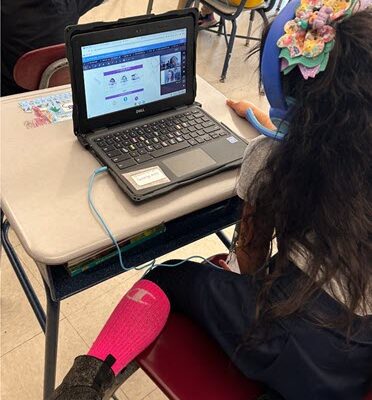
FALL RIVER – Fall River Public Schools announced an innovative new partnership with Ignite Reading to deliver virtual, one-to-one literacy tutoring for 300 first grade students in six schools this fall. Nationally, Ignite Reading’s students have recorded an average of over two weeks of reading progress per week, with no achievement gap for students of color, students with IEPs, multilingual learners, or students receiving free or reduced-price lunches. 

Ignite Reading officials joined Fall River leaders and students at Mary L. Fonseca Elementary today to showcase the nationally recognized program. The demonstration was followed by a Q&A session. Ignite Reading is now serving students in 60 schools across the commonwealth. 

“We’re thrilled to announce a new innovative collaboration with Ignite Reading. Given how participating students have bolstered their foundational reading skills in Massachusetts and nationally with Ignite Reading, we are optimistic that this program will supercharge literacy progress in Fall River,” said Stephanie Kennedy, Director of English Language Arts K-12 of Fall River Public Schools.

“Partnering with Ignite Reading has given us the opportunity to provide high-dose tutoring to our students in a way that would not otherwise be possible,” said Dr. Tracy Curley, Assistant Superintendent/Chief Academic Officer of Fall River Public Schools.

Ignite Reading pairs students with expert tutors who deliver daily, 15-minute, Science of Reading-based instruction to help them master the key foundational skills that equip them to become independent readers.The one-to-one virtual program is seamlessly integrated into the school day and takes the burden off teachers by providing individualized instruction for every student. 

The company is now teaching thousands of students to read across eight states with further plans to expand nationwide. In addition to Massachusetts, Ignite Reading is partnering with schools and districts to serve thousands of students in Arkansas, California, Colorado, Indiana, Mississippi, New York, and Oregon this fall.

“We’re excited to expand our collaboration with Fall River schools to equip hundreds of local students with enhanced literacy skills. Through Ignite Reading’s one-to-one tutoring model,  students nationwide are surpassing expected benchmarks, achieving more than two weeks of reading progress for every week in the program. In addition to improved literacy, we’re also witnessing a significant and positive social-emotional impact. It’s a privilege to serve Fall River’s exceptional students, families, and educational institutions,” said Jessica Reid Sliwerski, Founder & CEO of Ignite Reading.

About Ignite Reading 

Ignite Reading’s mission is to ensure that every student is a confident, independent reader by the end of first grade. The organization was co-founded by CEO Jessica Reid Sliwerski and Evan Marwell, Executive Chairman of Ignite and CEO of EducationSuperHighway. Ignite Reading pairs schools with a dedicated literacy specialist and a team of virtual reading tutors, all highly trained in the Science of Reading, who deliver 1:1 daily instruction to students focused on their specific decoding gaps. Ignite’s data-driven approach, provided by caring and skilled tutors, gives kids the know-how and confidence they need to thrive as fluent readers. The Ignite Reading program, delivered 15 minutes per day during a school’s literacy block, takes the burden of differentiated instruction off of teachers and has an impact immediately. For more information about Ignite Reading, visit: www.ignite-reading.com

About Fall River Public Schools

As an urban Gateway district in the Commonwealth of Massachusetts, the student population of the Fall River Public Schools (FRPS) is ethnically and socioeconomically diverse. Of the 10,987 scholars in Fall River Public Schools, 86% of students are identified as High Needs.  Of all students, 23.1% are English learners, 25.9% are students with disabilities, and 79.9% percent are economically disadvantaged.  Our student population is 44.1% white, 31.8% Hispanic, 11.9% African American,  8.7% multi-race/non-Hispanic, 3.3% Asian, and 0.2% Native American.

Can Interactive Whiteboards Revitalize Online High-Dose Tutoring?

15 November 2023 at 18:55

After the pandemic, the nationwide adoption of online high-dose tutoring was expected to address deepening educational disparities. Additionally, it gained attention for its ability to provide high-quality education in regions with inadequate supplies of teachers, especially in higher-grade STEM education.

However, as of 2023, the effectiveness of high-dose tutoring has gradually declined due to low student participation rates and skepticism from education authorities regarding the actual educational impact of online high-dose tutoring. Some school districts have opted for in-person high-dose tutoring. So, is the low effectiveness of high-dose tutoring simply due to its online nature?

To answer this question, examining the conditions enabling online classes and exploring how EdTech technology can help address educational disparities and teacher shortages in our education system is crucial.

To effectively conduct high-dose education, teachers need not only to explain and repeat but also to find novel ways to help students understand difficult concepts, including encouraging students to take a central role, solve various examples themselves and explain their understanding to the instructor to be educationally effective.

Currently, most online high-dose education services do not provide students with the same quality of lessons as in-person classes. To effectively conduct high-dose education, teachers need not only to explain and repeat but also to find novel ways to help students understand difficult concepts, including encouraging students to take a central role, solve various examples themselves and explain their understanding to the instructor to be educationally effective. Especially for students with low achievement, diagnosing what they don't know through various questions is crucial, as students themselves often don't know where they need improvement.

However, attempting to conduct such "high-level communication" with flat-dimensional video alone or showing pre-made lesson slides through screen sharing can deter student engagement and make it challenging to achieve lesson goals. So, what additional elements are needed to attain frequent problem-solving communication in education online?

Throughout history, humans have used various media such as stones, wood, paper and chalkboards to explain and learn abstract concepts and complex knowledge. Chalkboards are often used by teachers to describe concepts, but they can also serve as a medium for students to come forward and try solving problems to ensure their understanding. In one-on-one tutoring, blank notes between the teacher and student serve as a substitute for chalkboards. Even students who do not ask questions because they don't know what they don't know can be encouraged to explain what they just learned to the teacher or classmates or to attempt problem-solving, revealing their true abilities to the teacher. This way, teachers can help students achieve the lesson's goals by providing more diverse examples and problem-solving.

During the recent pandemic, online high-dose tutoring was not embraced by teachers, students and parents for a number of reasons. Teachers had to rely on their voices to capture students’ attention and adapt to unfamiliar remote teaching methods to motivate students who only appeared on video. However, despite teachers’ efforts, students remained passive participants and could not actively engage in lessons as they would in a physical classroom. Observing these unengaged students, parents began to think that offline classes would be more effective.

In other words, to achieve online education of the same quality as offline, the whiteboard function, serving as a substitute for chalkboards, is not optional but essential. This whiteboard should not be a rudimentary feature where you can only draw rough underlines and lines with a mouse. It should provide a writing experience similar to using a pencil on paper or writing graphs and equations with chalk, capturing the feeling of offline note-taking. Only then can online education achieve the same quality as offline.

To achieve online education of the same quality as offline, the whiteboard function, serving as a substitute for chalkboards, is not optional but essential.

You might think popular video conferencing solutions already have a whiteboard function. However, the standard whiteboard function is more geared toward assisting business meetings rather than the feeling of a classroom whiteboard. There are apparent differences between educational and business whiteboards.

According to operational data from Pagecall, which provides whiteboard functions to educational companies, teachers and students input around 20,000 strokes of communication data in an average 60-minute online class. Unlike business whiteboards, which draw simple underlines and circles on presentation materials, educational whiteboards must synchronize a large amount of input data generated quickly among participants in real time and represent it graphically. Moreover, implementing such real-time communication and graphic rendering functions in tablet devices, which have lower hardware capabilities than PCs and suffer from battery drain and heating issues when performance is pushed to the limit, presents a considerable technical challenge. However, only when teachers and students can communicate with each other efficiently in this way, similar to offline teaching, will they feel that the quality of online education has improved.

Recently, in South Korea, one of the most competitive countries in the world for education services, the Seoltab service has grown significantly. It lacks video features and relies solely on audio and whiteboards for communication between teachers and students. Still, it has attracted thousands of users nationwide and continues to grow. Seoltab has grown as a beloved online education service for students and teachers because they have tablet devices with stylus input, allowing them to communicate effectively in a non-face-to-face environment, much like explaining on a practice sheet as if they were meeting in person.

Some school districts that are disappointed with online high-dose tutoring attempt to return to offline methods. As it becomes more difficult to find teachers who can adequately cover the subjects and study hours that students require, the disadvantages of online learning will slowly diminish, leading to a shift in focus toward online education. This transition will be accelerated by advancements in AI technology, the widespread adoption of digital textbooks and the emergence of vertically integrated super apps for edtech solutions. However, the starting point of this change will be the digital transformation of the chalkboard, which has been a core element of the education field for thousands of years.

© Image Credit: Pagecall

Can Interactive Whiteboards Revitalize Online High-Dose Tutoring?

Students Need a Holistic Approach to Pandemic Recovery

29 September 2023 at 10:00

Millions of students across the United States spent their summers in learning and enrichment programs, many of which employed intensive tutoring designed to bring math and reading scores up to grade level.

These efforts can be important and life-changing, yet research finds that increased learning time alone will not be enough to recover from the pandemic’s devastating effects on learning.

Recent data out of the Center for Research on Education Outcomes (CREDO) at Stanford University demonstrates that simply offering more instruction for students is insufficient, in part because it fails to account for each student’s pace of learning. Remarkably, researchers have determined that even an extra five years of schooling would still leave a quarter of students behind on 12th grade math and reading benchmarks. Despite this evidence, many of our COVID-19 recovery dollars are being spent on interventions that emphasize high-dosage tutoring rather than other potential strategies.

As lead researcher at Breakthrough Collaborative, a national nonprofit building supportive out-of-school-time learning communities to improve educational equity, I recently had the opportunity to closely study an after-school math tutoring program our organization piloted during the 2021-22 school year.

That experience showed me that high-dosage tutoring can't be the only tool we offer students after the disruptions of COVID-19. A successful approach must engage social-emotional learning (SEL), adapt to actual, real-world student needs, and incorporate community support, so that the burdens don't fall exclusively on students and teachers.

So — what does that look like?

We must go beyond dosage-dependent tutoring programs, and center the social and emotional needs of students. David G. Gil, late professor of social policy at the Florence Heller School for Advanced Studies in Social Welfare at Brandeis University, argued that individuals can only reach their full potential when human needs such as psychological safety are met.

Unfortunately, recent data demonstrates that the pandemic placed huge strains on the mental health and well-being of students, teachers and principals alike.

The good news is that SEL programs have been proven to have a powerful effect on students’ coping skills while also positively impacting academic achievement. The bad news is that SEL has become highly politicized in recent years. Opponents have misleadingly conflated SEL with critical race theory, and several states have passed legislation designed to limit its use in schools. Nevertheless, the research shows educators and parents should continue to advocate for SEL, and disregard the political noise that accompanies it.

Any program that is in service to students must respond to their ongoing and changing needs. In the middle of our after-school math tutoring pilot, we held focus groups with students and families to hear their feedback, with the intention of adjusting the program if necessary.

Through these focus groups, staff at one of our sites learned that students needed more community- and relationship-building time, and more time for homework support, even if that meant fewer hours of tutoring. As a result, program leaders changed their model, reducing tutoring time and adding lessons on math identity and SEL through math contexts.

This pivot meant that our tutoring program no longer qualified as “high-dosage,” but that trade-off was amply justified. This site was able to maintain a strong after-school attendance rate of 79 percent — impressive given that maintaining attendance after school is notoriously challenging — and their students’ average math gains surpassed their expected growth at the end of the year.

Our schools cannot and should not do this work alone. Much of the burden of student pandemic recovery is landing on our educators and children, two groups of people who were pushed to the limits these past few years.

Ideas to increase instructional time, like extending the school year and boosting classroom time during the day, are logical ones, but these ideas continue to place the burden on students and their teachers. This approach also ignores the fact that programs such as the Massachusetts Extended Learning Time Initiative, which provides funding for as much as 300 hours of additional instruction time per year, had no statistically significant impact on student achievement, and produced higher levels of teacher and student fatigue.

One avenue to support and extend the good work schools are doing is to leverage community-based organizations, particularly those with staff who have similar backgrounds to the students they serve. Breakthrough has seen this firsthand, as we intentionally recruit college-aged teaching fellows who mirror the diversity of our students, resulting in strong relationships and sense of belonging.

Research has proven the powerful benefits experienced by students who are taught by same-race teachers. According to that research, Black students with at least one Black teacher in kindergarten through third grade are 13 percent more likely to graduate from high school and 19 percent more likely to enroll in college. One plausible reason for this finding may be that Black teachers are serving as role models for their students.

Support can’t stop after graduation. The reality we face is that more students will leave high school with gaps in knowledge than in pre-pandemic times. That means we must also support this generation of young people further into adulthood.

We should consider how wraparound services can be provided to young adults as they navigate life after high school, and prioritize postsecondary initiatives like college success programs that partner with young people to help them transition into adulthood and reach their fullest potential.

Given the setbacks students are facing after the pandemic, it can be tempting to rely on solutions that increase instructional time, but a variety of solutions to support our students will be necessary to set them up for success in school and in life. As we look beyond the current crisis, let’s ensure we are taking into account all of our students’ needs, and not limiting our interventions to intensive instruction alone.

© YummyBuum / Shutterstock

Students Need a Holistic Approach to Pandemic Recovery
❌
❌