
Normal view

There are new articles available, click to refresh the page.
Before yesterdayMain stream

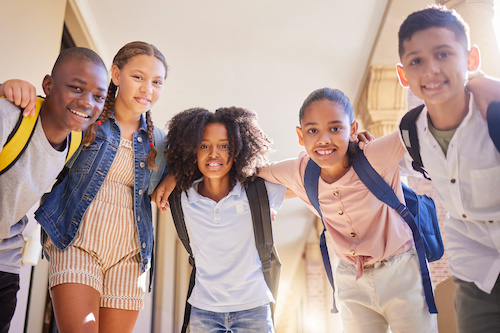
Empowering staff and students with a sense of belonging

The relationships we cultivate are the most powerful tool we have to create a sense of belonging with students and staff members.

Key points:

  • When students feel supported, they’re more likely to share their struggles
  • Mental health partnerships can better support students and staff
  • See related article: How to build relationships with students
  • Get the latest news on student and staff well-being by visiting eSN’s SEL & Well-Being page

Belonging is a fundamental human need. We are all searching for a sense of connection with the people and places in our lives. Students and school staff are no different, so it’s crucial to ensure learning environments foster a sense of belonging.

When students have a strong sense of belonging, they are more likely to be engaged in school and to perform well academically. Unfortunately, new data shows that only 62 percent of high school students feel connected to others at school, and nearly one-third of students experience poor mental health.

In addition, the latest federal data found that 33 percent of school leaders noticed an uptick in violence amongst students and students experiencing anxiety and attention-deficit hyperactivity disorder over the last year–many attribute the increase to the pandemic and its lingering effects. There’s simply no time to waste; we must make our schools welcoming, safe spaces for students and staff alike.

Build trusting relationships with students to create a culture of belonging

Trust is the cornerstone of belonging. Students need us to be accessible, dependable, and trustworthy. When students trust us, they’ll be more willing to be honest about their struggles and help us stay in tune with what’s happening in the halls that we don’t see.

Celebrate student backgrounds and cultures

Celebrating cultures is more than just hosting an event; it’s about consistently honoring the ethnicity, background, and experiences of the students we serve. By recognizing the diverse backgrounds and cultural traditions of the school’s communities, we create avenues for students to share and celebrate their experiences openly.

Encouraging open dialogue and allowing students to lead discussions about their cultures fosters a climate of true inclusivity.  Celebrating and embracing students’ lived experiences greatly increases students’–and their family’s–feelings of belonging.

Engage the community as a partner

Schools that focus on belonging recognize the power of community engagement. For example, when a community member talks openly about a challenging topic, such as their family’s experience with substance abuse, it can create a sense of belonging and validation for students coping with a similar situation.  School advisory councils that involve students, families, and staff as decision-makers influence school operations and bridge the gap between students and their communities.

Empower school counselors through collaborative partnerships

Relationships take time to foster. Students need to be seen, and staff need the time to truly see them. When staff are overburdened, as many are nationwide, it hinders their ability to build meaningful relationships with students. And when a student needs care outside of the scope of school resources, staff are often tasked with finding the care they need. On average, it takes up to 60 phone calls to connect a student, family member, or staff member to the proper mental health resources.

That’s where partners providing mental health care coordination services come into play. Collaborations like this can alleviate the burden on school staff and save them countless hours of tedious work. What’s more, a third-party partner can also provide mental health support to school staff. School staff are the backbone of a school community, and their mental health and well-being are essential to a thriving school culture.

After a prolonged period of disconnection, building strong relationships is more important than ever. Dr. Bruce Perry, in his book The Boy Who Was Raised As a Dog: And Other Stories from a Child Psychiatrist’s Notebook says, “Relationships are the agents of change and the most powerful therapy is human love. People, not programs, change people.” As you reflect on the practices in your school community, remember that the trusting relationships we cultivate with students and staff members are the most powerful tool we have to create the sense of belonging.

About Sarah Mathew
The bookend model: Using SEL to support before- and after-school programs

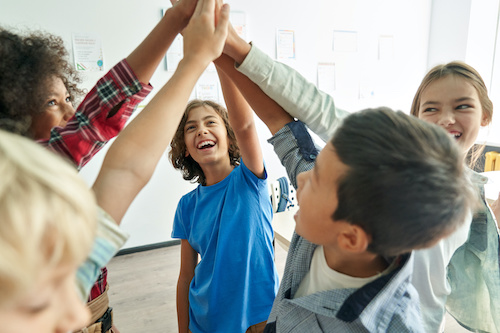
Before- and after-school programs with SEL components offer critical support and safe spaces where students build confidence and a sense of belonging

Key points:

Incorporating social and emotional learning (SEL) throughout the school day has risen in popularity over the last few years, especially to counteract the increasing rates of anxiety and depression in students since the COVID-19 pandemic. Lost in the discussion, however, is the importance of before- and after-school programs–the bookends of the school day. 

These before- and after-school programs dedicate a significant amount of time to activities that can help students develop social-emotional skills. In fact, a 2021 survey of program providers found that in addition to academic enrichment, 86 percent of programs give young people the time to interact with their peers and build social skills. Plus, students themselves report that 80 percent of the programs give the students time to talk with peers and adults about how they’re feeling. Yet, staff may not approach every interaction with intention to foster social and emotional growth.

Before- and after-school programs offer critical support, including caring and supportive mentors, as well as safe spaces where students build confidence and a sense of belonging. They also provide opportunities to work collaboratively, problem solve, and think critically. SEL skills are not separate from those activities–SEL is not sprinkled on the cupcake; it’s part of the cupcake. Before- and after-school programs must make every interaction more intentional to complement classroom learning.

These programs help children develop strong social skills, gain self-control and confidence, improve work habits and grades, and build healthy relationships with peers–all the things we want young people to have to be successful. But to ensure that these programs are set up for success, there are two essential questions every program coordinator should ask: “How well do I know my students?” and “How can I ensure my program meets their needs?” 

Running an effective program

SEL should be embedded throughout every program, starting with students’ arrival. How do you greet students when they show up? When a student hears a caring adult say their name, it instills a sense of belonging, supporting self-awareness.  

An overview of the schedule at the beginning of the program is important. Kids need to learn how to self-manage and regulate their emotions. For a young person who is excited for the craft part of the program, understanding what else is on the agenda is key to them mastering the skills of self-management and self-awareness.

The actual activity is when the rubber meets the road. As program directors and administrators, we need to analyze the activities–how much time are they alone, in small groups and in large groups. It is important to outline the program activities so students have an opportunity to participate in all three options and balance between them. As students develop, they must know how to interact at all three levels. If you find that some students don’t perform in large groups, you may have to reevaluate how well you know your students. For example, if behavior problems spike when you do large groups, maybe the answer is that you have too many students in these groups.

Finally, do you have a clearly defined dismissal policy? This is an ideal opportunity to introduce students to social awareness. When your program has an established system of welcoming and dismissing students, it demonstrates consistency. It also helps young people see how their individual behavior fits into the overall success of the program. This is a key component of social awareness, where students understand how they fit into the larger community in various ways. Additionally, it’s a way to model other ways they use social awareness for example while leaving a store or restaurant. It’s a reminder that the SEL skills developed in school are useful in all aspects of life.

For students, SEL is not just limited to the classroom. Before- and after-school programs play an equally important role. With every interaction between staff and students, these bookends to students’ days provide the opportunities to hone these competencies and grow, if there is consistency and intention in programs’ approach.

❌
❌