Reading view

There are new articles available, click to refresh the page.

Dear Educators, a Balm for Deep Cuts: Navigating Racial Microaggressions at School

I remember the first and only time I’ve ever yelled at a teacher in class.

Growing up in the U.S. as a female child of immigrants from Taiwan, this kind of behavior is practically sacrilegious; certainly scandalous and wildly antithetical to my traditional upbringing. I was raised above all else to not only revere education, but to literally show respect to educators and elders by being a dutiful, quiet, listening and obedient learner. This meant I was consistently rewarded at school for putting my head down and striving to be a “good student” and “high achiever,” but never for challenging authority or speaking up when something was wrong.

I broke that mold on the day that a substitute lecturer addressed my Ph.D. class.

“You can’t interview Asians because they won’t say anything substantive due to the norms of their culture,” she said.

Wait, what? I was in the first year of the top doctorate program in my field, and we were 20 educators-in-training being taught best practices of various communication research methods by supposed leading experts. This guest speaker was talking about how to run group interviews, and she, a white woman, was imparting what she learned from years of research with various U.S. populations, including “tips” on how to work with diverse communities.

“Asians have a politeness norm, so it’s difficult to get anything useful out of them,” she continued.

It was hard for me to hear anything after that, over the whooshing sound of blood rushing to my head, my heart pounding from the cortisol spike in my body. Did this professor really just wield her authority at the front of this room and say to an internationally diverse class of scholars, educators, and thought-leaders-in-training, that Asians — all the Asians — were not worthy of study or deep understanding because, in her professional experience as a white researcher, it was difficult to get people of different backgrounds to talk to her?

I spoke up. I don’t even remember exactly what I said, but I know I said it forcefully, interrupting her mid-lecture and vehemently arguing back. My voice was shaking and my face most certainly was red, but I said something to the effect of:

Asian and Asian American experiences and voices matter. Our humanity matters, but our unique experiences also matter. And we’re not just one homogenized, stereotypical group. And it’s really problematic and a glaring function of white supremacy to dismiss the importance of collecting information on the lived experiences of large swaths of people of color you deem unimportant because you didn’t establish a trusting relationship with them, so of course they wouldn’t talk to you. Accurate information directly impacts who gets what resources — aren’t you an educator and literal expert in communication and research? Shouldn’t you know that? And what depth of knowledge, background, or experience gives you the authority to speak on what works best culturally for Asians anyway?

At least, I hope I said something like that. I’ve spent so much energy replaying what happened, trying to process it with friends, ruminating about what I should’ve said or done instead, that you’ll have to ask my classmates how it really went down. My memory is tainted by the rage and stress of being unexpectedly triggered yet again by yet another racial microaggression in yet another school setting.

It’s the kind of experience I’ve studied as well as lived through. For my dissertation, I researched the power of youth activists creating and circulating counternarratives in response to racial microaggressions, the layered, subtle, and often unintentional forms of everyday racism experienced by people from marginalized racial and ethnic populations. A key finding from this work shows that mobilizing personal stories through a range of artistic and cultural expressions, outlets and collaborative networks can help individuals and groups process, heal from and speak back to these everyday experiences and their cumulative effects.

As a scholar, as an Asian American, and as a product of the U.S. school and university system, I wanted to find out how microaggressions shape the experiences of Asian American K-12 educators. In summer 2022 as part of the Voices of Change project, we at EdSurge Research convened and conducted group interviews with 80 classroom teachers, administrators, school counselors and literacy and tech coaches, who described how everyday experiences of casual racism persistently weigh them down by requiring tough mental calculus about whether and how to respond, and by reinforcing stereotypes about Asian Americans as perpetual foreigners. Yet they also shared that they sometimes seize microaggressions as opportunities to push back against bias, in the moments when they’re willing to take on that extra burden.

Sharing the results of this study is important, primarily to validate the experiences of Asian American educators and also to inform others about the harms microaggressions cause in schools. I’ll offer my perspective, too, both as a professional researcher and a person.

What Are Microaggressions?

Microaggressions are the subtle, causal, everyday assaults, indignities and invalidations that people of color and marginalized communities face incessantly in this country. Often characterized today as “death by a thousand cuts,” the concept was first described in the late 1960s by professor of psychiatry and education Chester Pierce. In his work with Black families and students, Pierce reported “subtle, stunning, often automatic, and non-verbal exchanges which are ‘put downs’”¹ that control “space, time, energy, and mobility … while producing feelings of degradation, and erosion of self-confidence and self-image.”²

Since then, many scholars and researchers have expanded upon this work. Psychologist Derald Wing Sue developed extensive frameworks³ showing the depth and range of microaggressions, their impact, and the unrelenting frequency with which they occur for people perceived as “different” from an imagined “normal.” Critical race and education scholars like Daniel G. Solórzano and Lindsay Pérez Huber contextualize these harmful lived experiences through vivid storytelling and rigorous research,⁴ illuminating their lasting physical, psychological and social consequences.

The corrosive and life-threatening effects of exposure to chronic racism have also been long documented.⁵ Coping with chronic forms of overt, intentional racism is itself damaging enough and microaggressions are no different — they fester, layer and compound depending on context and other aspects of identity (for example, one’s gender, religion, class, sexual orientation, indigeneity, ability, immigration and/or citizenship status, etc.). For those having to incessantly navigate painful, disruptive experiences of frustration and anger, self-doubt and helplessness, regular exposure to these unpredictable expressions of social discrimination has also been linked to ulcers, insomnia, elevated blood pressure, heightened stress, anxiety, chronic pain, depression, suicide, and other life-threatening symptoms akin to those who have experienced severe traumatic stress.

In other words, microaggressions may seem small, but their impact is big. Unlike more direct, overt, or deliberate acts of discrimination, microaggressions are often subtle, happen quickly, and are frequently, though not always, unintentional. Their assaultive power comes from their cumulative and lasting effects, from experiencing them all the time, unpredictably, everywhere, including in schools.

In our Voices of Change research, it became clear that Asian American educators face microaggressions all too often.

In our virtual learning circles, structured small group discussions where educators could connect, share resources and learn from each other, we discussed a range of issues weighing heavily on the minds of many U.S. educators — the lasting social and economic impact of COVID-19 and America’s ongoing racial reckoning; teacher burnout, trauma and mental health; low pay and low morale in the profession; public scapegoating of teachers; and the incessant escalation of demands on their time with shrinking professional resources.

We also talked about the realities of being Asian American educators, who represent only 2 percent of K-12 educators in the U.S. We discussed regular paradoxical experiences of both hyper-visibility and invisibility in their schools, and recounted the numerous damaging stereotypes and discriminatory moments they had to navigate with students and colleagues, often with little to no institutional support. Despite hailing from diverse urban, rural and suburban school communities across 18 states and D.C., a shared experience that repeatedly came up was the frequency and weight of casual, everyday racism they encountered as Asian Americans, many of which had gone unacknowledged for years.

For many participants, these small group conversations were the first opportunity they had to gather with other educators like themselves to bear witness to and process the repeated painful microaggressions they’ve endured, as well as the joys and successes they’ve had in bringing themselves fully to work and in modeling this for their students and other teachers.

Responding to Microaggressions

Everyday instances of casual racism are already insidious enough to bear, but the mental calculus one has to go through to figure out a response in these moments is part of the cumulative weight of microaggressions. As we heard in our groups, in a split second, educators have to decide:

What’s my goal — to educate, to call them out to do better, to defend or protect others, to preserve my own well-being? Is it safe to have a conversation with this person? Are there power differences at play or risks to my person or livelihood? Will others be harmed by my silence or my actions? Will I lose my job? Do I have the time and energy right now? Is it worth the emotional toll it will take?

For those who experience racism and interpersonal microaggressions frequently, the choice often feels like it’s between the lesser of two evils: Do I want to feel bad about not saying something at all, or do I want to feel bad about not saying the “right” thing at that moment?

The truth is, there is no perfect response. It’s tempting to fixate on it because we think that if we could’ve just found the perfect thing to say or do, or said something faster, or more exacting, it somehow could’ve made the interaction hurt less, or be less invalidating and harmful. Staying silent can sometimes feel like defeat or betrayal of self or others, yet we also feel angry, resentful and defiant that we have to experience this at all. So much emotional energy is expended attempting to reconcile the disempowering moment in order to reclaim our humanity. It is exhausting and often invisible to people who do not experience this.

People are often unaware of how their internal biases bleed out in everyday conversations with others, so one strategy for responding to microaggressions is rooted in a simple goal: Call attention to what’s not being said. Make the underlying assumptions visible by pointing it out. This can be accomplished in many ways — through a simple, quick statement or expression (like “ouch!,” or a grimacing “yikes”) before moving on; by making a joke or using humor to try and disarm the situation; by striking or pushing back; by taking the time to engage in further discussion to educate; or some combination of all of these tactics.⁷

For example, in our conversations with Asian American educators, one particular microaggression cropped up repeatedly across the various learning circles, rooted in the stereotypical idea of Asians as perpetual foreigners. That no matter how long a person has been in America, they are foreign or “other,” and therefore don’t belong. This manifests particularly in what many perceive as an innocuous question: “Where are you from?” (often followed immediately by “No where are you really from?,” as if one cannot be from here because they must be from an exotic, distant land). Other invasive and tokenizing forms of the question manifest as “What are you?” or demands to perform foreignness and “say something in that language.”

The educators in our circles shared with each other the range of what they do when this happens to them at school, depending on the situation and who it’s coming from.

“I have grown into an educator who believes that you’ve got to take it head on, vocally and preemptively,” said Robert Fung, principal of a public high school in San Diego.

In the learning circle he joined, he and other teachers and administrators discussed how it’s relatively manageable learning how to respond to the kids they work with, but often much harder to figure out how and when to have these conversations with other adults, like fellow teachers or parents.

“I look for opportunities to take those defining experiences and turn them into something that other people have to deal with now,” he said, using his position as a principal and those quick, fleeting, painful moments to prompt perspective-taking. “What I ask people is, ‘look, this is a question that I've gotten all my life and it's put me in this defensive place, so I want to turn it onto you and imagine if you were asked that, but your answer — “I'm from San Diego or I'm from Cleveland” — is not good enough … how would you respond to that question? “Where are you really from?”’"

He explained that he wants to nudge other people outside of their comfort zones, challenging the “privilege and entitlement” enjoyed by those who don’t regularly have to think about their race and who are not asked to justify where they come from. As a school leader, Fung intentionally creates space to engage in these tough but necessary conversations, which he’s found can open up dialogue in a way that is productive with adults, whether they are other educators or parents.

Similarly, when stereotypical interactions come from his teenage students, Fung looks for other meaningful points of connection. By being vulnerable and sharing experiences of what it was like also growing up with an undocumented parent, for example, he ultimately tries to emphasize, "Look, we are not that different simply because you think I'm this foreign person from another land. There is a way we can connect."

For the educators working with elementary- and middle school-aged students, many described turning microaggressions into opportunities for learning by using pointed but neutral follow-up questions to prompt student self-reflection, like “Why do you want to know?” or “Why is that important?” Questions like that force the asker to think about and articulate the assumptions underlying their questions.

First grade teacher Mayrin Bunyagidj in Northern California, for example, said that she will often respond by asking her young students clarifying questions. “I always just go back with … what do you mean by that? … Are you asking about my culture, what languages I speak, or what my family history is?” This invites her 6- and 7-year-olds to continue being curious and make connections with others, but to also start paying attention to the precision and consequences of their communication.

Yet for others working with older youth, the strategy is to put the microaggression back on them. When Whitney Aragaki, a high school biology and environmental science teacher in Hawaii, hears “What kind of Asian are you?”, she immediately challenges the frame. “I turn it around, ‘What kind of white are you?’ ‘What kind of whatever are you?’ ‘What kind of brown are you?’ It’s extremely offensive if you were to phrase it in any other terminology, so if you do that, then it sounds like, ‘yeah, that is racist.’” By putting the question back on the asker, they are forced to feel what it’s like to be asked such a problematic question. People are stopped in their tracks and compelled to check themselves.

Aragaki also reflected to her group that in these kinds of conversations, she noticed the person who is being ‘othered’ is often the one being asked to disclose something personal about themselves first, which can make the conversation feel risky and not safe to join. When students ask about alternative ways they can connect with someone whom they perceive as different, she will advise that “if you want to know something, offer something up first and then engage in conversation. ‘My favorite food is this, or this is my favorite dinner at home. What’s yours?’” It becomes more of an exchange as opposed to a one-sided demand for information.

While most of the educators we talked to felt equipped to handle conversations about identity, difference and belonging with the students under their care, the deep frustration and exhaustion came from having to constantly field invalidating interactions from colleagues, bosses, parents, diversity, equity and inclusion (DEI) trainers, and other adults at school. They wish that people who ask "Where are you really from?" or "What kind of Asian are you?" would ask themselves which stereotypes they are trying to project onto what group of people. What do they want to know? And why is it important? If these question-askers are seeking to make a connection, is there another way they can do so, without reducing the connection point to a racial or ethnic stereotype?

As these examples above show, there are a range of ways to respond when something like this comes up, and it’s going to differ based on context and goals.

Personally, when people ask me “What are you?”, I’ll sometimes smile, look them in the eyes and respond sweetly, “Human. What are you?”

Prepare for Discomfort, Denial, Defensiveness, Dismissal or Gaslighting

As the educators pointed out, responding to microaggressions is going to get uncomfortable. Depending on the speaker and situation, people will respond in a variety of ways if you point out that they acted in a way that caused harm. A common response is either denial or defensive dismissiveness: “I didn’t mean that” or “it was just a joke.” Other times, people lash out and try to deny your experienced reality by saying, “that’s not what happened,” “you’re too sensitive,” or “you’re taking it the wrong way.” They may try to keep the focus on themselves, prompting you to reassure them that they are “not a bad person.”

As one educator from our circles who asked not to be named shared, she is used to the casual racism she experiences daily in her job, being constantly mistaken for other Asian teachers or parents by both children and adults, or having to navigate stereotypical or racist questions about Asians. Like all Asian Americans, she picks which of those battles to spend her energy on, but it was different when she found out from another parent that kids in her child’s middle school class had tauntingly “thanked” the child for building the Transcontinental railroads after learning about it in the Western Expansion section of their social studies unit.

“I had a conversation with the administrator and the dean of students, and it was really hard, because their immediate response was to be defensive about it,” she shared with her group. They pushed back as if it were a personal attack on their character or values, saying, “We really believe that equity is at the center,” but to this educator, that was not the point.

“We can’t just say ‘we believe in equity’ and then be done with it,” she said. “The kids are talking about this; how are you equipping teachers to have conversations like this? … How are we going to help teachers to adjust their own biases and raise their own awareness and understanding so they know how to have a conversation instead of feeling uncomfortable themselves?”

In another learning circle, we heard from other seasoned educators that these conversations are always going to be uncomfortable because learning anything new is going to be uncomfortable, and that teachers and school leaders can learn to sit with the discomfort as part of the process of guiding others through it.

As a teacher of English as a second language and ethnic studies who works with older youth in Boston, Somy Kim has significant experience with facilitating complex conversations about identity, racism and history, and with it, the delicate task of helping students navigate the discomfort that comes with learning hard truths that can challenge their fundamental understanding of themselves and their worlds.

“Things that are consequential will of course make people feel uncomfortable, because it matters,” she said. “When it’s consequential and people’s feelings and impact is involved, then people are like ‘Wait a minute, I did that. I committed that microaggression just this morning. Does that make me a bad person? I don’t want to be a bad person.’”

Kim recalled a difficult moment when a Latina student was unknowingly but blatantly saying racist things about Asians in class. Kim had decided to let it pass, but her Mexican American co-teacher felt it was right to intervene, so they talked to the student privately later. The student grew defensive, saying, “I think you guys are calling me racist and I’m not racist.” Despite being careful to not call her out in front of other students and trying to calmly explain the reasoning behind their conversation, the student felt judged and like her character was being attacked. She was ultimately unable to hear the larger message. Despite Kim’s best efforts to build up trust again, Kim described their teacher-student relationship deteriorating after that.

“There's so much involved in learning that has to do with our own identity and how we see ourselves as good people,” Kim said. Especially “when real learning about historical truths that were hidden from us happens, people are going to be upset or people are going to be defensive, people are going to say, ‘that's not true’ … or … ‘was it that bad?’” she said. As an educator, she tries to prepare herself for the potential reactive emotional experiences of others by expecting it as part of the process of learning, and to model for students that it is going to be uncomfortable to grow.

“I've gotten to the point where I'm like, I'm bearing witness to and holding the hands of the people I'm learning alongside and just allowing it to happen, allowing the emotions and the rollercoaster to happen,” she described.

Other educators in her group understood how difficult it is to navigate these conversations, especially when everyone’s racial identity development, self-awareness and understanding of social context are in vastly different places. “It’s really hard,” commented high school English teacher Charlene Beh, especially, she added, “for students of color to have that recognition of ‘I can do harm to another student of color.’ That’s a lot.” One approach Beh takes in those moments is to pause if she can and seek understanding, asking, “What do you mean? I’m with you,” to try and work it out with them. “It takes time,” she admitted, but “continuing to extend those invitations of ‘let’s check in again,’” can foster trust to continue having the hard conversations that hopefully can then lead to learning outcomes for all.

“These conversations around anti-racism and equity are a long-term game,” Beh counseled. “Even within a year with a student who you had a good relationship with, and then it got less good because of those hard conversations … I try to have faith that, you know what, at some point there's a possibility that that student two years later, five years later, 10 years later, will think back and be like, ‘You know what, I recognize now we're all part of this racist system. So I said something that was racist, and in that moment I was fragile or I didn't treat it well. But now looking back, I recognize that that was part of my growth.’”

“I try to hold on to that sense of, we're planting seeds and sometimes those seeds take a super long time to grow,” Beh added. “But all we can do is just continue to plant those seeds and hope.”


References

¹ Pierce, C. M., Carew, J. V., Pierce-Gonzalez, D., & Wills, D. (1977). An experiment in racism: TV commercials. Education and Urban Society, 10(1), 61-87.

² Yosso, T., Smith, W., Ceja, M., & Solórzano, D. (2009). Critical race theory, racial microaggressions, and campus racial climate for Latina/o undergraduates. Harvard Educational Review, 79(4), 659-691.

³ Sue, D. W. (2010). Microaggressions in everyday life: Race, gender, and sexual orientation. John Wiley & Sons.

Sue, D. W., & Spanierman, L. (2020). Microaggressions in everyday life. John Wiley & Sons.

⁴ Solórzano, D. G., & Huber, L. P. (2020). Racial microaggressions: Using critical race theory to respond to everyday racism. Teachers College Press.

⁵ Centers for Disease Control and Prevention. (n.d.). Racism and health. Retrieved November 8, 2023, from https://www.cdc.gov/minorityhealth/racism-disparities/index.html

⁶ Nadal, K. L. (2018). Microaggressions and traumatic stress: Theory, research, and clinical treatment. American Psychological Association.

⁷ Sue, D. W., Alsaidi, S., Awad, M. N., Glaeser, E., Calle, C. Z., & Mendez, N. (2019). Disarming racial microaggressions: Microintervention strategies for targets, white allies, and bystanders. American Psychologist, 74(1), 128–142.


© Master1305 / Shutterstock
Dear Educators, a Balm for Deep Cuts: Navigating Racial Microaggressions at School

This Is Your Brain on Math: The Science Behind Culturally Responsive Instruction

As a math educator at the high school and middle school levels, I lived for the moments when students’ furrowed brows ever-so-slightly began to unfold and smiles emerged.

Those “aha” moments were often accompanied with a gleeful, “I get it!” I refer to those epiphanies, when the metaphorical light bulb above a student’s head switches on, as “luminations.”

Many of those luminations surfaced because the lessons my students engaged with were designed to promote student inquiry and prioritize cultural relevance. Though some argue that mathematics is culturally independent, I can say from experience that it is anything but. Culture embodies our deepest collective social norms and beliefs, and provides the reference points for future learning. The brain makes sense of the world, and mathematics, through culture.

As the math educator in residence at Just Equations, a nonprofit focused on the intersection of math and equity, I research math education and I think a lot about my years in the classroom.

Brain science research is increasingly bolstering the idea that math instruction rooted in culturally relevant problem-solving helps students draw from their lived experiences and activates distinct areas of the brain, producing durable and deep learning.

Creating Community-Connected Learners

My geometry students did this kind of creative mathematical reasoning during a series of lessons that used geometric modeling to address food apartheid in Lawrence, Kansas.

In one of the lessons, students accessed the Agriculture Department’s Food Access Research Atlas to locate food deserts in their city. The goal was to develop a proposed site for a healthy grocery store or alternative option for fresh, wholesome food. The location students identified had to be strategically located for equitable access, accounting for the needs of community members most limited by transportation and low economic support.

During this lesson, students identified a bridge as a barrier in Lawrence that restricted convenient access to healthy and affordable foods. Working in small groups, they described both the physical structures and city policies that prevent the development of a grocery store in the area, thus sustaining the food desert.

Students constructed a triangle for the perimeter of the geographical space containing the food desert, then applied mathematical concepts to identify whether the centroid, circumcenter, incenter or orthocenter of the triangle would provide the most equitable access to the residents.

Lessons like these promote mathematical investigations within community-oriented contexts and require deep analysis. Students must think holistically about a real-world problem, and use mathematical tools to arrive at a solution. This process is meant to leverage not only the brain science behind complex mathematical reasoning, but also students’ passion for making change in the world on their own terms.

This lesson required spatial reasoning skills, which engage the parts of the brain most closely associated with mathematical thinking. A 2018 meta-analysis of functional magnetic resonance imaging (fMRI) studies of children ages 14 and younger demonstrated that math performance in children emerges from areas of the brain that are associated with number processing, such as the parietal and frontal areas. What’s interesting is that the parietal lobe also integrates sensory information, such as the body’s awareness of where it is in space, including in relation to itself, creating a spatial mental map to represent the world.

Sensory information is also significant to how people develop an awareness of identity and their relationships to the surrounding environment and sociocultural experiences within that environment. Therefore, mathematics grounded in sociocultural contexts helps students make sense of their world and make connections with new content.

Lighting Pathways in the Brain

The process the brain goes through during this kind of mathematical thinking can actually be observed in real time. In a study conducted at Carnegie Mellon University in 2016, researchers monitored the brain activity of study participants as they confronted complex math problems that demanded creative mathematical reasoning.

That research identified four distinct stages of problem solving — encoding, planning, solving and responding — that engaged diverse areas of the brain. That kind of increased brain activity has been shown to lead to better performance and higher retention of learning.

Just as student engagement in creative and constructive processes when learning mathematical reasoning has beneficial effects on learning and long-term memory, culturally responsive mathematics uses culture as a scaffold for deeper connections, building students’ brain power and improving information processing skills.

Importantly, lessons like the one addressing food apartheid in Lawrence also make math feel more relevant by connecting students with vital questions about systemic structural, racial and economic barriers. They offer an invitation to analyze how mathematics can be applied to promote civic engagement, advocacy, policy change and increased access to resources.

Geneva Gay, a professor of education at the University of Washington-Seattle, wrote that culturally responsive instruction allows teachers and students alike to develop "social consciousness and critique; cultural affirmation, competence, and exchange; community-building and personal connections; individual self-worth and abilities; and an ethic of caring." When we cultivate learning spaces designed to inspire and spark curiosity, students begin to forge their own mathematical identities. They come to see themselves as capable learners and doers of mathematics, and as essential members of the mathematical community.

This science suggests that all teachers can make use of these approaches. There are a wide range of resources available to help educators employ culturally-responsive brainstorming, visual imagery, storytelling, and interactive pedagogy in their own classrooms. Teachers who do so will foster not only durable academic success, but independent and lifelong learners.

© Shutterstock / DesignPrax

This Is Your Brain on Math: The Science Behind Culturally Responsive Instruction

Are Local Efforts the Secret to Supporting Early Care and Education in Red States?

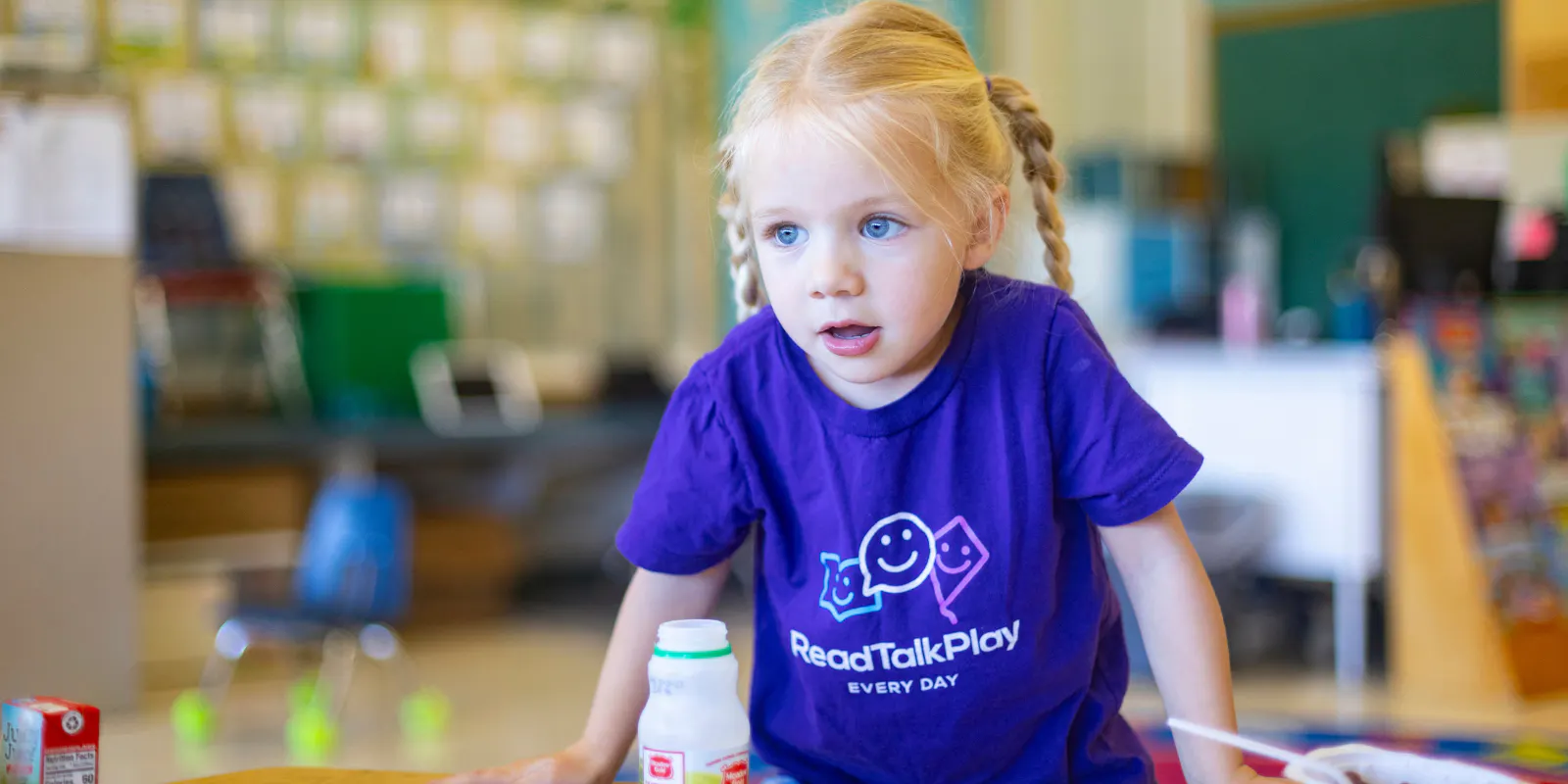
In one Idaho town, in the southeastern part of the state, families strive to “read, talk, play” with their children every day while the wider community marches toward its goal of achieving universal preschool.

In another, located outside of Boise, a host of once-unavailable services — a food pantry, a Head Start preschool, a health center, and a migrant family liaison — are now housed under a single roof near the center of town, readily accessible to families in need.

In the northern panhandle, where early learning programs tend to operate in isolation, providers are convening in person and online to share ideas, participate in training and build connections.

These are among the dozens of tailor-made programs, called “early learning collaboratives,” that have sprung up in communities all across Idaho in recent years. It’s part of a coordinated yet bottom-up approach, fueled by early learning advocates but led by locals, to build a system of early care and education in a state where it would not otherwise exist.

Idaho is one of the last remaining states that does not provide any funding for public preschool. In fact, it is unconstitutional for K-12 schools there to spend their state funding on children under age 5.

Even as many states, including politically conservative ones, have begun to invest in early learning, Idaho has resisted, with some far-right lawmakers arguing that more government intervention in education would only harm children and erode “traditional” values including the nuclear family.

Yet that doesn’t reflect the reality of Idahoans. More than half of children under age 6 require some sort of care arrangement because their parents work. And an estimated 28 percent of families need child care but can’t access it, a gap that prevents some parents from working and bolstering the economic well-being of their families. (It’s estimated that Idaho’s economy misses out on nearly half-a-billion dollars annually due to its inadequate child care infrastructure.)

Since neither the federal government nor the state of Idaho are stepping in to support young children and families, despite this tremendous need, early learning advocates across the state have organized a patchwork of local programs that simultaneously solve the problems communities are facing right now while also generating support for future endeavors. Other red states have adopted the collaborative model, but Idaho’s approach is unique in that it lacks funding from the state.

The success of locally devised early learning solutions in the Gem State, advocates believe, could serve as a roadmap for other parts of the country where elected leaders decline to invest in early care and education.

‘Community Spirit Trumps Anyone’s Political Agenda’

The first of the collaboratives launched in 2018.

Leaders at the Idaho Association for the Education of Young Children, a nonprofit advocacy group, were not making progress persuading lawmakers at the statehouse. Yet they knew that children were struggling, showing up to kindergarten having missed all sorts of academic and developmental milestones and expected to somehow catch up. Low-income families, meanwhile, were being crushed by the cost of care and the lack of high-quality options.

Beth Oppenheimer, executive director of Idaho AEYC, believed that Idahoans needed support. She and her colleagues had the idea to go ahead and start providing it to families, with or without backing from state leaders.

“Let's start building a system. Let's just start to do something,” Oppenheimer remembers thinking.

With a grant from the W.K. Kellogg Foundation, Idaho AEYC funded the creation of 10 early learning collaboratives across the state, with a goal of increasing access to high-quality, affordable early care and education opportunities. Those programs would bring together local leaders in the education, business and nonprofit sectors, as well as parents and community members, to ask: What problem are we trying to solve in early childhood, right here where we live?

In the five years since its inception, the program has grown from 10 local collaboratives to 25. Many have been established in deep-red, rural communities represented by some of the same state lawmakers who have been vocally opposed to early learning investments.

The need is so great for investment in early childhood education ... that locals are continuing to ignore the culture wars in Idaho.”

— Martin Balben

But that’s the beauty of bringing neighbors together to create their own solutions, backers say.

Tennille Call, interim director of education at the United Way of Southeastern Idaho, a nonprofit that serves as a backbone support for collaboratives in the region, notes that conservatives — of which Idaho has many — love to champion local control of policies and programs rather than state or federal mandates. “This is local control,” she says of the collaborative model.

In the small agricultural town of American Falls, it was the district superintendent who promoted the message of “read, talk, play” that has caught on widely with families, making early learning a point of pride.

“Here, the community can get behind it because it’s a community thing,” Call says of American Falls. “Community spirit trumps anyone’s political agenda.”


Read about how American Falls, a one-stoplight farming community in conservative Idaho, embraced a goal that backers describe as progressive: universal preschool.


Martin Balben, the early learning collaborative project director for Idaho AEYC, says the uptake of the local collaboratives, as well as the scale and strength of them, underscores the desperation so many families feel.

“The story here,” Balben says, “is that the need is so great for investment in early childhood education, particularly birth through age 5, that locals are continuing to ignore the culture wars in Idaho.”

Heather Lee, who is the director of operations for the early learning collaborative project at Idaho AEYC, notes that parents’ desire for their children to thrive transcends ideology.

“You don’t hear bitter partisanship” from families the way you do at the state Capitol, Lee says. “You hear stories of struggle.”

Inherent in the model is an understanding that a one-size-fits-all approach won’t work in a state as geographically, politically, religiously and culturally diverse as Idaho, which runs nearly 500 miles from its tip at the Canadian border to its base abutting Nevada and Utah.

Cathy Kowalski, owner and director of The Learning Garden, an early learning program in Post Falls, a small city in northern Idaho, feels that the community-driven nature of these efforts honors the uniqueness of each region in the state.

“Our communities are so different. It’s hard for individuals in Boise to truly understand what’s going on in North Idaho,” Kowalski shares. “That’s what I love about the early learning collaboratives — we’re bringing it back to local.”

Playing the Long Game, With Short-Term Results

Idaho didn’t invent the idea of local early learning collaboratives. Mississippi has used the model for a decade. Arkansas is launching a similar program.

The difference is those states fund their collaboratives.

“We’re having to do it in reverse,” says Oppenheimer. “We’re having to build the system for the state to fund, whereas the other states figured out how to build the system and fund it at the same time.”

For now, the experiment is working. Every day, thousands of families across Idaho benefit from the programs that have been created in their communities.

In American Falls, families have united around a campaign to “read, talk, play” with their children every day. The message is now ubiquitous across the small, rural community. Photo by Prisma Flores.

In American Falls, families have become more involved in their children’s learning and development. That includes dads, who proponents say are noticeably more engaged in raising their kids than fathers in the region used to be. About three-quarters of the town’s 3- and 4-year-olds are enrolled in high-quality preschool now, compared to about a quarter five years ago. Tests measuring children’s early literacy rates have continually improved since the collaborative’s launch.

In North Idaho, a five-county region where child care is as hard for families to afford as it is for them to find, child care scholarships have helped more than 500 families pay for their children’s care in just the last two years. Many of the recipients are single parents who work full time.

“When I saw that we were awarded the scholarship … a huge weight was lifted off my shoulders,” one parent told the leaders of the North Idaho collaborative. “I went from constantly wondering how I was going to be able to keep up with providing for my family to knowing that we were going to be OK.”

“Having a few extra hundred dollars in our bank account has made a world of difference in what we can provide for our children,” the parent shared.

Longer term, Oppenheimer hopes that the collaboratives’ success will be undeniable, and that if locals and early learning advocates build the system, the funding — and with it, sustainability — will follow.

“Our goal is not to fund this forever,” Oppenheimer says of Idaho AEYC. “We're a nonprofit. We can't be responsible for funding early childhood education in Idaho.”

That future funding doesn’t have to come from the state, although that would be a welcome surprise to early learning advocates. It could come from businesses, too, or public-private partnerships.

Already, some collaboratives are so deeply rooted in their communities that if Oppenheimer’s group were to disappear, she says, those programs would continue.

In American Falls, a number of businesses have sponsored the community’s early learning programming. A car dealership in town covered the costs of a family game night once, and a local hospital provided materials for another family engagement event.

Lamb Weston, a major potato producer based in Idaho, operates a processing plant in American Falls. The company has joined the local collaborative and has helped fund scholarships to expand preschool access for children in town.

“Businesses like to fund things in their backyard, especially in rural Idaho,” Oppenheimer says.

But it’s more than just charity for companies like Lamb Weston, she adds: “They've noticed that employees aren't calling out sick as often because they have child care. They have more people that are going to work every day that want to work. Their employee base in American Falls has been consistent and thriving.”

Though American Falls is the “gold star” of Idaho’s collaborative model, as Oppenheimer puts it, other towns are not far behind. Their programs’ existence — not to mention their success — proves that local, homegrown efforts can be an avenue for building early care and education infrastructure despite a dearth of government support.

“It’s hard,” Oppenheimer says, “and you have to play the long game. But we’re in it for the long game.”

© Photo by Prisma Flores

Are Local Efforts the Secret to Supporting Early Care and Education in Red States?

Can Interactive Whiteboards Revitalize Online High-Dose Tutoring?

After the pandemic, the nationwide adoption of online high-dose tutoring was expected to address deepening educational disparities. Additionally, it gained attention for its ability to provide high-quality education in regions with inadequate supplies of teachers, especially in higher-grade STEM education.

However, as of 2023, the effectiveness of high-dose tutoring has gradually declined due to low student participation rates and skepticism from education authorities regarding the actual educational impact of online high-dose tutoring. Some school districts have opted for in-person high-dose tutoring. So, is the low effectiveness of high-dose tutoring simply due to its online nature?

To answer this question, examining the conditions enabling online classes and exploring how EdTech technology can help address educational disparities and teacher shortages in our education system is crucial.

To effectively conduct high-dose education, teachers need not only to explain and repeat but also to find novel ways to help students understand difficult concepts, including encouraging students to take a central role, solve various examples themselves and explain their understanding to the instructor to be educationally effective.

Currently, most online high-dose education services do not provide students with the same quality of lessons as in-person classes. To effectively conduct high-dose education, teachers need not only to explain and repeat but also to find novel ways to help students understand difficult concepts, including encouraging students to take a central role, solve various examples themselves and explain their understanding to the instructor to be educationally effective. Especially for students with low achievement, diagnosing what they don't know through various questions is crucial, as students themselves often don't know where they need improvement.

However, attempting to conduct such "high-level communication" with flat-dimensional video alone or showing pre-made lesson slides through screen sharing can deter student engagement and make it challenging to achieve lesson goals. So, what additional elements are needed to attain frequent problem-solving communication in education online?

Throughout history, humans have used various media such as stones, wood, paper and chalkboards to explain and learn abstract concepts and complex knowledge. Chalkboards are often used by teachers to describe concepts, but they can also serve as a medium for students to come forward and try solving problems to ensure their understanding. In one-on-one tutoring, blank notes between the teacher and student serve as a substitute for chalkboards. Even students who do not ask questions because they don't know what they don't know can be encouraged to explain what they just learned to the teacher or classmates or to attempt problem-solving, revealing their true abilities to the teacher. This way, teachers can help students achieve the lesson's goals by providing more diverse examples and problem-solving.

During the recent pandemic, online high-dose tutoring was not embraced by teachers, students and parents for a number of reasons. Teachers had to rely on their voices to capture students’ attention and adapt to unfamiliar remote teaching methods to motivate students who only appeared on video. However, despite teachers’ efforts, students remained passive participants and could not actively engage in lessons as they would in a physical classroom. Observing these unengaged students, parents began to think that offline classes would be more effective.

In other words, to achieve online education of the same quality as offline, the whiteboard function, serving as a substitute for chalkboards, is not optional but essential. This whiteboard should not be a rudimentary feature where you can only draw rough underlines and lines with a mouse. It should provide a writing experience similar to using a pencil on paper or writing graphs and equations with chalk, capturing the feeling of offline note-taking. Only then can online education achieve the same quality as offline.

To achieve online education of the same quality as offline, the whiteboard function, serving as a substitute for chalkboards, is not optional but essential.

You might think popular video conferencing solutions already have a whiteboard function. However, the standard whiteboard function is more geared toward assisting business meetings rather than the feeling of a classroom whiteboard. There are apparent differences between educational and business whiteboards.

According to operational data from Pagecall, which provides whiteboard functions to educational companies, teachers and students input around 20,000 strokes of communication data in an average 60-minute online class. Unlike business whiteboards, which draw simple underlines and circles on presentation materials, educational whiteboards must synchronize a large amount of input data generated quickly among participants in real time and represent it graphically. Moreover, implementing such real-time communication and graphic rendering functions in tablet devices, which have lower hardware capabilities than PCs and suffer from battery drain and heating issues when performance is pushed to the limit, presents a considerable technical challenge. However, only when teachers and students can communicate with each other efficiently in this way, similar to offline teaching, will they feel that the quality of online education has improved.

Recently, in South Korea, one of the most competitive countries in the world for education services, the Seoltab service has grown significantly. It lacks video features and relies solely on audio and whiteboards for communication between teachers and students. Still, it has attracted thousands of users nationwide and continues to grow. Seoltab has grown as a beloved online education service for students and teachers because they have tablet devices with stylus input, allowing them to communicate effectively in a non-face-to-face environment, much like explaining on a practice sheet as if they were meeting in person.

Some school districts that are disappointed with online high-dose tutoring attempt to return to offline methods. As it becomes more difficult to find teachers who can adequately cover the subjects and study hours that students require, the disadvantages of online learning will slowly diminish, leading to a shift in focus toward online education. This transition will be accelerated by advancements in AI technology, the widespread adoption of digital textbooks and the emergence of vertically integrated super apps for edtech solutions. However, the starting point of this change will be the digital transformation of the chalkboard, which has been a core element of the education field for thousands of years.

© Image Credit: Pagecall

Can Interactive Whiteboards Revitalize Online High-Dose Tutoring?

I Love Being a Teacher, But I Can’t Survive on Compassion

In 1998, I began my journey as an elementary teacher under the tutelage of my aunt and revered educator, Marva N. Collins. My mother was also a teacher, so I saw firsthand what it meant to be a passionate educator who is deeply committed to students. Their commitment and passion for teaching were the reasons why I chose this profession. After watching them devote time and energy to their craft, I entered the profession with enthusiasm and excitement, not knowing what the next 25 years would bring.

I wanted to become a teacher with a calming presence and a positive attitude — a teacher who could help all students succeed. Unfortunately, becoming the teacher I wanted to be has taken more energy than I thought it would.

After more than two decades in the classroom, supporting students facing intense challenges in their home lives and trying to keep up with the unrealistic expectations set by administrators, I’ve finally hit my breaking point and all the compassion I have for my students and my dedication to the field may not be enough to help me recover.

How It All Began

When I began my first position as an English language arts teacher on the north side of St. Louis, I remember walking into the building as books and computers were thrown out of the third-floor window. Next door, there was a halfway house filled with young men, some of whom were fathers to the students I would be teaching. I remember wondering, “What in the world am I committing myself to?” My four years in college studying to become an educator did not prepare me for what I encountered. I was coming to teach the masses, full of hope and determination – how quickly I had to change focus.

Once I entered the school building, a young man was being detained for his behavior. I asked the school officer if I could speak with him, and she reluctantly agreed. When I asked him his name and why he was behaving this way, he became immediately defensive, asserting that I would soon be run out of the school like the teachers before me.

I knew from watching my mother that you couldn’t put out a fire with fire, so I decided to take a gentler approach, reminding him that despite his resistance, I was there to provide support and understand his issue better. Eventually, he revealed that the teacher had asked him to read; when I asked if he knew how to read, he dropped his head while a tear rolled down his face. His admission made me emotional, but I quickly gathered myself and told him if he gave me the opportunity, I would help him learn how to read.

I could only imagine what it felt like for a 13-year-old boy to be in the eighth grade and unable to read. His behavior became an outlet for his anger but all he needed was someone to listen and acknowledge his pain. This ended up being the beginning of a beautiful relationship. For years, Eric had seen people quit and move him along without any care for his needs. I was the change and hope he needed, but I would soon learn there were so many more like him.

Unrealistic Expectations

I remember being so excited about my role as a teacher — the creativity I possessed, the influence I knew I would have, and the sheer joy I gained knowing that one day, I would be a change agent. By the end of my fifth year of teaching, though, that excitement had changed. I became inundated with demanding and unrealistic expectations and realized that one of the key ingredients to supporting my students was supportive leadership, and we didn't have that at my school.

In fact, most of the administrators I worked with daily did not know the challenges students would come into the classroom with, much less what took place in the classroom. Most administrators were more concerned with meeting academic standards and metrics than offering holistic support to students who couldn’t meet these standards because of their personal challenges.

In my current role as a school and community engagement manager, I work with students and families facing a range of challenges — often very serious situations such as experiencing homelessness or community violence. It’s not uncommon for the trauma to follow my students into school. This kind of work makes it hard to disconnect, and the weight of my students’ personal hardships regularly follows me home at night.

Even though I knew I would have to endure classroom challenges without the support of administrators, I refused to give up despite the negative impact it had on my mental health and well-being. I know I am a capable teacher who can speak out against administrative issues and advocate for students who experience marginalization that impacts their academic performance. After all, I’ve always been a rebel, and I follow in the footsteps of my mother, who retired from teaching because she refused to conform.

I was committed to meeting my students where they were. I chose to stay and fight for them, but compassion has a cost that almost always falls to the teacher.

Staying in the Fight

To sustain in this field, you must possess a level of mental toughness and tenacity to endure. It is hard, and I, along with so many others, question whether our compassion for our students is enough to fix the state of our education system and keep us in the profession.

While I want to save my students, I know that there is only so much I can do before the weight of it all bears down on me. I was and still am in the trenches, fighting for what I believe my students and their families deserve – but this work isn’t for the faint of heart.

© fran_kie / Shutterstock

I Love Being a Teacher, But I Can’t Survive on Compassion

How AI Could Bring Big Changes to Education — And How to Avoid Worst-Case Scenarios

It has been a year since the release of ChatGPT, and educators are still scrambling to respond to this new kind of AI tool.

Much of the conversation has revolved around the double-edged nature of AI chatbots for educators. On the one hand teachers worry that students will suddenly cheat on homework with abandon, since chatbots can write essays in ways that are difficult to detect. On the other hand, though, educators see the potential of the tools to save them time on administrative tasks like writing lesson plans.

But in a recent working paper, a trio of education scholars say that these discussions are far too “parochial” and short-sighted. They argue that if the technologists building these new AI chatbots are right that the tools will quickly improve, then the technology will likely lead to massive shifts in knowledge work — including in academic research and the white-collar workforce — and therefore raise profound questions about the purpose of education.

“It just raises all these issues about what on earth are schools for?” says one of the paper’s authors, Dylan Wiliam, an emeritus professor of educational assessment at University College of London’s Institute of Education.

The paper imagines four possible scenarios for how generative AI, as the technology behind ChatGPT is called, might change society — and what those changes could mean for schools and colleges.

The goal behind the thought exercise is to get ahead of a rapidly changing technology, and to avoid what the scholars call the “worst-case scenarios” that could result. With that in mind, they close with a list of recommendations for how education and technology leaders can respond to try to best harness the benefits of the technology.

At times the paper is intentionally provocative. For instance, it imagines a scenario in which AI becomes so good at instantly creating learning tutorial videos and entertainment that people stop learning how to read.

“Literacy has been a relatively recent thing … and it’s actually really hard,” says Arran Hamilton, a director at the consulting firm Cognition Learning Group. “We have to co-opt a part of our brain that actually is generally used for facial recognition and we're borrowing that to use for literacy.”

After all, the scholars note, some research shows that the recent rise of GPS technology and mapping apps on smartphones have led people to become less able to read maps without the tools. Could it be possible that within a few short decades reading may, as the paper imagines, “become as quaint as Latin and the Classics—things that we learn for bragging rights and the conferment of social status, but not in the least essential (or even useful) for day-to-day living”?

For this week’s EdSurge Podcast, we connected with Wiliam and Hamilton to talk through what this AI-infused world might look like, and how educators can start preparing. They argue that the recent executive order by the Biden administration on the safe development of AI is a good start, but that it will take more big-picture thinking to respond to this technology.

Listen to the episode on Apple Podcasts, Overcast, Spotify, Stitcher or wherever you listen to podcasts, or use the player on this page.

© Cherdchai101 / Shutterstock

How AI Could Bring Big Changes to Education — And How to Avoid Worst-Case Scenarios

Is AI a Pathway to Better Teaching and Learning?

In the evolving landscape of education, one topic has taken center stage: generative AI. As educators, we tend to be on a continuous quest for innovative edtech tools that will enhance the learning experience for students. The potential of generative AI is both promising and profound, but it raises critical questions: How can this transformative technology be harnessed not only to educate but to empower inclusively and equitably?

Examining the Global Impact of Generative AI in Education and Beyond

In April 2023, Goodnotes initiated an exploration into the global utilization of generative AI within educational institutions, businesses and non-profit organizations. The objective was to discern how these innovative tools were being seamlessly integrated into daily routines and to ascertain their implications for the future of education. To achieve a comprehensive understanding, over 50 experts from 20 countries were convened, aiming to provide practical, implementable and secure recommendations for educational institutions.

The potential of generative AI is both promising and profound, but it raises critical questions: How can this transformative technology be harnessed not only to educate but to empower inclusively and equitably?

This research was motivated by Goodnotes' position as the AI-powered digital paper preferred by millions of students and teachers worldwide. When Steven Chan founded Goodnotes, he was a student at the time, and so his commitment to understanding the teaching and learning experiences of the community he built was essential to his mission, which is to revolutionize the way ideas are shaped and amplified. In addition, research contributors such as Dr. Alessandra Sala, the President for Women In AI and Director of AI and Data Science at Shutterstock, are clear about how much potential generative AI has in shaping education in the future.

The consequent published research is broken down into five recommendations that our contributors have highlighted as the most important, with diversity and equity at the forefront of our thinking. We understand that many schools around the world will be taking substantial steps to utilize this new technology, not just in handwritten digital note-taking but from bringing generative AI on board as a deputy head to recruiting directors of artificial intelligence. Indeed, premium private schools have a lot more scope to harness the potential of AI than the vast majority of public or state schools, many of which are underfunded and struggling to ensure that their students have equitable access to the subjects they want to study and their desired career paths.

For this reason, we intentionally collaborated with contributors from various backgrounds, including underprivileged schools, keen on exploring how generative AI could help educators better address student and community needs. Therefore, our recommendations prioritize facilitating discussions on the technology and providing practical deployment examples rather than prescribing specific solutions.

A Strategic Roadmap for Integrating Gen AI Into Schools

1. Create Guidelines: Create guidelines for the use of generative AI, ensuring accessibility across different regions and addressing diverse student and family needs. Involve various stakeholders, including boards of directors and caregivers. Prioritize safeguarding, child protection and adherence to regional regulations. Ensure that despite the excitement surrounding this technology, essential policies concerning child safety and data trust remain unwavering, as emphasized during the recent research publication event at DLD College in London Lord Jim Knight, Bukky Yusuf and Dr Andy Kemp.

2. Rethink Homework: Promote self-motivated study outside the classroom, encouraging students to deepen their knowledge at home. Discourage traditional homework assignments involving written tasks and essays, especially with unreliable AI detection tools. Remove grading for non-end-of-year assessment work. This recommendation stems from the experiences of students who have harnessed generative AI to enhance their understanding of subjects, promoting curiosity, confidence and deeper learning.

3. Transform Coursework and Assessment: Focus on redefining the process of completing coursework rather than altering the content, considering the various forms coursework can take. Encourage innovative classroom dynamics, such as co-working environments with AI 'copilots' to support independent student work. By transforming how coursework is completed, classrooms can become hubs of dynamic learning, empowering students to explore subjects more deeply with AI as their guide.

4. Promote Professional Development: Empower teachers to embrace AI-driven changes through closer collaboration with industry and the dissemination of AI's general capabilities and limitations. This recommendation centers on the importance of nurturing educators' confidence in adopting AI innovations through industry partnerships and knowledge-sharing within the teaching community.

5. Prioritize Equity and Diversity: Recognize the resource disparities between schools and the scarcity of technology in some regions. Encourage collaboration and knowledge exchange among schools and teaching communities, ensuring that no institution is left behind in the adoption of AI, with a focus on supporting teachers in pursuing their passions and addressing individual student needs. The emphasis on collaboration is particularly relevant in ensuring that even schools with limited resources can access the transformative benefits of AI in education, fostering inclusivity and diversity across the educational spectrum.

Inevitably, there will be schools that find this transition more difficult than others, and one of the consequences of this work is that Goodnotes has a strong network of determined and passionate schools and AI experts willing to help. We are eager to assist when it comes to ensuring that this transformation in education is as equitable as possible in providing access to knowledge and as diverse as possible when it comes to offering opportunities to learn and share experiences.


Launched in 2011, Goodnotes started as an improvement to physical paper notes — introducing the ability to take handwritten digital notes, search handwritten text and organize everything into a digital library. Today, Goodnotes is pioneering generative AI for digital handwriting in the productivity space. To learn more about Goodnotes research-based initiatives or to join our mission, find us at www.goodnotes.com/research

Is AI a Pathway to Better Teaching and Learning?

Top 5: Rebooting the Oral Exam Tops Most-Read List for October 2023

Changing teaching was the biggest theme of our most popular articles in October.

Topping our monthly Top 5 list was a look at how professors are rebooting oral exams to respond to concerns that students can now use ChatGPT and other AI tools to cheat on essays. And the list included an interview with a Nobel prize winner about his research to improve science instruction; a set of reader responses to our coverage of “math wars”; and a look at what’s keeping teachers from embracing edtech. Also making the list was an essay by a teacher launched into a leadership position at age 26 reflecting on a lack of support during the shift.

1. As AI Chatbots Rise, More Educators Look to Oral Exams — With High-Tech Twist: The rise of ChatGPT has left educators scrambling to find alternatives to written essays. Some are bringing back a classic approach that was once common in medieval universities: the oral exam. Can technology help make them less time-consuming to deliver?

2. How Teaching Should Change, According to a Nobel-Prize-Winning Physicist: Since winning the Nobel Prize for physics in 2001, Carl Wieman has devoted the bulk of his energies to trying to improve teaching. That has led him to promote active learning — and to look for better ways to evaluate teaching. Will the ideas catch on?

3. Readers Respond: Does Fixing the Leaky STEM Pipeline Require Calculus To Adapt?: With declining student math scores and “math wars” waging over instruction this year, EdSurge headed over to Harvard to observe instructors at work trying to update the calculus curriculum. They argue that their methods will keep more students from being pushed out of STEM. But that was just the beginning of the conversation. Find out what readers had to say, in favor and against that idea.

4. Catapulting Teachers Into School Leadership Positions Too Soon Comes With a Cost: Elevating young teachers into school leadership roles without adequate support can be risky, writes Lindsey Fuller, executive director of The Teaching Well. Fuller knows this all too well because at age 26, she was promoted from teacher to administrator without guidance or training. When teachers are promoted to leadership positions, Fuller says, they need support to do their jobs effectively.

5. What's Really Getting in the Way of Teachers Embracing Edtech?: What’s holding teachers back from embracing edtech tools and tech-enabled instruction? That was the driving question behind a project designed to better understand the gap between teaching practices and tech use. Two researchers share what they learned about how edtech can be used most effectively in instruction, the barriers to adoption and the tools that can best support teachers in shifting their practices.

© Patricia Soon / Shutterstock

Top 5: Rebooting the Oral Exam Tops Most-Read List for October 2023

How to Navigate the Nuances of Anonymous and De-Identified Data in AI-Driven Classrooms

As the Director of Quantitative Research and Data Science, as well as the Data Privacy Officer at Digital Promise, I aim to demystify the complex world of data privacy, particularly in the realm of education and AI tools. Having begun my journey as an Institutional Review Board (IRB) committee member during my graduate school years, I've been committed to upholding ethical principles in data usage, such as those outlined in The Belmont Report. Collaborating with researchers to ensure their work aligns with these principles has been a rewarding part of my career. Over the past decade, I've grappled with the nuances of anonymous and de-identified data, a challenge shared by many in this field. In a time when student data is being captured and used more prolifically than we know, understanding how privacy is maintained is crucial to protecting our learners.

Anonymous Versus De-Identified

In a time when student data is being captured and used more prolifically than we know, understanding how privacy is maintained is crucial to protecting our learners.

The Department of Education defines de-identified data as information from which personally identifiable details have been sufficiently removed or obscured, making it impossible to re-identify a person. However, it may still contain a unique identifier that could potentially re-identify the data.

Similarly, the General Data Protection Regulation (GDPR) characterizes anonymous data as information that does not relate to any identified or identifiable individual or data that has been rendered anonymous to the extent that the data subject cannot be identified.

These definitions, while seemingly similar, often lack clarity and consistency in literature and research. A review of medical publications revealed that less than half of the papers discussing de-identification or anonymization provided clear definitions, and when definitions were provided, they frequently contradicted one another. De-identified data can be considered anonymized if enough potentially identifiable information is removed, as suggested in HIPAA data de-identification methods. Conversely, others contend that anonymous data is data from which identifiers were never collected, implying that de-identified data can never be truly anonymous.

Simplifying Data Privacy: Three Key Strategies for Educators

As AI tools become prolific in classrooms, it is easy to become overwhelmed with the nuance of these terms. Moreover, our news feeds are inundated with these conversations related to student privacy: Parents are concerned about data privacy, teachers reportedly don't know enough about student privacy and most school districts still lack data-privacy personnel.

In a time when the difference between anonymous and de-identified could matter greatly, what are educators to do about the data collected by AI tools they might use? I offer three overly simplified strategies.

1. Ask.

In 2020, Visual Capitalist developed a visualization of the length of the fine print for 14 popular apps and shared that the average American would need to set aside almost 250 hours to read all the digital contracts they accept while using online services.

Related Resources:

If you do not want to spend hours researching whether the company collects and uses anonymous or de-identified data and how it defines it, you can always ask. A few examples of these questions include:

  • What data will you collect?
  • Can that data be connected back to the students themselves?
  • How will data be used?
  • Can a student or parent/guardian request that their data be deleted (if you live in California, the answer is often Yes!), and how would they go about doing that?

2. Give Students Choice.

The Belmont Report states that in order to uphold the Respect for Persons principle, individuals should be given the opportunity to choose what shall and shall not happen to them and, by extension, their data. Providing students the opportunity to choose whether they want to use an AI tool that will make use of their data whenever possible upholds this important ethics standard and gives students autonomy as they traverse this tech-rich world.

3. Allow Parents to Consent.

A further look at the Respect for Persons principle shows that individuals with diminished autonomy are entitled to protection. The Common Rule, or the federal regulations that outline processes for ethical research in the United States, states that children are persons who have not yet attained the legal age for consent and are one of the many groups entitled to this protection. In a practical application, this means that permission is needed by parents or guardians for participation, in addition to the child’s consent.

To the greatest extent possible, parents should also have the opportunity to understand and agree to a child’s data being gathered and used.

Let’s Navigate the Nuances Together

As someone who has been thinking about how to best protect students’ data since before you could wear your iPhone on your wrist, I regularly rely on these three strategies to best uphold the ethical principles that have guided my career. I ask when I do not understand, I strive to give individuals autonomy over their choices and their data and I seek consent when additional protection is needed. While these three practices won’t allay every fear one may have about the use of AI in classrooms, they will allow you to gather the information you need to make better choices for your students, and I have confidence that we can navigate the nuance together!

© Image Credit: Vaniato / Shutterstock

How to Navigate the Nuances of Anonymous and De-Identified Data in AI-Driven Classrooms

Students Are Busy but Rarely Thinking, Researcher Argues. Do His Teaching Strategies Work Better?

Students can be excellent little actors in a traditional classroom, going through the motions of “studenting,” but not learning much. At that critical moment when a teacher chalks a problem on the board and asks everyone to write out an answer, for instance, one kid might stall by sharpening a pencil, another might doodle or feign writing, and another might stare into space — though not thinking about the problem at hand. Yet all seems well to the teacher at the front of the room, who, after a brief pause, reveals the answer.

That’s the argument of Peter Liljedahl, a professor of mathematics education at Simon Fraser University in Vancouver, who has spent years researching what works in teaching. And he’s found that in this common classroom format, very few students are actually thinking: maybe no more than 20 percent of them, and only 20 percent of the time, according to his experiments.

By thinking, he means actively engaging with the course material. The most problematic strategy that many students try instead, he argues, is what he calls “mimicking,” which he has especially found in the math classes he studies. These mimickers dutifully copy the problems presented in classes, but never grok the conceptual underpinnings, so they’re left able only to do problems that are nearly identical to what the teacher showed them.

These are the students who end up hitting a wall when math courses move from easier algebra to more advanced concepts in, say, calculus, he argues.

“At some point, mimicking runs out,” says Liljedahl. “And when that happens, students don't go from an A to a B, they go from an A to a D, because they haven't actually learned the things that they need to learn to set them up for success.” He argues that that’s why so many students get to college and have to repeat their first-year calculus course.

Liljedahl has developed a strategy for teaching that he says greatly improves how many students in a class are actually thinking about course material. He’s outlined the strategies in his book, “Building Thinking Classrooms in Mathematics.

But he has decided not to try to convince schools and school systems to adopt his system. Instead, he’s spreading the word to teachers one by one, through the book and by tirelessly speaking at conferences and other education forums.

And his ideas appear to be going viral. A search of YouTube or TikTok shows seemingly endless videos of teachers sharing examples of their adoption of the approach in their courses. That has made the book an unusual bestseller for a title on teaching practice, with more than 200,000 copies sold and editions translated into a dozen languages.

EdSurge connected with Liljedahl recently to hear what he’s found and learn why what he sees as faulty teaching practices have stuck around for so long.

Some educators on Reddit discussion boards have pointed out that Liljedahl has not published research on whether his approach leads students to earn higher marks on standardized tests, focusing instead on student engagement. But the researcher says he has heard from hundreds of teachers who have reported improvements in test scores.

Listen to the episode on Apple Podcasts, Overcast, Spotify, Stitcher or wherever you listen to podcasts, or use the player on this page. Or read a partial transcript below, lightly edited for clarity.

EdSurge: Early in your teaching experiments, you tried a classroom with no furniture at all. How did that go?

Peter Liljedahl: So early on in the research, what we realized was we're going to have to break norms. And that kind of became the mandate: Break norms and see if it improves student thinking. Can we get more students thinking? Can we get them thinking for longer? And we were trying anything and everything.

And one of the things was, let's take the furniture out of the room. Let's see what effect that has. It was almost a lark.

The kids come in and there's no furniture — no desks, no teacher desk, no file cabinet, nothing, just blank. And we didn't really expect that much out of that.

Well, here's the problem: Thinking improved. We had more students thinking and thinking for longer. And it took a year and a half for me to understand why that was.

For those of you who are listening, I don't recommend taking out the furniture. Teachers don't like teaching in classrooms without furniture. Teachers hated it. And this actually raised an interesting tension in the research, because it was so participatory and collaborative, but one of the things I've learned is there's no point coming out with solutions that teachers don't want to implement. We don't need another socially engineered solution that nobody wants to do. It has to be something that's within reach, within feasibility and within approachability by teachers.

But at the same time, I'm not going to use their comfort level to limit the things that we explore. It just all has to work together.

So why did it work?

It actually comes from a theory from the 1970s. It's a theory called systems theory. So we have to think of any social situation, any sort of situation that we engage in, whether it's scouts or Brownies or a ski club or a track club or a book club or a classroom, any place that has an organization, any structure, think of that as a system. So what is a system? A system is a collection of agents and forces.

So in a classroom, who are the agents? There's a teacher and there's the students. Now what are the forces? Well, the teacher's applying force to the students and the students are applying forces on the teacher through their resistance or compliance and so on. But the students also apply forces on each other. And I don't mean every student applies a force on every student, but some students apply forces on some students and so on and so forth, but they're not the only agents in the system.

We also got colleagues pushing, putting forces on the system, and then parents and administrators and then the curriculum. So what you get is you have all these agents and they act like nodes. And then you have these forces and they act like edges, and they're pushing on each other. And then when you have all these forces and agents pushing on each other, eventually the system reaches a stable point, a stasis, right? It stabilizes and everything is sort of in harmony with each other. That doesn't mean that the forces have disappeared, they're still there, but everything's sort of balancing each other out.

Now, how do we change a system? Number one is when you try to change the system, the system will defend itself because you have all these forces that have now reached the stable point. If you now move one of these agents or introduce a new agent or increase a force from one of these agents, the system wants to restabilize and the most with all those forces and all those agents, it's more likely to restabilize back to the way it was.

And this is what we were seeing in the students in these ‘studenting’ behaviors we talked about earlier. When students’ studenting behaviors are just their habits, that's how they behave. And when a student walks into a classroom that looks like every other classroom they've ever walked into, they're going to invoke those same habits. If they're a slacker in this lesson, they're going to be a slacker in that lesson. They are constant in this regard.

So they bring these habits into the room, and then the room pretty much rewards that because it's got its own forces and those forces are more like every other room and so on and so forth.

So how do you achieve change in any setting if that's the case? Well, the way you affect change is you have to overwhelm the system. You either have to apply a single force or multiple forces in a way that overwhelms the stability of the system. So the system has to restabilize into a new form. And what taking the furniture out did was it was an overwhelming force. When those students walked into the classroom, this didn't look like anything they'd seen before. So they left their habits at the door and then they were willing to construct new habits inside this setting.

You don’t recommend taking out the furniture, but you do have a set of strategies you recommend for what you call a “thinking classroom.” What are the main aspects?

Well, for one, the workspace. What was the optimal workspace?

Before I tell you that, let me tell you what the worst workspace was. The worst workspace was having students sit and write in their notebooks. That one performed worse through a metric of thinking than any other workspace.

What was optimal? Having students work in groups at vertical whiteboards. Except it didn't have to be a whiteboard, it just had to be vertical and erasable. So like a window would work, the side of a file cabinet would work. … Blackboards worked. It just had to be vertical and erasable.

They stood in their groups.

Why standing?

It's not that standing is so good, it’s that sitting is so bad.

It turns out that when students are sitting, they feel anonymous, and the further they sit from the teacher, the more anonymous they feel. And when students feel anonymous, they disengage. And that's both a conscious and a subconscious act. And what standing up did was it took away their anonymity.

Just think back to the last time you went to a professional development workshop. Think about that. You were in this room and you were sitting down and you felt anonymous. And in fact, you may have put yourself in the back row of this room so that you could feel anonymous, so that you could disengage, right? This is not a phenomenon that's unique to kids. This is human nature.

So what was the optimal way to form a group? Well, it turns out that strategically constructing the groups like we see in a lot of elementary schools turned out to be a disaster. That was not conducive to thinking. Likewise, having students set their own groups was a dumpster fire — that was not conducive to thinking.

The optimal was to form groups at random. And it wasn't good enough that it was random. It had to be visibly random. They had to see that it was random, and it had to change frequently. About once every 60 to 75 minutes, we re-randomized.

And any task we give them had to be a thinking task. Thinking is what we do when we don't know what to do. If we already know how to do it, it's not a thinking task, it's an exercise.

Or busywork, I guess somebody might call it.

A thinking task had to be something that they don't know how to do — which means that if they're going to have to think, they're going to get stuck. But it also means that we can't pre-teach them how to do it.

So here we have in a thinking classroom: The students standing at the whiteboards in their random groups of three, one marker per group, working on these thinking tasks.

And that produced thinking classrooms. All of a sudden, overnight, we went from 20 percent of students thinking for 20 percent of the time to 80 percent of students thinking for 80 percent of the time.

You paint a pretty critical picture of common teaching practices. What are you doing to get the word out about these issues and your approach?

Building thinking classrooms is not a curriculum, first of all. It's a pedagogy, it's a framework for helping teachers enact whatever curriculum that they have to work with. Curriculum is mandated, pedagogy is professional. So this helps teachers enact whatever curriculum content that they have to get through.

And I respect teachers' professional autonomy. I think teachers should have the professional freedom to judge for themselves what's going to work for them. And if this is going to work for them, I'm there trying to support it. I don't want to mandate this because I don't believe that mandating pedagogy is an effective way to change pedagogy.

And it's like growing everywhere. … The projection for the number of teachers using it in Denmark is in the 90 percent [range]. It's starting to gain traction in Australia. And the book is also coming out in Mandarin. It's coming out in Korean, it's coming out in Greek and Turkish and Polish and French. And so we're starting to see this. It's all these exponential curves at different points of time.

Listen to the complete interview, including more details about what goes into a ‘thinking classroom,’ on the EdSurge Podcast.

© Tim Bedley, via YouTube

Students Are Busy but Rarely Thinking, Researcher Argues. Do His Teaching Strategies Work Better?

Why Professional Learning Is a Crucial Piece of a 1:1 Program

Paula Stamey, a seventh-grade social studies teacher in Benton, Tennessee, taught for 20 years before her school became a Verizon Innovative Learning School and adopted one-to-one technology in 2017. Initially, she resisted this change, feeling it was unnecessary and distracting. “I felt I had a system that worked, and introducing this ‘nonsense’ wouldn’t add anything to my classroom and would only create more work for me and be a distraction for my students,” she said. She had her students put their devices away when they entered her classroom and continued teaching the same way she had for the last two decades.

But when the COVID-19 pandemic shut down schools in March 2020, Mrs. Stamey realized that everything she had been doing suddenly needed to become digital. She knew she had to prepare herself for what may come, so she thought back on what she had learned during her initial Verizon Innovative Learning Schools learning experiences and began diving into every professional development and certification opportunity she could find. “I wanted to have as many tools in my belt as possible when the new school year rolled around,” she said.

Educators often experience professional development as a patchwork of different providers and formats disconnected from district initiatives, characterized by a mostly passive delivery model with few opportunities to connect learning to the local context or to extend learning into meaningful classroom practice.

Mrs. Stamey is not alone in her initial reluctance to use technology in her classroom. While she had time to change her mindset and be intentional with how she added technology into her teaching, so many teachers have grappled with the rapid influx of technology since districts hastily adopted one-to-one programs in a scramble to offer distance learning solutions for students during the pandemic. The heroic accomplishments of district and school leaders, IT leaders, teachers and parents to keep learning happening amidst the unprecedented events revealed two essential truths about one-to-one programs:

  1. The steady advances in educational technology — including devices, connectivity and software — affirm its tremendous potential to support teachers with powerful tools capable of reaching learners in vast and varied ways.
  2. The challenges for implementing a one-to-one program effectively to maximize that potential are complex, intertwined and not easily solved.

As schools enter their third year post-pandemic, they face challenges like aging devices and the need for robust systems supporting device procurement, connectivity and maintenance. Educators require support in harnessing technology for diverse student needs, emphasizing digital competencies and 21st-century skills. To address this, comprehensive professional learning integrated into one-to-one programs is crucial for sustainable digital transformation. It aligns district and school leaders' vision with systems for implementation, ensures IT support for device access and equips educators for student-centered learning. This comprehensive approach aligns with Digital Promise’s soon-to-be-released Digital Equity Framework, fostering meaningful improvements in student outcomes.

The inconvenient truth, however, is that it is not easy to come by high-impact professional development. Research has shown that investment in professional development yields mixed results. Educators often experience professional development as a patchwork of different providers and formats disconnected from district initiatives, characterized by a mostly passive delivery model with few opportunities to connect learning to the local context or to extend learning into meaningful classroom practice.

Still, empirical research into what makes professional development effective at developing new skills and in changing instructional practices that impact student learning point to several effective practices that can inform the design and delivery of the type of professional learning that is needed for districts and schools to transform their one-to-one programs into high-impact models. Our experiences supporting districts to implement successful one-to-one programs through the Verizon Innovative Learning Schools program over the past 10 years revealed these evidence-based keys to effective professional learning:

Recommended Resources
  • Coherent and Sustained Duration. There is a consensus among researchers that educators benefit from sustained and ongoing professional learning that is connected to both district and school initiatives and grounded in a local context, with some suggesting approximately 50 hours in a specific area. Unlike one-off workshops that may spark interest in the short term, repeated opportunities to engage with concepts and develop related skills over time are essential for educators to transfer what they learn from professional development sessions into new classroom practices. The multi-year professional learning program for Verizon Innovative Learning Schools supports learning for multiple stakeholders responsible for the successful implementation of one-to-one programs. The scope and sequence of professional learning for each stakeholder ensures numerous hours of coherent and connected content intended to spiral the development of the high-leverage knowledge and skills for each role. The numerous touchpoints over time allow concepts to develop, prompting regular opportunities to practice and refine application across all aspects of implementation.
  • Active and Responsive Learning. An active learning model promotes deep cognitive engagement and opportunities to practice while remaining responsive to individual learning needs. Feedback from experts and peers is essential for an active and practice-rich professional learning model. Furthermore, offering learners agency and choice with regard to paths and pace increases active learning and can increase their engagement. We accomplish these goals in a number of ways as part of our instructional design process. First, we lean into designing learning for multiple modalities, both synchronous and asynchronous. Live synchronous sessions are rich in modeling and collaborative meaning-making. Asynchronous sessions are more flexible for learners who can explore concepts and examples based on their interests and areas for growth. Finally, we provide bite-sized practice opportunities in the classroom, enhanced by on-the-ground instructional technology coaching. This adds motivation and enables real-time feedback for reflection and skill improvement. Verizon Innovative Learning Schools coaches are the centerpiece for an active and responsive professional learning model, constantly connecting learning to the local context and supporting ongoing cycles of practice, feedback, reflection and sense-making.
  • Collective Participation. Being intentional about collective participation speaks to the benefit of pursuing professional learning with others from the same school or district, which can increase peer-to-peer support and spur ongoing learning outside of the structured professional development sessions. The cohort model of the Verizon Innovative Learning Schools program means that learners from different roles engage in professional learning tailored to their individual contributions for one-to-one implementation, which supports collective participation. This collaborative approach is heightened through our promotion of online professional learning communities. To this endeavor, we leverage community spaces, both online and through in-person and virtual events, to connect learners within districts, across districts and across cohorts in different stages of implementation.

Mrs. Stamey never went back to her old ways of teaching. “Once I allowed myself to finally give in to technology and I saw how much it increased student engagement, I began to let go of other ‘old school’ notions of what a classroom should look like and how a class should function,” she said. Thanks to insights gained from her professional development, Mrs. Stamey has created a classroom where students have a choice in what they work on and how they work on it. “I don’t think any of this would have been possible without Verizon Innovative Learning Schools… letting me see just how much more I could give to my students,” she said. “I feel more invested and engaged in my career than I have in a long time.”

© Image Credit: Drazen Zigic / Shutterstock

Why Professional Learning Is a Crucial Piece of a 1:1 Program

Unlocking Skills: What Learners and Employers Need to Know About Microcredentials

Digital badges, microcredentials and digital credentials… What sets them apart, or are they synonymous? Essentially, these credentials share a few attributes: They are skill-specific and emphasize industry-relevant competencies. Moreover, they possess the valuable quality of being stackable, allowing learners to accumulate multiple credentials over time, systematically enhancing their expertise through a portfolio of competencies.

One of the draws to credentialing programs is that they afford learners unparalleled flexibility while requiring a considerably smaller investment of time than traditional degree programs. Nevertheless, a pressing question remains: Do all credential programs uniformly pave the way to enhanced career opportunities?

The credentialing world has grown significantly in the last few years, resulting in an evolving and sometimes undefined digital education model. Yet, there is clear value in digital credentials within higher education and job-embedded professional learning. Recently, EdSurge spoke with Rob Coyle, a digital credential program manager at 1EdTech, a 25-year strong, members-based standards consortium focused on uniting digital learning systems and standardizing learning credentials. Coyle’s background in instructional design in higher ed has provided him with an important perspective when tackling the drive for interoperability in the credentialing landscape.

EdSurge: How has the concept and practice of microcredentialing evolved over the years?

Rob Coyle
Digital Credential Program Manager at 1EdTech

Coyle: It seems every credentialing organization has its own definition of microcredentials, alternative credentials, digital credentials and badges.… But I think, ultimately, we're often talking about the same thing: a formal expression of a skill that can be demonstrated or knowledge that can be assessed as something that has been mastered.

One of the original concepts of microcredentials came from Mozilla’s drive for open recognition of skills through badges. 1EdTech inherited Open Badges from Mozilla in 2017. This move aimed to partner Mozilla’s established community of badges with the standards-driven body of 1EdTech.

Digital credentialing is an electronic means of transferring data about an individual’s accomplishments, resulting in a PDF, image or other digital learning record. Credentials that adhere to the Open Badges or CLR [Comprehensive Learner Record] standards have a specific way of packaging that data to be both human-readable and machine-readable. That's where the credential value comes in. Not only are you communicating what the data is, but you're doing it in a way that can be used by people and machines, verifying various academic and workplace achievements. Because the credentials are standardized, we can make that flow of information much more seamless across different systems. This adds value to the credential.

What are the advantages for learners to use digital credentialing? How does badge standardization affect employers and higher education institutions?

The Open Badges and the CLR standards help learners express the skills and knowledge they have achieved. Courses don’t always provide such transparency around these competencies. Your history course may not specify that you are gaining skills in research, writing and evaluation logic. Digital credentialing helps unpack and identify each skill. That in itself is valuable to learners: understanding the skills they are gaining and conveying that to others. This is priceless in a job interview. When you have electronically verifiable credentials, you're taking it to a whole new level to empower the learner to maximize their potential.

Digital credentialing helps unpack and identify each skill. That in itself is valuable to learners: understanding the skills they are gaining and conveying that to others.

— Rob Coyle

With digital credentials, learners can showcase skills they have mastered in a smaller package than a degree — before earning a degree. In the context of higher education, students can earn badges for their skills along the way. This means learners can try out different career pathways without having to fully commit to that degree. Or maybe you already have a degree but want to change course. Microcredentials allow learners to respond to market needs faster. Technology certifications change constantly; a digital credential allows learners to continue building on those new skills, allowing them to be agile. That badge gives learners more opportunities in different internships and careers.

The digital credential provides employers with verifiable information about prospective employees. That’s an important advantage for employers. It saves time in the hiring process and brings more confidence in the hiring decision. A partner organization recently told me one of their employers hired someone specifically based on their digital credentials, cutting out two weeks of background research.

And the number of credentials is increasing drastically. There have been over 74 million badges issued worldwide. That growth is just bringing more attention to digital credentials and, ultimately, more value to the employer for badge standardization.

In the higher education setting, a lot goes into the governance structure around creating course content. Our conversation with institutions is that they don’t need to create new content or new programs for badges; there doesn’t have to be this hurdle of creating something new. Instead, start with badging the skills that are in the existing courses. Package those skills in a digital credential. That brings more value to their programs.

I often get email inquiries from faculty about offering Open Badges to students in their courses. We clearly need a systematic approach to implementing digital credential programs at the organizational level. As an edtech organization whose background is in standards and interoperability, 1EdTech is positioned to contribute here. We collaborate with institutions and edtech vendors to help universally define the standards ecosystem and support the mobility of digital credentials through technology solutions, and we offer certification of platforms to ensure they are adhering to the standards as intended.

Recommended Links:

Now, we’re working on a new framework to increase the value of microcredentials for all stakeholders. Our TrustEd Microcredential Coalition is working on setting a standard for what the information digital credentials need to contain in terms of transparency with respect to skills, knowledge and abilities a learner achieved, and ensuring the credential is interoperable. We hope to have a framework finalized in time for 1EdTech’s Digital Credentials Summit in March.

What is a success story related to the implementation and recognition of microcredentials within educational and employment contexts?

My colleague Kelly Hoyland just shared with me about an institution we are working with that has made it a priority to issue microcredentials focused on transitioning a learner to a family-sustaining wage. This particular institution is in a very impoverished city, so anything we can do to help those learners break through the barriers and increase their salary is a success.

Another success story that comes to mind is from a provider that is partnering with a social justice nonprofit to help give internship opportunities to students from disadvantaged backgrounds. The digital credential program is helping promote equity and social justice, reaching communities beyond the traditional educational pathway.

There are so many examples like these, and that’s what I love about the 1EdTech community, is that we have all of these different people representing different types of industries and learners working together to find standards and solutions that will help everyone be successful.

© Image Credit: Evdokimov Maxim / Shutterstock

Unlocking Skills: What Learners and Employers Need to Know About Microcredentials

What I Learned From an Experiment to Apply Generative AI to My Data Course

As a lecturer at the Princeton School of Public and International Affairs, where I teach econometrics and research methods, I spend a lot of time thinking about the intersection between data, education and social justice — and how generative AI will reshape the experience of gathering, analyzing and using data for change.

My students are working toward a master’s degree in public affairs and many of them are interested in pursuing careers in international and domestic public policy. The graduate-level econometrics course I teach is required and it’s designed to foster analytical and critical thinking skills in causal research methods. Throughout the course, students are tasked with crafting four memos on designated policy issues. Typically, we examine publicly available datasets related to societal concerns, such as determining optimal criteria for loan forgiveness or evaluating the effectiveness of stop-and-frisk police policies.

To better understand how my students can use generative AI effectively and prepare to apply these tools in the data-related work they’ll encounter in their careers after graduate school, I knew I needed to try it myself. So I set up an experiment to do one of the assignments I asked of my students — and to complete it using generative AI.

My goal was twofold. I wanted to experience what it feels like to use the tools my students have access to. And, since I assume many of my students are now using AI for these assignments, I wanted to develop a more evidence-based stance on whether I should or shouldn’t change my grading practices.

I pride myself on assigning practical, yet intellectually challenging assignments, and to be honest, I didn’t have much faith that any AI tool could coherently conduct statistical analysis and make the connections necessary to provide pertinent policy recommendations based on its results.

Experiments With Code Interpreter

For my experiment, I replicated an assignment from last semester that asked students to imagine how they would create a grant program for health providers to give perinatal (before and after childbirth) services to women to promote infant health and mitigate low birth weight. Students were given a publicly available dataset and were required to develop eligibility criteria by constructing a statistical model to predict low birth weight. They needed to substantiate their selections with references from existing literature, interpret the results, provide relevant policy recommendations and produce a positionality statement.

As for the tool, I decided to test out ChatGPT’s new Code Interpreter, a tool developed to allow users to upload data (in any format) and use conversational language to execute code. I provided the same guidelines I gave to my students to ChatGPT and uploaded the dataset into Code Interpreter.

First Code Interpreter broke down each task. Then it asked me whether I would like to proceed with the analysis after it chose variables (or criteria for the perinatal program) for the statistical model. (See the task analysis and variables below.)

Screen shot of Code Interpreter's task analysis. Courtesy of Wendy Castillo.Screen shot of Code Interpreter's variables. Courtesy of Wendy Castillo.

After running the statistics, analyzing and interpreting the data, Code Interpreter created a memo with four policy recommendations. While the recommendations were solid, the tool did not provide any references to prior literature or direct connection to the results. It was also unable to create a positionality statement. That part hinged on students reflecting on their own background and experiences to consider any biases they might bring, which the tool could not do.

Screen shot of Code Interpreter's recommendations. Courtesy of Wendy Castillo.

Another flaw was that each part of the assignment was presented in separate chunks, so I found myself repeatedly going back to the tool to ask for omitted elements or clarity on results. It quickly became obvious that it was easier to manually weave the disparate elements together myself.

Without any human touch, the memo would not have received a passing grade because it was too high-level and didn’t provide a literature review with proper citations. However, by stitching together all the pieces, the quality of work could have merited a solid B.

While Code Interpreter wasn’t capable of producing a passing grade independently, it's imperative to recognize the current capabilities of the tool. It adeptly performed statistical analysis using conversational language and it demonstrated the type of critical thinking skills I hope to see from my students by offering viable policy recommendations. As the field of generative AI continues to advance, it's merely a matter of time before these tools consistently deliver “A caliber” work.

How I’m Using Lessons Learned

Generative AI tools like the one I experimented with are available to my students, so I’m going to assume they’re using them for the assignments in my course. In light of this impending reality, it’s important for educators to adapt their teaching methods to incorporate the use of these tools into the learning process. Especially since it’s difficult if not impossible, given the current limitations of AI detectors, to distinguish AI- versus human-produced content. That’s why I’m committing to incorporating the exploration of generative AI tools into my courses, while maintaining my emphasis on critical thinking and problem-solving skills, which I believe will continue to be key to thriving in the workforce.

As an educator, I have a duty to remain informed about the latest developments in generative AI, not only to ensure learning is happening, but to stay on top of what tools exist, what benefits and limitations they have, and most importantly, how students might be using them.

As I consider how to weave these tools into my curriculum, two pathways have emerged. I can support students in using AI to generate initial content, teaching them to review and enhance it with human input. This can be especially beneficial when students encounter writer's block, but may inadvertently stifle creativity. Conversely, I can support students in creating their original work and leveraging AI to enhance it after.

While I’m more drawn to the second approach, I recognize that both necessitate students to develop essential skills in writing, critical thinking and computational thinking to effectively collaborate with computers, which are core to the future of education and the workforce.

As an educator, I have a duty to remain informed about the latest developments in generative AI, not only to ensure learning is happening, but to stay on top of what tools exist, what benefits and limitations they have, and most importantly, how students might be using them.

However, it's also important to acknowledge that the quality of work produced by students now requires higher expectations and potential adjustments to grading practices. The baseline is no longer zero, it is AI. And the upper limit of what humans can achieve with these new capabilities remains an unknown frontier.

© Song_about_summer / Shutterstock

What I Learned From an Experiment to Apply Generative AI to My Data Course

Teens Need Parent Permission to Use ChatGPT. Could That Slow Its Use in Schools?

Since the release of ChatGPT nearly a year ago, teachers have debated whether to ban the tool (over fears that students will use it to cheat) or embrace it as a teaching aid (arguing that the tool could boost learning and will become key in the workplace).

But most students at K-12 schools are not old enough to use ChatGPT without permission from a parent or guardian, according to the tool’s own rules.

When OpenAI released a new FAQ for educators in September, one detail surprised some observers. It stated that kids under 13 are not allowed to sign up (which is pretty typical, in compliance with federal privacy laws for young children), but it also went on to state that “users between the ages of 13 and 18 must have parental or guardian permission to use the platform.”

That means most students in U.S. middle and high schools can’t even try ChatGPT without a parent sign-off, even if their schools or teachers want to embrace the technology.

In my eighteen years of working in education … I’ve never encountered a platform that requires such a bizarre consent letter.

— Tony DePrato

“In my eighteen years of working in education … I’ve never encountered a platform that requires such a bizarre consent letter,” wrote Tony DePrato, chief information officer at St. Andrew's Episcopal School in Mississippi, in an essay earlier this year.

In a follow-up interview this week, DePrato noted that one likely reason for the unusual policy is that “the data in OpenAI cannot easily be filtered or monitored yet, so what choice do they have?” He added that many schools have policies requiring them to filter or monitor information seen by students to block foul language, age-restricted images and video or material that might violate copyright.

To Derek Newton, a journalist who writes a newsletter about academic integrity, the policy seems like an effort by OpenAI to dodge concerns that many students use ChatGPT to cheat on assignments.

“It seems like their only reference to academic integrity is buried under a parental consent clause,” he told EdSurge.

He points to a section of the OpenAI FAQ that notes: “We also understand that some students may have used these tools for assignments without disclosing their use of AI. In addition to potentially violating school honor codes, such cases may be against our terms of use.”

Newton argues that the document ends up giving little concrete guidance to educators who teach students who aren’t minors (like, say, most college students) how to combat the use of ChatGPT for cheating. That’s especially true since the document goes on to note that tools designed to detect whether an assignment has been written by a bot have been proven ineffective or, worse, prone to falsely accusing students who did write their own assignments. As the company’s own FAQ says: “Even if these tools could accurately identify AI-generated content (which they cannot yet), students can make small edits to evade detection.”

EdSurge reached out to OpenAI for comment. Niko Felix, a spokesperson for OpenAI, said in an email that “our audience is broader than just edtech, which is why we consider requiring parental consent for 13-17 year olds as a best practice.”

Felix pointed to resources the company created for educators to use the tool effectively, including a guide with sample prompts. He said officials were not available for an interview by press time.

ChatGPT does not check whether users between the ages of 13 and 17 have the obtained permission of their parents, Felix confirmed.

Not everyone thinks requiring parental consent for minors to use AI tools is a bad idea.

“I actually think it’s good advice until we have a better understanding of how this AI is actually going to be affecting our children,” says James Diamond, an assistant professor of education and faculty lead of the Digital Age Learning and Educational Technology program at Johns Hopkins University. “I’m a proponent of having younger students using the tool with someone in a position to guide them — either with a teacher or someone at home.”

Since the rise of ChatGPT, plenty of other tech giants have released similar AI chatbots of their own. And some of those tools don’t allow minors to use them at all.

Google’s Bard, for instance, is off limits to minors. “To use Bard, you must be 18 or over,” says its FAQ, adding that “You can’t access Bard with a Google Account managed by Family Link or with a Google Workspace for Education account designated as under the age of 18.”

Regardless of such stated rules, however, teenagers seem to be using the AI tools.

A recent survey by the financial research firm Piper Sandler found that 40 percent of teenagers reported using ChatGPT in the past six months — and plenty are likely doing so without asking any grown-up’s permission.

© FGC / Shutterstock

Teens Need Parent Permission to Use ChatGPT. Could That Slow Its Use in Schools?

How Can Teachers Prepare Students for an AI-Driven Future?

In our increasingly digital world, educators recognize the significance of integrating AI tools in the classroom. AI integration can address diverse learning needs, promote data-driven decision-making, and spur class discussion. Leveraging AI in the classroom can enhance teaching while preparing students for a future where AI is integral to the workforce. It is essential for educators to tap into professional development (PD) opportunities to advance their understanding of how to use AI to improve the classroom experience.

ISTE U serves as a digital hub offering top-tier professional learning courses designed to assist educators in developing fundamental skills for teaching and learning in a digital world. Recently, EdSurge spoke with Chelsey McClelland, a third-year social studies teacher at Lawrence North High School in Indianapolis who recently completed the ISTE U course Artificial Intelligence Explorations for Educators.

EdSurge: Why did you decide to take the ISTE U AI course? What were your goals?

Recommended Resources:

McClelland: One of the things that piqued my interest in the ISTE U course was that I didn't know much about using AI. I knew of ChatGPT from reading articles online, but I didn't know how it worked. I was just worried that my students would use this to write all their essays! And at first, our school blocked its use. I think all educators grew concerned.

I was at a crossroads; I didn't want students to use it because I didn't want academic dishonesty, but I also knew this technology would not go away. I thought it was really important to take the course because if I don't learn how to use it effectively and I don't learn what it is, then I won't be able to convey that to students. I'm doing them a disservice if I don’t learn about AI.

What elements of the course structure and content were particularly effective in facilitating your learning about AI?

The instructor was really supportive. The course seemed more focused on my outcomes — on my learning and applying the material — rather than meeting a deadline. I loved that the course was asynchronous and self-paced. As much as I love being a part of live PDs and collaborating with other educators across the country, it's really hard to do that weekly.

In the ISTE U course, we could regularly chat with classmates through posts and replies. I could still connect with educators but without having to be on a [video conference call], especially considering different time zones and start dates for school. My school started in early July, so I finished the course during the first few weeks of my school year. I appreciated having the flexibility to say, I'm super swamped this first week back at school and don’t have time in the evenings; I'm just going to sit down and do this on Sunday when I'm doing my lesson planning.

I think of it as levels of taxonomy: AI can give us a basic understanding, but then students need to analyze and create from there.

— Chelsey McClelland

I really loved that every module opened with a fun way that AI can be used — it's not just ChatGPT writing an essay or MagicSchool AI making your lesson plan. One of my favorite activities was giving prompts to different generative art AI bots, resulting in completely different designs. Even the AI tools that are trained using the same information could still give unique results! This later became a great discussion point with my students.

Another great example from the course was a whole lesson on deepfakes, which involve creating audio or video of situations that never actually happened. Being a government teacher and teaching about political elections, I'm really excited to apply what I’ve learned in my classroom. This will help me educate students on spotting deepfakes and discussing the possible implications.

The crux of what I got from the course, which has helped me a lot in approaching AI and how to use it in the classroom, is that there are so many things to learn. As educators, we often think that it’s bad for students to use ChatGPT and that it's going to lead to them not learning anything. But we can't knock students for not knowing how to use it properly if we don't know how to use it properly ourselves; we need to teach them in what context to use AI and how to do it in an academically honest way.


Watch to learn more about the ISTE U course Artificial Intelligence Explorations for Educators.
AI can teach kids content, but it doesn’t teach them how to apply it. That’s our job as teachers.

— McClelland

Can you share specific examples of how you integrated AI concepts or tools into your teaching practices as a result of taking this course?

I work in a school with an emerging multilingual population, and AI has been so beneficial in helping me scaffold resources to make them more accessible for my students. Especially in a social studies classroom where I’m working with a lot of primary sources, sometimes it's hard to figure out how to break down that language so that English learners are still accessing the same content but not losing the academic vocabulary.

In government class the other day, we used AI to gather background information on past political parties. Once students understood the basic points, we then discussed how those parties may have merged into modern political parties.

I have also held class discussions about how AI works and how it is trained with information from the internet. This leads to conversations around what problems could arise. I ask students, “Could AI be trained on bad information? What can we do about that?” We discuss how we can’t blindly trust AI; rather, we can use it as a baseline to build knowledge. I think of it as levels of taxonomy: AI can give us a basic understanding, but then students need to analyze and create from there.

What advice can you offer other educators looking to learn more about integrating AI in their classrooms?

If we as educators are trying to prepare students for the world of college and careers, we must train them to use AI tools responsibly.

— McClelland

Don’t be afraid of AI. It seems like there exists this fear that AI will replace teachers. AI can teach kids content, but it doesn’t teach them how to apply it. That’s our job as teachers. Our role is changing a bit, but for the better. Now, we don’t necessarily need to spend as much time teaching the baseline information. Instead, we can do more projects, engage in more class discussions, and help students apply that information.

I encourage teachers to find their online communities. I follow several edtech accounts that offer ideas on using AI in the classroom, and I adjust the ideas to my different classes. This doesn’t mean redoing everything in your lessons. Try revising a couple of lessons for each unit by integrating AI tools. You don’t have to totally change what you are doing to expose students to AI.

AI is going to become a more integral part of the workforce. If we as educators are trying to prepare students for the world of college and careers, we must train them to use AI tools responsibly.


ISTE U’s Artificial Intelligence Explorations for Educators course is offered each spring, summer and fall. Private cohorts are available for cohorts of 20 or more educators. Learn more at iste.org/AIcourse or reach out to isteu@iste.org for more information.

© Image Credit: Drazen Zigic / Shutterstock

How Can Teachers Prepare Students for an AI-Driven Future?

Empty Desks: Getting Chronically Absent Students Back to Class Is No Easy Feat

MENLO PARK, Calif. — Forty minutes. That's how long it took Laura to walk from her home to her high school two blocks away one sunny April morning.

Getting to the classroom has been a struggle for students like Laura, 15, who just finished her freshman year at East Palo Alto Academy (EPAA). She has had heart palpitations and difficulty sleeping since the onset of the COVID-19 pandemic in 2020. Her anxiety is worse on days when her best friend won't be at school. She was absent from one class 28 days during the 2022-23 school year. We agreed not to publish Laura's real name, to protect her privacy.

Yadira Mederos De Cardenas, a teacher at the early learning center All Five, in the Belle Haven neighborhood of Menlo Park, May 26, 2023. Photo by Lizzy Myers for The Almanac.

In the past, Laura's mother Yadira Mederos De Cardenas, a preschool teacher at All Five in Menlo Park's Belle Haven neighborhood, would have called in Laura's absence to the high school. But having already missed so many work days this past school year — about a week per month of work to care for her children — she put her foot down.

"I said, 'Sorry your friend is not here; I'm going to drop you off, and I can call the counselors and let them know what happened, and you can do classes in the office,'" said Mederos De Cardenas

For a long time, test scores have slumped at schools in the area, which lies in the shadow of Stanford University and neighboring wealthy Silicon Valley school districts on the other side of Highway 101. But last school year, something else concerning happened: there was a huge jump in the number of students who weren't coming to school at all.

Laura is among the skyrocketing number of students in the East Palo Alto area over the last two years who have been chronically absent, which the state defines as missing 10 percent or more of the school year. The state began collecting and publishing chronic absenteeism data from schools during the 2016-17 school year.

East Palo Alto Academy, a small charter high school, saw a chronic absenteeism rate of 199 out of 355 students (56 percent) during the 2021-22 school year, according to state data. Numbers improved this school year, with 111 of 290 (38 percent) students chronically absent as of mid-May, according to Sequoia Union High School District data.

Source: California Department of Education. Note: Figures include charter schools. Graphic by Zoe Morgan of Embarcadero Media.

The Ravenswood City School District, which has about 1,600 students in its elementary and middle schools (excluding charters) in East Palo Alto and Menlo Park, saw chronic absenteeism spike from just 471 out of 2,549 (18.5 percent) during the 2018-19 school year to 846 out of 1,637 students (51.7 percent) in 2021-22.

This one district is just one example of a nationwide issue. In 2021-22, 6.5 million more students across the U.S. missed at least 10 percent or more of school days than in 2017-18, according to an Attendance Works analysis.

The schools in the Ravenswood district serve an especially diverse, low-income area of the Bay Area. Some 86 percent of students in the district during the 2021-22 school year met the definition of socioeconomically disadvantaged, which means that they are eligible for free or reduced priced meals or have parents or guardians who did not receive a high school diploma. Nearly 47 percent of district children have experienced homelessness. At EPAA, 81 percent are from low-income households.

Students miss out on foundation skills that impact them forever when they miss school, including learning to socialize with their peers, said Sara Stone, Ravenswood's assistant superintendent of teaching and learning.

"When students are chronically absent, no matter what the issue is, you're missing out on learning," she said. "School is about giving kids the keys to the locks that are going to be in front of them in their lives."

Children who are chronically absent in preschool, kindergarten and first grade are much less likely to read at grade level by the third grade, according to U.S. Department of Education data. Students who cannot read at grade level by the end of third grade are four times more likely than proficient readers to drop out of high school, according to the Department of Education.

Alex said that students who are chronically absent "very easily fall behind."

"Considering in the district that a lot of students are behind in reading level or math level, it's very easy for them to fall behind even more. A lot of students are behind by multiple grade levels."

Just 6 percent of students met or exceeded the math standards in 2022. Only around 12 percent met or exceeded the English language arts (ELA) standards.

Students performed better in 2019, with 18 percent meeting state standards for ELA and just under 12 percent meeting standards for math. In 2018, scores were higher still, with 24 percent of students meeting ELA standards and 15 percent meeting math standards.

Ravenswood trustee Bronwyn Alexander told the board in June that when absenteeism rates are this high, it is going to directly reflect in test scores.

The Ravenswood district does not keep a detailed database on the causes of students' absences. Instead, missed days are recorded and marked as excused or unexcused. Notes on absences are kept within individual student records, but the districts do not keep such notes consistently.

Why Students Are Absent

Ravenswood district officials attributed the increase in absences this past fall and winter to the so-called "tridemic" of RSV, flu and COVID-19, especially among young children. School officials have encouraged students to not come to school when they feel sick so they don't expose other students.

"Obviously our target is that every student comes to school regularly and no students are chronically absent, but in this world in which we're living, we want our students to feel safe, healthy and secure," Jennifer Gravem, executive director of Educational Services with Ravenswood City School District, said this past winter.

Pre-pandemic, illness was always the top reason for student absences, said Emily Bailard, CEO of EveryDay Labs, a Redwood City-based startup that helps schools nationwide reduce student absences and has worked with the Ravenswood district. Sickness still only accounts for about half of absences at schools her organization worked with this past school year.

"Portraying absences simply as illness-related is missing half of the picture," she said. "Particularly this year, as school policies around COVID or illness are a lot less strict."

Ravenswood Superintendent Gina Sudaria concurs that there are many reasons for student absences. Sudaria said the district planned to spend this summer finding the root cause of why students have been chronically absent from classes.

Ravenswood school district interim Superintendent Gina Sudaria delivers a presentation on which district schools may merge at a school board meeting in East Palo Alto on Dec. 6, 2019. Photo by Magali Gauthier for The Almanac.

"We are always constantly trying to build a stronger school culture," she said. "In reality, we also don't want kids coming to school sick because of COVID. We don't want perfect attendance anymore. We do want to be mindful of their mental health issues."

We as a society got scared to be in public together because of our health," Stone said. "It's a valid thing. We potentially instilled more fear in them (children) than was necessary.

— Sara Stone

Students are feeling more socially anxious than before lockdown, according to Stone. School officials are working to help them, including allowing students to go to quiet spaces for breaks, and to be a "tiny bit" late to school, rather than punishing them for not being on time. They are also working with families to designate a trusted adult for students to talk to during the school day.

"We as a society got scared to be in public together because of our health," Stone said. "It's a valid thing. We potentially instilled more fear in them (children) than was necessary."

Bailard said mental health challenges are manifesting into higher rates of anxiety, which leads to school refusal — defined by the Children's Health Council as repeatedly balking at attending school or staying there.

There are also affluent families who feel more willing to pull their child out of school for a vacation, or trips to visit family to make up for what kids missed out on during the pandemic, she said.

"The norms around going to school and acceptable reasons to miss school have just fundamentally shifted," Bailard said.

EPPA Principal Amika Guillaume said students at her school who perpetually miss classes are struggling with their mental health or family challenges. There are also students juggling school with 30 hours or more of work per week to help their families pay rent.

Aside from illness, adults who are struggling with their own mental health or other illnesses have trouble bringing their kids to school, said Alex, who works in the Ravenswood district but asked to not be named to protect her job.

"Some (students) are disappointed and acknowledge the fact they are falling behind," Alex said. "It's tough to see from the perspective of, I'm there to support them and they don't really have a lot of control over (missing school)."

Unreliable transportation can also be an obstacle for getting to the classroom. Gravem recounted a case in which the days a student was missing were the ones when they weren't at home and were staying with an uncle.

Need for More Mental Health Resources

Nearly a third of Silicon Valley's middle and high school students reported experiencing chronic sadness, and one in eight report having considered suicide, which is alarmingly high, according to the 2023 Silicon Valley Index, which measures the region's economy and community health.

In 2020, at 16.2 percent, East Palo Alto had the highest rate in the county of residents who said they struggled with poor mental health for two weeks or more over the last month, according to the Centers for Disease Control and Prevention.

Mederos De Cardenas said EPAA offers few mental health supports to her daughter and her family can't afford to pay for therapy.

She herself has always struggled with anxiety and panic attacks, but it's gotten worse since the pandemic, she said. She contacted three different therapists but couldn't afford them so she has a monthly therapy session with her psychiatrist instead.

Yadira Mederos De Cardenas, center, plays games with her son, Nicolas, right, and fellow student, in her classroom at the early learning center, All Five in the Belle Haven neighborhood, in Menlo Park on June 8, 2023. Photo by Lizzy Myers for The Almanac.

EPAA Principal Guillaume acknowledged the shortage of therapy services.

Still, the charter high school is better resourced than others. There are two psychiatry fellows and three therapy interns from Stanford who work part time on campus. The school also has a full-time social services manager.

All Five executive director Carol Thomsen said her early childhood learning center, which is next to Ravenswood's Belle Haven Elementary School, is unique in that it has a counselor available to staff and families onsite on Mondays through One Life Counseling Center.

"It lessens the stigma," said Thomsen. "It's the best we can do for now. Unfortunately, they (the counselor) don't speak Spanish."

The state itself is facing a shortage of behavioral health workers. A 2018 report by the University of California at San Francisco predicted — even before the pandemic increased need for such services — that by 2028, demand for mental health providers would be 40 percent higher than supply.

Cultural Barriers to Mental Health Care

Stigma around talking about or seeking treatment for mental health struggles is an ongoing barrier for care in the Ravenswood community, said Fong of San Mateo County Health.

Alex, who works in Ravenswood district classrooms, said she works with a lot of students who come from families of color where mental health is not discussed.

Ethnic minorities tend to access mental health services at a much lower rate than their white peers, according to 2009 research. Latinos have been found to be about half as likely as white men and women to access these services when they need them, according to a 2018 national survey.

Behaviors learned during the pandemic are also contributing to absences. Mederos De Cardenas said she continues to follow quarantine policies put in place during the pandemic. Even if her 4-year-old Nicolas isn't feeling sick, she keeps him home if one of his siblings is ill, to protect his classmates in case he's contagious but isn't showing symptoms yet.

"It's something I'm working on, thinking about in the future if I should send him," she said. "My feelings were different before the pandemic." As a teacher, she said she calls parents to find out about a student's illness and would not say, "Don't bring them in" if their siblings were sick and they weren't.

She said in Mexican culture it's the mother's responsibility to take care of children.

"I'm more informed about my culture and working on the way I was raised," Mederos De Cardenas said. "I have this job that I tremendously love and I don't want to lose it."

She said she's also pulled her children out of classes during the school year to travel to Mexico to see family, especially since her father died four years ago. She now only plans to travel to Mexico during the school year for emergencies.

"I want to be a role model," she said. "The situation (absences) is impacting my two children at school — I regret it and being home with them. ... There's just this trauma from the pandemic."

© Photo by Lizzy Myers for The Almanac

Empty Desks: Getting Chronically Absent Students Back to Class Is No Easy Feat

How a Small Town in a Red State Rallied Around Universal Preschool

AMERICAN FALLS, Idaho — After reading a book about the five senses to a semicircle of rapt 4-year-olds, Abi Hawker tells the children in her afternoon preschool class that she has a surprise for them.

This story was published in collaboration with The Associated Press.

She drags a small popcorn maker onto the carpet and asks them to consider: Which of their senses might be activated when she pours the kernels into the machine? When the kernels heat up? When the popcorn begins to pop?

Moments later, the children shriek with joy as the corn kernels burst.

While Hawker explains what the kids are seeing, she asks them questions that connect back to the day’s lesson. From the activity, the class transitions to snack time, stimulating two more senses: touch and taste.

A few years ago, this experience would’ve been inaccessible to nearly half of the children in Hawker’s classroom. Their families don’t make enough money to afford early childhood education. Other kids come from families who may have the means but, until recently, didn’t make early learning a priority.

Today, though, American Falls is a town transformed.

This one-stoplight farming community on the banks of the Snake River has seen marked improvements in family engagement, preschool access and kindergarten readiness in just the last few years — the results of a grassroots effort to support children and families in this enclave of southeastern Idaho.

Hillcrest teacher Abi Hawker, left, leads preschoolers in a sensory-based learning activity involving popcorn on Thursday, Sept. 28, 2023. Photo by Kyle Green for The Associated Press.

It could not have come at a more critical time. As President Joe Biden’s efforts to expand child care support have faltered, states have been the next-best hope for addressing a nationwide crisis in early childhood education. Some, such as New Mexico, Minnesota and Vermont, have invested heavily. But others have made clear they view early care and education as an individual, not government, responsibility.

In reliably conservative Idaho, lawmakers have gone a step further. They’ve withheld statewide support for early learners — Idaho is one of the few states that does not provide funding for preschool — and rejected federal grants to improve early childhood education. Some have expressed open hostility toward early learning, including one Republican lawmaker who said he opposed any bill that makes it easier “for mothers to come out of the home.”

American Falls swings conservative, too. Yet the town has proudly embraced a goal that backers describe as “progressive”: universal preschool. Residents have rallied around a simple mantra — “read, talk, play” — and turned it into a movement.

Hawker leads children in a breathing exercise, the kind of lesson designed to help them manage emotions. Photo by Kyle Green for The Associated Press.

That homegrown success has been fueled by a broader experiment spreading across the state, where communities build their own systems for early childhood education. These ad hoc projects are known as “collaboratives,” and they bring together educators, school district leaders, and nonprofit and business executives to identify and dismantle barriers to early childhood development. It’s known here as early learning done “the Idaho way.”

“The bottom-up approach is critical to its success,” says Beth Oppenheimer, executive director of the Idaho Association for the Education of Young Children, a nonprofit that champions the collaborative model.

A town of 4,500, American Falls has seen marked improvements in family engagement, preschool access and kindergarten readiness in just the last few years — the results of a grassroots effort to support children and families. Photo by Kyle Green for The Associated Press.

These local partnerships offer hope to families in the 25 Idaho communities and counting that have launched them. The goal: for the success of these self-determined efforts to prove to state lawmakers that early learning programs are good for all Idahoans and worthy of state money.

“We’re building something that they can see, feel, touch, experience in their backyards. We’re showing them it can work in their community,” Oppenheimer says. “So if you invest in early childhood, you are going to see better fall kindergarten [readiness] rates. You’re going to see families who know where to go for resources. You’re going to see children thriving.”

That’s what is on display in American Falls, the darling of Idaho’s early learning enterprise.

It started with Randy Jensen, who became superintendent of the American Falls school district in 2017. At the time, he says, kindergarten readiness rates “were like, whew, rock bottom.” To turn things around, he encouraged families to read to their children, talk with their children and play with their children every single day.

“In the world today, everyone's so divided. ‘Read, talk, play’ is something the whole community could support,” says Randy Jensen, the superintendent of American Falls School District since 2017. “Who can argue with it?” Photo by Kyle Green for The Associated Press.

Six years later, after a community-wide campaign, the concept is ubiquitous in the 4,500-person town, where half of residents identify as Hispanic. At the bank, in the grocery store, at the mayor’s office, people in town wear their “read, talk, play” shirts with pride. The message, sometimes translated to the Spanish “leer, hablar, jugar,” can be found also on decals in shop windows, pinned to office bulletin boards and on banners hung from light poles.

“It’s just part of the culture here now,” says Tennille Call, the interim director of education at United Way of Southeastern Idaho. The nonprofit supports early learning in American Falls financially and by hosting regular events where parents and children participate together in learning activities.

A preschool push started in 2019.

A small number of families in town could afford to pay out of pocket. Others qualified for free Head Start or child care subsidies.

But the majority fell into an overlooked middle category.

“They don’t have money for preschool,” Jensen says, noting his rural district has one of the highest poverty rates in the state. “They’re living paycheck to paycheck.”

The United Way stepped forward with scholarships that today support nearly 40 percent of the children who attend preschool in American Falls, which now has five programs — a mix of private and public.

“But then, we didn’t just want kids in preschool,” Jensen adds. “We wanted them in a high-quality preschool.”

As the 3-year-olds in Honi Allen’s class grab their seats and get started on the art activity, she notices a few grip their crayons like one might stir a cauldron, fists closed tightly. She reminds them to “pinch, pinch, pinch” the utensil. They adjust their grips.

© Photo by Kyle Green for The Associated Press.

How a Small Town in a Red State Rallied Around Universal Preschool

Catapulting Teachers Into School Leadership Positions Too Soon Comes With a Cost

Too often, teachers are rapidly elevated from the classroom to school leadership positions, whether to fill an unexpected vacancy, act as an interim administrator or to take on a permanent leadership role. But ushering teachers into administrator roles before they are prepared and without adequate support poses risk of burnout — or worse, opens up the possibility of causing harm to themselves or their school community, out of sheer lack of experience.

In my work at The Teaching Well, where I support teachers and administrators in wellness and sustainability, I hear about this issue regularly, and in the decade I spent working in schools, I saw it happen to colleagues frequently. I also understand the problem deeply on a personal level because it happened to me.

Early in my teaching career, when I was 26 years old, I was offered and accepted a position as a dean at an elementary school in East Oakland, California. The following school year, I was promoted to assistant principal, and a year into that role, I had to cover our principal while she was on maternity leave. None of these promotions came with special training or additional coaching; I wasn't even told to read any books in preparation. I found myself burning out and I didn’t have the language to advocate for my needs, let alone hold that space for the staff I was responsible for.

It is essential to recognize that the premature placement of teachers into leadership roles comes at a cost. If we’re going to elevate young teachers, the system owes it to them — and to their colleagues and the students they serve — to wrap them with empathy, support and comprehensive training.

When Elevating Teachers, Support Is Key

In the face of recent shortages and staff turnover in schools, I understand why many district leaders quickly move teachers into vacant administrative positions. In fact, I was a district leader who made this recommendation at times. With so many leaders leaving, we are in a hiring crisis and there is no surplus of candidates clamoring for these jobs. What could be a better solution than talent you know personally and can cultivate from within?

A talented teacher is often a natural leader. But there’s a difference between commanding presence with students and leading staff. I know because I’ve lived it.

I was a green educator catapulted into a leadership role. To a certain degree, I was open to the opportunity and maybe I even sought it out. At the time, I was grappling with the decision-making at my school, particularly when it came to serving our Black students, and I wanted to make a change. My proactive nature, my work as a peer observer and my facilitation of a professional learning community at our school is part of what opened up the opportunity to move into an administrator role.

Me in my final year as a teacher, just before becoming an administrator. Courtesy of Lindsey Fuller.

When I became a dean, I was thrust into a demanding position with a tremendous amount of responsibility. I quickly realized that holding space where educators can gather and share in a grade level team meeting isn’t the same as building a strategic professional development scope and sequence. Observing a peer isn’t the same as being able to provide a thorough evaluation. I had never formally supervised anyone, but was required to facilitate difficult conversations regularly. No one told me about the ugly parts of people management, like having to write folks up or design and implement support plans.

Fortunately, relationship-building came easily and when I made mistakes, I did my best to own them. It also helped that I was from the community I was serving, which enabled me to navigate many of the cultural nuances of working in our school. Even with these strengths, my learning curve was steep.

Physically, mentally and emotionally, this was one of the most challenging times of my life. At the time, I was pregnant with my first child and my husband was in law school. Eating balanced meals at work felt impossible. I was fainting regularly and developed insomnia. My inexperience caused ruptures with colleagues that I had to repair. In my role I was often called to support students with intensive needs, sometimes having to physically restrain them while breaking up fights or to prevent self-harm. When I got home, I was tapped out. It was hard to want to hug my partner or have my new baby crawling all over me. I had immense guilt as a parent and partner and overwhelming feelings of failure — and I felt isolated.

My healing work with school leaders today has helped me realize I wasn’t alone. The feelings I had were natural and many in the field experience similar emotions.

Over the years, I’ve worked with school leaders who are excelling and making it work despite unthinkable odds as they’ve unpacked the pressures they feel. I’ve also worked with leaders who have held their role for a few months or years before burning out and leaving as an act of self-preservation. Some have expressed that their reputation was damaged or that they developed an inner narrative of failure. I remind them that they opened their hearts to serve even though no one was serving them — that they are leaders who weren’t led.

We talk about our young people as the future, as liberatory agents, as the ones who will elevate our society. We should invest deeply in those leading our schools, especially new leaders. And when we promote teachers to leadership positions, we owe it to them to provide the support they need to do their jobs effectively.

© Jorm Sangsorn / Shutterstock

Catapulting Teachers Into School Leadership Positions Too Soon Comes With a Cost

Why I Believed Edtech Could Save My School — and How It Failed Me

While I’m not proud to admit it, at the height of the COVID-19 pandemic, I thought teaching remotely would be a dream come true. It wasn’t that I didn't value, cherish and miss the face-to-face interactions I had with my students, but because I naively assumed that my more reluctant colleagues would see the light and finally embrace edtech. As a techie at heart, I envisioned a digital utopia where post-pandemic schools would become fully digitized with students and teachers always remote and online while still preserving the magic of human interaction.

But when I looked over my classes after returning to in-person instruction, I had the sinking feeling that I had exchanged the traditional model of student instruction with individual seats in rows and columns for a replica with devices instead. Are we just educational luddites or has the edtech revolution fallen short of its promises? As educators, we need to be more discerning and discriminating about the use of technology in our classrooms and be willing to admit when the drawbacks outweigh the benefits.

The Hype Has Left the Building

The tech landscape at my school was far from unique before the pandemic. Between early adopters and strident naysayers, most teachers fell in the middle. Google classrooms were rarely used, and laptops, while ubiquitous, were primarily used during standardized testing season. The landscape seemed ripe for a tech revolution but it never gained the critical mass needed to be realized.

While I thought the integration of new tech at my school would be a good thing, it turned out to be mediocre, at best. Working from home on a subpar laptop, most of my time was spent waiting for things to load. Even the best tech couldn't drown out the sounds and distractions from neighbors in my building who were also forced to shelter in place and work from home. A dropped Internet connection – a minor annoyance in the best of times – became the straw that broke the camel’s back.

Ironically, though, it was the lack of human interaction that became the central issue. Chat messages were not able to mimic lively in-person exchanges between students, shared documents couldn’t replace collaboration in real-time, and a collage of student avatars was certainly no substitute for seeing students face-to-face — even in the rare instances when they would choose to turn on their device cameras. When tech adoption was voluntary, these shortcomings could be mitigated by using technology to enhance rather than replace human-centric teaching. When there was no alternative to making it the centerpiece, its deficiencies became impossible to work around.

Being a computer science teacher, I thought I had a natural affinity for technology that could translate into a successful tech-agnostic approach to curriculum and instruction; however, by Thanksgiving of the following year, I had led one too many uninspiring and demoralizing online classes where it felt like I was talking into a deep, dark void. Swapping stories with fellow teachers over the past year, it is apparent that these experiences are nearly universal. As the medium and the messenger, technology became the scapegoat for all the frustration and discouragement teachers and students felt at that time, including myself. Ultimately, when put to the test, the edtech boom in 2020 fell far short of its hype.

The Exhaustion Lingers On

The lingering fatigue many teachers and students are experiencing with edtech is real, and in hindsight, completely predictable. Lockdowns and hybrid classes during the pandemic gave edtech companies a golden opportunity to peddle their wares to a captive audience, and it gave teachers enthusiastic about edtech a virtually limitless playground to try out new tools and apps. The tech deluge also necessitated that users create multiple accounts on multiple platforms, each with its own dashboards to monitor and quirks to work around. “I just delete all the emails from tech companies and people offering PD because it’s just too much,” a colleague told me in the later stages of the pandemic.

Even students, the “digital natives'' whom many of us assumed would be much more facile with technology, eventually got tired of juggling so many different platforms. In each of my classes — from freshman introductory programming to my senior-level advanced placement calculus — as the months went on, I noticed much lower student engagement with numerous tech platforms I used to teach. Every new app seemed to fill the gap and provide features that other apps were missing, so it was tempting to try and find a use case for all of them, but the experience left us dazed, confused and apathetic.

Much of my time was spent learning keystrokes and navigating preferences instead of thinking about the more impactful question of how to incorporate technology in a meaningful way that would facilitate the human aspects of teaching and learning, like discourse and creativity. The time I spent fiddling and tweaking classroom tech gave me a harmless, mindless and justifiable escape from confronting the realities of an unprecedented worldwide pandemic, but these distractions were also emblematic of my worldview before the world changed. My preference for a technological solution above all others was as much an unconscious attempt to mitigate and hide deficiencies in my own teaching as it was about my belief in the superiority of bits and bytes. This was a hard truth to swallow, one which spurred me to delete more than a few accounts and intentionally cherish the slivers of human contact that managed to make it through digital filters and firewalls.

Observing my classes during these early days back to in-person instruction and seeing a sea of silent, unresponsive, and almost shell-shocked students, I felt more defeated, ineffective and powerless than at any other time in my career. There is an exhaustion that lingers from that experience, an exhaustion that teachers have not had the time and space to recover from before being thrown back into the classroom to make up learning losses and bolster social-emotional learning deficits.

Accepting What Never Was

As we continue on in this new school year, I finally feel a sense of normalcy has returned to our campus. Classrooms are filled with excited and happy student voices, but among us teachers, there is still skepticism about edtech that remains. While that may seem unfortunate, it is actually healthy and, in the long run, serves as a cautionary tale for us all. Like all of the human actors in the pandemic drama, edtech was forced into a role that it was never designed for.

Our humanity remains at the heart of good teaching, and tech is best used to support, enhance and facilitate the human-to-human interactions that underlie it. When it tries to assume a starring role and become all things to all people, its rapidly diminishing benefits become outweighed by its drawbacks. While my digital utopia never came to fruition, at least edtech has given us a better ability to distinguish between a dream and reality.

© Frame Stock Footage / Shutterstock

Why I Believed Edtech Could Save My School — and How It Failed Me

4 Ways Edtech Entrepreneurs Can Earn Trust and Unlock New Opportunities With Education Customers

Emerging technologies have the potential to reshape the educational landscape. From the earliest stages, as Pre-K parents search for activities and resources to nurture their child's growth, to K-12 schools adopting technology to improve student outcomes and operational efficiencies, the impact of modern learning tools is undeniable. The broader post-secondary landscape, including higher education and workforce development, has also quickly embraced online learning and up-skilling opportunities to better engage students and employees remotely.

Navigating this evolving landscape, edtech founders are confronted with many challenges in taking their products to market. Here’s how maintaining a focus on data, analytics and the responsible use of artificial intelligence can help edtech founders earn trust with their customers, unlock new opportunities and positively impact educational outcomes.


The AWS Education Accelerator application is now open. Apply now.


Key milestones in education innovation

Looking at the innovations in education over the last few decades shows how much the landscape has adapted and changed. In 2002, a critical transition occurred when 94 percent of public schools secured always-on broadband connections, granting educators and students increased access to rich media content. This was followed in 2006 with Amazon’s launch of Amazon Web Services (AWS), which enabled edtech entrepreneurs to build their solutions in the cloud, allowing them to rapidly and constantly iterate based on customers’ needs throughout the academic year.

By 2010, we saw a more intentional focus on learning standards, which provided curricular innovators an opportunity to develop materials tailored to the depth and rigor of the new standards, bypassing the constraints of outdated materials. Meanwhile, a trend that began in the 1990s was picking up steam — one-to-one computing. By 2015, technology had become an integral facet of learning, with devices ubiquitously present in students' hands.

Then, in March 2020, schools across the globe closed their doors, quickly pivoting to online instruction. Virtual classrooms became the norm. Edtech startups rapidly launched and scaled solutions, ranging from mental health supports to online proctoring tools. This abrupt transition not only changed the immediate education landscape but also left its mark on the future of education.

Today, as we navigate the post-pandemic era, the education industry is faced with numerous challenges, such as teacher shortages, declining enrollments and cybersecurity threats. Yet, this period is also marked by the promise of AI and the opportunity for educational institutions to develop robust partnerships with edtech startups to address these most pressing challenges.

Unique challenges of the education market

In education, alignment and collaboration are essential as edtech founders develop their go-to-market strategies. Founders must recognize that education sales involve multiple stakeholders, ensuring that varied perspectives are considered and the best solutions are adopted. They must align their planning to the academic calendar and the distinct buying cycles of the educational market.

Standards around security, compliance and compatibility are critical because they reinforce a commitment to safeguarding student information and ensuring quality solutions. And a recent push for evidence-based solutions with demonstrated efficacy increases the likelihood of positive implementations.

4 Ways to earn trust and unlock new opportunities with institutions

For edtech founders, the future is full of opportunities to reshape and elevate the learning experience. By maintaining a focus on data, analytics and the responsible use of AI, here are four ways founders can address some of the unique challenges in education to earn trust with customers and unlock new opportunities for growth.

  1. Data privacy and security. Adherence to privacy laws, like the Family Educational Rights and Privacy Act (FERPA), is non-negotiable. Beyond compliance, data should include robust security measures to protect sensitive information and should be delivered in a way that is actionable and efficient for educators.
  2. Evidence-based solutions. Educators want proof of efficacy. They want to know that what they're investing in delivers the intended outcomes. Furthermore, by harnessing data analytics, founders can collaborate closely with educators to refine instructional methodologies, refine product attributes and enhance learning materials.
  3. Compatibility with existing systems. It’s essential for edtech solutions to integrate with existing systems. Adopting standardized data formats and helping to reduce the number of isolated systems leads to a more streamlined experience for both students and educators.
  4. Responsible use of AI. Founders have the exciting task of exploring AI opportunities for educators. As they engage with customers, they should be diligent in their implementations by proactively identifying and addressing biases in data utilization or interpretation to ensure the outcomes are fair and equitable for all learners.

The future of education is full of opportunities for edtech founders to transform raw data into actionable insights for educators. Combined with the undeniable potential of AI, edtech founders have an incredible opportunity to partner with educators and help solve some of the most pressing challenges in education.

Apply today for the AWS Education Accelerator

To help accelerate innovation in education for edtech companies, AWS has launched the new AWS Education Accelerator. The first cohort is focused on startups that can demonstrate early-stage traction with solutions aimed at enhancing the teaching and learning experience and improving educational outcomes.

The AWS Education Accelerator is a 10-week immersive program open to edtech startups globally. Applications are being actively accepted through November 17, 2023. This hybrid program will kick off with an in-person event at an Amazon office.


Recommended Links:

© Image Credit: ESB Professional / Shutterstock

4 Ways Edtech Entrepreneurs Can Earn Trust and Unlock New Opportunities With Education Customers

Every Black Student Should Have a Black Teacher. Here’s How We Can Make That Possible.

I’ve spent more than a decade working as a teacher and principal. In 2015, I left the classroom for a year to try something different and it completely reshaped my work.

I took on a role as a teacher recruiter at Achievement First, where my focus was working with principals to hire teachers. At the time, I had just finished my Teach For America commitment at my placement school, Miami Northwestern Senior High School, where I had the benefit of working in a historically Black community at a public high school with a majority Black staff and leadership team with members who looked like me.

Our Blackness was elevated and celebrated every day, so when I began recruiting, I was unaware of the racial disparity between America's teaching cadre and our nation’s student population.

I assumed that all Black students experienced Black teachers in school. I was wrong.

When I became a teacher recruiter, part of my job was to visit each school, observe classrooms and talk to students to get a better understanding of the atmosphere and personality of each school community. There was one trend that was consistent across the majority of schools I worked with: Most of the students identified as Black, while the majority of the teachers were white.

As a recruiter, I saw this picture clear as day and I wasn’t the only one. In fact, one of the principals I was working with looked me straight in the eye during one of our check-ins and said, “Damen, I need Black teachers.”

I didn’t have an immediate solution for her, but I did have a community I could tap into to find strong Black teacher candidates. I had graduated from a historically Black college (Morehouse College), I am a member of a historically Black fraternity, and many of my family members had ties to the education profession.

I turned to my network for referrals and it started to work. Some of the principals I was working with began hiring more Black teachers. One of them — the principal at Achievement First Brooklyn high school — hired six Black teachers that year, including me.

When I went back to the classroom after my year of recruiting, I noticed the problem again. Our students were majority Black but (at that time) our staff was mostly white. Though my decision to return to the classroom was helping to change the narrative in my own school building, the gap persisted and I wasn’t in a position to change it systemically.

Now, eight years later, I am the principal of that same school and I’m proud to say that every student has multiple Black teachers each year, an anomaly given that in the United States, only 7 percent of public school teachers identify as Black according to data from the National Center for Education Statistics.

This change didn't happen overnight — it took years to ensure that our staff reflects the diversity of our student body. To get there, I had to shift my mindset towards equity and applying what I learned from my role as a recruiter to refining our hiring process. But before all of that, I had to turn to history for a deeper understanding of how we got here.

Turning to History

When I started this work, it felt critical to understand why there are so few Black teachers in American public schools. The 1954 Brown vs. Board of Education decision was revealing. Though the case nullified the Plessy vs. Ferguson doctrine of “separate but equal,” and created the landscape for racial integration in America's public schools, it decimated the Black teacher and administrator workforce. Widespread resistance to integration led to the firing, dismissal or demotion of 100,000 Black principals and teachers between 1952 and the late 1970s, according to Brookings Institution. Since the 1970's, the number of Black teachers has been on the decline.

There has been plenty of research to prove the positive effects a qualified and effective Black teacher has on Black students' academic and social outcomes. Black teachers can serve as role models whose presence can leave a positive effect long after a student graduates. When we do not prioritize hiring, developing and retaining Black teachers, we rob Black students of the benefits of having same-race teachers.

While learning about the history of the problem, I reflected on my own journey as a Black student, teacher and administrator. I grew up in an upper-middle-class neighborhood where most of my neighbors were white, which had a big impact on my experience with race in school. I never lived in a majority-Black neighborhood or attended a majority-Black school. But I did have Black teachers and administrators in school and in my community who made me feel seen and valued in spaces where I was the minority. In fact, my first elementary school principal was a dynamic Black woman whose kindness and warmth I still feel and keep with me as a principal today.

I carry these memories as reminders of the tremendous impact Black educators had on my confidence, identity development and academic success. Their representation was validating, motivating and propelled me not only to pursue excellence in my own education but to build a career in the field.

Turning a Problem Into an Opportunity

Becoming a principal was a career-defining opportunity in a number of ways, but mostly because it positioned me to make even more change at my school by turning a challenge into an opportunity. At the top of my priority list was hiring a diverse and effective staff that represented our student body.

As principal, I interview and make the final hiring decision on all staff, so the buck starts and ends with me. I have the power to create the team I believe students need, but to do that, I’ve had to rethink our hiring practices, including our recruitment strategy and interview process. I’ve prioritized ensuring that every kid under my care has the teachers they deserve, and have revised our practices to make it happen.

I made a few significant shifts to our hiring process. First, I navigate the national teacher shortage by leaning on a lesson I learned from recruiting and turning to my staff for referrals. Excellent people know excellent people, so whenever there is an opening or a departure, I look to my community for support which has led to tremendous success. My operations team, instructional staff and leadership team have all been made stronger by turning to those who work in my organization for candidate recommendations.

Second, I always include members of my leadership team in interviews to widen my perspective and mitigate any unconscious bias that may be at play. I intentionally pick a hiring committee that reflects the existing role, skill and life diversity present in my school, and after each interview, we use a competency rubric, not just our gut, to assess each candidate objectively.

Finally, I explicitly ask interview questions about race and its impact on our work as educators of Black children in the public education system. I’ll pose a question like this: “Leading for racial equity is something we value here at my school. Given your identity and personal values, what do you believe your role is in leading for racial equity?” Or, “What do you think your role is in dismantling systemic racism given your role as a teacher?” These kinds of questions allow my team and I to assess a candidate’s value’s alignment and commitment to our mission. These questions also make clear where my school stands, showing the candidate we care about diversity and are not afraid to talk about it.

When I took a year off from teaching to become a recruiter, I never thought it would shape my career the way it has. It taught me to question the status quo, to lean on history for a clearer picture on how some of the complex problems in education came to be, and most importantly, it reminded me that the presence of Black educators and school leaders is more than just “nice to have” — it is critical to the success of all learners, particularly Black students.

© phloxii / Shutterstock

Every Black Student Should Have a Black Teacher. Here’s How We Can Make That Possible.

Unlocking the Power of Personalized Learning With Trustworthy AI and Advanced Analytics

Personalized learning is an educational approach that tailors the learning experience to the specific needs and preferences of each student. It recognizes and strives to accommodate differences in students' backgrounds, learning styles and abilities. As a result, each student deserves an education that is tailored to their individual needs and characteristics.

Technology plays a pivotal role in facilitating personalized learning, particularly through the application of data analysis and artificial intelligence (AI). Additionally, interoperability is a fundamental component in the realm of personalized learning, significantly enhancing its effectiveness and practicality. Armed with this holistic perspective, educators can make well-informed decisions about tailoring individualized instruction to effectively address the unique needs of their diverse student population.

Justin Rose
Senior Director of Product Management, Anthology

Recently, EdSurge had the opportunity to speak with Justin Rose, the senior director of product management for data and analytics at Anthology, a provider of AI-enabled learning solutions. Rose shared his excitement about using technology to generate “novel, actionable and timely insights” to improve student learning experiences and operational efficiencies.

What does it mean to personalize learning? Why has it been a challenge for edtech companies to deliver effective solutions?

Rose: Personalized learning goes beyond tailoring the pace and the content of education to individual learners, though that is certainly part of the definition. Perhaps more importantly, it's also about creating an effective, ethical and equitable educational experience for every learner. That involves understanding the learner's cognitive style, their cultural background and even their emotional state or sentiment. It's a multidimensional approach that respects the learner's agency and the unique learning pathways that they may be on. And importantly, it also incorporates ethical considerations, ensuring that the technology used is transparent and data privacy is maintained.

I believe that personalized learning can democratize education, making high-quality learning experiences accessible to diverse populations. It can be even more impactful when it is supported by the kind of real-time, data-informed insights enabled by innovative technologies that institutional leaders can leverage for continuous improvement to the benefit of both learners and educators.

Personalized learning goes beyond tailoring the pace and the content of education to individual learners, though that is certainly part of the definition. Perhaps more importantly, it's also about creating an effective, ethical and equitable educational experience for every learner.

However, the challenges that are inherent to effectively implementing personalized learning, powered and extended by solutions that offer advanced analytics and AI, can be daunting. There are ethical considerations around data privacy, algorithmic transparency and equitable access that are paramount to going about this personalized-learning effort. There's also the challenge of ensuring that technology augments the human element in education rather than replacing it. So I think that involves and necessitates a significant shift in mindset for educators who have to learn to integrate technology into their teaching methods both effectively and ethically, but also a shift for administrators, policymakers, and other campus stakeholders who must reimagine conventional higher education technology ecosystems in their lived institutional contexts.

Another challenge that the sector is witnessing, perhaps more in the pedagogical dimension than the technological, involves the role of the educator, whether in-person, online, hybrid, high-flex or what have you, evolving from exclusively functioning as a lecturer to a facilitator or a coach. When this evolution matures, the result is a reshaped learning environment that operates as a dynamic and interactive space where students are actively engaged in their learning journeys as opposed to just having information shared with them. Shifting from teacher-centric to learner-centric education is a paradigmatic shift that we have known is necessary and that has been engaged along a number of fronts for some time now. However, the pandemic, a rapidly changing labor market, skills-based requirements for the occupations of the near and far future, and the evolving technological landscape have catalyzed and accelerated that shift of pedagogical focus from the teacher to the learner in recent years.

How does AI contribute to creating more personalized learning? How do data and analytics tangibly improve the classroom experience?

The perception of AI often simplifies it as one-size-fits-all, but in reality, AI is a diverse field with various algorithms and applications. In education technology, this diversity offers numerous opportunities to enhance personalized learning, from machine learning to predictive analytics, enriching educational experiences.

Recommended Resource:

AI can act as a catalyst for educational innovation by providing insights into the most effective types of content and strategies, guiding continuous improvement. It's not only about making education more engaging; it's also about making it more effective. When students are engaged, they're more likely to retain information and apply it in a practical context, which is the ultimate goal of education.

A data-informed classroom provides another lens through which to view and evaluate student performance, complimenting educators’ own expertise and intuition. This allows educators to address issues before they become problems, allowing for more targeted and effective interventions.

However, it's important to note that data does not replace human judgment. Data can be a tool that can greatly enhance the education experience when used responsibly and ethically. Real-time analytics provides a level of granularity that was previously unattainable, enabling ongoing data-informed adjustments to the curriculum.

It's not just about improving academic performance, though that is an important component. It's about making education more equitable and ethical. By continuously monitoring the effectiveness of various educational strategies, instructors, advisors and other key stakeholders can identify and address issues of inequity and bias and ensure that all students have the opportunity to succeed.

The focus really remains on meaningful human interactions. Educators can use data and insights to guide student interactions, ensuring the technology enhances rather than overshadows the human elements of education.

Learners in a personalized education system are active participants in their educational journeys rather than passive recipients of information. AI should empower them to explore their unique strengths and challenges, set their own goals and monitor their own progress. This increases motivation and engagement by instilling a sense of ownership and agency. These are critically important factors in today’s educational environment. Students’ abilities in this environment, such as adaptability, critical thinking and self-directed learning, are exactly what they will need to navigate the complexities of the 21st century job market.

What is the significance of interoperability and integrated data models in the context of education?

It is really a matter of enabling meaningful, impactful decision-making at every level of the institution. Interoperability, integrated data models, advanced reporting and data exploration tools help to democratize insight and institutional intelligence across the organization. This means administrators, leaders and decision-makers are able to be more effective and move from the intuitive and anecdotal to the data-informed.

We know that the demands on and workloads of university faculty and advisors are significant and growing. Anthology offers a forthcoming advising tool that surfaces crucial learner engagement and performance data and helps educators make timely interventions. For example, one advisor shared about reaching out to a student whom they noticed in the progress tracker was having some difficulty in the course. The student later told that faculty member that if it weren't for that contact that the instructor made — if they hadn't reached out when they did — they wouldn't be enrolled anymore. They wouldn't be at the institution! The use of this technology by a human with the capacity to care and reach out made all the difference in helping the student to retain and persist at their institution and to continue their educational journey.

The focus really remains on meaningful human interactions. Educators can use data and insights to guide student interactions, ensuring the technology enhances rather than overshadows the human elements of education.

© Image Credit: metamorworks / Shutterstock

Unlocking the Power of Personalized Learning With Trustworthy AI and Advanced Analytics

Will Hybrid Teaching Stick Around as the Pandemic Fades?

Stuart Blythe teaches writing courses at Michigan State University that are officially listed as in-person only. But he makes it clear to students that they are welcome to join any class session remotely via Zoom if they can’t make it in on any given day.

It’s a practice he started at the height of the COVID-19 pandemic, when many students were in quarantine and needed ways to continue learning remotely. Now, having gone to the trouble to design course resources that can be accessed remotely and feeling accustomed to turning on a webcam in the classroom, he has continued to embrace a teaching practice that is known as “HyFlex,” a portmanteau of hybrid and flexible.

“For example, this morning I taught a web design course, and one of my students has epilepsy, and he said, ‘I can feel something coming on so I better not come out today,’” Blythe says. “Things come up in students’ lives, and the HyFlex gives them the ability to still be part of a class even when things get in the way.”

But not every educator who tried hybrid teaching of some kind during the pandemic has continued it. Even vocal proponents of HyFlex admit it’s not widely popular among college instructors.

“It’s a pendulum swing, that we need to get people back in the classrooms,” says David Rhoads, director of hybrid and emerging pedagogy at Vanguard University in California, who considers himself a proponent of HyFlex teaching. He says instructors who felt forced to quickly allow for remote options or teach remotely are now eager to get back to what they consider normal.

“Faculty are saying, ‘I’m back in the classroom where I want to be,’” he says, admitting that there is less HyFlex teaching now than during the pandemic.

Rhoads argues that students often feel differently than the people at the podium about returning to the default of all-in-person teaching. “Students discovered the flexibility,” he says, “and now they're demanding it.”

Some data seems to back that up: A survey earlier this year from Tyton Partners found that nearly seven out of 10 students said they preferred courses with at least some virtual component, while more than half of faculty members said they preferred face-to-face teaching.

Even so, proponents of hybrid teaching are making a push to build on the experience so many educators gained teaching online during the pandemic. Just last week, for instance, fans of the approach held a workshop and sessions teaching HyFlex practices at the Educause conference in Chicago, and a group called the HyFlex Collaborative held a national conference on HyFlex teaching over the summer. And they point to a recent Educause Horizon Report that listed HyFlex as an emerging practice in part because of an increasing demand from students for greater flexibility in accessing higher education.

Will their efforts succeed? And how much flexibility is best to balance convenience and high-quality teaching?

Built for Flexibility

The first known course that called itself HyFlex emerged in 2006, at San Francisco State University, taught by Brian Beatty, a professor of instructional design and technology. And one main driver was surprisingly mundane: traffic snarls that routinely kept students from getting to class on time.

The goal was to employ a high level of course design from the outset, so that the instructor built all the course material for students to use either live during a class session (online or in person) or as on-demand modules for those who can’t be there at the appointed time.

“Faculty say it’s more work for them to do that,” says Rhoads. “And 100 percent it’s more work.”

It’s work that pays off, though, Rhoads argues, since it opens the course material to students even when they are sick or unable to attend, and the material can easily be reused over time.

“I’ve had days where I have two people in the room and everyone else is online and vice versa."
Stuart Blythe, an associate professor of writing, rhetoric and American cultures at Michigan State University

“The question that usually comes up is, ‘I don’t have enough time and I don’t have enough money.’ Which is completely 100 percent valid,” he says. That’s why Rhoads argues that institutions should invest in making courses more flexible rather than just leave the work to those teaching the courses.

One of the biggest complaints about the HyFlex model is the logistical challenge for the teacher of attending to those in the physical classroom as well as those logging in remotely on Zoom.

For Blythe, of Michigan State, he says he has gotten better at doing that juggling over time, and that it’s now pretty routine for him in his classes of about 20 students. He says he arranges his computer so his notes are open on one half of the screen and the Zoom display is on the other, “so I can look at the students in front of me or look down at the computer screen and see those students.”

But he admits that when he enters the classroom each day, he has no idea how many will be joining him in person and how many he’ll see only as a small box on a screen.

“I’ve had days where I have two people in the room and everyone else is online and vice versa,” he says. “It probably feels a little weird if it’s just me and another student, but I guess I’ve gotten used to it.”

While Blythe feels the extra effort is worth it to help students, many faculty argue that by trying to serve everyone, even those who can’t attend, the experience is worse for everyone. As one instructor wrote in an essay last year, “everyone lost something in HyFlex courses. The students in class, the remote students and the instructor each felt they’d been given short shrift.”

What’s the ‘Gold Standard’?

The proponents of HyFlex classes are often making a larger argument against the standard lecture model of teaching that is the norm at colleges.

Rhoads, for example, says that complaints about hybrid formats often stem “from believing that traditional way of doing education is the gold standard. I do not believe that.”

He argues that the process of redesigning a course to be taught in various formats — online or in person — pushes instructors to rethink how to best help students achieve the learning outcomes.

“I would love to ask faculty, ‘Do you know of any research on traditional education showing the efficacy?’” he says. (Lectures, for example, are not holding up well in some studies.)

And for those instructors worried that no one will come to an in-person class if an online option is given, he argues that “if you design an experience that students can't get any other way than in person, then I think they’ll come.”

HyFlex is not the only way to make courses flexible, however.

At the University of Central Florida, officials say that while some instructors do HyFlex teaching, they’ve had more takeup for so-called “blended” courses, where some sessions are online and some are in person. Unlike in the HyFlex model, where students can pick whether to come or not on any given class, the blended model means that, say, for a class that meets on Tuesdays and Thursdays, the Tuesday sessions will be held in person and the Thursday sessions will be online.

“We train faculty to take advantage of the in-person moments to do the things that can only be done in person,” says Thomas Cavanagh, vice provost for digital learning at the University of Central Florida. As a result, he says, “those classes have the highest review from students, they get the highest grades and they have the lowest withdrawal rates.”

Rhoads, the HyFlex advocate at Vanguard University, hopes that the pendulum will start to swing back to online again as educators have time to properly design flexible classes.

“Professors are kind of beat coming out of the pandemic,” he says. “We have to get them refreshed and say, ‘Shake it off for a minute.’ I think many more faculty actually know what they need to do — they need to do more to be flexible.”

© Central Michigan University

Will Hybrid Teaching Stick Around as the Pandemic Fades?

What's Really Getting in the Way of Teachers Embracing Edtech?

Amy Ballard, Ph.D., a math teacher and instructional coach at Brashier Middle College Charter High School in Simpsonville, South Carolina, has more than two decades of experience and spends a lot of time thinking about edtech. Yet Ballard’s main focus is not the tools themselves, but rather, how to support teachers leveraging edtech to help improve student learning.

“I worked as an administrator for 10 years, so I think about edtech from both sides — both how an administrator makes decisions about edtech tools, but also how we can support our teachers,” Ballard shared in a focus group that was part of a larger project designed to better understand the gap between teaching practices and technology use. This project was supported by Google for Education and involved a number of partners, including our organization, WestEd.

As the research leads on the project, we drew on literature and educator focus groups to investigate how technology could be leveraged most effectively in instruction, the barriers to adoption, and the strategies that could best support teachers in adopting effective instructional practices.

We selected Ballard and her peers for our series of focus groups because of their leadership in supporting the effective use of technology in their schools. Even though Ballard is a self-described “early adopter,” she is careful not to recommend the latest, shiniest tools to her teachers outright. She recognizes that tools must align to teachers’ instructional goals and must be accompanied by professional development that covers not just how individual tools function, but also how they fit into effective teaching practice.

“I need to reiterate with my teachers that the tech tool itself isn't the be all, end all,” Ballard said. Instead, she added that it is important to center edtech around the educator; ultimately it is how teachers use that technology to advance their instructional goals that matters.

A Shift to Technology-Enabled Instruction

Ballard, along with other teachers who participated in our focus groups, is helping to cultivate “technology-enabled instruction,” a concept coined by education researchers Peggy A. Ertmer and Anne Ottenbreit-Leftwich that refers not just to whether technology is used in the classroom but also when and how teachers use technology to improve learning outcomes.

For a school to shift from simply adding tech tools to encouraging teachers to use them effectively, a few elements must be in place, including informed decision-making by leadership, continual training and support for teachers and buy-in from staff. After all, there are a lot of reasons why a teacher might be reluctant to embrace edtech, and not all of these obstacles hinge on whether a teacher knows how to integrate technology in the classroom.

Ballard understands that better than most. For example, in one of our focus groups, we asked teachers to examine the prototype for a tool they could use to evaluate whether and how to use edtech. Ballard believed that the tool required too much time for teachers to parse and leverage effectively in their teaching. She said, “When I think about my teachers, I think they would just shut down if they saw this.” Ballard illustrated that sometimes it’s not about knowing how to use a tool — it’s about not having the time.

There are good reasons for that, Ballard said. Teachers are already stressed, overwhelmed by technology and reluctant to invest their limited time in a potentially unproven tool or approach. Many have seen this show before: a faddish flavor of the month that was quickly replaced by the next big thing or that was shown to be ineffective in the long term.

For a school to shift from simply adding tech tools to encouraging teachers to use them effectively, a few elements must be in place, including informed decision-making by leadership, continual training and support for teachers and buy-in from staff.

Barriers to Embracing Technology in the Classroom

Teachers in our focus groups explained that beyond time and experience-backed cynicism, there are a host of other reasons why teachers might not want to adopt technology-enabled instructional practices.

Some participants reflected that they have colleagues who express a lack of confidence in their technological abilities or who say they have adopted non-technological approaches that they feel are more effective. Others shared that they or their colleagues fear being reprimanded by school leaders for trying something new, don’t feel adequately trained, or lack access to the tools they need to implement edtech effectively.

These explanations for educator reticence about embracing edtech are backed up by a quarter-century of research, dating back to before the term “technology-enabled instruction” was first introduced. Ertmer first distinguished between “first- and second-order barriers” to the effective use of technology in the classroom in 1999, referring to categories of challenges that are sometimes called “external and internal barriers.”

External barriers are factors outside of a teacher’s control — access to technology, support from leadership and opportunities to participate in high-quality professional development, among others. Internal barriers are intrinsic to the teacher — for example, their beliefs and attitudes about the usefulness of technology, and their real and perceived knowledge.

Examples of External BarriersExamples of Internal BarriersLack of access to technologyReal and perceived knowledge and skillsLack of professional developmentBeliefs about technology-enabled teaching and learningLack of a school or district vision for technology integrationPedagogical values and beliefsPoor or unsupportive leadership

This distinction between external and internal barriers was intuitive for the teachers in our focus groups. If a classroom has spotty Wi-Fi or a teacher has inadequate access to devices for students, it’s awfully hard to make the most of edtech. If a teacher has had negative prior experiences with edtech tools or considers themself a technophobe, it’s difficult to convince them that learning to use tech tools is a good use of time.

Understanding the Relationship Between Barriers

The significance of these barriers has changed over time. Over the past two decades, there has been significant progress on breaking down external barriers such as Wi-Fi and device access, even as the challenges are far from solved. According to a 2019-20 survey administered by the National Center for Education Statistics, nine out of 10 schools reported that their computers met the school’s teaching and learning needs to a moderate or large extent. Internet access has also improved substantially. A 2021 survey by EdWeek Research Center found that more than 75 percent of teachers said that at least three-quarters of their students have adequate internet access at home to support learning. Digital divides persist, but schools have made some progress in addressing these barriers.

When looking at how teachers use technology, their school and district context matters a great deal too. A teacher in one school might work with administrators who’ve clearly articulated a plan for how teachers can use edtech and who have provided the support necessary for teachers to implement that vision. That support might include peer-teacher models, relevant professional development opportunities and professional learning communities that elevate teacher voices. A teacher in another school with less support might be less effective in using edtech.

When considering how to address these context-specific barriers, it’s important to understand how internal and external barriers are related. In a landmark study of barriers to using edtech effectively published in 2007, researchers Khe Foon Hew and Thomas Brush argued that internal and external barriers must be addressed together. As Hew and Brush put it, these barriers “are so inextricably linked together that it is very difficult to address them separately.”

Several participants in our focus groups told us that they were excited to embrace new edtech tools but encountered resistance from leaders who claimed that the work did not fit into the vision for the school or who did not support additional teacher training. In these cases, teachers faced no internal barriers when it came to beliefs and attitudes, but they were still hampered by using edtech effectively in instruction.

Other teachers told us that they had colleagues who had access to a variety of tools but who viewed technology negatively, and opted not to use technology in ways that could have benefited student learning.

Those internal barriers are especially tough to address. The good news is that research shows that teachers' beliefs, values and attitudes are not static, and that school and district leaders can play an important role in changing their perceptions, paving the way for technology-enabled instruction to take place.

How School and District Leaders Can Address Barriers Holistically

A number of researchers, including Ertmer, Windschitl, Hew and Brush, have shown that teachers’ beliefs — the underlying ideas and assumptions they hold about technology and pedagogy — influence whether and how they use technology.

Yet, these researchers have also shown that these beliefs are malleable. Ertmer and others have shown that teachers’ beliefs about edtech can shift when presented with evidence that a practice improves student learning. When school and district leaders help teachers see how tech can help with a particular teaching goal such as scaffolding or accommodation of individual student needs, teachers are more likely to be open to using technology in instruction.

Studies also reveal that teachers’ beliefs and practices can also change in response to direct, positive experiences using edtech. Opportunities to experiment with tech in small and incremental ways can help teachers improve their self-confidence, self-efficacy and perceived technical knowledge, resulting in teachers’ willingness to use tech where it can benefit instruction and learning. There’s also evidence that teachers can experience a similar shift in attitude when schools support them with ongoing and relevant professional learning opportunities, professional learning communities and opportunities to contribute to decision-making.

Of course, instituting these approaches to shift teachers’ beliefs and attitudes to foster technology-enabled practices isn’t easy. It requires substantial time, effort, respect for educators and a clear understanding of how internal and external barriers relate. But, as we heard from the teachers in our focus groups, it is a process that will ultimately benefit everyone, students most especially.

© cybermagician / Shutterstock

What's Really Getting in the Way of Teachers Embracing Edtech?

How Teaching Should Change, According to a Nobel-Prize-Winning Physicist

After Carl Wieman won the Nobel Prize for physics in 2001 for, as he puts it, “shining lasers on atoms” in a new way that gave experimental proof to a theory by Albert Einstein, Wieman decided to shift his research focus. He devoted the bulk of his time and energy to studying how to improve teaching.

“I just could make a bigger difference in education,” he says.

Education research wasn’t new to Wieman, who these days is an emeritus professor of physics and of education at Stanford University. In fact he had been pursuing research to improve physics teaching for years, as a parallel area of work that people hadn’t paid much attention to. But with the fame brought by the Nobel, he hoped to raise the profile of educational research.

He argues that the traditional lecture method for teaching physics and other STEM fields has been proven ineffective, and that shifts to more active methods can greatly improve learning outcomes to make sure the next generation of researchers can make the next Nobel-worthy breakthroughs.

Wieman has led efforts to improve science teaching. He wrote the book “Improving How Universities Teach Science.” And he won the world’s top teaching award in 2020, the $4 million Yidan Prize.

So what has he learned in more than 20 years from applying his persistence (and much of the money he won from the Nobel) to studying teaching?

EdSurge connected with Wieman to find out, and to hear about his more recent efforts to improve how teaching evaluations are done at colleges to make them more useful — and more equitable.

Listen to the episode on Apple Podcasts, Overcast, Spotify, Stitcher or wherever you listen to podcasts, or use the player on this page. Or read a partial transcript below, lightly edited for clarity.

EdSurge: What was it that got you started in doing research on effective teaching?

Carl Wieman: It was really started by sort of a puzzle that I saw, which was that I had these graduate students come in to work in my research lab doing physics, and they'd had many years of great success in physics courses, but they really didn't seem to know how to do physics when they came in to work for me.

There wasn't anything fundamentally wrong with them, because after they worked for me for a couple years, they turned into expert physicists. And so after I saw this happening over and over again, and I saw actually sort of a correlation, that the really top students in coursework never turned out to be the better physicists, I decided there was some fundamental question here about learning and thinking.

And so I just tackled this as a science question, and I started reading the research on how people learn — how people learn physics. … And it showed me there were much better ways to teach than what was being used in most of our courses.

Did you feel there has been something lacking in the teaching you had in physics when you were a student?

Well, I always hesitate to use myself as data. But in fact there were some pretty unique aspects in my education that is in the back of my mind when I'm looking at what's happening with other students. And in my case, I in fact got involved in doing physics research at a very early stage in my first year in college, and got heavily involved in it and decided this was a whole lot more interesting and worthwhile than taking courses.

And so I really spent my whole college career devoted to research and doing the minimal coursework I could get away with, essentially. And I managed to get lots of loopholes, to get away with a lot. And so for me, my education was overwhelmingly just actually doing research, interacting with other research students and graduate students in the lab. And the coursework, I never felt I learned terribly much from any of my classes, but it was very much secondary.

You talk about needing to change the paradigm of teaching physics and other STEM fields. Broadly, what do you think should change?

So the norm is really this paradigm of, you've got a brain, and it's a sort of fixed thing, and you fill it up with knowledge. And how well it can absorb that knowledge is just determined by the characteristics of that brain. And so colleges spend lots of time focusing on, ‘OK, how do we select the brains that'll absorb the most with admissions and tests and such?’ And then, ‘What material are we going to try and pour into them? What things do we cover?’ That's the old and still largely pervasive paradigm.

But I'd say what research shows us is a very different picture, which is that the brain is very, what we call plastic, it changes. So really you need to think about that these student brains come into the classroom ready to be transformed by their educational experience. And the better their educational experience, the more their brains are changed. And what's really happening is you're rewiring how the neurons are hooked up, and that's developing new capabilities in those brains. And so it's very much not an idea of a fixed brain with its capacity, it's how much new capability you can develop in a brain through proper education.

And the best form of that education that essentially does the best transformation of the brain is really having the brain practice the thinking you want it to learn. And so rather than sitting, listening to somebody, drone away, giving information where the brain is doing very little — essentially just taking in sounds — it needs to be actively thinking about ideas, solving problems, figuring things out with feedback and guidance as it's practicing. That it's strengthening, essentially, through the right kind of mental exercise. And so that's really the different paradigm, is how do you exercise the brain in the right way to best develop new capabilities in it.

You’ve famously compared lecturing to bloodletting. It sounds like you stand by that pretty harsh critique.

Yes. This was my soundbite, but it was effective, that lectures are the pedagogical equivalent to bloodletting. And this isn't just flippant. I mean if you look at it, for 2000 years people felt bloodletting was the treatment of choice and you could justify it because well, you let blood from people and look, they got better. And so obviously it was working.

And so much of the same thing is happening with lectures. You give lectures to a bunch of students, and some of those students actually turn out to be pretty good. And so obviously that means the lecture was effective and the students who weren't successful, their brains weren't very good. And so that's how you could continue to justify lectures as effective in very similar ways to how you justified that bloodletting was good. Yeah, it didn't work for all the people, but that was just the fault of those people who had poor systems.

I hear you even tested the value of your own lectures on students to show this?

One little study I did was, I sort of picked some important but non-obvious fact and lectured about it and then tested students on it half an hour later. And 10 percent of them actually remembered it. So 90 percent didn't get this.

And then actually later on I repeated this, but I presented this material in what we call an active learning environment, where rather than just telling students that they had to answer a question, they had to figure out a question about how something behaved and then get feedback on that. And then I tested them on that and overwhelmingly they all remembered it. So that was just a very simple but clear demonstration of what I thought was pretty good lecturing was not very effective.

You’ve led many efforts to reform college teaching and written a book on it. Are you frustrated that that hasn’t led to more change than it has?

I'm always frustrated because I'm an impatient sort of person. But at the same time, I have to admit that you're dealing with something that's very entrenched culturally and historically, and that's just hard to make big changes in things like that.

And there really has been quite a bit of change. I mean, you see aspects like the [Association of American Universities] launched a big program and its STEM education initiative six or seven years ago that is devoted to changing the teaching of introductory science courses. It represents the 60 or so leading research universities in North America, and it's calling on its members to change how they teach. That sort of thing would've been unheard of not very long ago.

One thing you’ve focused on more recently is teaching evaluation at colleges. Why that topic?

We’re trying to solve what I see as a really fundamental issue in improving education. And that's the methods for evaluating teaching, particularly at the university level, where I think everybody realizes that we don't have good ways of doing that.

The things that almost every university uses is student evaluations. And those have tremendous flaws to them. They're very biased, and they don't capture effective teaching practices at all. And everybody knows that they're highly flawed and they're probably going to be illegal because there's such good evidence that they are very biased against, for example, if you're a underrepresented minority or a female instructor in a white-dominated field, you just get lower evaluations even if you do this exactly the same as a white male does. So anyway, so it's a real problem.

People always say you can't tell [faculty] what to do. I'm convinced they really are doing what they get rewarded for. And right now the teaching evaluations are so meaningless. They really are counted appropriately, counted very little in the incentive and reward promotion system. So what you need is something that's a good meaningful evaluation that then could be taken seriously in how you hire and promote people, and then it'll make a big difference.

AAU has run a competition that then provided grants to I think five or six departments to come up with demonstration projects of better evaluation systems. So we'll see how that works out.

Listen to the full discussion, including examples of active learning methods shown to work and how Wieman thinks the pandemic has impacted teaching on the EdSurge Podcast.

© Stanford University

How Teaching Should Change, According to a Nobel-Prize-Winning Physicist

How Can the Metaverse Transform Learning?

Beata Mirecka-Jakubowska, M.A.
Founder & CEO, Intercultural Education Consulting

The metaverse, a virtual, interconnected, and immersive digital space where users can interact with each other and digital environments, holds tremendous potential to transform education. It can facilitate immersive learning environments, allowing educators to craft virtual classrooms or historical settings so that students engage in interactive and captivating lessons. Collaborative learning thrives in the metaverse, fostering teamwork and cross-cultural communication as students from different locations collaborate on projects. Experiential learning is enhanced, offering a safe platform for hands-on activities like science experiments. AI-driven avatars and virtual tutors enable personalized learning experiences, catering to individual learning styles. Geographical barriers are dissolved, granting global access to high-quality education for students from diverse backgrounds.

Beata Mirecka-Jakubowska, the founder and CEO of Intercultural Education Consulting Group, has 36 years of international classroom experience. She turned to ViewSonic’s 3D immersive platform UNIVERSE with her online graduate students in Indonesia and later tried it with the Connected Learning project team in Iceland. Mirecka-Jakubowska has a contagious passion for learning and urges educators to embrace this new technology. EdSurge had the opportunity to speak with Mirecka-Jakubowska about her exploration of UNIVERSE, its impact on student engagement, the need for open-mindedness among educators and the exciting potential of the metaverse in education.


Watch this video to see what teaching and learning in UNIVERSE looks like!

EdSurge: How did your teaching journey lead you to try UNIVERSE with your college students?

Mirecka-Jakubowska: That’s a very long story that goes back to the 1970s when I attended the United Nations International School in New York. [Laughs]. I learned early to be open to change. I had very good training as a substitute teacher in my first year at TASIS Hellenic International School in Greece. I went to school every morning, and whoever was absent, I replaced that person. So I taught Greek, Arabic, PE, first grade, 12th grade, IB, middle school — anything! How did I teach Arabic when I had no clue what the individual letters even looked like? I tried to be creative, use the resources around me and empower my students. I gave the reins to my students, and they loved it! That got me thinking about student-centered learning — something not well known back then. With that knowledge, when I moved to Jakarta International School in Indonesia, and with the help of several dear colleagues, we began creating student-centered programs.

Recommended Links

When technology evolved in the late 1990s, first with email and then websites, the school’s IT head said, “Trust me, you want to learn all of this.” So, that’s what I did. I trusted him, and I even learned to code. As technology continued to develop, I often thought, Oh, that’s something my students need to know for their future. Who’s going to teach them? And I realized I’m the one who is going to teach them these skills. I integrated project-based learning and technology in all kinds of ways. I asked my English language learners to create films. I asked them to create websites. I asked them to create blogs to interact through blended learning. Did we have failures? Absolutely. There was always something to improve, something that went wrong. But I would tell my students, We will learn from this. What can we do better next time?

In 2018, I attended a workshop where I talked with a game-app developer. We started talking about gamification and how we could use games in a different way, a more developmental way. I envisioned a classroom with avatars who work on interactive projects together, and students could log in from anywhere. Then, in 2022, I was at the Singapore EDUtech Asia conference, and as I was walking by the booths, I saw my vision had become a reality. I thought, How is it possible that somebody else made my dream come true? I tried UNIVERSE there, and it blew me away. I could walk between student groups and hear all the conversations. I could stop and talk but still hear other groups in the background. It was totally different from [video conferencing]. And I knew I had to use it with students.

How did UNIVERSE help increase student engagement and interactions for learning in a virtual setting?

I noticed during the class that everyone wanted to say something. Even those students who were not usually talkers were super engaged. Those who were normally reluctant to speak seemed to speak up, perhaps because of their fascination with the technology or because they could be avatars. Their shyness was detached; they could try on a different persona and change their interactions in the classroom. They seemed to feel safe speaking among the cacophony of other voices in the background.

The adaptability, flexibility and creativity of the teacher will play a huge role in designing and implementing a lesson in the metaverse to have learning outcomes that surpass those of the traditional classroom.

— Beata Mirecka-Jakubowska

One exercise that worked very well was the interactive Collaboration Board. I placed an image with a question on the board, and all the students responded either with sticky notes or text. That is a great writing and thinking tool. And then there is that fantastic button that the teacher can press, and all of the avatars are seated and muted. I think UNIVERSE has great potential.


Students are circled around the Collaboration Board to share their thoughts on a discussion topic using sticky notes and texts.

What challenges did you work through during the implementation process?

The preparation involves designing the classroom. Teachers need to think about how to set up the flow of the room for the best experience. It takes time to navigate everything and learn the technology. It takes time to teach the technology to students. A teacher probably won’t get everything done on the first try. The adaptability, flexibility and creativity of the teacher will play a huge role in designing and implementing a lesson in the metaverse to have learning outcomes that surpass those of the traditional classroom.

For students who logged in from different islands around Indonesia, sometimes their Wi-Fi wasn’t strong enough to carry their voices without breakage. But the drawbacks of the experience were mainly technical. Once we worked through what we could, students completed several tasks and activities in UNIVERSE for about 50 minutes and didn’t want to leave.

Technology is on a course of its own. We must embrace new technology and improve upon it to enhance learning. This is history in the making, and it is exciting to be a part of it!

— Mirecka-Jakubowska

What guidance can you offer educators who are considering incorporating metaverse experiences into their teaching environments?

My advice is to be open-minded. Embrace the changes and embrace the challenges. Some teachers worry about students using Chat GPT, so they say it is forbidden in their classes. That is similar to 10 or 15 years ago when teachers said phones are forbidden in class; put them on the side. And I said, no, bring the phones in. That's your dictionary. That's your resource. Learn to use it wisely and manage distractions. Learning how to use the metaverse wisely is something to bring to the table with that open-mindedness because we are never going to stop technology. Technology is on a course of its own. We must embrace new technology and improve upon it to enhance learning. This is history in the making, and it is exciting to be a part of it!


To learn more about UNIVERSE by ViewSonic and how it can help support your teaching and learning needs, you can schedule a demo with a solution expert here.

How Can the Metaverse Transform Learning?

How Many English Learners Graduate From High School? It Depends Where They Live

When Mayra Valtierrez talks about the students in New Mexico public schools who are learning English, one thing becomes clear: It’s an incredibly diverse population.

Parsing education data into snack-sized servings.

The New Mexico Public Education Department is tasked with serving not only students who have grown up speaking Spanish but also Native American children who are learning English and newcomers from other countries.

“We are a friendly state when it comes to taking any sort of refugees, or anyone who enters our state, so we have Spanish-dominant [English learner] students who come at any age, from being little to being youth,” says Valtierrez, the department’s director of language and culture. “We've been supporting some of our refugees from Afghanistan, for example, and from other places. Then we have the children of immigrants that were born here, and thus inherited a language from their family.”

Schools with English-learning students are tasked not just with ensuring that these children acquire the language but also, as with all other students, succeed academically and eventually graduate from high school.

But just how likely English learners are to graduate can vary widely depending on which state they live in.

Data from the U.S. Department of Education shows that students who are English learners — sometimes called emergent bilinguals — generally lag behind their peers when it comes to high school graduation rates.

The data covers 10 years, starting with 2010-11 through the 2019-20 school year. The paper notes that the onset of the COVID-19 pandemic may have caused difficulties for some states in collecting and reporting graduation data for the 2019-20 school year. Texas and Illinois did not provide information that year.

© VectorMine / Shutterstock

How Many English Learners Graduate From High School? It Depends Where They Live

How to Drive Student Success With Creative Generative AI Tools in the Classroom: Part 2

This article is the second of a two-part series covering key principles to consider when integrating a generative AI creativity tool into your academic setting. Read the first article here.

The first two principles focused on how to ensure that the AI tool not only fits with existing technology and workflows but equips students for their futures. These next three principles provide guidance on what to consider in your AI tool evaluation.

Navigate the ethics of generative AI in education.

Generative AI is incredibly exciting but also opens the door to new questions about ethics and responsibility in the digital age. Thankfully, school systems have made meaningful headway in the past decade by integrating new media literacy and digital citizenship skills into the curricula, such that responsible AI can be a new addition to existing modules.

When selecting a generative AI tool, examine creators, training methods and ethical transparency. Not all image generators are equal; Adobe’s generative AI tools, powered by Adobe Firefly, were trained on Adobe Stock images, openly licensed content and public domain content where copyright has expired. Firefly is designed to be safe for commercial use, and thanks to guardrails encouraging appropriate use, it is ready to be used in classrooms. Plus, Adobe continually tests its model to mitigate against perpetuating harmful stereotypes.

Educators are just beginning to discover the most exciting ways that generative AI can engage students, drive deeper learning, save time and streamline mundane tasks.

In a world rife with misinformation, students also need authentication skills and responsible creation ethics. That's why Adobe has set the transparency standard through the Content Authenticity Initiative (CAI). Part of CAI’s work includes ensuring all Firefly output is properly labeled with secure metadata Content Credentials, which show the provenance, or origins, of digital file types, including how they might have been edited along their journey from creation to publishing. When it comes to education, this level of transparency and responsibility are paramount for everyone in a learning community, including students, educators, staff and caretakers.

Get started by exploring these content authenticity curricula crafted to help students better navigate the ever-changing digital information landscape with essential media and visual literacy skills.

Promote inclusion, feedback and bias reduction.

AI tools must be inclusive and reflect diverse perspectives. It is important to understand the data used to train classroom tools to ensure inclusivity and minimize bias. When selecting tools, prioritize those open to feedback for ongoing improvement, which indicates a good educational partnership.

At Adobe, we use varied datasets and refine our generative AI models to mitigate bias. Our generative AI features, like Firefly and Adobe Express, offer easy feedback options, enhancing dialogue. It's crucial that companies and organizations engage with educators, fostering collaboration to develop and improve generative AI for all.

By prioritizing ethics, inclusivity, feedback and community, we can empower students with the skills and knowledge they need to thrive in a digitally driven world, ultimately shaping a brighter future for education.

Get support with professional development, curricula and educator communities.

As with any new technology or transformative change, educators and school leaders will need a lot of support, inspiration and a like-minded community to bounce around ideas and share inspiration. When selecting a generative AI tool for the classroom, look for a holistic solution being offered beyond the technology, including ongoing professional development, curricula, community and other support.

Educators are just beginning to discover the most exciting ways that generative AI can engage students, drive deeper learning, save time and streamline mundane tasks. As we embark on this journey of learning, Adobe is collaborating with educators in K-12 and higher education to develop free opportunities for professional growth. This includes professional learning, in-person and virtual events, and Adobe Creative Educator (ACE) community groups all focused on collectively exploring the innovative realm of creative generative AI within the classroom.

After all, together is better. That’s why Adobe also leads conversations on AI in education with global and cross-industry education partners like the World Economic Forum’s Education 4.0 Alliance. Adobe has also joined the advisory committee for the TeachAI initiative, led by ISTE, Code.org, Khan Academy and ETS. In these ways, we invest in a broader, global coalition to learn from and help advise educators, leaders and policymakers with guidance, policies and a vision for continual improvement in student learning and outcomes.


Let Adobe be your trusted Generative AI classroom partner. As a leader in software innovation for social good, Adobe is at the forefront of building trusted, exciting generative AI tools for its users, including education and beyond. We want to empower students to bring their ideas to life quickly, overcome the fear of a blank canvas and nurture their creative confidence through school, college, careers and beyond.

© Image Credit: Generative AI in Adobe Express

How to Drive Student Success With Creative Generative AI Tools in the Classroom: Part 2

The Role of the Substitute Teacher Needs an Overhaul

Education experts were raising questions and expressing concerns about teaching shortages long before COVID-19 came into the picture, but the pandemic exacerbated the issue. With stressful working conditions, low wages and health risks, many teachers have been making their exit — and with particularly acute shortages for substitute teachers, it’s been tough to find long-term solutions.

Many schools and districts, including mine, scrambled to find quick fixes to keep the doors open during the height of the pandemic and in its wake.

In a deal struck between the New York City Department of Education and the United Federation of Teachers, a new position — paraprofessional classroom manager (PCM) — was created as a temporary solution to allow paraprofessionals (paras) like me to sub for classroom teachers. This gave paras an opportunity to step up and cover a class when needed, and it gave administrators a cushion to fall back on for coverages.

The role of PCM was an added responsibility for paras. A PCM maintained all of their responsibilities as a para while expanding their role in a critical way — they could teach a class without a supervising teacher in an emergency. The title came with a stipend and if the PCM was asked to do more than five emergency coverages in a term, there was additional compensation.

I applied for the role, was accepted and served as a PCM from October 2020 to June 2022. During that period, I continued my duties as a para, ensuring the students I worked with met the goals and mandates of their Individualized Education Plan (IEP). If there was a class to be covered, I was pulled to teach it. That happened frequently (according to logs I kept while I was PCM, I covered 97 classes).

I was excited about the new job. After all, it offered me a chance to see how I’d feel leading a classroom and it came with a pay raise. But I soon learned that the position came with little support and quickly led to burnout.

This experience gave me a glimpse inside the challenges facing substitute teachers and I’m convinced that things need to change. Education leaders need to reimagine what it means to be a substitute teacher, design systems and resources to support the people doing this important work, and take further steps to foster a sense of belonging and community for substitutes in our schools.

Subbing In

Navigating life as a para and a sub was difficult and the first year was the toughest. Health and safety guidelines were changing daily. Some teachers were leaving and others were calling out sick. Every day felt like we were putting out fires and there was no time to breathe.

Education leaders need to reimagine what it means to be a substitute teacher, design systems and resources to support the people doing this important work, and take further steps to foster a sense of belonging and community for substitutes in our schools.

But it wasn’t only difficult because of the pandemic. Even once the dust settled and we weren’t facing daily emergencies, the job had obstacles. I was expected to pivot my daily schedule with the drop of a hat, it was hard to set expectations with students when they knew I’d only be there for a short time and there was a real lack of support.

My time subbing gave me an inside look at the ways in which educators are thrust into situations they are not adequately equipped or prepared for. One of the first signs that this new role was going to be a taxing one was the fact that I rarely knew in advance if I would be covering a class. It was common to be notified that I was needed as a substitute the day of, and in many instances, just minutes before the kids were into the classroom. Every day was drastically different from the last, especially in that first year.

Fortunately, I had a number of factors working in my favor. First, I was able to draw from my experience being in classrooms as a para to inform my practices as a substitute teacher. Plus, I already had preexisting relationships with the majority of the students before I subbed in their classroom and knew what classroom management style worked with them. These are luxuries that are not afforded to most subs. Even still, I struggled to form deeper connections with students, to engage them while I was implementing lesson plans on-the-fly, and to hold them to high standards, when they knew it was likely that I wouldn’t be there the next day.

The thing that really struck me though, was even in this very specific case in which a role was created to solve a critical problem, there was a lack of preparation. I didn’t have to attend professional development or training to become a PCM. I remember wondering: How can schools and districts expect to retain subs if they are not equipping them with the tools necessary to set them up for success?

In the midst of the chaos of 2020 and its aftermath, I found reasons to come to work each day. Mostly, I found purpose in knowing that the teaching shortage was tough on students and I could help. If a sub couldn’t not be found, classes were often split; special classes that students loved like music, art and physical education were canceled; and too often, the special education teachers in co-teaching environments were being pulled for coverage and students were losing out. By stepping in, I was supporting the students and they were excited to have me there. Hearing them shout “We have Mr. Parra today!” when they realized I’d be subbing was what got me through the day.

My colleagues were also a source of comfort. I was at the end of my rope and in my conversations with my colleagues I began to understand that I was not alone in how I was feeling. Being under constant pressure to perform at pre-pandemic levels was proving to be too much. The world had changed and my job was fundamentally different. It felt as though the only ones who did not seem to get that memo were district leaders.

In Fall 2022, about a month into the school year, my principal told me that the PCM position was effectively dissolved. The additional compensation that I depended on to help support my family was taken away swiftly and without official notice, and my time teaching classes came to an end.

In my eight years as a paraprofessional, I’ve often felt undervalued, underpaid and too often, forgotten, but education is the field I’ve dreamed of working in for as long as I can remember. This opportunity gave me a taste of what it would be like to have my own classroom and it was eye-opening. Some days, I could picture myself becoming a teacher and other days I found myself questioning whether or not I can realistically continue on this path without substantive changes to workforce conditions.

Time for Change

After this experience, I can say it comes as no surprise that the substitute shortage has raged on for so long. As it exists today, it’s not a very enticing job.

If school and district leaders wish to retain the subs they already have and attract strong new candidates, they need to start thinking about bold changes that can lead to longer-term solutions. Those might include offering comprehensive training and ongoing professional development; increasing pay and benefits for substitute teachers; and putting a support system in place to foster a substitute teacher’s ability to develop stronger bonds with students and colleagues to better equip them to step into the classroom.

Unfortunately, these changes aren’t coming fast enough. Educators at every level are being pushed to their limits. Many are still leaving the profession and shortages remain.

I often hear district leaders and education policymakers praising the work educators do day in and day out, and speaking about how our children deserve the most qualified teachers. My plea is for them to back their words with action. And my hope is that while they’re hard at work on solutions, they recognize that substitute teachers are an integral part of the education system and our children deserve the most qualified, prepared substitute teachers too.

© SvetaZi / Shutterstock

The Role of the Substitute Teacher Needs an Overhaul

How to Encourage Viewpoint Diversity in Classrooms

ST. PAUL, Minn. — Robert Groven, director of the Minnesota Urban Debate League, has been coaching high school debate competitions for more than 30 years, and he’s noticed a marked shift in student behavior in the past decade or so.

During debate exercises, there’s been a “consolidation” around points of view that are more left-leaning, he says, and a reluctance to make the case for extreme right-leaning positions.

“I have a friend of mine from the University of Chicago who likes to say, ‘We do a great job of preparing conservative students to leave high school and college and go defend their views in the world, but we don't do such a great job of teaching left-of-center students how to defend those points of view, because we don't challenge them as often,’” says Groven. “To me, that's a problem from a pedagogical perspective.”

Groven made the point during a recent panel discussion about how best to encourage viewpoint diversity in classrooms, hosted by the Free Speech Project, a nonpartisan initiative run by Georgetown University. EdSurge was asked to moderate the session, which took place on the campus of Hamline University here.

The discussion tackled plenty of thorny issues facing K-12 and college instructors these days, including how to respond to pressures to ban books in schools, how to make classrooms a welcoming place for debate as schools and colleges grow more diverse, and how to respond to misinformation that students bring to classroom conversations.

The panelists were:

  • Groven, who is also an assistant dean of faculty development and associate professor of communication studies at Augsburg University
  • Kathryn Kay Coquemont, vice president for student affairs and dean of students at Macalester College
  • Deborah Appleman, a professor of educational studies at Carleton College, and author of the book, “Literature and the New Culture Wars,” which asks the question: “Can educators continue to teach troubling but worthwhile texts?”

Listen to the episode on Apple Podcasts, Overcast, Spotify, Stitcher or wherever you listen to podcasts, or use the player on this page. Or read a partial transcript below, lightly edited for clarity.

What is different now when it comes to viewpoint diversity than a few years ago?

Deborah Appleman: I [used to be] a high school English teacher, but at Carleton I'm in the educational studies department. So my big concern for what's happening to the teaching of literature has to do with the people that I call my ‘thinking partners’ all over the country — secondary teachers, middle school teachers, even elementary school teachers, who are really under threat. That includes librarians as well.

If I think about what's changed at Carleton in the 37 years that I've been there, there are both external forces and internal forces. The external forces have to do with the conversation that the culture is having about cancellation, about what authors are OK, about what books are OK and what content is OK. And this seeps into the college culture within the context of a classroom.

And I need to preface it by saying I love my students, I'm here for my students. They're the most important thing that I think about. But so much has changed. One of the things that has changed is something that some of us call ‘the discourse of harm.’ So students come into the classroom extremely vulnerable and at the same time armed with a readiness to defend themselves against any perceived harm. And I cannot tell you how many conversations I've had with colleagues who are rethinking what they're teaching. People are anticipating moments of difficulty [and avoiding assigning books that might cause controversy.]

So on one hand we teachers have our own version of the Hippocratic oath: ‘First do no harm.’ None of us ever wants to cause harm for our students. On the other hand, we believe that learning is and should be uncomfortable.

So on the first day of my educational psychology class, I say … my job isn't to make sure that you're never uncomfortable. Actually my job is to make sure that you get uncomfortable intellectually with that kind of cognitive dissonance that will help you grow. That's become harder to do.

Kathryn Kay Coquemont: I want to compare something that happened in my formal education with what I think is happening with our current traditional-age college students' education. So it wasn't until I was a Ph.D. student in my 30s that I learned about the origins of racism toward Asians in our country. That’s where I learned about how Asian immigrants weren't allowed a pathway to citizenship. About how after the Civil War when Southern plantation owners wanted to underpay their Black former-enslaved people, so instead they brought in Asian immigrants from the West Coast who had been pushed out of those towns because of the anti-Asian sentiment, and how it bred discord amongst those two communities of color. I didn't know about the history of Hawaii and what we had done to have it become part of the United States.

When I learned this in my 30s, my brain was hopefully fully developed by that time. I had a lot of life experience on how to deal with these things that felt so personal and hard to grapple with and I was so angry about. And in high school I wasn't taught those things.

The cool thing right now is our students are coming with a totally different K-12 education. They might have been in AP African American history. They might have already learned about what oppression is on a short-term basis through TikTok. The ways that they're learning about these things and are starting to grapple with what that means for society and what that means for who they [are] as an individual is totally different than how I came into a classroom as a college student. And we should be rethinking what curricula is calling to them and challenging them.

Why do you think these changes have happened?

Appleman: One of the things … is what I call a pandemic hangover. For the students who did their first couple of years of college in their childhood bedroom with their stuffed animals behind them, there was a way of infantilizing that made them feel more vulnerable. They didn't come with a lot of the social interaction skills that you would expect people between the ages of 18 and 22 to already have.

Groven: I would say there's probably three things rolling there. One is simply that as a society, as conservative columnist George Will has said, that you can sort of write the history of America by looking at how more people are given a seat at the table of American democracy. And I think that's essentially what we see continuing to happen, that more people are getting a seat at the table, and as a result their views need to be included, and that's happening at all levels of society, including in education, higher education, and in debate.

I think a second is the diversification of the country. So just from a demographic perspective, and in particular the diversification of higher education, because a huge number of the issues we see now are really driven by who is in the classroom. If you roll the clock back 100, 150 years, higher ed was overwhelmingly white and male. And as a result, a lot of these issues simply didn't [seem] relevant, because it wasn't part of their experience. But now we have at Augsburg, we have, I think we're like 67 percent of students of color now. That means that if we are not talking about those issues, we are not talking about those students' lives.

And then the third piece is that there has been a development of a large body of research and scholarship and theory which talks about why these things should matter, not just to education, to pedagogy, but also to all the different realms in which we make decisions collectively as a society.

How can educators respond to these changes?

Appleman: So a couple of decades ago, a professor of literature, Gerald Graff, talked about ‘teaching the controversy’ — saying what's at stake, presenting both sides. So when you're teaching a book because the author has been censored. So recently I've been working with some students and teachers at Henry High School in Minneapolis, and they were going to offer a book written by Sherman Alexie, who's been ‘canceled’ because of his sexual misconduct allegations and admissions thereof. He's a wonderful writer, and in many ways irreplaceable for some of the work that he can do with kids.

So what the teacher did was to say, ‘OK, we have these books. We have another class set of this book or this book or this book, and here's what I want to tell you. Some people think that this book shouldn't be taught and here's a couple articles about why. And then here's a couple articles about what this book is and some reviews and let's read them, let's talk about them, and then let's have a discussion and then vote.’

Coquemont: The other thing I think about a lot is, ‘Who is built up and who has had a legacy of being built up in who they are, and who hasn't?’ … ‘Who has always had a mirror reflected back at them, and who has only ever had windows?’ And I think that's really sometimes the crux of it, is you're now giving options that are still inequitable, not because we are trying to reinforce inequity, but because the society they've lived in has been inequitable to them. And so one of the things I think about a controversial book is, can you deal with that controversy? Are you a healthier person to have that conversation when you've already had things that reflect who you are?

And I really worry about the state of K-12 education, by state, because it's going to be even harder, especially for those working in private colleges that have students from all different states where people have had very, very different experiences. That's always been true, but I feel like it's just furthered.

But maybe don't start with the controversy because maybe some of our students now have only had to deal with the controversy and been taught the controversy. Maybe start first with the things that uplift and reflect.

One of the things with controversy that I've noticed is the way sometimes we've also said that the emotion that's brought into spaces is somehow bad. And I do a lot of my work is de-escalation of emotion. There's a lot of that that's needed. But I also think about how do we even set up the conversation to say, ‘It's OK to bring emotion into this, but let's talk a little bit more about what place that has, because the emotion is really connected to the lived experiences that we want to honor.’

Listen to the full discussion on the EdSurge Podcast.

© Vectorbum / Shutterstock

How to Encourage Viewpoint Diversity in Classrooms

Readers Respond: Does Fixing the Leaky STEM Pipeline Require Calculus To Adapt?

The need to strengthen the science, technology, math and engineering (STEM) careers pipeline has received renewed interest lately.

Whether students can successfully flow through the pipeline to fill vital jobs in the country may have significance for the national interest, according to some observers.

So what would it take to make STEM truly open to would-be future scientists? A number of instructors say it’s partly reconsidering how calculus, a crucial step toward STEM careers and often a “weed out” course in higher ed, is taught.

With educators duking it out in the so-called “math wars” over the curriculum changes in California — which recommended delaying algebra, a critical juncture in the race to calculus in K-12 — the question rose to the fore this year. Noticing this, EdSurge traveled to Harvard this summer to observe one attempt at a more subtle revolution, meant to bring calculus instruction into the 21st century. The resultant piece — published in EdSurge and USA Today — struck a chord. And readers had a lot to say, both in favor and against the thesis.

Here are some of the more thoughtful responses.

Another Language

A reader from Utah: “For me the breakthrough was finding out math is just another language with its own grammar and syntax. It is a language that is very eloquent at describing what we see in the natural world, and like all languages conveys meaning and understanding. Memorizing formulas and equations is about as useful as memorizing poems as way of learning to write in English. Teach it as a language used to describe things and as a tool for real life problem solving.”

A teacher from Pennsylvania: “Been teaching calculus to HS seniors for 30 years. The issue is algebra skills. Those with strong algebra skills will excel at calculus. The weak algebra students weed themselves out. After all, if you understand what calculus is all about, you will realize that calculus is just algebra 1 ‘on steroids.’”

A parent from Iowa: “As it happens my daughter is a freshman in ME taking Calc 2 this semester and I was helping her study for her first big exam last night. While the content of the course has changed almost completely since I took it 40 years ago, in my opinion it is still way too based on memorizing dozens of formulas for the exams. No professional works that way. If you don’t happen to remember some formula or integral or whatever, (probably because you do it a lot), you just look it up and continue. Knowing *what* to do for a problem is a million times more important than having memorized some trivia about it along the way. IMO, this memorization-heavy approach is why so many of my fellow students flushed out of Engineering and why I never really understood it until my EE ‘waves and fields’ class let me see the ‘what and the why.’”

A reader from Illinois: “One of my favorite things about learning calculus the last year and half was the application to the real world. If anything, vectors and multi variable calculus should be taught sooner instead of last or not at all as it has the most applicability to the real world.”

The ‘Fail Out Course’

An educator from California: “This misses the bigger picture that the reason maths instruction like algebra keeps getting pushed to younger grades is because folks are trying to get the edge in getting into highly competitive universities. Get rid of the societal lies that everyone needs to go to college and everyone must strive to go to an Ivy League school rather than one that is their best fit. You will see more success all around.”

A reader from Minnesota: “A long time ago I was told my algebra was weak. I got As in middle school but soon as high school the teaching got muddled. Never got to master what I learned just basics but never felt confident in any math class from that point on. Can math be taught [or] is it just a gift. My college professor while he was teaching us announced to the class that math can’t be taught. So gave up on ever getting it. Great huh.”

A teacher from Kansas: “In college, calculus was a requirement for the business school. It was the fail out course. In MBA school it was only used in an economics course. That was it. In undergrad, when I switched out of music, I picked a new major by looking for something that I was interested in studying and didn't require calculus or organic chemistry. That was geography.”

A professor from Indiana: “I've taught calculus dozens of times, with diverse textbooks, quite successfully. Some texts overflow with fake ‘applications,’ but these hide the mathematical essence under a mountain of details. Students learn better from a straightforward treatment of the mathematical essence.”

© Photo By Dzianis Vasilyeu/ Shutterstock

Readers Respond: Does Fixing the Leaky STEM Pipeline Require Calculus To Adapt?

Why Educators Should Lean in to AI to Better Support Students

Plato once quoted Socrates lamenting that, “If men learn this, it will implant forgetfulness in their souls; they will cease to exercise memory because they rely on that which is written.”1 The ancient philosopher was speaking, of course, of the latest technology in the B.C. era: hand-written scrolls.

As humans, we’ve always had a somewhat complicated history with invention. On the one hand, we are driven to create tools that make our lives more efficient, but we also can’t help but feel a little uncertain of these new steps even as we are compelled to take them. With all new technology comes a great deal of trepidation that our previous ways of knowing are being lost. It goes with the territory, so to speak, whether we are living in ancient times or here in the 21st century.

With all new technology comes a great deal of trepidation that our previous ways of knowing are being lost.

Last spring, my university held an emergency faculty meeting about identifying papers written using artificial intelligence. Upon the release of ChatGPT in the fall of 2022, we noticed that some of our students had suddenly become “experts” at synthesizing research and organizing their term papers, often resulting in perfect scores on their written assignments. It was a bit of a dizzying experience trying to get ahead of the technology as we scrambled to find ways to cope with this impressive new platform, so seemingly well-equipped to help our students effortlessly complete their assignments.

We had been here before in the ’90s when we were all but certain that internet search engines had entirely ruined higher education. Despite those first days of insecurity, we decided to teach ourselves to lean in to technology rather than distance ourselves from it. Teachers and librarians began to integrate online formats into the learning experience, with great success and often with highly desired outcomes. It worked out perfectly!

But just as we were relaxing into a smug sense of mastery, AI happened, and it unexpectedly upended the whole deal.

With our lessons on leaning in not far behind us, we knew we had to embrace this new technology. We also knew that the detection software was not far behind, and in fact, it was released by the next term. The best way to harness a monster, after all, is to create a more powerful one.

Yet in our rush to control the technology, we may have initially overlooked the gifts that had been given to us via AI. In truth, this new invention can take us to next-level learning, and we are just now unlocking the full potential of this in our classrooms.

Ways that students and educators may benefit from using AI include:

  • Creating an opportunity to rethink gender equality in technology
  • Offering support for people learning English as a second language
  • Enabling alternative instruction techniques for atypical learning
  • Teaching students to share and sharpen their thoughts

An Opportunity to Rethink Gender Equality in Technology

Gender inequality in technology development and user design is a well-known challenge; expanding technology use is part of the solution. Melinda Gates has recently given a series of interviews sounding the alarm over the inherent male-centered bias of AI, among other concerns.

To shift AI toward being a more neutral, individual-oriented tool, educators can commit to teaching and supporting the use of gender decoders, which are algorithms that detect a lack of gender inclusivity, and other modalities aimed at achieving design balance.

On a grand scale, the United Nations is working on an agenda to address this and other concerns at the Global Digital Compact session in fall of 2024, which aims to “outline shared principles for an open, free and secure digital future for all.” At the individual level, though, we can each encourage and inspire the students in our classrooms to consider how to address such complex issues as gender bias in their own use (and design) of technology tools. The STEM gender gap remains an area of much-needed attention that we, as educators, can actively work on improving in our daily lessons.

Support for People Learning English as a Second Language

AI offers people who are learning English new and improved avenues for more effective communication. Language AI modeling tools can assist learners with pronunciation, grammar and translation, responding receptively in real time through simulated chats and quizzing techniques.

Some formats even allow learners to generate 3D images based on their written instructions, creating an instant multi-sensory experience as they work on their language skills. The benefit to our classrooms is immeasurable here as it can engage students at their proficiency level, helping students keep up with their peers and the flow of class material.

This technology can be reversed too, assisting English-speaking students in foreign language acquisition. Such tools set the foundation for meeting the needs of a 21st century economy, where global communication skills are essential for students and teachers alike.

Alternative Instruction for Atypical Learning

This is a game-changer for neurodivergent students or those with specialized educational needs. Visual or auditory challenges can effectively be addressed via AI, as programs can be coded to communicate via sign language or translate written words into speech. AI configurations can also provide students with audio, pictures, or project-driven materials according to personalized feedback.

One of the strengths of the software is that it can be prompted to explain the same concept in several different ways. This allows students the ability to repetitively work through difficult subjects until they locate an explanation of the material that resonates with them.

Additionally, researchers have found that some learners with autism or ADHD, for example, respond more positively to lessons provided by robots than other approaches that have been used. One of the key findings is that mechanized bots don’t demonstrate facial feedback that could be construed as unsupportive or judgmental. Broader research is currently underway, indicating that this is an area of growth investment for our schools.

Teaching Students to Share and Sharpen Their Thoughts

I’m learning to accept the setbacks that might come with such giant leaps forward, hopeful that AI will provide us with innovative tools to help every student reach their highest potential.

Students shouldn’t use AI to write their papers, but it can help them get started with the hardest part: organization. In my classrooms, I encourage some students to use ChatGPT for expediency in brainstorming paper topics. This includes using AI for designing outlines, learning about core foundational designs (like how to build a thesis), or integrating appropriate stylized citations. In this way, it is the starting point for research, and the heavy lifting comes on the other end of the information garnered from the software.

For example, since AI is hugely prone to internal factual flaws, students must fact-check and cross-reference every statement generated by the tool. Critical thinking comes into play as students must locate, read and determine the legitimacy of each original source. The next step is to formulate and express their own ideas on the subject matter. In this way, we encourage a healthy dose of skepticism in our learners, motivating them to take control of tech-generated content rather than be passive consumers of it.

While the future of AI is unclear, I am taking a lean in approach as we journey toward this frontier. As with all new inventions (from hand-written scrolls to talking robots), I’m learning to accept the setbacks that might come with such giant leaps forward, hopeful that AI will provide us with innovative tools to help every student reach their highest potential.


1 Plato (1952) [c. 360 B.C.E.]. Phaedrus. Translated by Reginald Hackfort. pp. 274c-275 b.

© Moor Studio / Shutterstock

Why Educators Should Lean in to AI to Better Support Students

Students Need a Holistic Approach to Pandemic Recovery

Millions of students across the United States spent their summers in learning and enrichment programs, many of which employed intensive tutoring designed to bring math and reading scores up to grade level.

These efforts can be important and life-changing, yet research finds that increased learning time alone will not be enough to recover from the pandemic’s devastating effects on learning.

Recent data out of the Center for Research on Education Outcomes (CREDO) at Stanford University demonstrates that simply offering more instruction for students is insufficient, in part because it fails to account for each student’s pace of learning. Remarkably, researchers have determined that even an extra five years of schooling would still leave a quarter of students behind on 12th grade math and reading benchmarks. Despite this evidence, many of our COVID-19 recovery dollars are being spent on interventions that emphasize high-dosage tutoring rather than other potential strategies.

As lead researcher at Breakthrough Collaborative, a national nonprofit building supportive out-of-school-time learning communities to improve educational equity, I recently had the opportunity to closely study an after-school math tutoring program our organization piloted during the 2021-22 school year.

That experience showed me that high-dosage tutoring can't be the only tool we offer students after the disruptions of COVID-19. A successful approach must engage social-emotional learning (SEL), adapt to actual, real-world student needs, and incorporate community support, so that the burdens don't fall exclusively on students and teachers.

So — what does that look like?

We must go beyond dosage-dependent tutoring programs, and center the social and emotional needs of students. David G. Gil, late professor of social policy at the Florence Heller School for Advanced Studies in Social Welfare at Brandeis University, argued that individuals can only reach their full potential when human needs such as psychological safety are met.

Unfortunately, recent data demonstrates that the pandemic placed huge strains on the mental health and well-being of students, teachers and principals alike.

The good news is that SEL programs have been proven to have a powerful effect on students’ coping skills while also positively impacting academic achievement. The bad news is that SEL has become highly politicized in recent years. Opponents have misleadingly conflated SEL with critical race theory, and several states have passed legislation designed to limit its use in schools. Nevertheless, the research shows educators and parents should continue to advocate for SEL, and disregard the political noise that accompanies it.

Any program that is in service to students must respond to their ongoing and changing needs. In the middle of our after-school math tutoring pilot, we held focus groups with students and families to hear their feedback, with the intention of adjusting the program if necessary.

Through these focus groups, staff at one of our sites learned that students needed more community- and relationship-building time, and more time for homework support, even if that meant fewer hours of tutoring. As a result, program leaders changed their model, reducing tutoring time and adding lessons on math identity and SEL through math contexts.

This pivot meant that our tutoring program no longer qualified as “high-dosage,” but that trade-off was amply justified. This site was able to maintain a strong after-school attendance rate of 79 percent — impressive given that maintaining attendance after school is notoriously challenging — and their students’ average math gains surpassed their expected growth at the end of the year.

Our schools cannot and should not do this work alone. Much of the burden of student pandemic recovery is landing on our educators and children, two groups of people who were pushed to the limits these past few years.

Ideas to increase instructional time, like extending the school year and boosting classroom time during the day, are logical ones, but these ideas continue to place the burden on students and their teachers. This approach also ignores the fact that programs such as the Massachusetts Extended Learning Time Initiative, which provides funding for as much as 300 hours of additional instruction time per year, had no statistically significant impact on student achievement, and produced higher levels of teacher and student fatigue.

One avenue to support and extend the good work schools are doing is to leverage community-based organizations, particularly those with staff who have similar backgrounds to the students they serve. Breakthrough has seen this firsthand, as we intentionally recruit college-aged teaching fellows who mirror the diversity of our students, resulting in strong relationships and sense of belonging.

Research has proven the powerful benefits experienced by students who are taught by same-race teachers. According to that research, Black students with at least one Black teacher in kindergarten through third grade are 13 percent more likely to graduate from high school and 19 percent more likely to enroll in college. One plausible reason for this finding may be that Black teachers are serving as role models for their students.

Support can’t stop after graduation. The reality we face is that more students will leave high school with gaps in knowledge than in pre-pandemic times. That means we must also support this generation of young people further into adulthood.

We should consider how wraparound services can be provided to young adults as they navigate life after high school, and prioritize postsecondary initiatives like college success programs that partner with young people to help them transition into adulthood and reach their fullest potential.

Given the setbacks students are facing after the pandemic, it can be tempting to rely on solutions that increase instructional time, but a variety of solutions to support our students will be necessary to set them up for success in school and in life. As we look beyond the current crisis, let’s ensure we are taking into account all of our students’ needs, and not limiting our interventions to intensive instruction alone.

© YummyBuum / Shutterstock

Students Need a Holistic Approach to Pandemic Recovery

We Don't Have to Sacrifice Joy for Rigor in the Classroom

A joyful class is a rigorous class.
A rigorous class is a joyful class.

I wrote this mantra on a sticky note and placed it on my desk as a daily reminder that my students’ right to access joy is just as important as academic rigor. During my third year of teaching, I struggled to envision what rigorous learning looks, sounds and feels like without joy. I had to ask myself: What is rigor? Why do we sacrifice joy for rigor in our classrooms? More urgently, why did I have so much anxiety about my Black students experiencing this joy in the classroom? We live in a racialized society that shapes our thoughts, practices and behaviors. None of us are exempt from the power of this influence and internalization. This is why our work of unlearning and relearning is important.

My experience in the classroom has taught me that educators who work with diverse student populations must interrogate our thought processes and internalized biases to transform learning environments from spaces of compliance to spaces of joy. In my classes, Radical Black Joy not only sustained us in our learning, but it became necessary to create liberatory spaces for students and transform relationships within the school community.

Cultivating a Culture

One day during my English class, Khalil, one of my sixth grade students, created a live soundtrack to accompany my lesson on mentor sentences. His musical equipment? Two pencils and a school desk he used for drumsticks and a drum:

Tuh-tuh-duh-tuh-tuh-duh-tuh-tuh-duh-tuh-tuh-duh-tuh-tuh-duh

As educators, we must ask ourselves what we can do within our capacity to co-create a cultural landscape that decenters the white gaze and allows the full breadth of the human experience.

Tap-tap-tap

Tuh-tuh-duh-tuh-tuh-duh-tuh-tuh-duh-tuh-tuh-duh-tuh-tuh-duh

Tap-tap-tap

Don’t get me wrong, I love music. I grew up in a house where music blared from the speakers in our living room; our ancestors danced inside picture frames as beats reverberated throughout the walls of our many homes. Despite my love for music, I thought, there is a time and a place, right? Several questions ran through my head as I thought about how to respond: Did he have to do this while an administrator was observing me? How do I regain control? Give a warning? Take the pencils away? Redirect him? Of course, all eyes in the classroom were on me, anticipating how I would respond. I took a deep breath, preparing for the power struggle I expected to happen:

“Khalil, if you gon’ drop a beat, at least do a better one so I can drop a verse.”

“Oooooooh,” my twenty-eight students roared in unison.

“Aight, I got you,” Khalil grinned, accepting the challenge. Even Devon, as quiet and shy as he was, lifted his head to take in the action.

“After we get through this lesson on mentor sentence and all of you pair-share for edits,” I emphasized, setting the conditions.

“Bet!” the classroom agreed.

The students eagerly began working together to accomplish their tasks while I visited students who needed more support. I was quite sure that the administrator sitting in the back of the room felt that I had given in to chaos. A rigorous class is a busy class, but busy can be joyful, too.

My student taught me the power of Radical Black Joy and how it can be used to fuel belonging and learning performance in a community. Similarly, Sequoia Thompson and Eric Rey of SoCal Grantmakers said that, “Radical Black Joy means coming together to uplift what has been historically shunned. To return to the collective happiness that white supremacy insidiously corrupted to separate us from each other and ourselves.”

As educators, we must ask ourselves what we can do within our capacity to co-create a cultural landscape that decenters the white gaze and allows the full breadth of the human experience. How do we accomplish this? We allow students to co-create a space that prioritizes their joy with as much intensity as it prioritizes academic rigor.

Creating a Song

In the summer of 2017, rapper Cardi B dropped the Diamond-certified single, “Bodak Yellow”, and my students couldn’t get enough of it. The song activated their inner joy as well as their confidence, so I used this opportunity to establish our English Language Arts anthem, "Bodak Goals":

Said I got major plans

So I make major moves (Look)

I got major plans

That’s why I come to school

I got dreams so I work real hard

To make them come true

You got dreams

What you waitin’ on

We got work to do (ayyye)

We performed this song daily – sometimes in the lunchroom, at the start of class, standing on chairs, and even at school assemblies. We all set reading goals, including myself, and we worked rigorously to fully realize our goals. We measured our reading achievement using the Northwest Evaluation Association (NWEA) Measures of Academic Progress (MAP) assessment, which uses Common Core standards to measure what students know and how they grow in math and reading. After taking the assessment, our class report revealed that we had achieved almost two years of reading growth. The combination of our classroom culture and reading growth achievement earned our class the 2018 Southwest Ohio Teach For America Classroom of the Year Award. More importantly, radical Black joy brought an air of magic to our classroom that was uniquely ours to hold and nurture.

Building a Movement

We live in a society that stories the Black experience with struggle, strife and death. Radical Black Joy gives students an opportunity to bear witness to the full expanse of Black humanity and community. In the summer of 2020, not only did my students bear witness to a catastrophic pandemic that uprooted their sense of normalcy, but they also bore witness to the power of the Black Lives Matter Movement right after the murder of George Floyd.

While many societal conditions threaten the welfare and culture of our classrooms, we must create opportunities to experience authentic joy.

With so much uncertainty and sorrow in the world, how could I center Black Radical Joy in my classroom,- particularly with the looming concern of learning loss that consumed the education community? The short answer: we dance. As administrators, educators, parents, and students, we found joy in our bodies. For Black History Month, students were not permitted in the school building due to public health guidelines from the Centers for Disease Control and Prevention. Consequently, the Black Culture Classic was born at DECA Middle in which staff members performed songs by Black artists that have brought joy to the world.

Despite not being able to meet in person, we shared this joy with our school community via social media and invited them to use dance to capture their own joy in the midst of chaotic and uncertain times. It is no surprise that Franky Beverly and Maze’s “Before I Let Go” accompanied our electric slide dance in the school parking lot as we launched our first district-wide Juneteenth celebration that same year. Students danced next to parents who danced next to teachers who danced next to senators. This was Black. This was radical. This was joy.

A classroom that centers joy is a classroom that centers leadership, culture and academics. Radical Black Joy sustains us in a society set up to restrict our humanity and limit our lived experiences. Though I was the teacher, my students taught me to yield to joy on our terms – without permission and apology. We do not always have to perform labor before we access joy. Joy is not something to earn but something that is ours to hold onto, regardless of our external conditions. While many societal conditions threaten the welfare and culture of our classrooms, we must create opportunities to experience authentic joy. This is where students come alive and engagement blooms. I challenge every stakeholder to reimagine how learning looks and feels. Our Black students’ learning experience depends on it.

© wavebreakmedia / Shutterstock

We Don't Have to Sacrifice Joy for Rigor in the Classroom

Helping Students Think With Their Whole Bodies

When people think about thinking, they typically conceive of the brain as a kind of machine or muscle that is strictly confined to our skulls. As Rodin’s famous sculpture of the thinking man propping his chin on his hand, we imagine the mind as all in our heads.

But what if those typical metaphors for our brains are limiting our capacities to think and learn?

That’s the question posed by science journalist Annie Murphy Paul, who points to research emphasizing the many ways that thinking is influenced not just by what’s inside our skull, but by cues from our body movements, by our surroundings, and by other people we’re interacting with.

Paul, who says she reads academic journal articles for fun, first encountered this argument when she came across a 1998 paper by philosophers Andy Clark and David Chalmers, who argued that the human mind extends into the world around it. And that sparked her interest in digging into learning science research that she’s gathered into a recent book, “The Extended Mind: The Power of Thinking Outside the Brain.”

Those who design our tech, she argues, are particularly prone to a brain-bound vision of the mind, forgetting that users of smartphone apps and computers are situated in bodies and move about the world in physical space with others.

EdSurge recently sat down with Paul to dig into her arguments about rethinking how we think, and what educators can learn from the research.

Listen to the episode on Apple Podcasts, Overcast, Spotify or wherever you get your podcasts, or use the player on this page. Or read a partial transcript below, lightly edited for clarity.

EdSurge: What is it that you think is missed in popular notions of our mind?

Annie Murphy Paul: Our education system is very much dominated by what you might call a brain-bound model, which is the idea that thinking happens inside the brain. It's sort of sealed inside the skull. And moreover, that intelligence is the kind of lump of stuff that's either bigger or smaller, and we can weigh it through tests and assessments.

And that's challenged by the notion of the extended mind, which as I mentioned comes from philosophy. … It was an article by philosophers David Chalmers and Andy Clark, and they started off that article by saying, ‘Where does the mind end and the rest of the world begin?’

And that to me was a really provocative question, a potentially generative question, in part because it seems like it has an obvious answer or a conventional answer, which is that, ‘Well, the mind stops at the skull, right? The mind is sort of identical with the brain.’ And that's the kind of model that dominates our education system.

But what Chalmers and Clark were saying was that the mind extends beyond the head into the rest of our bodies, into our physical surroundings, into our relationships with other people, into the use of our devices, our technologies. And that to me was a really exciting idea because it meant that if we could improve the quality of those raw materials that we do our thinking with — and if we could improve our skills and abilities at using those outside-the-brain resources — that was a kind of new way to get smarter. It didn't mean that our only option was to exercise the brain or make the brain smarter or stronger. We actually could improve the quality and our use of all these outside-the-brain resources as a way to get smarter and more effective.

You talk about three main ways that the mind can be thought of as extended, and I’m hoping to go through them one by one. The first you talk about is “embodied cognition.” What is that and why is it important?

Embodied cognition is the idea that we don't just think with our brains, we think with the sensations and movements and gestures of our bodies. So I'll just start with that first one — sensations. That actually has a less jargony name, which goes by our gut feeling.

We all know what that means, that there's a kind of wisdom or a kind of informed sense that our bodies seem to have that might elude our conscious minds. And there's a term called interoception that describes that flow of internal sensations and cues that our educational system and our culture more generally tends to tell us to ignore. But what embodied cognition suggests is that we should actually be tuning in a lot more to those interoceptive sensations through meditative practices like the body scan, and that those interoceptive sensations actually have a lot to tell us about the situations that we find ourselves in.

How does that play out in classrooms?

Yeah, so the brain-bound approach to thinking and learning, which is dominant in our education system, suggests that all we need is our heads. And these days, especially when we're in Zoom meetings, we can actually feel just like we're heads, or a brain and a vat. But in fact, the human organism thinks with our whole bodies, which includes our internal sensations and our physical movements and our gestures. So the more we can bring the body into learning, the better. I find that we are good at doing that with young children with early education, we think it's okay for them to run around and to interact with materials and use manipulatives. But as students get older, we have this notion that they should put all that away and start doing things just in their head.

But what the science of embodied cognition shows is that the more we can sort of externalize our thoughts and our thinking processes, get them out of our head and express them through our bodies or learn through our bodies and our senses, the better our learning will be. So I think we need to bring some of that early education spirit of having the body be part of learning into middle school, high school, college, all of that, because we are embodied creatures. We can't be anything but embodied creatures, even as adults. And so embodied cognition suggests that this head-first or brain-bound approach to learning is really misguided.

What about the second category of research you tackle in the book, which is known as situated cognition?

Situated cognition is the idea that where we are, our physical environment, affects the way that we think. And that's one way in which our brains are really different from, say, a computer, which works exactly the same way. My laptop works the same way in my home office as it does if I were to take it out to a park and sit on a park bench. But human brains are not like that. They're exquisitely sensitive to context, and we think differently, say, in the outdoors than we do in an interior space. So given that it's a good idea for us to be aware of how our physical spaces are affecting the way that we think, and we can intentionally use them in the sense of going outside to restore our attention and replenish our attention, or we can design our interior spaces, our learning and working spaces to support intelligent thought in ways that the brain-bound model doesn't really allow.

The third area you explore in the book, it's distributed cognition. What's that look like?

That pushes against another really strong current in our culture, which is this idea of this individualistic streak — that ideas and thoughts belong to one brain, that they're sealed inside an individual head, when really we are such fundamentally social creatures that we learn to think and we learn to speak language in a social context. And thinking and learning is always irreducibly social and shared and collective.

So that's another way of thinking about intelligence is that it's not a lump of stuff sealed inside one person's brain. It's really a collective enterprise that we need to think about in social terms.

Some of these ideas that you've talked about sound a bit like common sense. Why has it taken so long to, or why many people may still not, realize these things that you're talking about?

Yeah, I agree. The extended mind, which is a relatively new idea in philosophy, is just reminding us of what was always true, which is that human beings have bodies. We're embedded in physical spaces, and we're a part of these dense social networks that describe us as full human beings. And, unfortunately, in a lot of settings, including educational settings, but also work settings, we're encouraged to think of ourselves as just brains, as just heads. And so the extended mind kind of invites us to remember what we have forgotten as a culture.

What are some takeaways for educators at older levels to do differently based on this research?

I’ll take one from each area of research.

One is bringing the body into learning — bringing physical movement and gesture as much as possible into the classroom.

The second one would be thinking really carefully about the spaces in which we were having kids learn, and trying to get them outside as much as possible. And then when they are inside, thinking about what kind of cues and signals are present in the physical environment that I think are particularly important are cues of identity. Kids should be able to look around and see cues that remind them of who they are in that particular environment, what role they're playing as scholar or artist or thinker. So I think it's useful for teachers and others to look around and see, ‘What are my kids seeing when they enter their classroom or their school?’

And then the third is this social piece. I think now that we're all back together in person and not doing remote schooling so much anymore, we can really take advantage of what psychologists called ‘groupiness.’ That's an actual scientific term. And that refers to a sense that a group of people isn't just an assemblage of individuals. They're really an entity unto themselves: a group. And that sense of groupiness tends to get people on the same page, people learn better, think better, and remember things better when they do it together with other people in that kind of cohesive, connected way.

You note that there are equity issues in education that stem from this research.

One of the exciting things to me about the extended mind is that it's another way of looking at issues of equity and equality. We have this idea that we can rank people according to how much intelligence they have in their brains, but if you shift to looking at things through an extended mind lens, then it's really about, well, what is the quality and the accessibility of the outside-the-brain resources that this person has?

Because our students don't have anything like equal access to, say, the freedom to move their bodies, or access to green spaces, or to safe spaces, to quiet spaces. They don't have equal access to helpful mentors or really skilled teachers or motivated peers. And if all of those things really matter for how effectively intelligent, how successful academically a person can be, then we need to shift away from thinking that intelligence is something sealed inside a person's head — it's more out here, in the world.

Hear the complete interview on the EdSurge Podcast.

© Hung Chung Chih / Shuttertsock

Helping Students Think With Their Whole Bodies

Empowering Teachers and Inspiring Students for a STEM-Driven Future

Education is an indispensable profession in our world today, as teachers play a pivotal role in equipping students for the challenges of the future, enabling them to be successful at every stage in life. The positive impact of teachers has been extensively substantiated through years of research highlighting that teacher effectiveness is the most important school-based factor related to student achievement and outcomes. As a former teacher, I recognize that having the foundational resources and supports allows for greater effectiveness in the significant work of nurturing student success.

Enhancing Teacher Practice Through Professional Development

One resource every teacher needs is high-quality professional development. Professional development allows teachers to continue to improve their practice, learn new strategies and content, and engage students. Research has found that effective professional development is content-focused, incorporates active learning and supports collaboration. When teachers have this kind of professional learning that is relevant to their work and professional goals, they have improved job satisfaction.

Students must have high-quality and engaging real-world applied learning experiences where they develop technical and employability skills that will set them up for success throughout school and beyond.

Project Lead The Way (PLTW) knows how important it is to support teachers so they are able to make a difference for students. That is why PLTW Core Training allows teachers to engage actively in their learning and collaborate with other educators. And it is making a difference: 74 percent of teachers reported that PLTW Core Training made them more effective as a teacher, and 68 percent of teachers reported that PLTW Core Training has had more of an impact on their teaching practice than other professional development. From PLTW research, 67 percent of teachers felt PLTW made them more satisfied with their careers.

Cultivating Students’ Lifelong Learning and Career Exploration

A core belief of PLTW is that students can’t be what they can’t see. Students must have high-quality and engaging real-world applied learning experiences where they develop technical and employability skills that will set them up for success throughout school and beyond. Additionally, students must be able to see themselves in the wide array of career opportunities that are out there. PLTW has heard from students regarding how valuable their courses are because they help expose them to and engage them in STEM subjects and prepare them for life beyond K-12.

There comes a point very early in a child’s educational experience where they self-select themselves in or out of subjects like math and science. Students who haven’t had experience with those content areas often self-select out. PLTW Launch curriculum for preK-5 students was created to address this. Studies indicate that early exposure to STEM is associated with increased interest in STEM and increased academic performance. PLTW strives for students to experience an engaging, hands-on way to learn about engineering, computer science and biomedical science. This provides students with opportunities to see what they like and what they are great at. One student shares, “If PLTW was never a thing, if it never existed…I would’ve not become the person I am right now. I wouldn’t have learned robotics. I would’ve not liked coding. I would’ve not discovered something I really love.”

In PLTW courses, students use the software, hardware and tools that are used in the industry, leveraging programs such as CAD, C++, Python and AutoDesk Inventor. This development of technical skills provides a foundation students can build upon in higher ed or the workplace. Additionally, students hone employability skills such as critical thinking, problem solving and collaboration in their PLTW classroom. "All of the skills I have gained in those aspects — collaboration, critical thinking, problem solving — come 100 percent from PLTW classes,” declares one student, “Without the PLTW classes, I would not be where I am now with being able to collaborate and solve problems.”

Developing and leveraging partnerships through a STEM ecosystem is how we can ensure students are equipped to be successful and how we can do this work at scale across our nation.

The intentionality of these classroom experiences is important to make a difference for students. Independent research studies have found that PLTW improves a range of student outcomes, including academic achievement, high school graduation and postsecondary success.

The Role of Partnerships in Advancing STEM Education

This underscores the significance of the work accomplished by PLTW, an organization created and led by educators to support teachers and students. But PLTW can’t do this work alone. Schools can’t do this work alone. Developing and leveraging partnerships through a STEM ecosystem is how we can ensure students are equipped to be successful and how we can do this work at scale across our nation. We need to ensure students have experiences that change their STEM identities and help them build a social network. This comes from immersive experiences — both inside and outside of the classroom.

It is important for teachers to have a STEM ally, providing them with an engaging curriculum to implement in the classroom, as well as professional learning that allows them to thrive in their careers. PLTW wants to play a role in shaping what is next for students: helping students develop relevant skills and giving students exposure and experience with potential career opportunities they might never have dreamed possible.


At Project Lead The Way, our goal is for all students to have access to STEM experiences and thrive in school, career and beyond. We know this is only possible if students have caring, engaged and equipped teachers to facilitate their learning. Therefore, our mission is to provide hands-on, immersive learning experiences for students and applicable, engaging professional development for teachers.

© Image Credit: Rawpixel.com / Shutterstock

Empowering Teachers and Inspiring Students for a STEM-Driven Future

Will Teachers Listen to Feedback From AI? Researchers Are Betting on It

Julie York, a computer science and media teacher at South Portland High School in Maine, was scouring the internet for discussion tools for her class when she found TeachFX. An AI tool that takes recorded audio from a classroom and turns it into data about who talked and for how long, it seemed like a cool way for York to discuss issues of data privacy, consent and bias with her students. But York soon realized that TeachFX was meant for much more.

York found that TeachFX listened to her very carefully, and generated a detailed feedback report on her specific teaching style. York was hooked, in part because she says her school administration simply doesn’t have the time to observe teachers while tending to several other pressing concerns.

“I rarely ever get feedback on my teaching style. This was giving me 100 percent quantifiable data on how many questions I asked and how often I asked them in a 90-minute class,” York says. “It’s not a rubric. It’s a reflection.”

TeachFX is easy to use, York says. It’s as simple as switching on a recording device.

“With other classroom tools, I have to collect the data myself. And the data usually boils down to student grades,” York explains. But TeachFX, she adds, is focused not on her students’ achievements, but instead on her performance as a teacher.

Generative AI has stormed into education. Most of its applications, though, are either geared toward students (better tutoring solutions, for instance), or aimed at making quick, on-the-spot lesson plans for teachers.

Bubbling right under the surface is a key question: Can AI help teachers teach better?

“Teaching is hard. Helping teachers be the best version of themselves takes a huge investment of time and energy, and schools just don't have the resources. So most teachers don’t get the support they deserve,” says Jamie Poskin, the teacher-turned-founder of TeachFX.

Poskin says most teachers know good teaching practices, but need a little revision (or reflection) from time to time. These practices are largely based on giving students more voice in the classroom, so the balance of “talk” between a teacher and their students isn’t heavily skewed toward the former. For instance, teachers may consider replacing one-sided lectures with more group discussion, or they may make sure to ask follow-up questions to students’ answers.

“For student outcomes to change, something has to change about what the teacher is doing in the classroom. That behavior change is very hard,” Poskin says.

For student outcomes to change, something has to change about what the teacher is doing in the classroom. That behavior change is very hard.

— Jamie Poskin

Poskin cites anecdotal evidence about teachers who, after using TeachFX, realized they were inadvertently calling on some students to discuss answers more than others. These students often tended to be white and fluent in English.

Poskin, who started TeachFX while still a graduate student, says he wanted to figure out how to help teachers improve their instruction in a scalable way. “When teachers make two recordings, we can already see them asking more open-ended questions in the second one. We’ve been able to create an inexpensive observer effect,” Poskin claims.

These observations generated by AI can take quick effect. Keara Phipps, an elementary school teacher from Atlanta, says that TeachFX showed her she “talked too much” in her classes. With that feedback, Phipps brought down the ratio of teacher-to-student talk to 50:50. “Students should be equal participants in their learning,” says Phipps.

Many teachers might be surprised to realize just how much they speak compared to their students.

“We did a study of 100,000 hours of audio of non-TeachFX users. You want to guess how much the average student spoke in one hour of class?” Poskin says. “Seven seconds, per hour.”

TeachFX is the visible front-end of a collective effort that’s using AI to scale effective, quick and completely personalized feedback to teachers. At the Institute of Cognitive Science at the University of Colorado Boulder, Jennifer Jacobs has put raw classroom audio through automated speech recognizers and then natural language processing to generate feedback that tells teachers how many times they followed a “good” classroom practice, like asking their students to give the evidence behind an answer. Her application is called TalkMoves, and a version of Jacob’s research is now being used by the tutoring company Saga Education to train first-time tutors.

This kind of personalized feedback, made possible by AI, isn’t place- or time-bound, and that’s what makes it scalable, says Yasemin Copur-Gencturk. A researcher at the University of Southern California, she has been working on AI-based professional development for math teachers for several years.

Initially, she claims, there was pushback. “Many did not see the need for this kind of PD,” she says.

Copur-Gencturk persisted, supported in part by a federal grant, to create a tutoring-style platform for teachers, as yet unnamed. It features a talking digital avatar that helps teachers unpack common misconceptions that their students carry in mathematics. “If teachers know how students are going to respond to a learning activity, they can tailor their instruction,” says Copur-Gencturk.

AI-based professional development is gaining traction at a time when a record number of teachers are feeling burned out, underpaid and demoralized about their profession. The makers of these AI tools believe that technology can help stem the tide out of the profession. While tools can’t necessarily replace human coaches or in-depth professional development that districts conduct, they can help teachers take stock, and correct course.

Copur-Gencturk says the frequency and quality of the feedback shouldn’t depend on how rich or poor a school district is. All teachers should have equal access to tools that can improve their teaching. Yet for that to happen, these fledgling tech solutions need to find a way to pay for themselves, or convince early adopters to shell out.

“I wanted to get TeachFX for my entire school. But even for a small cohort of 10 teachers, they were going to charge the school $5,000 per year,” York says — the average cost for a pilot package. That’s much more than a department’s annual budget in her school, says York.

AI tools will also have to have to reckon with teacher concerns about where all that data about their instruction ends up.

Peeking Into a Black Box

Providing teachers with one-on-one, personal feedback is an ambitious goal. But it’s humanly impossible to bring that level of attention to every teacher’s class. It’s time- and cost-intensive, and potentially intrusive to teachers who don’t want to feel judged for their teaching styles.

“This is why the computational power we have now is exciting. Large language models can analyze classroom discussions at scale. To get more evidence out of a classroom is a precursor to explain everything else, like [understanding] student outcomes,” says Dora Demszky. Demszky is an assistant professor in education data science at the Graduate School of Education at Stanford University, and she’s part of an expanding group of academics feeding classroom audio to large language models to generate automated feedback for teachers.

Large language models can analyze classroom discussions at scale. To get more evidence out of a classroom is a precursor to explain everything else.

— Dora Demszky

The audio-to-AI tool works like this: Recordings from a classroom, which include both teacher and student voices, are fed to a large language model. This has been trained, generally, on what “good” teaching practices sound like. For instance, if a teacher asks follow-up questions, or asks students to argue their point, the model is going to pick it up, identify it as an action, and show the teacher how many times they did that action in class. Both Poskin and Demszky say that the data itself doesn’t qualify their instruction style as a good or bad one, but rather offers a neutral report.

In May, Demszky and her colleague released findings from a study they conducted on more than 1,100 tutors who were teaching a free introductory coding course to about 12,000 students online. The tool they developed, M-Powering Teachers, led the tutors to reduce their own talk time by 5 percent in mentoring conversations, and their “uptake of student contributions” was up by 13 percent. “Uptake” here refers to a teacher revoicing a student’s contribution, elaborating on it or asking a follow-up question — teaching practices that give students more agency. These increased numbers, Demszky claims, offer good evidence that teachers can quickly respond to, and incorporate, objective feedback.

Evolving AI technology has made this feedback sharper. Poskin says the TeachFX application can pick out the richest teaching moments — like asking students follow-up questions, and affirming student responses — from classroom audio, and then show teachers how many times they employed these strategies. This feature wasn’t possible to add six months ago.

Jacobs, the researcher from the University of Colorado Boulder, conducted her own study in 2019 for an application that her team developed called TalkMoves. Jacobs has been working on a version of TalkMoves since 2017, thanks to a couple of grants she received from the National Science Foundation. Jacobs gave educators cameras to record videos in their classrooms, and then automated speech recognizers extracted audio, fed it to the natural language processing models and logged the teachers’ speech according to certain “discourse” markers that the model had been trained on. The TalkMoves application was one of the first apps of its kind to include a teacher interface that displays feedback in an accessible manner, claims Jacobs.

When COVID-19 hit during the study, in-person recordings had to stop, but Jacobs says some teachers continued to record their online classes. In the second year, when some of the instruction became hybrid, teachers recorded both online and offline instruction. The dataset shrunk from 21 to 12 teachers between the two years, but Jacobs observed an increase in teacher activities, or “moves,” like getting students to relate to each others’ answers — an improvement that researchers attribute to teachers using feedback from TalkMoves. Interestingly, says Jacobs, there wasn’t a significant difference between online and offline recordings when it came to the uptake of “good” talk moves by teachers.

Mandi Macias has personal experience with this kind of evolution. She’s taught fifth grade for 25 years in the Aurora Public School system in Colorado. After teachers there asked for better professional development tools, the principal at Macias’ old school introduced TeachFX. Macias used TeachFX every week last year and claims that she has since changed her whole teaching style from “lecturing” to “asking questions.”

“Students are also doing the heavy lifting with me in class. I’m not satisfied when they just agree or disagree with each other. They can now bring the best evidence for their answers,” Macias says.

Being able to listen to her class recordings — coupled with the TeachFX data dashboard — meant Macias could create a new model of conversational learning for her class. Currently Macias says she doesn’t have access to TeachFX since she switched schools.

Getting Personal With Professional Development

Not all teachers may need or have time to sift through the transcripts generated by TeachFX and similar tools. York, the teacher from South Portland High School and Macias, the teacher from Aurora Public School system, both agree that teachers have to put in the work to change, once they see the data.

“I’ve been in PD sessions where teachers fall asleep or walk out. Teachers often make the worst students,” says York.

But what’s undeniable about TeachFX’s feedback and Copur-Gencturk’s digital mentorship platform is that all this data is personal. This is why the one-on-one sessions work, says Copur-Gencturk.

Her solution involves a low-voiced AI mentor that pops up on one side of the screen (like a colleague in a Zoom call), and walks teachers through different problem sets. This kind of professional development looks most like what students might go through with an AI assistant. Teachers can either type or voice their responses.

Copur-Gencturk spent two years building the dataset that would eventually train the AI tutor. For this, she had to log every conceivable problem that students might encounter in a math lesson. For instance, students could have challenges moving from simple addition to the multiplicative reasoning that’s needed to study ratios. “Teachers need to know how students are approaching a math problem and what their responses indicate about their understanding. The program helps teachers ask the right questions to find out,” says Copur-Gencturk. The mentoring is punctuated with actual classroom videos that show teachers how these problems are solved.

The system has checks and balances, because the AI doesn’t let teachers move on to the next activity until their response meets the learning goals of the set activity, says Copur-Gencturk. This could feel limiting, except teachers have the option to pause and come back another time. This isn’t possible with in-person professional development.

A screenshot of Copur-Gencturk’s AI-tutoring platform.

Copur-Gencturk wants this AI program to become a part of pre-service teacher training, especially for math. What would be even better is to link student diagnostic tools with the kind of professional development she’s building. That way, says Copur-Gencturk, teachers will know what misconceptions to attack.

The Personal Is Also Private

Both TeachFX and the virtual assistant have common goals: make professional development personalized, safe and easily scalable. If it’s priced competitively — the AI mentor isn’t a commercial product right now — then personal professional development can also be accessible to every teacher.

Teachers, the target of all these innovations, have to be on board. York says she loved working with TeachFX, but when she sent it out to a group of 80 fellow teachers in her district, she got zero sign-ups. “There’s no judgment here. They may not have had the time. But some CS [computer science] teachers just didn’t want to know feedback about their instruction,” says York.

Teachers don’t always want to be recorded because, York claims, the data could become punitive in districts’ hands. Poskin, of TeachFX, asserts that the data the tool collects is only intended for the teachers’ personal use, unless they choose to share it with a mentor or observer.

The issue of data sharing is a sensitive one, says Demszky of Stanford, and rightfully so. Making sure that the classroom data is only shared with the right people is the first step.

Demszky admits there has been a mixed reception from school districts — some are more open to tech innovation than others. “Teachers are already using tons and tons of tools where their data is being shared. It’s happening in many contexts. This is a new context we are trying to share data in,” says Demszky.

Phipps, the teacher from Atlanta, says teachers may find it difficult to take constructive criticism from an app’s feedback. “This isn’t subjective. It’s taking a deeper look at your work. You’re going to have to change something when you look at this data,” Phipps says.

New personalized professional development tools will need their own champions and early adopters. Phipps says she’s open to observers looking at her classroom data, and she already has suggestions for TeachFX: a crossover app with Swivl, a classroom management tool that records teachers as they move around a classroom.

“Then I can see and hear what’s going on. It could spark new seating ideas, for example,” Phipps says.

York says she already had an open-door policy about her teaching style. She teaches a diverse set of students, some of whom are learning English, and she wonders whether TeachFX can evolve to better support them.

“It would be interesting if the app picked up the many languages spoken in class. Or if it picked up students translating for each other,” York says. “How many times is more than one person speaking? How many times are groups talking?”

But York is willing to give it more time before expecting these tools to become perfect.

After all, she says, “We didn’t expect Siri to pick up all our idiosyncrasies from day one.”

© Master1305 / Shutterstock

Will Teachers Listen to Feedback From AI? Researchers Are Betting on It

Students Know What They’re Looking for Online. Are Colleges Delivering What They Want?

Most of us know what to expect in a face-to-face classroom: Students sitting in rows, facing instructors and listening to lectures, watching videos displayed on screens up front, or, in smaller classes, participating in lively discussion. Altogether, a modest set of conventional choices we’re all familiar with as students and faculty on campus.

But in the last couple of decades, since the introduction of online instruction in higher ed, students now expect a much wider range of options — a collection of novel approaches, inconceivable before the digital revolution, including participating online in breakout rooms, joining online study groups, watching recordings of class sessions posted later for study and reflection, and more.

But are colleges paying attention to what online students want most? Are virtual classes delivering what they expect?

These days senior college leaders should be eager to find out, as enrollment overall is falling even while interest in online courses is on the rise. A recent analysis of federal government data by Jeff Seaman of Bay View Analytics shows that enrollment in on-campus courses fell nearly 11 percent in the past decade and almost 30 percent from 2020 to 2021. In contrast, enrollment in online courses shot up from nearly 34 percent over the 10-year period and leaped 110 percent in the first years of the pandemic.

Source: Bay View Analytics

So do we know about what these students value most?

Surveys of remote college students show that their top priorities are convenience and flexibility. After all, about 70 percent of online students work, while in the wider college population, only about 40 percent are employed.

Many depend on accessing course resources and lessons seamlessly from online textbooks or other digital resources. Others find it enriching to participate in online chat and polling. Those who live in remote areas of the U.S. or in disadvantaged countries abroad that lack robust broadband options depend on mobile devices to participate online.

Remote students also want the kind of services their on-campus peers get — robust academic and technical support, job-ready curricula and links to employers. And just like those on campus, they’re eager to win scholarships and receive financial support.

Many students expect their online courses to be completely on-demand (what’s known as asynchronous), so that they can tune in as they carve out time between jobs and other life responsibilities. A survey of online students conducted by Wiley found that 69 percent preferred asynchronous classes in fully online programs, with no requirement to visit a campus.

But a different survey of students published in Frontiers of Education concluded that college students prefer real-time interaction online (known as synchronous instruction) such as showing up on Zoom to a class held at a specific day and time together with other classmates. The sharp difference in results comes from whose opinion counted. This survey asked a broader group of students, while the Wiley study quizzed those in online programs only.

It turns out, luckily for online students, that the most common type of remote instruction for undergraduates is asynchronous, according to the CHLOE report from Quality Matters of chief online learning officers — a result that came as a surprise to me, since most faculty members prefer in-person teaching. For years, it’s been a struggle for many college faculty to adapt to online instruction. Even though Zoom and other video conferencing systems have opened classrooms to remote students, the habit of delivering lectures in real time is hard to break, and that doesn't translate as well online.

If you're looking to uncover whether colleges and universities are delivering what remote students want, the recent Quality Matters report offers insights with mixed signals. With only about 40 percent of online officers saying their institutions are fully ready to give it all they’ve got, it suggests that higher ed is only moderately prepared to deliver the digital bells and whistles remote students are looking for. An almost equal fraction of online officers hesitate, saying that their colleges need time to do the right thing.

For centuries, higher ed was the province of scholars, with faculty determining the scope and nature of what constitutes knowledge, what students learn and how they learn it. In the digital age, faculty no longer occupy the seat of authority alone, but must share it with their students.

If colleges are serious about attracting new streams of online learners to solve their enrollment challenges, leaders must move full speed ahead with online options and support.

© Ground Picture / Shutterstock

Students Know What They’re Looking for Online. Are Colleges Delivering What They Want?

Evidence Is Mounting That Calculus Should Be Changed. Will Instructors Heed It?

Calculus is a critical on-ramp to careers in science, technology, engineering and mathematics (STEM). But getting to those careers means surviving the academic journey.

While there’s been progress of late, it’s been “uneven” and Black, Hispanic and women workers are still underrepresented in some STEM fields. Traditional methods of calculus instruction may be knocking students off the path to these vital occupations, which is why advocates warn that getting diverse students into these careers may require instructional models more responsive to students. Meanwhile, the country is struggling to fill vacancies in related fields like semiconductor manufacturing, despite sizable investments — a feat that may require stabilizing the pipeline.

Good news: There's mounting evidence that changing calculus instruction works for the groups usually pushed out of STEM. At least, that’s according to a randomized study recently published in the peer-reviewed journal Science.

The study — which involved 811 undergraduate students at Florida International University, a large public university in Miami — is perhaps the biggest randomized study of active learning methods in calculus, says Laird Kramer, a physicist at the university and one of the study’s authors. Researchers tapped alternative models of calculus teaching that have shown evidence that they work, according to Kramer.

The study, which occurred over three semesters, randomly assigned students to either learning through lectures, the old-school way, or through “active” calculus instruction that emphasizes student engagement. Those active methods limited the amount of lecture time, instead focusing on small groups and using “learning assistants,” other undergraduates who were on the teaching team. Instead of sitting through lectures and working through procedural rules, students in the experimental groups were expected to focus on calculus concepts such as derivatives. Outside of class, they worked on problems on their own, while during class, they thought like mathematicians by reasoning out problems with limited guidance.

Its conclusion? That the traditional lecture method of teaching calculus isn’t as effective as active models. Those who learned from active methods did significantly better across race, gender and major, according to the study. (Students majoring in biology saw the biggest bump.) Over each of the three semesters of the experiment, there was a “medium/large effect size.”

It’s common for students who are used to learning math from lectures to be reluctant to think critically at first, learning assistants from the study say. But eventually, they get it. “[The students] move away from that algorithmic knowledge of mathematics, just following steps and just working like a little robot,” says Daniela Zamora Zuniga, a former economics student who was a learning assistant from 2019 through 2022.

Zuniga, now graduated, learned calculus through the active learning model, and it led her to pursue math courses outside of the degree requirements, she says.

That’s similar to something she noticed in other students who took the course. The students she’s kept up with, Zuniga says, report carrying an understanding of calculus forward into other STEM courses. That can relieve the pressure they feel around advanced math, freeing up mental space to devote to science, Zuniga adds.

Sometimes, in these classrooms, students who are apprehensive of calculus because they might have weak background knowledge can end up being the best students, says Juan Sanchez Quintana, a senior at Florida International University who was a learning assistant during the study. Quintana assisted the experimental classrooms, and says that his participation has fueled his desire to teach college math after he graduates. Quintana, a math education major, estimates that he’s been a learning assistant for about 120 class periods. In the end, he came away as a proponent of the model, because “I’ve seen it work.”

That these newer methods of teaching impart more learning isn’t surprising to the study authors. But, Kramer says, the research does serve a purpose by adding to the store of evidence that these methods work. He and his co-authors hope that bringing scientific rigor to the studies of these methods of teaching calculus might sway skeptical colleagues to change how they teach.

Widening the Gateway

As a gateway course to STEM, calculus can be seen as a make it or break it moment for students, especially ones who are typically excluded from these careers. “If you're struggling, it's a barrier for you,” Kramer says.

In conducting the study — funded by the National Science Foundation — researchers wanted to let students experience what it’s like to be a mathematician.

The researchers figured that Florida International, one of the largest public research universities in the country, had a unique chance to help students who are underrepresented in STEM disciplines better connect with the subject matter. The university has a lot of Hispanic and women students, two underrepresented groups, the study notes. Whether many of those students pass calculus varies: In the six semesters leading up to the study, the pass rates for introductory calculus — which included classes taught using some limited active learning methods — spanned from 13 to 88 percent. Failure could mean potential biologists, mathematicians or engineers being pushed out of the field.

Kramer and others have been experimenting with active teaching methods for a number of years, and wanted to break the notion that some students are born with natural abilities in calculus and that teachers are supposed to identify the gifted few. “Our study shows that [any] student can grow” under the right circumstances, Kramer says. “And that's really our responsibility as faculty, is to put students in environments where they can succeed, and [where] they are going to be able to achieve things that they might not have thought possible.”

Kramer projects certainty that these models are effective. These ways of teaching can be a lot more fun, too, Kramer says. But they break the preconceived notion of calculus as a weed-out course, he says, which can raise the hackles of professors skeptical of education research, and that increases the need for strong evidence.

Will this latest study be enough to convince colleagues to wander away from traditional lecturing methods?

“It should be very compelling evidence to anybody who looks at the study,” Kramer says. But people are messy. “My suspicion is that people will even be skeptical over this, even though it has a strong effect size, we've taken care of all the potential biases, as best as humanly possible, and it is published in Science, which is known to be an extremely rigorous process,” Kramer adds.

Instructors may still cling to lecture models, Kramer says, perhaps because “it helps their ego that they get to be the sage in front of a bunch of students professing how awesome they personally are.”

Nevertheless, there were possible limitations to the experiment that bear mentioning.

While the researchers say it was impossible to randomize the teachers, since the instruction relies on specialized knowledge, students were randomly assigned to either traditional classes or active learning classes. Randomizing the teachers could have raised more problems than it solved by introducing potential biases around active learning, Kramer argues.

But for some observers, this is a notable limitation. Jon Baron, a former chair of the National Board for Education Sciences and former vice president of evidence-based policy for Arnold Ventures, has called the study “encouraging but less than definitive” since it failed to randomly assign teachers.

A learning assistant noted another potential hindrance: These models don’t inspire as much enthusiasm when taught online.

When Quintana, the learning assistant, took calculus during the pandemic campus closures, the active learning methods were already in place, he says. But, Quintana notes, because students like himself were so fatigued by virtual learning, it didn’t really have as big of an effect. They didn’t interact in the breakout sessions as much, and didn’t really want to be there.

Still, to Quintana, it beat suffering through lectures.

“I can't even think how long it would have been for me to take calculus without any type of active learning, like, no learning assistance at all,” Quintana says.

© Photo By Ground Picture/ Shutterstock

Evidence Is Mounting That Calculus Should Be Changed. Will Instructors Heed It?

One Day, AI Will Make Teaching Obsolete. As Educators, We Have a Different Role to Play.

This past spring, I overheard one of my fifth graders boast that he would start using ChatGPT to do his homework. I chuckled because I knew him well enough that he wouldn’t follow through. Frankly, I would have been thrilled that he did any homework, even with assistance. I’d already read many stories about ChatGPT in the news, and initially, I wasn’t concerned that the emergence of artificial intelligence (AI) would impact my teaching. I assumed we’d work around it, or better yet, incorporate it in meaningful ways.

However, after listening to a TED Talk featuring Sal Khan, the founder of Khan Academy, demonstrating the use of AI tutors in his school, I realized that my days of teaching traditional math content and language arts skills are numbered. It won’t be long before there’s an AI that can teach students how to compare fractions better than I can, or one that can listen to students read and identify the specific decoding skills or vocabulary they need to improve their comprehension. That should scare me, but it doesn’t.

The reality is, as much as I love teaching my content, I don’t have the capacity to do the individualized planning to support every child’s learning. There isn’t time in the day to give them immediate feedback on their work or sit with each student and guide them through it. Could Khanmigo do it? Perhaps.

I could worry about losing my job, but I also see an upside. The arrival of AI gives us an opportunity to talk about what teachers do that goes beyond learning content and practicing skills. Specifically, we can focus on our roles as human and social engineers, helping to develop young people and creating the world of the future in collaboration with them.

What Matters in My Classroom

Embracing the identity of every student is central to what I do as a teacher. Allowing them to be who they are and helping them to blossom into who they want to be happens when academic goals aren’t the only important thing. This can be as simple as when I cheered on the Ghanaian national soccer team during the World Cup to connect with a student whose father immigrated from there or provided time and space for a student fascinated by seashells to draw and categorize her collection, fostering a lifelong passion for science and nature that’s allowed her to study marine biology abroad. By teaching students how to find their voice and explore their passions, we’re setting them up for a future in which their identities are valued and they feel empowered to pursue their dreams.

It also means knowing and understanding that kids experiencing life changes, traumatic events or mental health struggles need space to express their feelings and the safety of knowing they can escape their challenges for a little while. Imagine if the purpose of my job was to deeply know and support each child in my care, instead of it being something I’m supposed to squeeze in between academic goals? The AI could focus on how they are doing in math and I could focus on who they are becoming as people.

At an end-of-the-year picnic, I ran into a former student on the playground who returned to visit friends. She seemed like a different kid who was more positive and open than I knew her to be. She told me that she felt like she learned to care more about others in my class and believes she’s a better person now because of her experience. One routine that made a difference for her was our weekly appreciation circles where students share something positive they saw another student doing during the week. She learned to pay attention to others and practiced kindness, empathy and gratitude. The community we built during that year influenced the value she placed on others. We need human connection to develop, and schools are integral to growing those abilities in every child. I could pour even more energy into helping kids learn how to build community if AI helped them build their academic skills.

Adaptive Educators

By constantly adapting our curriculum, we have the ability to critically examine the culture we’re sharing and work to change the beliefs and messages schools transmit.

Last year, I had two students come back to visit me. During their visit, we reminisced over the map-making project about explorers that we did when they were in my fifth grade class. The district set the curriculum, but the medium of creating maps to share what they learned was a decision I made based on my observations of the students in the class. My class loved to doodle, so I decided that if they were going to be drawing all the time, they should do it for a purpose. We researched explorers, took trips to practice mapping and investigated a local collection of historical maps. My former students didn’t remember the specific facts they included, but they remembered doing draft after draft of their maps – they persevered, grew their skills and had fun along the way.

My classroom is centered on rich content and integrated projects that allow students to collaborate, be creative and experience growth. I have a scope and sequence to follow, but I adapt my teaching to the students in front of me each year and what they need. As exhausting as it is, I rarely teach the same unit in the same way; I’m constantly re-examining it through my students’ eyes and what they need. This requires an understanding of the students in the class, something we can’t ask AI for. This past year, when we studied the arrival of Christopher Columbus in the Americas and the genocide that followed, I considered the experience of a student in my class, who is Taíno, the first peoples of the Caribbean who encountered Columbus. It made no sense to continue reading textbooks and articles saying the Taíno were gone when that was plainly false. Instead, we talked about how those stories came to be and whose interests they served. She felt seen, and the whole class understood how history can be incomplete and why the stories we tell matter.

This is another way that human teachers are essential. By constantly adapting our curriculum, we have the ability to critically examine the culture we’re sharing and work to change the beliefs and messages schools transmit. I wouldn’t rely on AI to unearth new understandings and find hidden stories. Large language models that drive AI are built on the past and the beliefs and biases that have shaped us are baked into the texts that those models use to learn. Robot teachers are more likely to recycle and reinforce the status quo than change it. Our ability to critique the past and evolve from it is why human teachers are vital.

Becoming a Different Kind of Social Engineer

If my only function is teaching academic skills, I should worry about becoming obsolete. We need to claim responsibility for developing young people, building community and shaping the world our students will live in.

I know there are myriad concerns about bringing AI into our schools. Those concerns are another reason we must recognize teachers’ role in shaping society. In the absence of ethics and values to drive the deployment of AI, its arrival in schools is a risk. We know that technology may negatively impact children’s mental health and social relationships, and AI could make this worse. Teachers are on the front lines of helping students navigate new technologies and the messages that bombard them. My class discussions regularly include conversations about pop culture, videos, song lyrics and memes to try and unpack and process the ideas they spread. The stream is so constant that teachers need to be there to help kids make sense of it all.

I believe AI has the potential to help students grow their academic knowledge and skills and give teachers time to do more of the human development and social engineering that is an essential, if not under-recognized, part of our work. If social engineering sounds controversial, it shouldn’t be – at least not in the context that we are most familiar with the term. Schools and educators have always played a role in shaping society, and while technology and media have too, educators are publicly accountable. Doing the work of developing people and community should happen out in the open, through the public and democratic forum of schools and the guidance of human teachers.

Sitting on the sidelines and claiming that we only teach content isn’t going to be enough in the future. If my only function is teaching academic skills, I should worry about becoming obsolete. We need to claim responsibility for developing young people, building community and shaping the world our students will live in.

My student who wanted to use ChatGPT for his homework struggled academically in my class. I wasn’t successful in teaching him much content, but I was one of the few adults in the building he trusted. He knew I believed in him and wanted him to be his best self. I gave him experiences that stretched and helped him build community with others. It was hard but necessary work, and I wish I could have done more to help him grow socially and academically.

AI gives us an opportunity to reinvent the role of teachers to focus more on the human development and social engineering we constantly do. I’m shaping society and creating the future every day in my classroom. We can’t ask a computer to teach kids how to be human, but if AI can allow me to make sure that my students flourish as people, then I can get on board.

© Andrey_Popov / Shutterstock

One Day, AI Will Make Teaching Obsolete. As Educators, We Have a Different Role to Play.

Will Virtual Reality Lead More Families to Opt Out of Traditional Public Schools?

For students at a new Florida-based charter school, entering the classroom means strapping on a VR headset.

While plenty of schools have experimented with short lessons conducted in virtual reality, this new school, called Optima Academy Online, has embraced the technology as a primary mode of course delivery. That means participants log a lot of time in VR most every school day: Students in third through eighth grade are given a Meta Quest 2 VR headset and wear the devices for about 30 to 40 minutes at a time for three or four sessions, spaced out over the course of a day. (Younger children in the school take courses using more-traditional online tools, including Microsoft Teams.)

The school’s founder, Erika Donalds, hopes this cutting-edge technology can help spread an educational approach that is decidedly old-fashioned. She’s a champion of a model of education that favors students reading classical texts and otherwise focusing on the traditional canons of arts, literature and culture. And, ironically, she thinks that the latest VR technology provides a unique way for students to hold socratic dialogues and engage with ancient texts in ways that can’t be done in other formats.

“With our approach to classical education,” the school’s website says, “students learn about historical events, characters, stories, fables, myths, scientific facts, and mathematical proofs in the locations where these educational advances were made.”

Emma Green, a staff writer for the New Yorker, has been spending time visiting these VR classrooms and researching the company for the magazine. Her article, published earlier this month, digs into how the school’s backers hope it will lead to the next frontier in the school choice movement. Because it turns out that Donalds, Optima Academy Online’s founder, is a longtime Republican activist pushing for ways for parents to opt out of public schools..

For this week’s EdSurge Podcast, we connected with Green to find out what she learned about the school, about why some edtech experts are concerned about the amount of time its students are spending in VR, and about how the high-tech experiment fits within broader debates about the future of public education.

Listen to the episode on Apple Podcasts, Overcast, Spotify or wherever you get your podcasts, or use the player on this page. Or read a partial transcript below, lightly edited for clarity.

EdSurge: So you saw some demos of this VR school with their sixth graders and eighth graders. What did the VR classroom look like?

Emma Green: It felt to me a little bit like I was in a video game when I was in these environments. Teachers are able to spawn all of these different tools, like big [virtual] Post-it notes that they can put in the air, or a blackboard that they can use to project images or write words. They can decorate these scenes to try to be more historically accurate. So there's a lot of adaptability in the setting that they use.

They use Engage as their platform, which gives them a lot of flexibility to be able to design their own landscapes. So it's very interesting and seems very flexible in terms of how the teacher wants to create different formats for different age groups.

So everyone is doing this from their own homes instead of a school building, right?

The teachers are all over the country. I talked to the headmaster, who is in North Carolina. The person who's the chief technology officer lives in Mississippi. Over the past year, all of the students who participated in Optima Academy Online lived in Florida, but they're now expanding their offerings so that it's possible that students might be in a classroom setting with kids who are actually in different states.

And indeed, when I talked to Erika Donalds, who's the woman who founded OptimaEd, the company that runs the school, her vision is that ultimately their academy can be not bounded by geography — that students could put on their headset and they could be in a classroom with kids who live thousands of miles away from them, but still have the same curriculum, have access to the same field trips to Mars or to the ancient world of the dinosaurs and not have distance or the setting where you live be a limiter on your ability to access this kind of education.

How did you come to even hear about this school?

I first heard of OptimaEd through a story that I was reporting on about a college in Michigan called Hillsdale College, which is a conservative school. It's a pretty central node of the intellectual conservative movement. And in recent years, Hillsdale has started to champion charter schools — and, specifically, classical charter schools, schools that use a curriculum that emphasizes the liberal arts, the teaching of language, ancient languages, the teaching of “Great Books” and original texts, like actually reading the Constitution instead of just reading about the Constitution. And these classical schools, which have sprung up across the country with Hillsdale’s support, are really flourishing and growing. There's a lot of demand for them.

And one of the hubs for this growth is Florida. Erika Donalds, who lives in southwest Florida and is the wife of [Republican] Congressman Byron Donalds, has been an education activist. And one of her projects has been to work with Hillsdale to launch charter schools in this classical model. And she's helped to do that for brick-and-mortar charter schools in Florida. And then during the pandemic, she had this opportunity to launch a virtual school, which ultimately led to Optima Academy Online. It's claiming to be the first ever all-virtual, virtual reality classical school.

Typically VR efforts are associated with Silicon Valley, which is known for some liberal and progressive values. But in this case it sounds like a Republican activist is using this technology to advance a conservative agenda. That’s kind of a surprising contrast.

It is. And her activism, as you said, very much has been within conservative education movement. She's a big school choice advocate going back all the way to the anti-Common Core movement.

And what was so interesting to me talking to her about her vision is that she sees virtual reality school as a logical extension of the work that she has done in the school choice movement because fundamentally, the school choice movement is about giving parents and families the flexibility to be able to access a free, publicly funded education, but to do so on their own terms, not to just be wedded to their local zoned public school.

And to her, the option to have your kids stay at home anywhere in the state of Florida or anywhere in the country for that matter, if her great plans succeed, and be able to access their school through a headset that you have at home and then later in the afternoon be able to do their homework and do the rest of their schoolwork on their own terms, at their own pace to accommodate the rest of their family's schedule or maybe a sports schedule — that to her is ultimately school choice.

This is an unusual amount of VR use for a school. I understand that has raised some concerns.

I talked with an expert at Stanford named Jeremy Bailenson, who really is the guy when it comes to understanding VR and the consequences of VR use over time. He's done some research on VR and education as well. And he told me that he finds it hard to imagine having VR as the main delivery mechanism for full-time school in which kids as young as maybe 8 or 9 or 10 having on a headset for multiple hours over multiple days of a week over multiple weeks in a year.

He actually had the opportunity during the pandemic to run this experiment. He took students at Stanford where he teaches and created through the pandemic these virtual reality classrooms, and they ran experiments on what was useful to do in the classroom setting in VR and what wasn't useful, how long did they want to stay in, how did they put parameters on the use of the technology in order to keep people from experiencing the fatigue that is common from using these headsets over long periods of time.

It's kind of like getting car sick or being on a boat and feeling nauseous. ‘Simulator sickness’ is what it's called. That's one possible consequence. And what he found after having multiple rounds of these classes that were set in VR is that he really felt strongly about placing boundaries of limits on the amount of time that anyone was in VR, let alone people who are still developing in their brains and their eyes as kids. His rule in his lab is 30 minutes at a time, so you do 30 minutes, you set aside the headset, maybe you come back later in the day, but 30 minutes is kind of the outer edge of it.

So from his perspective … there are some real downsides to trying to make VR an all-the-time platform. And that researchers just don't know what happens when you try to put kids into a headset for multiple hours over a sustained period of time.

So what does Erika Donaldson say, the founder of this school, when presented with that kind of concern about the overuse of this format for students?

I talked to Erika about this, and it was very clear to me that she's up in the literature because she was citing to me some of the Stanford studies. And she said that they do have some limits in place, so it's not all day. They typically will have the headset on for maybe three to four, potentially five sessions in a day. There are those time limits, 30 to 40 minutes of a session. And so they are setting some boundaries around it. They encourage students to do the same things that Jeremy Bailenson encourages his students to do, which is to talk to a regular person, have a glass of water, take a walk around when you take the headset off so that you can get grounded in reality.

She thinks that the benefits outweigh the costs and that it's worth doing what they're doing. I think that in some ways, they're running the experiment. They are trying to pioneer something that hasn't been tried before. And I think for researchers who are in this world, they're a really interesting potential case study to see what does happen.

Why use VR instead of other forms of virtual education?

She made the case to me that you can't really do classical school on Zoom — that for whatever reason, these platforms that are two dimensional just feel flat. It's not really possible to engage in the same way. They had an experience with their brick-and-mortar charter schools over the pandemic trying to do classical school in a Zoom setting, which was good. I think there was interest in it, and she said it was really successful, but it ultimately left her feeling like you couldn't have the kind of engagement that you need. So she made the case that VR really does add something that goes above and beyond, being able to go to these places and have that kind of tactile engagement. She says there's more opportunity for robust learning.

Hear the complete interview, including more details on what it looks like when a group of kids do a lesson in a VR simulation of the moon, on the EdSurge Podcast.

© Pita Design / Shutterstock
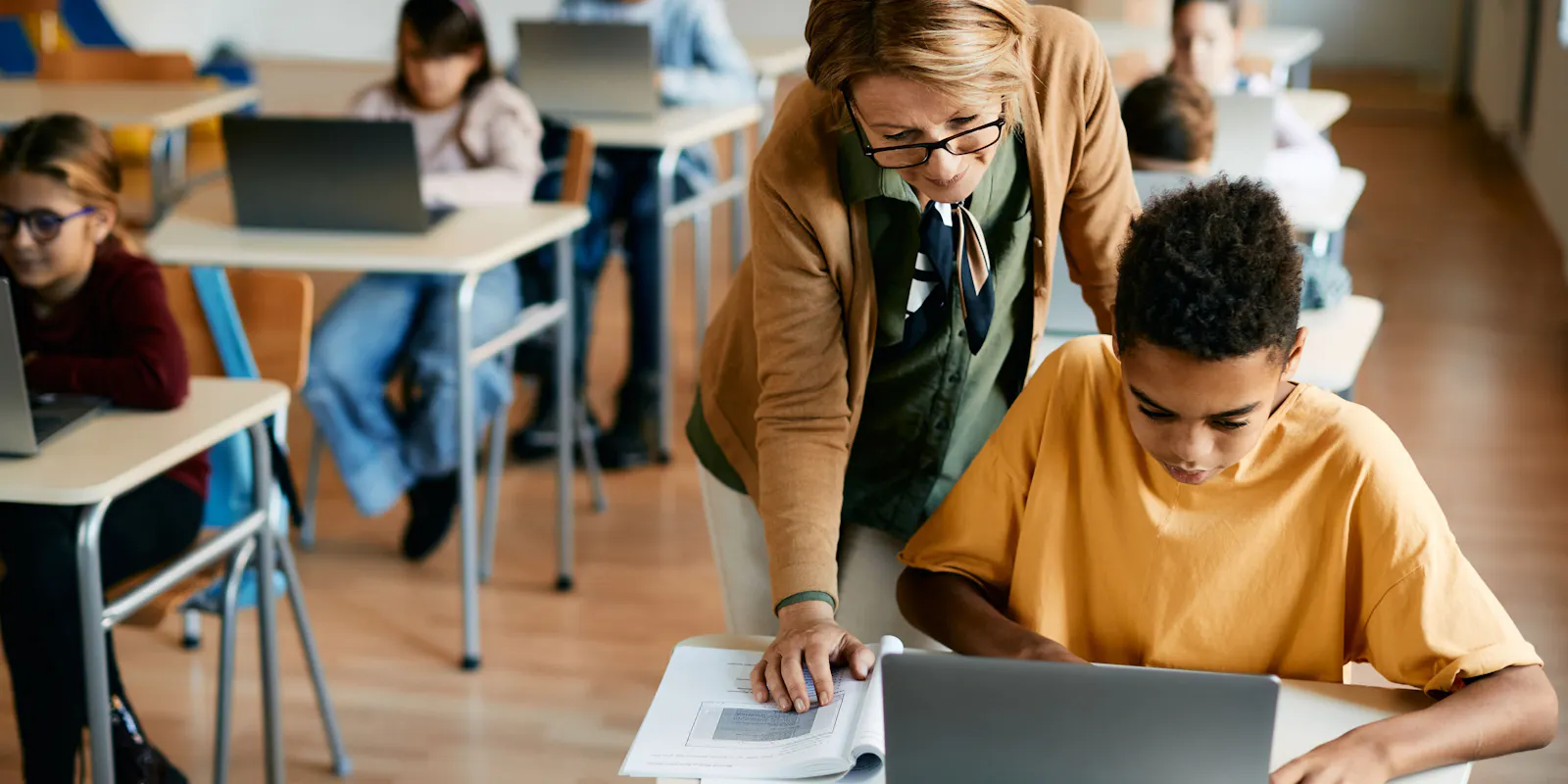
Will Virtual Reality Lead More Families to Opt Out of Traditional Public Schools?
❌