

Normal view

There are new articles available, click to refresh the page.
Before yesterdayMain stream

Introducing Tynker Copilot – The First-Ever LLM-Powered Coding Companion for Young Coders

19 October 2023 at 14:00

MOUNTAIN VIEW, California — Tynker, the leading game-based coding platform that has engaged over 100 million kids, proudly introduces “Tynker Copilot.” Leveraging the capabilities of Large Language Models (LLMs), Tynker Copilot empowers young innovators aged 6-12. It provides a seamless interface for these budding developers to transform their ideas into visual block code for apps and games. Additionally, when exploring existing projects, kids benefit from the tool’s ability to explain block code fragments, ensuring a deeper understanding. Tynker Copilot allows children to build confidence as they work with AI, laying a solid foundation for their future. With this launch, coding education takes a significant leap forward.

Large Language Models (LLMs) have excelled in text-based programming languages like Python and JavaScript. However, their application to visual block coding, the primary introduction to programming for many kids, had yet to be explored. Tynker is the first to bridge this gap. Our latest integration lets children quickly convert their ideas into block code, streamlining their initial coding experience.

Tynker introduction of the Copilot feature marks a significant industry milestone. Until now, the capabilities of LLMs have not been fully utilized for the younger age group. Tynker Copilot empowers children as young as 6 to input text commands like “Design a space-themed knock-knock joke” or “Teach me how to build a Fruit-ninja style game” and receive block code outputs with step-by-step instructions. Moreover, when debugging existing projects, students can submit block-code snippets and benefit from LLM-generated natural language explanations.

“Our ethos at Tynker is grounded in innovation and breaking boundaries,” stated Srinivas Mandyam, CEO of Tynker. “We’re exhilarated to channel the latest advancements in AI technology to serve our youngest learners, fostering an environment of curiosity and growth. While the potential for such a tool is vast, our prime objective remains to employ it as an empowering educational aid, not a shortcut.”

Developing Tynker Copilot posed challenges distinct from standard LLMs, which typically handle text-based code. Our focus was visual block coding tailored to kids’ unique programming preferences. With insights from millions of submissions in Tynker’s repository, ranging from pet dress-up games to platformer adventures and Minecraft mods, we fine-tuned Llama2. This rich, child-centric data helped us adapt the model to generate visual block coding programs, making Tynker Copilot a specialized tool designed around the creative tendencies of young coders.

“Bringing LLMs into Tynker’s dynamic visual block coding ecosystem presented unique challenges,” commented Kelvin Chong, CTO of Tynker. “We fine-tuned Llama2 with AI and ML techniques to align with young coders, supporting parallel scripts, visual actors, and kid-centric features such as Physics, AR, sound effects, and Minecraft modding. As coders grow, they’re naturally transitioned towards Python.”

All educators and home users will be notified when this innovative feature becomes generally available in the product. In the meantime, for more insights into its capabilities and to view examples of its potential use, visit the  Tynker blog

About Tynker

Tynker is a leading K-12 creative coding platform that empowers children worldwide to develop coding skills for designing animations, games, and a wide range of real-world applications. With a focus on critical thinking and problem-solving, Tynker’s acclaimed curriculum is used by 1 in 3 U.S. K-8 schools, 150,000 schools globally, and over 100 million kids across 150 countries. Partners include renowned brands like Apple, Google, Microsoft, and NASA. Accessible on computers and mobile apps, Tynker offers free and paid subscriptions. In 2021, Tynker was acquired by BYJU’S, the world’s largest edtech company. For more info, visit  www.tynker.com.
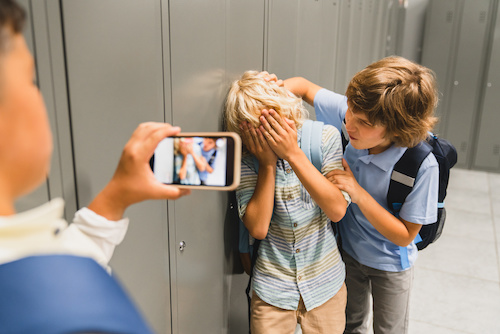
How to start solving your school bullying problem

To solve your school bullying problem, it will take a real commitment by leadership and parents to make a change to create a safe environment.

Key points:

Student bullying is a nationwide problem. Parents are outraged and demand that school administrators evaluate their campus security protocols to keep all students alive and safe.

A southern California school district agreed to pay $27 million to settle a lawsuit brought by the family of a 13-year-old boy who died after he was assaulted at school. On Sept. 16, 2019, two 14-year-old boys were videotaped attacking the victim outside classrooms at the school. One boy struck the teenager in the head from behind and he fell, hitting his head against a pillar. The boys then continued punching the boy, who died nine days later from a brain injury.

Last school year, a 14-year-old female student at a high school in New Jersey died by suicide two days after a video of her being viciously attacked by her bullies at school was uploaded online. The school district’s superintendent has resigned, and four girls have been criminally charged in connection with the assault.

Bullying at schools is pervasive across the country. According to a recent national survey report by the Boys and Girls Clubs of America, 130,000 kids and teens ages 9-18 reported some form of bullying.

This survey revealed that in the past year, 40 percent of youth said they were bullied on school property and 18 percent of youth say they have experienced cyberbullying. Unfortunately, 37 percent of youth say they have skipped a day of school in the last month.

Research has found that students who are bullied are more likely to experience depression and anxiety, have more health complaints, and skip or drop out of school.

Is there anything school administrators or parents can do to control this problem? The answer is yes, but it will take a real commitment by leadership and parents to make a change to create a safe environment.

Recommendations for school administrators

A comprehensive security risk assessment of each campus is needed and is designed to reduce incidents, pinpoint critical areas of vulnerability, and identify the school’s overall strengths and weaknesses. It also helps schools review existing crisis response plans to address and tackle problems such as bullying.

  1. Admit you have a bullying problem: To begin with, educators need to admit the situation occurs on their campuses.
  2. Provide training to teachers: Teachers and staff will need training on what bullying is, what the school’s policies and rules are, and how to enforce the rules.
  3. Work with parents: Schools must work with parents to help them understand that bullying is a severe problem and that they should talk with their children about it.
  4. Develop student awareness: Similarly, students must be made more aware of the effects that this problem can have on their classmates.
  5. Support LGBTQ students: Lesbian, gay, bisexual, transgender, queer, and questioning students should not be discriminated against due to their sexual orientation and their gender identity.
  6. Cyberbullying: Students need to be aware that cyberbullying includes sending, posting, or sharing negative, harmful, false, or mean content about someone else. Some cyberbullying crosses the line into unlawful or criminal behavior.
  7. Install security cameras: Cameras need to be installed, especially in areas where bullying is most likely to take place: hallways, near restrooms, inside the lunchroom, gymnasium, on the playground and on school buses.
  8. Having direct evidence is important: Many parents insist their child would never bully another student. However, when they are shown the video evidence, most promise to work with their child at home. The video also makes it easier for the school to enforce detentions and suspensions.
  9. Provide adult supervision: Keep an adult–ideally a teacher or administrator–in the lunchroom during mealtimes, on the playgrounds during recess and in the hallways during passing periods. Most bullies are cowards and will not act up when they know they are being watched.
  10. Set up an anonymous tip line: Have a tip line or other means of communication (text, online, etc.) that allows students, parents, teachers, staff and the community to anonymously report incidents.
  11. Empower teachers: Teachers have concerns that if they report bullying, they might face severe repercussions from their administration. There needs to be a mechanism for teachers to share information about incidents and concerns outside of the normal reporting structure.

It takes planning and the will to act, but bullying can be brought under control. It takes collaboration from all individuals in the school community.

My thoughts and prayers go out to families, friends, and the community who have been impacted by bullying.

Related: 5 ways bullying changed during the pandemic

❌
❌