

Normal view

There are new articles available, click to refresh the page.
Before yesterdayeSchool News

Most states don’t actually know if teachers are qualified to teach reading

20 November 2023 at 10:29
Requiring stronger elementary teacher reading licensure tests can improve teacher preparedness and the quality of reading instruction.

Key points:

  • States are using inadequate elementary reading licensure tests
  • States should transition to stronger tests and test providers should clearly identify weaknesses in tests
  • See related article: Teacher Q&A: Strengthening PD with AI
  • For more news on teacher prep, visit eSN’s Educational Leadership page

Most states (29 states and the District of Columbia) use a weak elementary teacher reading licensure test, meaning that they do not effectively measure teachers’ knowledge of scientifically based reading instruction prior to entering the classroom, according to a new analysis from the National Council on Teacher Quality (NCTQ).

In fact, one state, Iowa, requires no reading licensure test at all. This shortcoming means that, every year, nearly 100,000 elementary teachers across the country enter classrooms with false assurances that they are ready to teach reading.

The data brief, False Assurances: Many states’ licensure tests don’t signal whether elementary teachers understand reading instruction, provides the most up-to-date analysis on the quality of elementary reading teacher licensure exams being used by each state.

More than 50 years of research has illuminated the most effective way to teach children to read. It requires systematic, explicit instruction in the five core components of the science of reading: phonemic awareness, phonics, fluency, vocabulary, and comprehension. Preparing teachers to teach these five components–known as scientifically-based reading instruction–can ensure more than 1 million additional students enter 4th grade able to read each year.

Unfortunately, far too often, states allow teachers into the classroom inadequately prepared to teach reading. Licensure exams, if rigorous and aligned to the science of reading, can serve as an important guardrail for making sure teachers have this critical knowledge. However, many licensure tests are weak in that they do not adequately assess teachers’ preparedness to teach reading. Far too many states are using these weak tests.

“Every child deserves great reading instruction, but far too many children aren’t receiving it,” said NCTQ President Heather Peske. “As part of a comprehensive strategy to improve reading instruction, states can help ensure teachers are prepared to teach reading effectively by requiring stronger licensure tests.”

Examining every elementary teacher reading licensure exam currently being used by states, NCTQ looked for evidence that the tests adequately address the five core components of reading. NCTQ also examined whether these tests devote undue attention to methods of reading instruction that have been debunked by research and
can hinder students from becoming strong readers, such as three-cueing.

Additionally, NCTQ checked whether these tests combine reading with other subjects. This is important because if subjects are combined, the teacher’s understanding of reading could be masked. Using these criteria, NCTQ determined whether tests were strong, acceptable, weak, or unacceptable.

Key national findings:

  • Of the 25 elementary teacher reading licensure tests in use by states, the majority (15) are weak. Just six exams are rated “strong” and four are rated “acceptable.”
  • Across these 15 weak licensure tests: Ten do not adequately address all five components of the science of reading and five combine reading with other subjects, such as social studies or science. (Note, one test fits into both categories listed above.) One includes too much emphasis on content contrary to research-based practices.
  • The majority of states (29 states and the District of Columbia) use “weak” tests that do not signal whether teachers have the knowledge they need to teach students to read.

“Teachers who aren’t prepared in the most effective instructional practices for teaching reading unknowingly enter classrooms ill-prepared to help students become successful readers,” said Peske. “This lack of preparation has a profound impact on students’ literacy skills and future prospects, especially among students of color and
those living in poverty.”

Roughly one-third of children in elementary classrooms across the country cannot read at even a basic level by the middle of the fourth grade. The situation is even bleaker for historically marginalized students, for whom inadequate reading instruction is yet another barrier to educational equity, with 56 percent of Black students, 50 percent of Hispanic students, 52 percent of students in poverty, 70 percent of students with disabilities, and 67 percent of English Learners reading below basic reading levels.

Students who are not proficient readers are four times more likely to drop out of high school, face lower lifetime earnings, and have higher rates of unemployment.

Recommendations

To address this pressing issue, the NCTQ recommends the following solutions.

State education leaders should:

  • Transition to a stronger reading licensure test: States select and approve the tests that their teachers must pass for licensure. Requiring a stronger test will likely lead to better reading instruction in elementary classrooms across the state as preparation programs will be motivated to align their courses with the components of reading addressed in a stronger test.
  • Require a strong reading test for anyone teaching students in the elementary grades. In some cases, states require reading tests for general education elementary teachers but not for special education teachers or for early childhood teachers who are licensed to teach lower elementary grades. These loopholes ultimately hurt the students who most need teachers capable of building a foundation in literacy.

Testing companies should:

  • Shore up weaknesses and clearly identify limitations in existing tests: Both major testing companies, ETS and Pearson, have strong and acceptable reading licensure tests on the market, but they also offer tests that omit numerous topics from the core components of reading, and that combine reading with other subjects, diluting the assessment’s ability to verify teachers’ reading knowledge.

This press release originally appeared online.
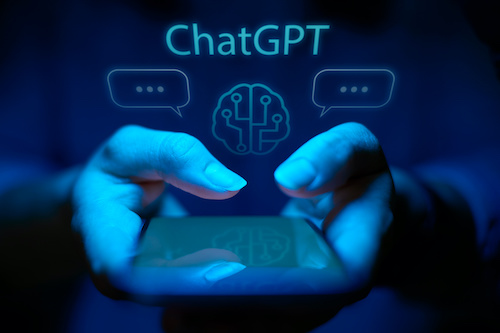
OpenAI releases ChatGPT teaching guide

19 October 2023 at 11:13
Teaching with ChatGPT doesn't have to be challenging--educators can embrace the AI tool and also show students how to create original work

Key points:

  • OpenAI, maker of ChatGPT, is releasing a guide to help educators incorporate the AI tool in their instruction
  • The guide includes use examples and answers frequently-asked questions
  • See related article: An AI to-do list for educators
  • Get the latest news on AI in education by visiting eSN’s Digital Learning page

Educators face myriad dilemmas in the wake of ChatGPT’s explosion, with some of the most popular including teaching with ChatGPT and how to address student use of AI chatbots in assignments.

OpenAI, the maker of ChatGPT, has released a new guide to help educators navigate the many ways AI can be used in teaching and learning. The guide contains examples of how some educators are teaching with ChatGPT, along with a series of frequently-asked questions that may help guide teachers as they seek to strike a balance between accepting AI’s presence and an over-reliance on such tools.

As outlined in OpenAI’s guide, here’s how some instructors are teaching with ChatGPT:

Role playing challenging conversations: Dr. Helen Crompton, Professor of Instructional Technology at Old Dominion University, encourages her education graduate students to use ChatGPT as a stand-in for a particular persona—like a debate partner who will point out weaknesses in their arguments, a recruiter who’s interviewing them for a job, or a new boss who might deliver feedback in a specific way. She says exploring information in a conversational setting helps students understand their material with added nuance and new perspective.

Building quizzes, tests, and lesson plans from curriculum materials: Fran Bellas, a professor at Universidade da Coruña in Spain, recommends teachers use ChatGPT as an assistant in crafting quizzes, exams and lesson plans for classes. He says to first share the curriculum to ChatGPT and then ask for things like fresh quiz and lesson plan ideas that use modern or culturally relevant examples. Bellas also turns to ChatGPT to help teachers make sure questions they write themselves are inclusive and accessible for the students’ learning level. “If you go to ChatGPT and ask it to create 5 question exams about electric circuits, the results are very fresh. You can take these ideas and make them your own.”

Reducing friction for non-English speakers: Dr. Anthony Kaziboni, the Head of Research at the University of Johannesburg, teaches students who mostly don’t speak English outside of the classroom. Kaziboni believes that command of English is a tremendous advantage in the academic world, and that misunderstandings of even small details of English grammar can hold back students from recognition and opportunity. He encourages his students to use ChatGPT for translation assistance, to improve their English writing, and to practice conversation.

Teaching students about critical thinking: Geetha Venugopal, a high school computer science teacher at the American International School in Chennai, India, likens teaching students about AI tools to teaching students how to use the internet responsibly. In her classroom, she advises students to remember that the answers that ChatGPT gives may not be credible and accurate all the time, and to think critically about whether they should trust the answer, and then confirm the information through other primary resources. The goal is to help them “understand the importance of constantly working on their original critical thinking, problem solving and creativity skills.”

Some of the common questions around teaching with ChatGPT include:

  1. How can educators respond to students presenting AI-generated content as their own?
  2. How can ChatGPT be used for assessment and feedback?
  3. How can educators get started with ChatGPT?

Related: Coming out of the AI closet: A scholar’s embrace of ChatGPT-4

Riverside Insights Debuts CogAT.com Portal to Support Strengths-based, Differentiated Learning that Helps All Students Thrive

10 October 2023 at 23:02

ITASCA, Ill. – Riverside Insights®, a leading developer of research-based assessments and analytics, today introduced www.CogAT.com, a new microsite to support Riverside’s CogAT® in the Classroom initiative. This online portal provides resources to transform Cognitive Abilities Test™ (CogAT) assessment data into tailored classroom instruction that enables all students to thrive. Designed for teachers, administrators and parents, CogAT.com’s tools support a positive learning environment by encouraging differentiated learning through a strengths-based lens.

“Data collected as part of the CogAT is extremely powerful, yet most school districts are not optimizing its use to better understand how all students learn, then applying that in the classroom,” said Dr. Joni Lakin, professor at the University of Alabama and co-author of the CogAT.  “Riverside’s CogAT in the Classroom initiative is making it easier than ever to use CogAT data effectively in the classroom to maximize student growth. On CogAT.com, we provide the tools that teachers, administrators and parents need to better understand the abilities of each student coupled with actionable strategies that will benefit every learner in the classroom.”

Using CogAT ability data and CogAT in the Classroom resources, educators can evaluate student potential using both abilities and achievement data and differentiate instruction based on students’ cognitive reasoning strengths. Infusing ability data into the classroom environment helps teachers build a holistic understanding of each student’s potential and create tailored classroom instruction to provide more opportunities for all students to excel.

CogAT.com includes resources for:

  • Teachers – The Ability Profile™ Finder offers instructional recommendations and strategies for each unique Ability Profile. Sample lesson plans show how to infuse CogAT data into differentiated instruction. Teachers also can access resources that outline proven strategies for easily grouping students of like abilities, while providing best practices, case studies and on-demand mini-modules that show CogAT in the Classroom in action.
  • Administrators – A Gifted Coordinator Toolkit highlights best practices for using ability data in a multi-tiered system of supports (MTSS), supporting emerging bilinguals in gifted education, and clustering and grouping students to maximize their learning. A Local Norms Tool enables administrators to calculate local norms in their district or school, giving more students the opportunity to receive advanced placement services. And an Ability and Achievement Tool combines multiple measures to identify gaps in student potential and performance.
  • Parents – Articles on how to understand ability data, as well as what parents can do to support learners at home and foster student strengths.

“CogAT traditionally has been used to identify gifted students, but by assessing all students, we can understand their verbal, quantitative and non-verbal reasoning abilities to better target strengths and opportunities in a more equitable way,” said Monica Simonds, M.Ed., Director of Advanced Learning Programs and Services for the Richardson (Texas) Independent School District. “CogAT in the Classroom is helping us flip the script and move from deficit-based to strengths-based instruction, creating a more positive and effective learning environment for students and teachers.”

To learn more about the CogAT in the Classroom initiative, Riverside Insights has developed a series of on-demand webinars. CogAT.com will be home to a growing resource library designed to support teachers and leaders with actionable insights, make teachers’ lives easier and help educators understand the power of using CogAT data in the classroom for all learners. Visit www.cogat.com for more details.

About Riverside Insights

Riverside Insights, one of the nation’s leading and most long-standing developers of research-based assessments, is led by a powerful mission: to provide insights that help elevate potential and enrich the lives of students, clinical patients, employees, and organizations globally. For more information, visit www.RiversideInsights.com.

❌
❌