Normal view

There are new articles available, click to refresh the page.
Before yesterdayMain stream

This Is Your Brain on Math: The Science Behind Culturally Responsive Instruction

17 November 2023 at 10:00

As a math educator at the high school and middle school levels, I lived for the moments when students’ furrowed brows ever-so-slightly began to unfold and smiles emerged.

Those “aha” moments were often accompanied with a gleeful, “I get it!” I refer to those epiphanies, when the metaphorical light bulb above a student’s head switches on, as “luminations.”

Many of those luminations surfaced because the lessons my students engaged with were designed to promote student inquiry and prioritize cultural relevance. Though some argue that mathematics is culturally independent, I can say from experience that it is anything but. Culture embodies our deepest collective social norms and beliefs, and provides the reference points for future learning. The brain makes sense of the world, and mathematics, through culture.

As the math educator in residence at Just Equations, a nonprofit focused on the intersection of math and equity, I research math education and I think a lot about my years in the classroom.

Brain science research is increasingly bolstering the idea that math instruction rooted in culturally relevant problem-solving helps students draw from their lived experiences and activates distinct areas of the brain, producing durable and deep learning.

Creating Community-Connected Learners

My geometry students did this kind of creative mathematical reasoning during a series of lessons that used geometric modeling to address food apartheid in Lawrence, Kansas.

In one of the lessons, students accessed the Agriculture Department’s Food Access Research Atlas to locate food deserts in their city. The goal was to develop a proposed site for a healthy grocery store or alternative option for fresh, wholesome food. The location students identified had to be strategically located for equitable access, accounting for the needs of community members most limited by transportation and low economic support.

During this lesson, students identified a bridge as a barrier in Lawrence that restricted convenient access to healthy and affordable foods. Working in small groups, they described both the physical structures and city policies that prevent the development of a grocery store in the area, thus sustaining the food desert.

Students constructed a triangle for the perimeter of the geographical space containing the food desert, then applied mathematical concepts to identify whether the centroid, circumcenter, incenter or orthocenter of the triangle would provide the most equitable access to the residents.

Lessons like these promote mathematical investigations within community-oriented contexts and require deep analysis. Students must think holistically about a real-world problem, and use mathematical tools to arrive at a solution. This process is meant to leverage not only the brain science behind complex mathematical reasoning, but also students’ passion for making change in the world on their own terms.

This lesson required spatial reasoning skills, which engage the parts of the brain most closely associated with mathematical thinking. A 2018 meta-analysis of functional magnetic resonance imaging (fMRI) studies of children ages 14 and younger demonstrated that math performance in children emerges from areas of the brain that are associated with number processing, such as the parietal and frontal areas. What’s interesting is that the parietal lobe also integrates sensory information, such as the body’s awareness of where it is in space, including in relation to itself, creating a spatial mental map to represent the world.

Sensory information is also significant to how people develop an awareness of identity and their relationships to the surrounding environment and sociocultural experiences within that environment. Therefore, mathematics grounded in sociocultural contexts helps students make sense of their world and make connections with new content.

Lighting Pathways in the Brain

The process the brain goes through during this kind of mathematical thinking can actually be observed in real time. In a study conducted at Carnegie Mellon University in 2016, researchers monitored the brain activity of study participants as they confronted complex math problems that demanded creative mathematical reasoning.

That research identified four distinct stages of problem solving — encoding, planning, solving and responding — that engaged diverse areas of the brain. That kind of increased brain activity has been shown to lead to better performance and higher retention of learning.

Just as student engagement in creative and constructive processes when learning mathematical reasoning has beneficial effects on learning and long-term memory, culturally responsive mathematics uses culture as a scaffold for deeper connections, building students’ brain power and improving information processing skills.

Importantly, lessons like the one addressing food apartheid in Lawrence also make math feel more relevant by connecting students with vital questions about systemic structural, racial and economic barriers. They offer an invitation to analyze how mathematics can be applied to promote civic engagement, advocacy, policy change and increased access to resources.

Geneva Gay, a professor of education at the University of Washington-Seattle, wrote that culturally responsive instruction allows teachers and students alike to develop "social consciousness and critique; cultural affirmation, competence, and exchange; community-building and personal connections; individual self-worth and abilities; and an ethic of caring." When we cultivate learning spaces designed to inspire and spark curiosity, students begin to forge their own mathematical identities. They come to see themselves as capable learners and doers of mathematics, and as essential members of the mathematical community.

This science suggests that all teachers can make use of these approaches. There are a wide range of resources available to help educators employ culturally-responsive brainstorming, visual imagery, storytelling, and interactive pedagogy in their own classrooms. Teachers who do so will foster not only durable academic success, but independent and lifelong learners.

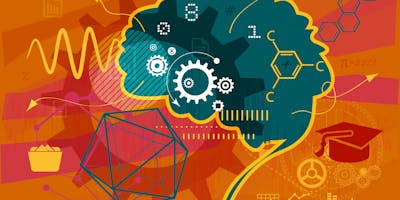
© Shutterstock / DesignPrax

This Is Your Brain on Math: The Science Behind Culturally Responsive Instruction

5 models that prioritize learner-centered education

18 October 2023 at 12:00
Learner-centered education collaborates with learners to design learning experiences and pathways tailored to their interests and needs.

Key points:

School models are, for the most part, outdated–and very overdue for replacement. When students reach high school, research shows that close to 66 percent of students are disengaged. But even students who do successfully navigate their schooling emerge with only a specific (and often narrow) skillset that may or may not match their strengths or interests.

Conventional schooling often leaves students disillusioned, questioning their intelligence and value as it is framed by a system that needs an overhaul.

Learner-centered education can play a critical role in reshaping education systems, offering a more holistic approach to meeting learners’ needs and helping students find fulfillment in their academic accomplishments.

K-12 Value Networks: The Hidden Forces That Help or Hinder Learner-Centered Education, a report from the Clayton Christensen Institute and authored by CCI senior research fellow Thomas Arnett, offers insight into understanding why schools struggle to change their instructional models, along with tips to establish and support learner-centered education models.

Program leaders, sponsors, learners and their families, staff, community partners, and funders are all critical to the success of these learner-centered education models.

The report describes how five different learner-centered education models–The Met, Virtual Learning Academy Charter School, Iowa BIG, Village High School, and Embark Education–were able to launch and grow their models by assembling value networks congruent with their vision for learner-centered education.

1. The Met: The Metropolitan Regional Career and Technical Center, known as The Met, is a network of six small, public high schools located in Providence and Newport, Rhode Island. The hallmark of The Met’s learner-centered model is that its learners go out in their communities for two days out of the week to lead real-world projects as interns for partner organizations. For example, learners might work with a local bakery, a law firm, a tech company, or a recording studio.

When learners join the Met, they and their families work with an advisor to identify their strengths, needs, and interests, and then develop an individualized learning plan with an internship as its centerpiece. Learners are responsible for researching potential internship opportunities and communicating with partner sites to arrange their internships. Advisors coach them as they do their research and outreach to ensure that internships match their needs and interests.

2. Virtual Learning Academy Charter School: The Virtual Learning Academy Charter School (VLACS) is a statewide virtual school created in 2007 that serves K–12 learners throughout New Hampshire. The concept for the school came from the superintendent of the Exeter Region Cooperative School District, who saw an opportunity to take advantage of a new charter school law to apply for a statewide charter. Rather than create another conventional school, however, the superintendent recognized the distinctive value of using a virtual school model to offer a wide array of flexible, part-time and full-time learning options unavailable through brick-and-mortar campuses.

VLACS’s competency-based model is highly adaptable to learners’ needs and interests. It offers a range of options for learners to earn credits: through online courses, learner-designed projects, and out-of-school learning experiences such as internships and travel. Learners who take online courses move through those courses at their own pace and earn credit whenever they’re able to demonstrate mastery of designated competencies. For projects and other learning experiences, VLACS aligns these experiences with state learning standards and then measures learners’ mastery of standards using performance-based assessments.

3. Iowa BIG: A community conversation about the knowledge and skills young people need to become engaged and successful members of the community as adults was linked with an initiative to send 60 community leaders back to school alongside learners over a four-month period. Through this experience, the community leaders realized that most learners were disengaged in school. Partitioning content into discrete subjects and courses made the learning boring and the teaching hard. Meanwhile, the work learners did in school had little connection to real-world problems, careers, and citizenship. Then came the founding of Iowa BIG, a high school learning experience sponsored by four local districts that enables learners to earn core credits by doing authentic projects.

The typical day of an Iowa BIG learner is half conventional and half learner-centered. For part of the day—either the morning or the afternoon—learners attend their local high schools. Then for the other half of the day, they go to an Iowa BIG site for real-world learning experiences. The model works with partner companies and organizations across Cedar Rapids to conceptualize projects learners might complete. Learners then work with partners to co-design interdisciplinary projects that both align with the academic and life goals of the learner, as well as the business or nonprofit needs of the partner. Projects might include creating museum exhibits, helping optimize processes at a hospital, hydroponic farming, or developing a messaging campaign for an animal shelter.

4. Village High School: The Village diverges markedly from standard approaches to high school education. Its learners receive all of their core academic content–English, history, social studies, and math–through mastery-based online courses. This format eliminates the need for scheduled class times and allows learners to progress at their own pace and test out of modules that they already have expertise in. Online courses at Village High School create time and capacity for the most learner-centered features of its model: its array of in-person electives.

Often team-taught and generally in-person, these courses are inspired by teachers’ and learners’ own passions. They cover myriad different topics, often in an interdisciplinary format: from Adulting 101, Renewable Energy, and Beekeeping to Comparative Religions and International Relations. Many electives take advantage of the Village’s flexible format. For an elective on ceramics, learners spend an entire day every week working on ceramics projects; and one physical education elective takes learners out into the Colorado Rockies for hiking and rock climbing. The grading model in electives is also different–closer to a workplace evaluation than to conventional points earned on assignments and tests. Learners and teachers sit down together to discuss learners’ progress and work, and decide on a grade together.

5. Embark Education: Miguel Gonzalez, a career educator, launched Embark Education in 2019 out of a coffee shop and a bike shop in North Denver, CO. His goal was to create a learner-centered model at the intersection of authentic experiences and relationships. That goal translated into a private, tuition-free micro-school serving approximately 50 sixth- through eighth-grade learners. Embark’s two businesses, Pinwheel Coffee and Framework Cycles, enable learners to engage in projects that integrate academics with real-world questions. For example, while working on the practical skill of crafting the perfect cappuccino under the guidance of adult baristas, learners investigate the differing mathematical ratios of ingredients present in a latte versus a cappuccino, and the chemistry behind the extraction of caffeine from coffee beans.

These integrated “shop projects’’ include a combination of direct instruction within the three core academic disciplines (math, science, and humanities); personalized learner exploration; and practical work within the bike and coffee shops. They enable learners to master foundational academic skills while simultaneously experiencing the application of these skills in the world beyond the classroom. Learners’ projects for the businesses must contribute to the success of the businesses. For example, learners don’t work on problems that the businesses have already solved, such as having learners apply math and science to reinvent the latte. Instead, Embark’s leaders look for opportunities that leverage the unique advantage of having learners’ on site to make the businesses better than what they could do alone.

What's Really Getting in the Way of Teachers Embracing Edtech?

18 October 2023 at 10:00

Amy Ballard, Ph.D., a math teacher and instructional coach at Brashier Middle College Charter High School in Simpsonville, South Carolina, has more than two decades of experience and spends a lot of time thinking about edtech. Yet Ballard’s main focus is not the tools themselves, but rather, how to support teachers leveraging edtech to help improve student learning.

“I worked as an administrator for 10 years, so I think about edtech from both sides — both how an administrator makes decisions about edtech tools, but also how we can support our teachers,” Ballard shared in a focus group that was part of a larger project designed to better understand the gap between teaching practices and technology use. This project was supported by Google for Education and involved a number of partners, including our organization, WestEd.

As the research leads on the project, we drew on literature and educator focus groups to investigate how technology could be leveraged most effectively in instruction, the barriers to adoption, and the strategies that could best support teachers in adopting effective instructional practices.

We selected Ballard and her peers for our series of focus groups because of their leadership in supporting the effective use of technology in their schools. Even though Ballard is a self-described “early adopter,” she is careful not to recommend the latest, shiniest tools to her teachers outright. She recognizes that tools must align to teachers’ instructional goals and must be accompanied by professional development that covers not just how individual tools function, but also how they fit into effective teaching practice.

“I need to reiterate with my teachers that the tech tool itself isn't the be all, end all,” Ballard said. Instead, she added that it is important to center edtech around the educator; ultimately it is how teachers use that technology to advance their instructional goals that matters.

A Shift to Technology-Enabled Instruction

Ballard, along with other teachers who participated in our focus groups, is helping to cultivate “technology-enabled instruction,” a concept coined by education researchers Peggy A. Ertmer and Anne Ottenbreit-Leftwich that refers not just to whether technology is used in the classroom but also when and how teachers use technology to improve learning outcomes.

For a school to shift from simply adding tech tools to encouraging teachers to use them effectively, a few elements must be in place, including informed decision-making by leadership, continual training and support for teachers and buy-in from staff. After all, there are a lot of reasons why a teacher might be reluctant to embrace edtech, and not all of these obstacles hinge on whether a teacher knows how to integrate technology in the classroom.

Ballard understands that better than most. For example, in one of our focus groups, we asked teachers to examine the prototype for a tool they could use to evaluate whether and how to use edtech. Ballard believed that the tool required too much time for teachers to parse and leverage effectively in their teaching. She said, “When I think about my teachers, I think they would just shut down if they saw this.” Ballard illustrated that sometimes it’s not about knowing how to use a tool — it’s about not having the time.

There are good reasons for that, Ballard said. Teachers are already stressed, overwhelmed by technology and reluctant to invest their limited time in a potentially unproven tool or approach. Many have seen this show before: a faddish flavor of the month that was quickly replaced by the next big thing or that was shown to be ineffective in the long term.

For a school to shift from simply adding tech tools to encouraging teachers to use them effectively, a few elements must be in place, including informed decision-making by leadership, continual training and support for teachers and buy-in from staff.

Barriers to Embracing Technology in the Classroom

Teachers in our focus groups explained that beyond time and experience-backed cynicism, there are a host of other reasons why teachers might not want to adopt technology-enabled instructional practices.

Some participants reflected that they have colleagues who express a lack of confidence in their technological abilities or who say they have adopted non-technological approaches that they feel are more effective. Others shared that they or their colleagues fear being reprimanded by school leaders for trying something new, don’t feel adequately trained, or lack access to the tools they need to implement edtech effectively.

These explanations for educator reticence about embracing edtech are backed up by a quarter-century of research, dating back to before the term “technology-enabled instruction” was first introduced. Ertmer first distinguished between “first- and second-order barriers” to the effective use of technology in the classroom in 1999, referring to categories of challenges that are sometimes called “external and internal barriers.”

External barriers are factors outside of a teacher’s control — access to technology, support from leadership and opportunities to participate in high-quality professional development, among others. Internal barriers are intrinsic to the teacher — for example, their beliefs and attitudes about the usefulness of technology, and their real and perceived knowledge.

Examples of External BarriersExamples of Internal BarriersLack of access to technologyReal and perceived knowledge and skillsLack of professional developmentBeliefs about technology-enabled teaching and learningLack of a school or district vision for technology integrationPedagogical values and beliefsPoor or unsupportive leadership

This distinction between external and internal barriers was intuitive for the teachers in our focus groups. If a classroom has spotty Wi-Fi or a teacher has inadequate access to devices for students, it’s awfully hard to make the most of edtech. If a teacher has had negative prior experiences with edtech tools or considers themself a technophobe, it’s difficult to convince them that learning to use tech tools is a good use of time.

Understanding the Relationship Between Barriers

The significance of these barriers has changed over time. Over the past two decades, there has been significant progress on breaking down external barriers such as Wi-Fi and device access, even as the challenges are far from solved. According to a 2019-20 survey administered by the National Center for Education Statistics, nine out of 10 schools reported that their computers met the school’s teaching and learning needs to a moderate or large extent. Internet access has also improved substantially. A 2021 survey by EdWeek Research Center found that more than 75 percent of teachers said that at least three-quarters of their students have adequate internet access at home to support learning. Digital divides persist, but schools have made some progress in addressing these barriers.

When looking at how teachers use technology, their school and district context matters a great deal too. A teacher in one school might work with administrators who’ve clearly articulated a plan for how teachers can use edtech and who have provided the support necessary for teachers to implement that vision. That support might include peer-teacher models, relevant professional development opportunities and professional learning communities that elevate teacher voices. A teacher in another school with less support might be less effective in using edtech.

When considering how to address these context-specific barriers, it’s important to understand how internal and external barriers are related. In a landmark study of barriers to using edtech effectively published in 2007, researchers Khe Foon Hew and Thomas Brush argued that internal and external barriers must be addressed together. As Hew and Brush put it, these barriers “are so inextricably linked together that it is very difficult to address them separately.”

Several participants in our focus groups told us that they were excited to embrace new edtech tools but encountered resistance from leaders who claimed that the work did not fit into the vision for the school or who did not support additional teacher training. In these cases, teachers faced no internal barriers when it came to beliefs and attitudes, but they were still hampered by using edtech effectively in instruction.

Other teachers told us that they had colleagues who had access to a variety of tools but who viewed technology negatively, and opted not to use technology in ways that could have benefited student learning.

Those internal barriers are especially tough to address. The good news is that research shows that teachers' beliefs, values and attitudes are not static, and that school and district leaders can play an important role in changing their perceptions, paving the way for technology-enabled instruction to take place.

How School and District Leaders Can Address Barriers Holistically

A number of researchers, including Ertmer, Windschitl, Hew and Brush, have shown that teachers’ beliefs — the underlying ideas and assumptions they hold about technology and pedagogy — influence whether and how they use technology.

Yet, these researchers have also shown that these beliefs are malleable. Ertmer and others have shown that teachers’ beliefs about edtech can shift when presented with evidence that a practice improves student learning. When school and district leaders help teachers see how tech can help with a particular teaching goal such as scaffolding or accommodation of individual student needs, teachers are more likely to be open to using technology in instruction.

Studies also reveal that teachers’ beliefs and practices can also change in response to direct, positive experiences using edtech. Opportunities to experiment with tech in small and incremental ways can help teachers improve their self-confidence, self-efficacy and perceived technical knowledge, resulting in teachers’ willingness to use tech where it can benefit instruction and learning. There’s also evidence that teachers can experience a similar shift in attitude when schools support them with ongoing and relevant professional learning opportunities, professional learning communities and opportunities to contribute to decision-making.

Of course, instituting these approaches to shift teachers’ beliefs and attitudes to foster technology-enabled practices isn’t easy. It requires substantial time, effort, respect for educators and a clear understanding of how internal and external barriers relate. But, as we heard from the teachers in our focus groups, it is a process that will ultimately benefit everyone, students most especially.

© cybermagician / Shutterstock

What's Really Getting in the Way of Teachers Embracing Edtech?

4 essential resources for building research skills in high school

Strong research skills are valuable beyond high school and will serve students well as they enter a world of digital resources and information

Key points:

Right now is the perfect time to start a research project with your students, as it will help them develop skills they will use for the rest of their lives. While your students, who have grown up in the Information Age and think they already know everything, any classroom teacher knows that our students need help more than they think.

As a school librarian for the past 11 years, my primary focus has been on helping students become adept navigators of the sea of information they live in. By the time students reach me in high school, they are already juggling multiple social media accounts and unknowingly driving many business and political decisions through their media consumption.

Our students’ belief that everything they need to know is online can, without the right skillset, leave them prey to misinformation. So how do we teach our students to steer through the online ocean of data to be both effective researchers and responsible digital citizens?

Here are 4 must-have resources for teaching high school students how to research:

Digital encyclopedias like Britannica School or Credo Reference are still important, and vetted, sources of basic information. Each provides students with a credible resource and gives them helpful notation and citation tools. But don’t settle for just one. Take students on a tour of both databases and explore the differences. Britannica School is user-friendly and comprehensive, which makes it an ideal tool for building student confidence in their research skills. Even if your students are literal social media influencers, they may be apprehensive or overwhelmed navigating a database, and we do not want them to give up and turn to Google. They need to develop their research skills before they are ready to evaluate content from across the world wide web. The bold, colorful text features and differentiation of reading levels make Britannica School engaging and easy to use, and it is a trusted source of information.

Although both databases offer similar content, Credo Reference has a unique feature called Visual Exploration that you and your students will love. The database will retrieve your search results in the form of a mind map, which links your search term to related terms that are hyperlinked to vetted content. Articles related to the original search term appear alongside the mind map. Visual Exploration is an effective and interactive tool for teaching students about choosing search terms and narrowing their research topics. Credo Reference also has a series of short research tip videos for students on topics such as “what to do when your topic is too broad.” 

Upper-level courses require students to navigate and analyze more complex sources than a standard encyclopedia entry, which can often be just a list of facts. Whether you are teaching U.S. Government or A.P. Language and Composition, your students are learning to evaluate persuasive writing and identify propaganda, because these are key information literacy skills. Gale In Context: Opposing Viewpoints not only provides students with curated  sources and all the tools of an online encyclopedia but also introduces students to well-researched writing from various perspectives. A huge part of research is thinking critically about the credibility and intent of the source, and this database provides a safe space to analyze and examine issues from multiple angles. Gale In Context: Opposing Viewpoints is both visually appealing and has a unique feature for visual learners. The Topic Finder retrieves results as your choice of a tile or a wheel that displays terms at various sizes depending on the number of results for that term. For example, a Topic Finder search for “Artificial intelligence” displays “mental health” among the largest clusters of the tile or section of the wheel, which lets me know I can find significant content in the database related to A.I. and mental health. There is a curriculum search and an Educator Resources page with helpful tip sheets and worksheets, including one for students to create their own concept map.

Before you dive into an encyclopedia head first, you may want to go to Discovery Education Experience and gather some tools for teaching research effectively. You do not need to build a lesson from scratch. There’s a wealth of media within the platform to help you activate prior knowledge, develop assignments and create interactive lessons on any topic. The Discover Data channel, which is the result of a partnership between the Nielsen Foundation, Discovery Education, and the National Afterschool Association, has interactive, relevant lessons that you can adapt for your students. One of my favorites is the “Social Media and Misinformation” presentation. You can use it as an introduction to information literacy or assign the presentation as a self-paced lesson for students. In fact, you can use the Build an Activity feature with this or another presentation from Discovery Education to create an assignment and share it directly to Google Classroom, Microsoft Teams, Schoology or Canvas.

With these essentials in your toolbox, you will be able to equip your students with research skills that will help them unlock success in and out of the classroom.

Related: 4 tools to help students build post-COVID research skills

Helping Students Think With Their Whole Bodies

26 September 2023 at 20:36

When people think about thinking, they typically conceive of the brain as a kind of machine or muscle that is strictly confined to our skulls. As Rodin’s famous sculpture of the thinking man propping his chin on his hand, we imagine the mind as all in our heads.

But what if those typical metaphors for our brains are limiting our capacities to think and learn?

That’s the question posed by science journalist Annie Murphy Paul, who points to research emphasizing the many ways that thinking is influenced not just by what’s inside our skull, but by cues from our body movements, by our surroundings, and by other people we’re interacting with.

Paul, who says she reads academic journal articles for fun, first encountered this argument when she came across a 1998 paper by philosophers Andy Clark and David Chalmers, who argued that the human mind extends into the world around it. And that sparked her interest in digging into learning science research that she’s gathered into a recent book, “The Extended Mind: The Power of Thinking Outside the Brain.”

Those who design our tech, she argues, are particularly prone to a brain-bound vision of the mind, forgetting that users of smartphone apps and computers are situated in bodies and move about the world in physical space with others.

EdSurge recently sat down with Paul to dig into her arguments about rethinking how we think, and what educators can learn from the research.

Listen to the episode on Apple Podcasts, Overcast, Spotify or wherever you get your podcasts, or use the player on this page. Or read a partial transcript below, lightly edited for clarity.

EdSurge: What is it that you think is missed in popular notions of our mind?

Annie Murphy Paul: Our education system is very much dominated by what you might call a brain-bound model, which is the idea that thinking happens inside the brain. It's sort of sealed inside the skull. And moreover, that intelligence is the kind of lump of stuff that's either bigger or smaller, and we can weigh it through tests and assessments.

And that's challenged by the notion of the extended mind, which as I mentioned comes from philosophy. … It was an article by philosophers David Chalmers and Andy Clark, and they started off that article by saying, ‘Where does the mind end and the rest of the world begin?’

And that to me was a really provocative question, a potentially generative question, in part because it seems like it has an obvious answer or a conventional answer, which is that, ‘Well, the mind stops at the skull, right? The mind is sort of identical with the brain.’ And that's the kind of model that dominates our education system.

But what Chalmers and Clark were saying was that the mind extends beyond the head into the rest of our bodies, into our physical surroundings, into our relationships with other people, into the use of our devices, our technologies. And that to me was a really exciting idea because it meant that if we could improve the quality of those raw materials that we do our thinking with — and if we could improve our skills and abilities at using those outside-the-brain resources — that was a kind of new way to get smarter. It didn't mean that our only option was to exercise the brain or make the brain smarter or stronger. We actually could improve the quality and our use of all these outside-the-brain resources as a way to get smarter and more effective.

You talk about three main ways that the mind can be thought of as extended, and I’m hoping to go through them one by one. The first you talk about is “embodied cognition.” What is that and why is it important?

Embodied cognition is the idea that we don't just think with our brains, we think with the sensations and movements and gestures of our bodies. So I'll just start with that first one — sensations. That actually has a less jargony name, which goes by our gut feeling.

We all know what that means, that there's a kind of wisdom or a kind of informed sense that our bodies seem to have that might elude our conscious minds. And there's a term called interoception that describes that flow of internal sensations and cues that our educational system and our culture more generally tends to tell us to ignore. But what embodied cognition suggests is that we should actually be tuning in a lot more to those interoceptive sensations through meditative practices like the body scan, and that those interoceptive sensations actually have a lot to tell us about the situations that we find ourselves in.

How does that play out in classrooms?

Yeah, so the brain-bound approach to thinking and learning, which is dominant in our education system, suggests that all we need is our heads. And these days, especially when we're in Zoom meetings, we can actually feel just like we're heads, or a brain and a vat. But in fact, the human organism thinks with our whole bodies, which includes our internal sensations and our physical movements and our gestures. So the more we can bring the body into learning, the better. I find that we are good at doing that with young children with early education, we think it's okay for them to run around and to interact with materials and use manipulatives. But as students get older, we have this notion that they should put all that away and start doing things just in their head.

But what the science of embodied cognition shows is that the more we can sort of externalize our thoughts and our thinking processes, get them out of our head and express them through our bodies or learn through our bodies and our senses, the better our learning will be. So I think we need to bring some of that early education spirit of having the body be part of learning into middle school, high school, college, all of that, because we are embodied creatures. We can't be anything but embodied creatures, even as adults. And so embodied cognition suggests that this head-first or brain-bound approach to learning is really misguided.

What about the second category of research you tackle in the book, which is known as situated cognition?

Situated cognition is the idea that where we are, our physical environment, affects the way that we think. And that's one way in which our brains are really different from, say, a computer, which works exactly the same way. My laptop works the same way in my home office as it does if I were to take it out to a park and sit on a park bench. But human brains are not like that. They're exquisitely sensitive to context, and we think differently, say, in the outdoors than we do in an interior space. So given that it's a good idea for us to be aware of how our physical spaces are affecting the way that we think, and we can intentionally use them in the sense of going outside to restore our attention and replenish our attention, or we can design our interior spaces, our learning and working spaces to support intelligent thought in ways that the brain-bound model doesn't really allow.

The third area you explore in the book, it's distributed cognition. What's that look like?

That pushes against another really strong current in our culture, which is this idea of this individualistic streak — that ideas and thoughts belong to one brain, that they're sealed inside an individual head, when really we are such fundamentally social creatures that we learn to think and we learn to speak language in a social context. And thinking and learning is always irreducibly social and shared and collective.

So that's another way of thinking about intelligence is that it's not a lump of stuff sealed inside one person's brain. It's really a collective enterprise that we need to think about in social terms.

Some of these ideas that you've talked about sound a bit like common sense. Why has it taken so long to, or why many people may still not, realize these things that you're talking about?

Yeah, I agree. The extended mind, which is a relatively new idea in philosophy, is just reminding us of what was always true, which is that human beings have bodies. We're embedded in physical spaces, and we're a part of these dense social networks that describe us as full human beings. And, unfortunately, in a lot of settings, including educational settings, but also work settings, we're encouraged to think of ourselves as just brains, as just heads. And so the extended mind kind of invites us to remember what we have forgotten as a culture.

What are some takeaways for educators at older levels to do differently based on this research?

I’ll take one from each area of research.

One is bringing the body into learning — bringing physical movement and gesture as much as possible into the classroom.

The second one would be thinking really carefully about the spaces in which we were having kids learn, and trying to get them outside as much as possible. And then when they are inside, thinking about what kind of cues and signals are present in the physical environment that I think are particularly important are cues of identity. Kids should be able to look around and see cues that remind them of who they are in that particular environment, what role they're playing as scholar or artist or thinker. So I think it's useful for teachers and others to look around and see, ‘What are my kids seeing when they enter their classroom or their school?’

And then the third is this social piece. I think now that we're all back together in person and not doing remote schooling so much anymore, we can really take advantage of what psychologists called ‘groupiness.’ That's an actual scientific term. And that refers to a sense that a group of people isn't just an assemblage of individuals. They're really an entity unto themselves: a group. And that sense of groupiness tends to get people on the same page, people learn better, think better, and remember things better when they do it together with other people in that kind of cohesive, connected way.

You note that there are equity issues in education that stem from this research.

One of the exciting things to me about the extended mind is that it's another way of looking at issues of equity and equality. We have this idea that we can rank people according to how much intelligence they have in their brains, but if you shift to looking at things through an extended mind lens, then it's really about, well, what is the quality and the accessibility of the outside-the-brain resources that this person has?

Because our students don't have anything like equal access to, say, the freedom to move their bodies, or access to green spaces, or to safe spaces, to quiet spaces. They don't have equal access to helpful mentors or really skilled teachers or motivated peers. And if all of those things really matter for how effectively intelligent, how successful academically a person can be, then we need to shift away from thinking that intelligence is something sealed inside a person's head — it's more out here, in the world.

Hear the complete interview on the EdSurge Podcast.

© Hung Chung Chih / Shuttertsock

Helping Students Think With Their Whole Bodies

Carnegie Learning Unveils ClearMath Elementary

12 October 2023 at 01:23

Pittsburgh, PA – In a groundbreaking move set to revolutionize elementary math education in the post-pandemic era, Carnegie Learning has launched ClearMath Elementary, its first core elementary math solution. Throughout four years of research in classrooms across the US, ClearMath Elementary has delivered exceptional results and, as it becomes widely available, is poised to become the most effective elementary math solution on the market today.

Play-Based Learning Develops Math Confidence

At the heart of this innovative blended learning approach is a simple yet revolutionary idea – play is central to learning. Through digital and print resources with highly engaging hands-on lessons, game-based software like the 2023 SIIA CODiE Award-winning MATHia® Adventure, and ready-made centers for collaboration, ClearMath Elementary empowers students to develop positive mindsets towards math, learn from each other, and focus on the journey of mathematics rather than just the solutions.

Helps Students Keep Up, Not Catch Up

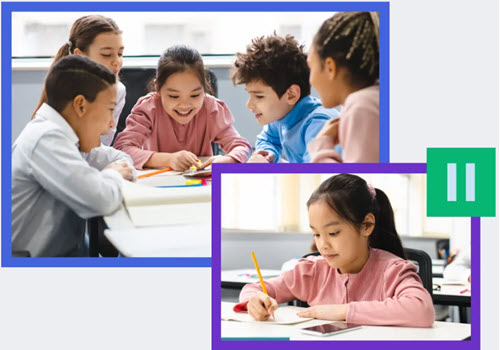
A departure from the traditional “catch-up” approach, ClearMath Elementary uses a revolutionary “teach-teach-pause” method, giving students an opportunity to keep up with the material from the start and teachers the time to meet each student exactly where they are. Students are at the center of the learning process with classroom discussions, reflection prompts, and assessment check-ins, so teachers can monitor their progress in real time. With creative problem-solving and mental math routines, and imaginative MATHia Adventure digital games, mathematical thinking is intentionally interwoven throughout the day to make meaningful learning happen anytime – not just when it’s scheduled.

Tools Tailored to Teachers Makes Planning Easier

ClearMath Elementary offers a built-in comprehensive suite of instructional materials for teachers, so they can focus on teaching and student success, not planning. This “one-stop shop” was designed with teachers’ needs in mind, including implementation notes, interactive activities, embedded supports, hands-on learning materials, pacing guides, assessments, and more, all designed to empower teachers and boost their confidence in delivering high-quality instruction with ease.

“ClearMath Elementary is a continuation of our award-winning math solutions and a critical step in our ongoing commitment to redefining math education,” said Barry Malkin, CEO of Carnegie Learning. “Building on our 25 years of developing research-based instructional solutions, ClearMath Elementary is the most effective math solution for K-5 students on the market today. We are tapping into the power of play to foster inventive math thinkers and help students develop conceptual and procedural fluency, so they don’t just know what the answer is, they understand why it’s the answer.”

For more information on Carnegie Learning’s ClearMath Elementary, please visit carnegielearning.com/solutions/math/elementary-math-solution.

About Carnegie Learning, Inc.

Carnegie Learning is celebrating 25 years as a leader in AI-driven technology, curriculum, and professional learning solutions for K-12 education. Our award-winning math, literacy, world languages, professional learning, high-dosage tutoring, and MATHstream products deliver real and lasting results. Born from cognitive science research at Carnegie Mellon University, we are known for harnessing the power of data to improve student performance. Our range of products allows us to support more than 2 million students and educators in all 50 states and Canada. Named a Top Place to Work for seven years in a row, our employees are passionate about partnering with educators in the classroom. For more information, visit carnegielearning.com and follow us on LinkedIn, Twitter, and Instagram.

❌
❌