Normal view

There are new articles available, click to refresh the page.
Before yesterdayMain stream

5 essential digital learning reads

22 November 2023 at 11:00
Digital learning is an essential element in today's connected and evolving classrooms--here's what you need to know.

Key points:

  • Digital learning is a key part of students’ school experiences
  • As technology evolves, so, too, do students’ learning opportunities
  • See related article: Is AI the future of education?
  • For more news on edtech trends, visit eSN’s Digital Learning page

Digital learning is a critical component of what happens in today’s classrooms. Edtech tools, connected learning experiences, and 21st-century skills all play a role in preparing students for the future.

But digital learning trends and technologies change so quickly that sometimes, it’s difficult to know where to focus or where to invest funding, time, and resources.

Here are 5 must-read stories about digital learning trends and developments to help your school leadership team determine which digital learning resources and edtech tools can best benefit students:

1. Digital learning requires digital research skills: Right now is the perfect time to start a research project with your students, as it will help them develop skills they will use for the rest of their lives. While your students, who have grown up in the Information Age and think they already know everything, any classroom teacher knows that our students need help more than they think. Our students’ belief that everything they need to know is online can, without the right skillset, leave them prey to misinformation. Let’s teach our students to steer through the online ocean of data to be both effective researchers and responsible digital citizens.

2. Digital escape rooms merge creativity with student engagement and skill development: Escape rooms are engaging for people of all ages–they require durable skills such as creativity, critical thinking, determination, and the ability to work in groups to solve challenges. It makes sense that educators would craft their lessons around the concept of an escape room–and that’s just what high school educator Lynn Thomas has done. In this Q&A with eSchool News, Thomas details how she found inspiration to create escape room learning opportunities and the benefits she sees for her students–and she offers a look at a new ChatGPT challenge she’s created.

3. Esports can engage even the youngest of students, and these programs help students develop critical skills no matter what paths they pursue: Scholastic esports is rapidly growing, and many schools are starting to incorporate esports programs into their curriculum. The benefits of esports make a compelling case for creating a program: Research shows that students who participate in scholastic esports experience social and emotional benefits, increased academic achievement, and higher graduation rates. These positive learning outcomes make esports popular in secondary grades, with both students and educators advocating for the addition and growth of scholastic esports in their middle and high schools. But esports isn’t just for the older kids, and starting an esports program in early elementary school can be an effective way to lay the groundwork for esports participation as students make their way into higher grade levels.

4. In an AI-driven world, how can students maintain their own voices? Now, more than ever, students’ future success in an ever-changing world requires that they learn how to think critically and creatively while collaborating with others to solve complex problems. But the unwritten curriculum of most schools—instilling process perfectionism through rewarding flawless performance—is probably doing more harm than good. Against this backdrop, there’s a lurking concern that AI is just going to help students find mindless shortcuts for cheating their way to good grades. But that’s only a risk if schools and teachers hold a low bar for what they expect of their students.

5. Effective digital learning means educators must know how to leverage digital tools correctly: When properly integrated, AI can amplify the work of teachers, shrink equity and accessibility gaps, and provide unrestricted access to information. But for technology to make a meaningful change in K-12 education, we need to address the true source of the problem: broken instructional models. Even though countless technology tools have been introduced into the market, classroom practice looks eerily similar to how it did a hundred years ago. That’s because educators are still equipped with an antiquated model of teaching that isn’t designed to be responsive to students’ learning styles. By leveraging AI and technology to rethink traditional teaching methodologies, we can level-set our classrooms to more effectively empower educators and personalize student learning.

Reaching edtech harmony in your classroom

Teachers and students thrive with a comprehensive classroom ecosystem--here's how to integrate essential tools like smart boards.

Key points:

In today’s dynamic educational landscape, technology has become an integral part of teaching and learning, but it presents a paradox. While diverse edtech products promise innovation, they simultaneously pose challenges. Educators, learners, instructional technology coaches, and IT/edtech staff are grappling with the complexities of managing an ever-expanding arsenal of disconnected digital tools. It’s important to understand the challenges more closely and how an integrated, interoperable, and effective educational technology ecosystem can meet the evolving landscape of learning for more efficient, impactful, and secure learning experiences.

There are several prominent shifts that are driving the future of learning, therefore making a comprehensive and interoperable ecosystem essential. First is the permanence of a remote and/or hybrid learning structure. Solutions like interactive displays, cloud whiteboarding, screen sharing, and video conferencing tools have helped schools embrace and succeed in this new learning format. Second is the need to create a 21st century learning environment that is accessible for all students, encourages engagement and collaboration, and can be more easily tailored for different learning levels and needs. For example, smart board tools such as text to speech, translation, or word prediction can help students overcome language barriers and unique challenges. For increased engagement and collaboration, teachers are relying on new teaching methods such as microlearning and gamification. Finally, there’s also a drive toward more community and outreach.

All these initiatives have meant an increase in digital tools and apps that must be properly monitored and managed. What’s more, they need to be interoperable and accessible not only on laptops and mobile devices but also on smart boards. According to Lightspeed’s Edtech App Report, which examined the use of edtech in more than 100 school districts during the 2021-2022 school year, there is an astounding number of apps in use. It found that districts surveyed use more than 2,000 apps and that 300 of those account for 99 percent of use. It also found that much of learning time is digital, with 56 percent of students actively engaged in digital learning for more than two hours per day. This highlights that while beneficial, the digital toolbox has become more complex and essential. It emphasizes the importance for a unified and interoperable ecosystem that can blend these diverse elements into a seamless and effective educational experience.

Another challenge is security. With more and more devices being introduced into classrooms, IT administrators will have to consider how to safeguard them in order to prevent possible security risks and data leaks. Outdated firmware and apps may create security loopholes that are vulnerable to attacks and data leaks. Keeping your system up-to-date is one of the best ways to ensure optimal device performance and data security.

In the realm of modern classrooms, one of the most notable advancements is the integration of smart board technology. Over the years, smart boards have evolved significantly from the early days of interactive whiteboards. However, it’s only recently that we’ve witnessed all-in-one solutions that effectively address contemporary trends in education as well as the challenges associated with managing these tools. Their use has become so significant that they actually lie at the heart of the ecosystem topic.

The key to this evolution lies in the operating systems that power smart boards, equipped with pre-installed software such as whiteboarding apps and web browsers. Some providers even offer the flexibility to download additional educational software from app stores, catering to the diverse needs of teachers. Smart boards have proven to be invaluable tools for educators seeking to foster active participation and enhance learning retention among students, especially with those that are compatible with their favorite interactive apps.

By combining a digital whiteboard with a wide array of educational apps, educators now have the capability to conduct entire lessons using just a smart board. This integrated approach allows teachers to seamlessly access digital content from their cloud storage or local drives, or download materials directly from the internet. Even when faced with non-digitized content, teachers have the option to wirelessly share their laptop screens or connect document cameras to the board. This technology represents a significant shift in modern education, offering educators a versatile and adaptable solution to meet the evolving needs of the classroom.

Smart boards play a vital role in meeting the app management and technology security needs of schools. As educational institutions introduce a growing number of devices into their classrooms, safeguarding these assets and protecting student and teacher data becomes a paramount concern. Smart boards rise to this challenge by implementing a range of robust security measures, ensuring a safe and secure educational environment. These measures include compliance with international data privacy standards such as the GDPR and CCPA, offering regular over-the-air (OTA) updates with the latest security patches, and leveraging secure cloud services hosted on trusted servers like Amazon and Google Firebase.

In today’s dynamic educational landscape, technology presents both promises and challenges. Educators, students, and IT professionals grapple with managing an ever-expanding array of disconnected digital tools, underscoring the need for an integrated, interoperable educational technology ecosystem. This ecosystem is vital to meet the evolving landscape of learning efficiently and effectively. Interactive classroom solutions, similar to smart boards, have the potential to play a pivotal role in shaping the future of education technology by seamlessly combining digital whiteboards with a wide array of educational apps. Educators can conduct entire lessons through such solutions, accessing digital content, sharing screens, and connecting document cameras effortlessly. Furthermore, data privacy and security are paramount, with a focus on compliance with international data privacy standards, timely security updates, and flexible network security options, including multi-factor authentication, password protection, compartmentalized user accounts, and secure user modes.

In the modern classroom, where technology has become indispensable, these solutions empower educators and institutions to navigate the complexities of the digital age with confidence, creating engaging, secure, and effective learning experiences for students.

The pandemic is over–but American schools still aren’t the same

21 November 2023 at 11:00
Many students and educators say school feels closer to normal than it has in over three years, but profound pandemic-era consequences persist.

This story was originally published by Chalkbeat. Sign up for their newsletters at ckbe.at/newsletters.

On a recent Friday at Gary Comer Middle School in Chicago, you had to squint to see signs of the pandemic that upended American education just a few years ago.

Only a handful of students wore face masks, and even then, some put them on to cover up pimples, staff said. The hand sanitizer stations outside every classroom mostly went unused, and some were empty. Students stopped to hug in the hallway and ate lunch side by side in the cafeteria. 

“I don’t think it’s a big deal as much as it was before,” said 12-year-old Evelyn Harris, an eighth grader at Comer, whose lasting memory of pandemic schooling is that online classes were easier, so she got better grades. “The pandemic didn’t really affect me in a big way.”

But inside Nikhil Bhatia’s classroom, the evidence was on the whiteboard, where the math teacher was shading in slices of a pie to illustrate how to find a common denominator. That day, his seventh graders were working to add and subtract fractions — a skill students usually learn in fourth grade.

Maybe you learned this before, Bhatia began. “Or, during the pandemic, you might have been on Zoom,” — a few students laughed as he dragged out the words — “put your screen on black, went to go play a couple video games. Snap if that sounds familiar?”

Clicking fingers filled the room. “That’s OK!” Bhatia responded. “That’s why we’re going to do the review.”

As the new school year begins at Comer and elsewhere, many students and educators say school is feeling more normal than it has in over three years. COVID health precautions have all but vanished. There’s less social awkwardness. Students say they’re over the novelty of seeing their classmates in person.

But beneath the surface, profound pandemic-era consequences persist. More students are missing school, and educators are scrambling to keep kids engaged in class. Many students remain behind academically, leaving teachers like Bhatia to fill in gaps even while trying to move students forward. Rebuilding students’ shaken confidence in their abilities is especially important right now.

“It’s OK that you don’t know this,” Bhatia tells his students. “It’s normal right now.”

Nationally, many students remain far behind in math and reading where they would have been if not for the pandemic. There have been especially steep learning drops at schools that taught virtually for most of the 2020-21 school year, as schools did across Chicago and within the Noble charter network, which includes Comer. It’s an issue that’s even more pressing for older students, who have less time to fill in those holes.

At Comer, 28% of eighth graders met or exceeded Illinois math standards the year before the pandemic, not far off from the state’s average of 33%. But by spring 2022, that had fallen to just 2%, compared with 23% for the state. 

In reading, meanwhile, 9% of Comer eighth graders met or exceeded state standards pre-pandemic, and that dipped to 4% in spring 2022, when the state’s average was 30%. 

The school made gains they’re proud of last school year, with 10% of eighth graders hitting the state’s bar for math and 22% hitting it for reading, though school leaders say they know there is still work to be done.

“If you don’t have some foundational skills and basic skills, it will be almost impossible to keep up with the curriculum as the kids get older,” said Mary Avalos, a research professor of teaching and learning at the University of Miami, who has studied how COVID affected middle school teachers. “That’s a big issue that needs to be addressed.”

How teachers are addressing pandemic learning gaps

Most of Bhatia’s students missed key skills in fourth and fifth grades — the years that school was remote, then interrupted by waves of COVID — but they mastered more advanced concepts in sixth grade last year.

That’s left Bhatia, like many teachers across the country, with the tricky task of coming up with mini lessons to fill in those elementary gaps, without spending so much time on prior concepts that students fall behind in middle school.

On a day like Friday, that meant to get students ready to add negative fractions, a seventh grade skill, Bhatia first had to teach a short lesson on adding fractions, a fourth grade skill. At first, some students mistakenly thought they should use the technique for dividing fractions they learned last year.

“They’ll say: ‘Oh is this keep, change, flip’?” Bhatia said. “The gap isn’t exactly what you would expect it to be.” 

This kind of teaching happened “once in a while” pre-pandemic, Bhatia said, but “now it’s like day by day I have to be really critical in thinking about: ‘OK what might be the gap that surfaces today?’”

Aubria Myers, who teaches sixth grade English at Comer, sees ways the familiar rhythms of school are just now returning, four months after federal health officials declared an official end to the COVID-19 emergency.

“This year, for me, feels the most normal,” Myers said. Students are saying: “Oh wait, what’s the homework again, can I get another copy?” she said. Last year when she mentioned homework, “they were like: ‘What is that?’”

On that recent Friday, Myers led an activity in her multicultural literature class that would have been impossible two years ago when students had to stay seated in pods of color-coded desks. 

Her sixth graders huddled close to one another as they tried to hop across the classroom, an exercise designed to give her fidgety students a chance to move around, while exemplifying the communication and teamwork skills that would be at the center of Seedfolks, the novel they were about to read in class.

Still, Myers had chosen the book, with its short chapters and lines full of metaphors and irony, to meet the needs of this crop of sixth graders, who spent all of third grade learning online. Many, Myers knows, never logged on. They have shorter attention spans and doubts about their reading skills but love class discussions, she said.

“They remember that time in their life when they were stuck talking to only people in their house,” Myers said. “They’re in class wanting to engage with each other.”

Myers has tried to prevent her students from getting discouraged by their learning gaps. At the start of this school year, for example, she’s pointing out spelling and punctuation errors, but not docking points yet. She wants to make sure her students first have time to learn some of the key skills they missed in earlier grades.

“We have kids who don’t understand how to put a period somewhere in your sentence, or how to put spaces between their words,” Myers said. “I see these very beautifully strung together ideas, these really well thought-out explanations, but they’re missing some of those key mechanics.”

Student mental health and engagement still top of mind

Comer has responded to students’ post-pandemic needs in other ways, too. The school expanded its team of social workers and other staff who work with students to resolve conflicts and address mental health needs, a trend that’s been observed nationwide.

The school has long felt the effects of neighborhood gun violence and student trauma, but staff say having more adults focused on those issues has helped students open up and seek help. Now, more students are requesting verbal mediations to head off physical fights, staff say.

“If you follow us through the building, you’ll see,” said Stephanie Williams, a former reading teacher who now directs Comer’s social and emotional learning team. “Kids will seek you out, or find you, and let you know: ‘Hey, I need this.’”

And this is the second year the school has scheduled all core classes earlier in the week, so that students can spend part of Friday practicing math and reading skills on the computer, and the rest of the day taking two special electives. It’s a strategy meant to keep students engaged — and showing up to school.

The school offers classes that pique students’ interests, such as the history of hip hop, hair braiding, and creative writing. Brandon Hall, a seventh grader at Comer, blended his first smoothie in a “foodies” class and bonded with his basketball coach through chess. He came to see similarities between making plays on the court and moving pawns across the board.

“I learned a lot from him,” he said.

On “Freedom Fridays,” attendance is higher and student conflicts are rarer, school officials say. That’s been important as the school, like many others, has seen higher chronic absenteeism rates over the last two years. At Comer, 1 in 3 sixth graders missed 18 or more days of school last year. Before the pandemic, that number sat closer to 1 in 5.

The approach runs counter to the calls some education experts have made for schools to double down on academics and add more instructional time — not take it away. 

A recent report by the Center on Reinventing Public Education, for example, spells out the numerous ways students are still struggling, and calls for “a greater urgency to address learning gaps before students graduate.” Harvard education researcher Thomas Kane noted that few districts have lengthened the school day or year and warned that, “The academic recovery effort following the pandemic has been undersized from the beginning.”

But JuDonne Hemingway, the principal of Comer, said devoting time to enrichment activities during the school day is worth it to ensure all students have access to them. These classes, she added, are helping students develop interests they may pursue in college or as part of a career.

“They’re not just random experiences for kids,” Hemingway said. “We think they are just as important as any traditional academic class.”

Chalkbeat is a nonprofit news organization covering public education.

For more news on COVID in schools, visit eSN’s Educational Leadership page.

SMART Technologies Unveils the New Performance SMART Board® RX Series, Empowering Teachers and Students with Advanced Features to Enhance Inclusion

17 November 2023 at 21:08

CALGARY, AB – SMART Technologies is proud to announce the launch of the company’s latest innovation for education: the SMART Board® RX series. This revolutionary display is designed with accessibility in mind and provides teachers with the tools they need to make learning more engaging for students, while saving precious time for teachers, too. This performance display comes with optically bonded glass and a multi-color stylus for an effortless inking experience, as well as leading student device integration, putting it in a category of its own.  

At the heart of the SMART Board RX series are the features and functionality, purposefully designed to help make classroom time higher quality time and engage all students in inclusive and accessible learning experiences. Most notably, the RX series comes with SMART’s exclusive Tool Explorer® technology that enables all students – including those with diverse learning needs – to actively engage with content and easily communicate with their peers and teachers.  

Tool Explorer digitally recognizes blocks that come in pre-programmed sets with images such as emojis that can help enable social and emotional learning. The blocks are also programmable, giving teachers or students the ability to program any image onto a block.  Tool Explorer provides a unique way for students to communicate and participate – including those students who are non-verbal, those who struggle to hold a pen or to write, and those who require or simply prefer different methods of communication. Tool Explorer is only available with the SMART Board RX series.  

The SMART Board RX series is Google EDLA certified, giving users native access to the Google Play™ store, Google Classroom, Chrome™ Browser, and other Google services so that teachers can have all their favorite apps at their fingertips. It comes with a completely refreshed embedded experience – iQ 4.0. The new version of iQ is designed to simplify workflows for teachers and make lessons engaging for students. 

The RX series also includes SMART’s exclusive ability for continuous differentiation of all interaction types, which enables multiple users to intuitively write, erase, and touch at the same time, without interfering in each other’s work for a truly collaborative experience. 

“The SMART Board RX series represents a major leap forward in classroom technology,” said Nicholas Svensson, CEO of SMART Technologies. “Our goal was not just to create another interactive display but rather an investment that helps to create inclusive, accessible classrooms that will stand the test of time.” 

The SMART Board RX series offers an array of features, including:  

  • Android 13 for enhanced security and smooth performance, with expandable storage up to 576GB. 
  • Optically bonded glass which provides a smooth, precise inking experience and unmatched viewing clarity. 
  • Simultaneous Tool Differentiation so multiple students can intuitively collaborate at the display together.  
  • An all-new multi-color LED stylus for easier color switching and simple, intuitive inking with color built right into the pen.  
  • NFC and QR code-based sign-in with one-click sign-out for added security and convenience. 
  • Integrated sound bar with two 20W speakers and a 15W subwoofer. 
  • New environmental and air quality sensors including a particulate matter sensor and volatile organic compounds sensor. 
  • All the software educators need, for free. 

The SMART Board RX is designed to serve districts for years to come. The RX series has an energy-efficient design that is designed to be a sound investment for many years. Automatic over-the-air updates keep customers up to date with new features, patches, and operating system upgrades—keeping pace with market trends and new options and features without spending budget on a new display. Schools and districts can get more out of their technology investment and continue to deliver high-quality learning experiences for years to come. 

About SMART Technologies ULC  

SMART isn’t just a leading tech company, but a connections company working tirelessly to create and advance technology that helps teachers, learners, businesses, and teams make meaningful connections every single day. The original SMART Board® launched in 1991, and has continued to innovate through Lumio™, an award-winning cloud-based learning software. With a full range of products, including an impressive selection of easy-to-use interactive displays used by millions of businesses, educators and students around the world, SMART creates connections that matter. To learn more, visit www.smarttech.com

5 ways I’ve leveraged AI in my English classroom

ChatGPT stormed into our lives and our classrooms, and it’s a mess. But my students and I are jumping in with AI in our English classroom.

Key points:

  • Students will be immersed in an AI world—they need to learn about it
  • One English teacher brainstormed creative ways to get students talking about, and working with, AI
  • See related article: 5 positive ways students can use AI
  • For more news on AI in education, visit eSN’s Digital Learning page

Last spring, a few weeks after I started using ChatGPT, I challenged my high school English students: “Artificial intelligence can do any of your class assignments,” I told them flatly. “Now prove me wrong.”

I wanted to provoke them, to get them to ask questions, and to start using these tools—not to cheat—but to flip their learning on its head. I knew we needed to learn this together. And since that day, we didn’t just shift the paradigms—we sent them into somersaults.

1. Putting ChatGPT on trial

I first became aware of ChatGPT last February when I began reading mind-blowing comments of several progressive educators. As a teacher who strives to help students uncover their interests and stretch their imaginations, I wanted to ensure they were participating in this new technology. We were about to begin our unit on The Crucible and I began wondering how we could leverage ChatGPT.

Typically, at the end of the unit, I ask my students to put various characters on trial, backing up their ideas with plenty of original evidence. This time around, I wanted them to also put ChatGPT on trial. What are its strengths and opportunities, its weaknesses and threats?

So I created a project-based scenario: The students were attorneys for a law firm, and I was their client, bringing them this challenge: I was thinking about investing in ChatGPT. Based on their understanding and the research they’d conduct during The Crucible unit, should I? What would be the implications? The upsides and the down?

So the students began, first reading The Crucible, relying only on their human intelligence. Then, after a week, they opened up their understanding of the classic play through ChatGPT. And it was astonishing: ChatGPT helped students discover subtle nuances and character traits they’d missed initially, created authentic-sounding trial documents that outlined their arguments, provided historical information about the Salem witch trials, and prompted students to explore the play’s themes and messages. It also generated hypothetical conversations between characters, providing fresh insights into how characters evolved throughout the play.

At the unit’s completion, the students had glimpsed AI’s potential—and its potential problems. Many students were concerned about cheating, about bias, about invented “facts,” and about privacy. But, ultimately, the majority of students advised that I, as their client, should invest in AI, finding that it increased efficiencies, helped with workload, sped up research, improved grammar, relieved deadline stress, and more.

2. Using ChatGPT as a creative partner

When they returned from spring break, students found that I’d taken their advice to heart: I’d invested $20 on a premium version of ChatGPT and had created an AI workspace in our classroom. Now I invited them to use ChatGPT during our final inquiry unit, during which they’d ask questions, come up with a plan, leverage their research, and then go public with their findings. Soon they found they could use ChatGPT as a creative, brainstorming, spit-balling partner—with great results: generating open-ended questions, discovering and exploring their interests, creating a day-by-day calendar to reach goals, ideating original art pieces, and augmenting lyrics for songs and scripts. To say they were wowed by ChatGPT’s ability to take their own thinking and creativity further would be an understatement.

3. Considering what’s next

During that inquiry unit, I wanted to better understand—and for my students to better understand—what might be ahead of us in terms of AI. So I invited our school librarians to visit our class, presenting glimmers of what’s ahead: the good, from conducting medical research to solving complex global problems; the bad, from impersonating someone’s speech to waging war with AI; and the surprising, from saving bees to predicting earthquakes.

Impressively, the librarians also fielded questions, addressing ethical considerations of AI, detailing the importance of vocabulary when it comes to writing powerful prompts, and reminding students that they need to be thinkers themselves and not just settle for what ChatGPT generates.  

4. Going from zero to hero

Just days before our fall semester started, I learned that I’d been assigned mythology—a subject I’d not taught before and one without a syllabus. But, like my students during their inquiry unit, I knew I could turn to ChatGPT as my creative partner. To begin, I wrote a thorough prompt, telling it: “You’re a high school English teacher who wants to teach an inquiry-based mythology class with self-directed learning. You have questions and you’re looking for answers. (That’s so the hero’s journey à la Joseph Campbell.) Now create a syllabus, complete with readings.” Less than a minute later, there it was, in all its mind-boggling near perfection. Next, I asked ChatGPT to create a hero’s journey chart with student checkpoints along the way. Once again, in 20 seconds, there it was. In class, I’ve stuck with these materials mostly and, so far, so good.

5. Clubbing—AI style

Most recently, I’ve teamed up with a school librarian to create an extracurricular AI club. We’re not totally clear on our mission or our goals—we’re in the early days. But we do want students to understand what’s happening with AI and to be, if not prepared, at least thinking about AI and how it may impact not only their careers but their lives.

As for that first challenge I presented—the one about AI being able to do any schoolwork—unfortunately, it proved true: AI can do pretty much any class assignment. And that made us all squirm. In fact, that feels scary. But that’s all the more reason to delve into AI. As Bill Gates said last spring, “You definitely want the good guys to have strong AI.” You don’t want only the “bad guys” to be using it, manipulating it to deceive or to swindle or to gain power or to wage war. That’s why we must keep talking about AI with our students. We can’t run away.

Soon AI will be a common tool in myriad fields. That’s why we as educators need to help our students use it, become familiar with it, and think for themselves about its implications. Yes, it’s threatening. It’s also exciting. And it’s going to be their world.

Real Talk about AI

16 November 2023 at 19:33

As the hoopla surrounding emerging AI technologies and their impact on education endures, we need to get past whether or not to use ChatGPT—Pandora’s box is officially open—and focus instead on how best to use it. Despite OpenAI recently releasing a guide for ChatGPT in the classroom that demonstrates how teachers can use the large language model software to enhance learning, Zarek Dozda, director of UChicago’s Data Science 4 Everyone, does not think it goes as far as it should to address educators’ concerns about the growth of this emerging tech in classrooms.

In this insightful conversation, Zarek breaks down several particulars he feels need to be addressed, including:

  • More research – OpenAI’s guidance focuses on anecdotal evidence of ChatGPT in classrooms but has little to say about best practices when using ChatGPT as an educational tool.
  • Focus on mechanics – Instead of highlighting education tactics that utilize ChatGPT, OpenAI should provide a more thorough explanation of large language models and how they work.
  • Training for teachers – The specific teachers mentioned in OpenAI’s guidance should be applauded for embracing emerging tech, but there needs to be greater resources for teachers just trying to keep up with AI.

Data Science for Everyone is a coalition advancing data science education so that every K-12 student has the data literacy skills needed to succeed in our modern world. Equitable access to data science education is an opportunity to open doors to higher education, high-paying careers, and an engaged community. Created by the University of Chicago Center for RISC and organized in partnership with The Learning Agency and the Concord Consortium, the group supports a growing community that knows that the data revolution has transformed modern life and we need to prepare our students. 

Other highlights from the conversation include:

Responsibility in AI Usage: Zarek emphasizes the importance of instilling responsible and efficient AI usage in students, preparing them for a future where digital skills are integral to various careers.

Changing Perceptions: The discussion challenges preconceived notions about AI, acknowledging shifts in attitudes among educators and students toward embracing technology as a valuable supplement to traditional teaching methods.

Educator Empowerment: Teachers are encouraged to view AI as an opportunity for professional development, using tools like ChatGPT 4 to create lesson plans and assessments, fostering a collaborative approach to interdisciplinary solutions.

Foundational Skills Remain Crucial: While AI tools advance, Zarek emphasizes the continued significance of foundational skills, asserting that students should still learn mathematics, coding, and critical thinking to understand and address AI-generated errors.

Balanced Implementation: Zarek advocates for a measured approach to AI integration, steering clear of extremes such as outright bans or complete reliance on AI for educational planning. Instead, a gradual introduction with teacher guidance is recommended.

Global Talent Race: The conversation concludes with a call for policymakers to recognize the urgency of upskilling educators, framing education as critical for future economic and international success in a rapidly evolving digital landscape.

Investing in mentorship can help the teacher retention crisis

Mentorship can help teachers and residents establish tangible connections between their coursework to experiences working with children.

Key points:

  • While mentorship is key for professional growth, it is often missing from training programs
  • Mentorship can provide crucial help to early childhood educators in navigating challenges and overcoming obstacles
  • See related article: Empowering educators through holistic teacher PD
  • Get the latest news on teacher PD by visiting eSN’s Educational Leadership page

Mentorship is an essential aspect of professional growth and development for early childhood educators, but for many training programs, mentorship components are either not well supported or are missing altogether. Experience shows that it can be highly valuable for both the mentee and the mentor as well. Being a mentor to someone else is a rewarding leadership experience that allows one to give back to the profession and help shape the future of early childhood education.

If structured and designed well, a mentorship program can help early childhood educators grow and develop in their current careers by gaining new insights, knowledge, and skills from a more experienced colleague. The early childhood education field and its many training programs, certifications, specializations and professional training should invest in a quality mentorship component.

Mentorship programs are common across many industries and offer a structured and supportive approach to professional development. A mentor can provide guidance on best practices, share knowledge and experiences, and offer constructive feedback in the context of a deeper, more trusted relationship. Early childhood educators can benefit from a mentor’s expertise in areas such as child development, curriculum planning, and parent engagement, and often receive more practical and personal tips rooted in experience. 

Mentorship can also provide crucial help to early childhood educators in navigating challenges and overcoming obstacles in their professional lives. A mentor can provide emotional support, helping educators deal with the stresses and challenges of their work. They can also provide guidance on career advancement, helping educators set goals and achieve their professional aspirations. These supports help to retain educators, many of whom leave the field after just a few years on the job.

Historically, one reason coaching and mentorship programs are not standardized is because of the high cost associated with this additional component. Cost cutting or cost avoidance is symptomatic of broader underinvestment in early childhood educators. Mentorship programs, however, are important to building the foundation of childhood education and should be viewed through the lens of overall benefit as opposed to just cost. They strengthen and amplify the content of instruction and should be viewed as a core component and a best practice – not a nice-to-have add-on. 

Through partnerships with networks of schools, Bank Street College of Education has designed degree programs that add a mentoring component to the combination of coursework and coaching all aspiring teachers receive as part of their degree. Our report, Cultivating Powerful Mentorship in Educator Credential Programs, takes a close look at the different ways these programs were designed to identify key components critical to the development of an effective approach to mentoring. We found that:

1. Strong educators aren’t automatically strong mentors; they need training

Mentors are typically teachers who have been in the field for several years, but they may not be familiar with adult development or have experience working with a student teacher in their classroom. In order to make mentorship a powerful experience, programs need to provide sustained training to prepare mentor teachers to effectively support residents. Opportunities to reflect and learn with other mentors help them to continually grow their practice throughout the residency year. 

2. Mentor training can provide experienced teachers access to the latest professional standards

The field of education moves quickly, with new concepts or philosophies guiding teacher preparation. One of our programs supported new teachers learning how to teach English as a second language. When introducing the concepts of translanguaging, mentors were able to learn alongside residents and deepen their own practice. 

3. Mentoring can be designed as a paid leadership pathway to attract and retain highly qualified educators

Mentors should be well-compensated for their work in recognition of their time and the additional work required in the role. This should include paid time for training as well as mentoring hours – aligned with hourly rates for similar work. In addition, the opportunity to mentor a new educator needs to be valued and recognized as a leadership role to attract experienced educators to the role. If done effectively, this can create meaningful responsibilities for educators we want to retain in their teaching roles.

4. Set schedules and routines for mentor-resident engagement and collaboration are critical 

Scheduled time during the day for co-planning, reflective discussions, and learning together is essential for mentoring to be impactful. 

5. New teachers say a mentoring relationship kept them in the job

For many educators, the first few years of teaching are the most challenging. Given these obstacles, earlier career teachers are more likely to leave the field. Mentorship can support residents and prepare them to be lead teachers by providing them with real world experience. When in formal training programs, mentors can also help residents establish tangible connections between their coursework to experiences working with children.

Early childhood education is a profession that’s all about forging meaningful connections–between the educator and the child, social bonds among the children, bonds to new concepts and connections to communities, values, and new ideas. Mentoring builds those same meaningful connections between new and experienced early childhood educators–cementing lessons learned in coursework so they can be replicated in the classroom.

At a time of strained resources, burnout, and a teacher shortage, now is the time to invest in forging those connections through stronger, more personal approaches to professional development.

5 models that prioritize learner-centered education

18 October 2023 at 12:00
Learner-centered education collaborates with learners to design learning experiences and pathways tailored to their interests and needs.

Key points:

School models are, for the most part, outdated–and very overdue for replacement. When students reach high school, research shows that close to 66 percent of students are disengaged. But even students who do successfully navigate their schooling emerge with only a specific (and often narrow) skillset that may or may not match their strengths or interests.

Conventional schooling often leaves students disillusioned, questioning their intelligence and value as it is framed by a system that needs an overhaul.

Learner-centered education can play a critical role in reshaping education systems, offering a more holistic approach to meeting learners’ needs and helping students find fulfillment in their academic accomplishments.

K-12 Value Networks: The Hidden Forces That Help or Hinder Learner-Centered Education, a report from the Clayton Christensen Institute and authored by CCI senior research fellow Thomas Arnett, offers insight into understanding why schools struggle to change their instructional models, along with tips to establish and support learner-centered education models.

Program leaders, sponsors, learners and their families, staff, community partners, and funders are all critical to the success of these learner-centered education models.

The report describes how five different learner-centered education models–The Met, Virtual Learning Academy Charter School, Iowa BIG, Village High School, and Embark Education–were able to launch and grow their models by assembling value networks congruent with their vision for learner-centered education.

1. The Met: The Metropolitan Regional Career and Technical Center, known as The Met, is a network of six small, public high schools located in Providence and Newport, Rhode Island. The hallmark of The Met’s learner-centered model is that its learners go out in their communities for two days out of the week to lead real-world projects as interns for partner organizations. For example, learners might work with a local bakery, a law firm, a tech company, or a recording studio.

When learners join the Met, they and their families work with an advisor to identify their strengths, needs, and interests, and then develop an individualized learning plan with an internship as its centerpiece. Learners are responsible for researching potential internship opportunities and communicating with partner sites to arrange their internships. Advisors coach them as they do their research and outreach to ensure that internships match their needs and interests.

2. Virtual Learning Academy Charter School: The Virtual Learning Academy Charter School (VLACS) is a statewide virtual school created in 2007 that serves K–12 learners throughout New Hampshire. The concept for the school came from the superintendent of the Exeter Region Cooperative School District, who saw an opportunity to take advantage of a new charter school law to apply for a statewide charter. Rather than create another conventional school, however, the superintendent recognized the distinctive value of using a virtual school model to offer a wide array of flexible, part-time and full-time learning options unavailable through brick-and-mortar campuses.

VLACS’s competency-based model is highly adaptable to learners’ needs and interests. It offers a range of options for learners to earn credits: through online courses, learner-designed projects, and out-of-school learning experiences such as internships and travel. Learners who take online courses move through those courses at their own pace and earn credit whenever they’re able to demonstrate mastery of designated competencies. For projects and other learning experiences, VLACS aligns these experiences with state learning standards and then measures learners’ mastery of standards using performance-based assessments.

3. Iowa BIG: A community conversation about the knowledge and skills young people need to become engaged and successful members of the community as adults was linked with an initiative to send 60 community leaders back to school alongside learners over a four-month period. Through this experience, the community leaders realized that most learners were disengaged in school. Partitioning content into discrete subjects and courses made the learning boring and the teaching hard. Meanwhile, the work learners did in school had little connection to real-world problems, careers, and citizenship. Then came the founding of Iowa BIG, a high school learning experience sponsored by four local districts that enables learners to earn core credits by doing authentic projects.

The typical day of an Iowa BIG learner is half conventional and half learner-centered. For part of the day—either the morning or the afternoon—learners attend their local high schools. Then for the other half of the day, they go to an Iowa BIG site for real-world learning experiences. The model works with partner companies and organizations across Cedar Rapids to conceptualize projects learners might complete. Learners then work with partners to co-design interdisciplinary projects that both align with the academic and life goals of the learner, as well as the business or nonprofit needs of the partner. Projects might include creating museum exhibits, helping optimize processes at a hospital, hydroponic farming, or developing a messaging campaign for an animal shelter.

4. Village High School: The Village diverges markedly from standard approaches to high school education. Its learners receive all of their core academic content–English, history, social studies, and math–through mastery-based online courses. This format eliminates the need for scheduled class times and allows learners to progress at their own pace and test out of modules that they already have expertise in. Online courses at Village High School create time and capacity for the most learner-centered features of its model: its array of in-person electives.

Often team-taught and generally in-person, these courses are inspired by teachers’ and learners’ own passions. They cover myriad different topics, often in an interdisciplinary format: from Adulting 101, Renewable Energy, and Beekeeping to Comparative Religions and International Relations. Many electives take advantage of the Village’s flexible format. For an elective on ceramics, learners spend an entire day every week working on ceramics projects; and one physical education elective takes learners out into the Colorado Rockies for hiking and rock climbing. The grading model in electives is also different–closer to a workplace evaluation than to conventional points earned on assignments and tests. Learners and teachers sit down together to discuss learners’ progress and work, and decide on a grade together.

5. Embark Education: Miguel Gonzalez, a career educator, launched Embark Education in 2019 out of a coffee shop and a bike shop in North Denver, CO. His goal was to create a learner-centered model at the intersection of authentic experiences and relationships. That goal translated into a private, tuition-free micro-school serving approximately 50 sixth- through eighth-grade learners. Embark’s two businesses, Pinwheel Coffee and Framework Cycles, enable learners to engage in projects that integrate academics with real-world questions. For example, while working on the practical skill of crafting the perfect cappuccino under the guidance of adult baristas, learners investigate the differing mathematical ratios of ingredients present in a latte versus a cappuccino, and the chemistry behind the extraction of caffeine from coffee beans.

These integrated “shop projects’’ include a combination of direct instruction within the three core academic disciplines (math, science, and humanities); personalized learner exploration; and practical work within the bike and coffee shops. They enable learners to master foundational academic skills while simultaneously experiencing the application of these skills in the world beyond the classroom. Learners’ projects for the businesses must contribute to the success of the businesses. For example, learners don’t work on problems that the businesses have already solved, such as having learners apply math and science to reinvent the latte. Instead, Embark’s leaders look for opportunities that leverage the unique advantage of having learners’ on site to make the businesses better than what they could do alone.

4 essential resources for building research skills in high school

Strong research skills are valuable beyond high school and will serve students well as they enter a world of digital resources and information

Key points:

Right now is the perfect time to start a research project with your students, as it will help them develop skills they will use for the rest of their lives. While your students, who have grown up in the Information Age and think they already know everything, any classroom teacher knows that our students need help more than they think.

As a school librarian for the past 11 years, my primary focus has been on helping students become adept navigators of the sea of information they live in. By the time students reach me in high school, they are already juggling multiple social media accounts and unknowingly driving many business and political decisions through their media consumption.

Our students’ belief that everything they need to know is online can, without the right skillset, leave them prey to misinformation. So how do we teach our students to steer through the online ocean of data to be both effective researchers and responsible digital citizens?

Here are 4 must-have resources for teaching high school students how to research:

Digital encyclopedias like Britannica School or Credo Reference are still important, and vetted, sources of basic information. Each provides students with a credible resource and gives them helpful notation and citation tools. But don’t settle for just one. Take students on a tour of both databases and explore the differences. Britannica School is user-friendly and comprehensive, which makes it an ideal tool for building student confidence in their research skills. Even if your students are literal social media influencers, they may be apprehensive or overwhelmed navigating a database, and we do not want them to give up and turn to Google. They need to develop their research skills before they are ready to evaluate content from across the world wide web. The bold, colorful text features and differentiation of reading levels make Britannica School engaging and easy to use, and it is a trusted source of information.

Although both databases offer similar content, Credo Reference has a unique feature called Visual Exploration that you and your students will love. The database will retrieve your search results in the form of a mind map, which links your search term to related terms that are hyperlinked to vetted content. Articles related to the original search term appear alongside the mind map. Visual Exploration is an effective and interactive tool for teaching students about choosing search terms and narrowing their research topics. Credo Reference also has a series of short research tip videos for students on topics such as “what to do when your topic is too broad.” 

Upper-level courses require students to navigate and analyze more complex sources than a standard encyclopedia entry, which can often be just a list of facts. Whether you are teaching U.S. Government or A.P. Language and Composition, your students are learning to evaluate persuasive writing and identify propaganda, because these are key information literacy skills. Gale In Context: Opposing Viewpoints not only provides students with curated  sources and all the tools of an online encyclopedia but also introduces students to well-researched writing from various perspectives. A huge part of research is thinking critically about the credibility and intent of the source, and this database provides a safe space to analyze and examine issues from multiple angles. Gale In Context: Opposing Viewpoints is both visually appealing and has a unique feature for visual learners. The Topic Finder retrieves results as your choice of a tile or a wheel that displays terms at various sizes depending on the number of results for that term. For example, a Topic Finder search for “Artificial intelligence” displays “mental health” among the largest clusters of the tile or section of the wheel, which lets me know I can find significant content in the database related to A.I. and mental health. There is a curriculum search and an Educator Resources page with helpful tip sheets and worksheets, including one for students to create their own concept map.

Before you dive into an encyclopedia head first, you may want to go to Discovery Education Experience and gather some tools for teaching research effectively. You do not need to build a lesson from scratch. There’s a wealth of media within the platform to help you activate prior knowledge, develop assignments and create interactive lessons on any topic. The Discover Data channel, which is the result of a partnership between the Nielsen Foundation, Discovery Education, and the National Afterschool Association, has interactive, relevant lessons that you can adapt for your students. One of my favorites is the “Social Media and Misinformation” presentation. You can use it as an introduction to information literacy or assign the presentation as a self-paced lesson for students. In fact, you can use the Build an Activity feature with this or another presentation from Discovery Education to create an assignment and share it directly to Google Classroom, Microsoft Teams, Schoology or Canvas.

With these essentials in your toolbox, you will be able to equip your students with research skills that will help them unlock success in and out of the classroom.

Related: 4 tools to help students build post-COVID research skills

5 strategies to ignite student engagement

Student engagement is about tapping into students' innate curiosity, creativity, and critical thinking skills--these strategies can help.

Key points:

When you think of education, what is the first thing that comes to mind? For some, it might be a pile of homework or a stack of books that need reading. Others may recall the flashcards they used to memorize specific formulas or expand their vocabulary. All these examples have a place in the learning ecosystem, but true education should be about so much more. Student learning should involve curiosity, discovery, and the opportunity to experiment with a variety of different solutions. To put it more simply: true education requires student engagement.

Every teacher hopes to ignite, empower, and engage the students who walk through their classroom door. Ample research has shown that student engagement is crucial to overall learning and long-term success. However, implementing this is easier said than done. To better ignite student curiosity and interest, teachers should consider trying one of these strategies that help make student engagement second nature:

  1. Mystery Box: Start your class by bringing in a mystery box with something hidden inside. Then, have students ask yes or no questions to figure out what is in the box. To ensure this activity stays relevant, it helps to have objects in the box that loosely ties to the content and have students draw the connection. For instance, an old horseshoe could be used in a lesson about the Pony Express, or a piece of amber for a unit on fossils.
  2. Taboo Tactics: There’s nothing more tempting than forbidden fruit—so use this strategy to make knowledge a mouthwatering apple. Before you teach new content, close the door. Tell them you don’t want anyone to find out that you’re teaching them this idea. The content should never actually be controversial, but adding an element of secrecy is enough to hold student interest.
  3. Make a Mascot: Task students with building a character that represents something you’re learning about. Have them explain the symbolism behind their construction as a means of probing their understanding. Be sure to add constraints as well, so students will need to think critically and creatively. For example, they could construct a mascot that represents how humans impact their environment using only 5 materials provided from a table.
  4. Build an Intellectually Safe Culture: Create a culture where students feel free to offer ideas and are encouraged to make mistakes. A simple change in the wording of a question can open up a comfortable space for students to offer solutions. Instead of asking, “What is the answer?” pose the question as “What is an answer?” This allows students to recognize that many solutions are possible.
  5. Engage in Project-Based Learning: Project-based learning (PBL) is a teaching method in which students learn by actively engaging in real-world and personally meaningful projects that – in ways both big and small – make the world a better place. Consider exploring Blue Apple projects which cover everything from environmental sustainability to responsible money management!

At its heart, student engagement is about tapping into their innate curiosity, creativity, and critical thinking skills. By giving students the space they need to ask questions and pursue ideas, teachers can equip them with a mindset that allows them to tackle any challenge that comes their way – both in the classroom and beyond.

Like it or not, ChatGPT is our new learning partner

ChatGPT is an unreliable learning partner--educators should provide a way for students to show how much help they received.

Key points:

You may have heard of ChatGPT. According to Google, about 350,000 articles have been written on the subject, and a significant percentage are related to education. With so much publicity, it is reasonable to assume that all students from middle school through post-secondary are aware of its power. Whether you like it or not, we have a new partner in the classroom.

Many primers on ChatGPT are available, but I want to focus on teachers’ and students’ concerns about using it in the classroom. Some schools (such as the entire NYC public school district) have attempted to ban it entirely, while others such as Yale have taken the opposite approach. In my opinion, attempting to ban anything in the world of ubiquitous cell phones is a waste of time and effort. Students are ingenious, especially when it comes to getting around the rules. From a search of articles, both scholarly and in mainstream media, the approach I am suggesting has not yet been proposed. I came upon it while thinking about the eternal pedagogical problem: how to grade group projects.

It is well-documented and often repeated in teachers’ professional development that the right type of co-learning can deepen understanding and long-term knowledge gains. The critical question is, “What is the right type of co-learning?” Sometimes group projects work well. Sometimes one partner does all the work and another just coasts along for the ride. How are teachers supposed to grade these efforts? Give everyone the same grade? Let students grade each other’s contributions? Try to guess how much time each student put in? There is no perfect solution.

And that, in a nutshell, is where we find ourselves with ChatGPT. From now on, every assignment must be explicitly graded as a partner project with ChatGPT. Individual essays, science fair partner projects, group programming assignments, digital and physical art pieces–every single assignment from now on has a silent partner.

Of course, this does not mean that every student will use ChatGPT on every assignment. What it does mean is that we must assume that they might. We must transfer the responsibility of evaluating how much of the work is original from the teacher to the student, and we must explicitly teach students how to take on that responsibility. ChatGPT might be the partner that did everything, the partner that didn’t show up, or somewhere in between. Despite many efforts, there will never be a tool that can evaluate how much of an assignment was influenced by AI. I will even double down by saying not only will there not be such a tool, there should not be such a tool.

This leads to the most important question: If no such tool exists, how can educators know how much help the students received? How do we evaluate their knowledge? The answer: we ask them. We need to give that responsibility back to the students. We are their partners in learning, not their masters, and it is our job to help them understand what they are learning and how, not to police and punish them for using tools we don’t fully understand or feel comfortable with.

It is time for educators to treat ChatGPT as an unreliable partner in all assignments and to provide a way for students to let us know how much help they received. I specify an unreliable partner because there is no way to know where ChatGPT got its information for any single response. It uses a mathematical model of likely words, not research. It’s basically auto-complete on steroids. ChatGPT is like a classmate who has read extensively and is really confident about everything they say but can’t remember exactly where they got their information from. It could be an academic publication or it could be a conspiracy website. And that is how we should treat it – a partner who sounds like they know what they are talking about but still needs to be fact-checked.

I would like to propose the following sample rubric based on how partners might rate each other in real life:

CategoryStudent-DrivenModerate ChatGPT HelpChatGPT-Driven
Topic Selection and Thesis FormulationStudent independently selected the essay topic and formulated the thesis. ChatGPT input (if any) was limited to guidance, suggestions, and corrections.ChatGPT assisted in refining the essay topic or thesis statement, but the initial idea was student-generated.The essay topic and thesis statement were primarily or entirely suggested or formulated by ChatGPT.
Research and Data CollectionStudent conducted all research and collected supporting evidence independently or with minimal ChatGPT consultation.ChatGPT assisted in finding sources or evidence but did not do the research for the student.ChatGPT conducted the majority or all of the research and data collection.
Analysis and ArgumentationStudent independently analyzed data and evidence to build arguments supporting the thesis. ChatGPT may have provided guidance on analytical methods.ChatGPT assisted in the analysis and argumentation but did not build the argument for the student.ChatGPT primarily or completely analyzed the data and constructed the argument.
Writing and StructureThe essay’s structure, including the introduction, body paragraphs, and conclusion, was formulated by the student. ChatGPT involvement was limited to feedback and suggestions.ChatGPT assisted in structuring the essay or improving its readability, but the content and organization were student-generated.The essay was primarily or entirely structured and written by ChatGPT.
Final Draft and EditingStudent independently revised and edited the essay. ChatGPT may have provided minor suggestions for improvement.Student utilized ChatGPT for more significant revisions and editing but maintained original thought and structure.ChatGPT conducted the majority or all of the revisions and editing.

This rubric could easily be modified for any assignment, from a programming challenge to a play. It requires no technical knowledge about ChatGPT. In fact, we could substitute the word “ChatGPT” with “Parents,” “Wikipedia,” “Google Search,” “Tutor,” or “TA.” It takes no more than a few seconds to fill out and read. And it still allows the teacher to specify how much ChatGPT is permitted for any given assignment. Even if the rule is “none at all,” the rubric is still valid. The student must still write down that they did not use the tool. It takes it from “I’m just tricking the teacher to save some time” to “I am explicitly lying about what I did.”

The value of this rubric is that it places the responsibility for learning back on the student’s shoulders. This proposal is not about making less work for the teacher or taking away their authority. It is about helping students develop their own moral compass. As CS Lewis so famously said, “Integrity is doing the right thing, even when no one is looking,” which is especially critical in the world of online learning. This rubric gives students the opportunity to show us what they did when we weren’t looking. It allows them a chance to have their integrity reinforced through practice. And if we treat this opportunity with understanding instead of punishment, it has the possibility of helping the students who need it the most.

You will notice that this rubric has no points attached. What if, instead of using it simply as another entry in the grade book, we took it as an opportunity for discussion with the student? If they are not afraid of getting a 0 for admitting that they used ChatGPT, it opens up a whole world of possible discussions, depending on their answers:

“I didn’t really understand the question, but once I did, I was fine.”

“I work every day after school and then look after my siblings…. I just didn’t have time.”

“I thought my essay was really good and didn’t know what changes to make.”

If we allow students to self-evaluate without grade-based consequences, we can learn what supports they need as well as how we can improve our curricula. We can even use it as a perfect opportunity to teach students how to support themselves using tools like ChatGPT properly without resorting to plagiarism. We could boost the equity in our classrooms immensely if students can individualize the help they are getting at the time, place, and pace they need.

It is no use burying our heads in the sand and banning AI-based tools. These tools are becoming more and more powerful and are being used in new ways every day. We have a real chance to help students understand their own responsibility, take charge of their own learning, and use this amazing technology to improve their self-efficacy, their knowledge, their outcomes, and ultimately their lives.

How to start solving your school bullying problem

To solve your school bullying problem, it will take a real commitment by leadership and parents to make a change to create a safe environment.

Key points:

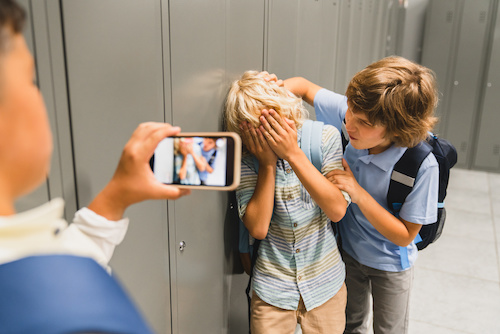
Student bullying is a nationwide problem. Parents are outraged and demand that school administrators evaluate their campus security protocols to keep all students alive and safe.

A southern California school district agreed to pay $27 million to settle a lawsuit brought by the family of a 13-year-old boy who died after he was assaulted at school. On Sept. 16, 2019, two 14-year-old boys were videotaped attacking the victim outside classrooms at the school. One boy struck the teenager in the head from behind and he fell, hitting his head against a pillar. The boys then continued punching the boy, who died nine days later from a brain injury.

Last school year, a 14-year-old female student at a high school in New Jersey died by suicide two days after a video of her being viciously attacked by her bullies at school was uploaded online. The school district’s superintendent has resigned, and four girls have been criminally charged in connection with the assault.

Bullying at schools is pervasive across the country. According to a recent national survey report by the Boys and Girls Clubs of America, 130,000 kids and teens ages 9-18 reported some form of bullying.

This survey revealed that in the past year, 40 percent of youth said they were bullied on school property and 18 percent of youth say they have experienced cyberbullying. Unfortunately, 37 percent of youth say they have skipped a day of school in the last month.

Research has found that students who are bullied are more likely to experience depression and anxiety, have more health complaints, and skip or drop out of school.

Is there anything school administrators or parents can do to control this problem? The answer is yes, but it will take a real commitment by leadership and parents to make a change to create a safe environment.

Recommendations for school administrators

A comprehensive security risk assessment of each campus is needed and is designed to reduce incidents, pinpoint critical areas of vulnerability, and identify the school’s overall strengths and weaknesses. It also helps schools review existing crisis response plans to address and tackle problems such as bullying.

  1. Admit you have a bullying problem: To begin with, educators need to admit the situation occurs on their campuses.
  2. Provide training to teachers: Teachers and staff will need training on what bullying is, what the school’s policies and rules are, and how to enforce the rules.
  3. Work with parents: Schools must work with parents to help them understand that bullying is a severe problem and that they should talk with their children about it.
  4. Develop student awareness: Similarly, students must be made more aware of the effects that this problem can have on their classmates.
  5. Support LGBTQ students: Lesbian, gay, bisexual, transgender, queer, and questioning students should not be discriminated against due to their sexual orientation and their gender identity.
  6. Cyberbullying: Students need to be aware that cyberbullying includes sending, posting, or sharing negative, harmful, false, or mean content about someone else. Some cyberbullying crosses the line into unlawful or criminal behavior.
  7. Install security cameras: Cameras need to be installed, especially in areas where bullying is most likely to take place: hallways, near restrooms, inside the lunchroom, gymnasium, on the playground and on school buses.
  8. Having direct evidence is important: Many parents insist their child would never bully another student. However, when they are shown the video evidence, most promise to work with their child at home. The video also makes it easier for the school to enforce detentions and suspensions.
  9. Provide adult supervision: Keep an adult–ideally a teacher or administrator–in the lunchroom during mealtimes, on the playgrounds during recess and in the hallways during passing periods. Most bullies are cowards and will not act up when they know they are being watched.
  10. Set up an anonymous tip line: Have a tip line or other means of communication (text, online, etc.) that allows students, parents, teachers, staff and the community to anonymously report incidents.
  11. Empower teachers: Teachers have concerns that if they report bullying, they might face severe repercussions from their administration. There needs to be a mechanism for teachers to share information about incidents and concerns outside of the normal reporting structure.

It takes planning and the will to act, but bullying can be brought under control. It takes collaboration from all individuals in the school community.

My thoughts and prayers go out to families, friends, and the community who have been impacted by bullying.

Related: 5 ways bullying changed during the pandemic

Learning Through Play Is Powerful – and Students and Teachers Agree!

12 October 2023 at 23:28

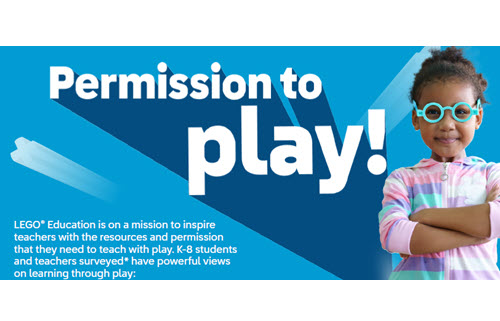
BILLUND, Denmark — To celebrate the second annual World Play Day, LEGO® Education is inspiring teachers to experience purposeful play firsthand by giving students and teachers Permission to Play. 

Play is not just for the playground. It is a powerful tool for teaching that naturally engages students in the learning and builds the skills they’ll need in and outside the classroom like creativity, communication, critical thinking, and collaboration.  

A new survey of K-8 teachers and students from LEGO Education found that nearly all (98%) of students say purposeful play helps them learn and the majority (96%) of teachers believe it’s more effective than traditional methods like lectures or textbooks. On top of that, almost 80% of students want more playful learning experiences in the classroom. 

Despite these benefits, 40% of teachers are incorporating play only once a week or less, and nearly half (47%) think they spend too much time on it.  

“Many teachers feel they can’t easily incorporate play into the classroom, so LEGO Education created the Permission to Play kit as that first step. Once you see students engaged and learning through play, it clicks and the question goes from how to how do we add more?” said Dr. Jenny Nash, Head of Education Impact, U.S. for LEGO Education. 

Whether you are a teacher, administrator, or parent, get Permission to Play by visiting  Rebuild The World, where you can: 

  • Take the Pledge: Commit to adding purposeful play to your own classroom or encourage teachers you know to add more play. 
  • Download free activities: Bring purposeful play into your classroom with activities for you and your students to join in on the fun (can be used with or without LEGO Education products). 
  • Track your play: Get your student(s) involved to see how much progress you’re making with a Color-By-Number template and “Learning in Progress” poster. 

“For nearly three decades, I used purposeful play in my classroom and have seen firsthand the impact it has on both students and teachers,” said Alicia Miller, a retired elementary school teacher from Evans, GA. “There are a lot of trends and products that have their place, but the biggest gamechanger for education is hands-on, playful learning. I encourage every teacher, principal, and parent to try a play-based learning activity with their students and see what joyful and meaningful learning should look like. Our students and teachers deserve to love learning again.” 

Take the pledge and download the Permission to Play Kit at  LEGOeducation.com/RebuildTheWorld.  

*The LEGO Education Survey was conducted by  Wakefield Research among 1,000 US K-8 students and 1,000 US K-8 teachers, split between those who teach/are enrolled in grade K-5 (500) and those who teach/are enrolled in grades 6-8 (500), between Sept. 13th and Sept. 19th, 2023, using an email invitation and an online survey. Data has been weighted. Results from the full survey have a margin of error of +/- 3.1 percentage points. 

About

LEGO® Education offers a range of playful, hands-on STEAM learning experiences based on its comprehensive learning system for students in early learning, primary and secondary education, as well as through after-school programs and competitions. From the Early Learning portfolio to the LEGO® Learning System, these solutions create an active and collaborative environment where learners of all levels and abilities build their confidence, future-proof their skills and spark a lifelong love of learning.  

LEGO, the LEGO logo, the Minifigure and the SPIKE logo are trademarks and/or copyrights of the LEGO Group. ©2023 The LEGO Group. All rights reserved.  

From pencils to pixels: Tech is shaping the future of education

New and advancing technology tools can support the future of education by boosting engagement through interactivity.

Key points:

Some of my most vivid school memories involve teachers struggling to use overhead projectors: placing a printed sheet on the glass and fumbling to align it properly to project an image onto the wall. Students would laugh as the teachers mumbled about the annoyances of technology. Now think about how far the classroom has come since then–schools stocked with iPads and tablets, interactive touchscreens, and even virtual reality headsets.

Undoubtedly, the pandemic accelerated the shift to technology adoption in schools. However, this push to digitize doesn’t just involve remote learning technologies, but also tools for in-person learning. As a result, the classroom is modernizing, and pixels are replacing pencils. But the tech is also much easier to implement and operate than that of days of yore. No more fumbling with transparent sheets and overhead projectors.

Let’s break down how these new technologies are working in practice and the ways they can support better educational outcomes.

Engagement and experimentation

Technology demonstrably helps keep students engaged in their lessons and facilitate better learning in a digital world. While some argue technology is a distraction in the classroom – which can certainly be true if it’s not implemented properly – it also helps students to be focused and engaged in lessons.

Some prominent tools include interactive touchscreens in classrooms that promote and support active learning, a strategy for engaging students in classroom activities with more hands-on activities. These touchscreens help bring learning alive, off the page and into the actual world. These touch screens can facilitate engagement across subjects, even in unlikely places. 

One noteworthy example is science education, specifically anatomy. In traditional lab classes, dissecting frogs and other animals can be challenging due to animal-welfare concerns and resource limitations. Interactive touchscreens, however, offer an alternative. Students can virtually dissect organisms, providing them with a deep understanding of anatomy without the need for physical specimens. This approach not only enhances engagement but also aligns with ethical considerations in education.

Why is engagement important? One study found that active learning significantly increases student performance in the classroom: Students were 1.5 times more likely to fail a class that was primarily lecture-based as opposed to interactive. When students can touch things and interact, as opposed to watching a teacher write notes on a chalkboard and copying it into their notebooks, test scores improve.

Information retention

What’s more, technology can help students retain information for the long term. Touchscreen and tablet technology enables students to actively explore and manipulate digital content, transforming abstract concepts into tangible and comprehensible experiences. The tactile nature of touchscreens allows learners to engage with subjects in a way that textbooks or traditional teaching methods cannot replicate, and that engagement also boosts retention.

Consider this: Research shows that an average learner forgets 70 percent of what they learned after 24 hours and 90 percent of what they learned after a week. But research demonstrates that students who engage with interactive content retain information more effectively via enhanced information processing, contributing to improved performance and better test scores.

Interactive learning can also elicit emotional responses, which in turn impacts retention. When students are emotionally engaged in a lesson or activity, it has been shown to enhance memory consolidation. Interactive technologies have the capacity to create emotionally resonant experiences, whether through gamification, simulations, or immersive storytelling. These emotionally charged experiences are then more likely to be remembered.

So, whether it’s complex mathematical concepts, historical events, or scientific principles, digital technologies offer a dynamic platform for enhancing memory retention and ensuring that learning extends beyond the classroom.

Adaptive learning

Adaptive learning technologies are another transformative aspect of accessibility in education and have the power to revolutionize the traditional classroom experience. This approach leverages artificial intelligence and data analysis to customize educational content for students, recognizing their unique strengths and weaknesses.

Adaptive learning technology provides insights into data to help teachers understand students’ learning processes and patterns. Adaptive learning systems can track data from a variety of sources, providing insights into student progress, engagement, and performance. Educators can then leverage those insights to create tailored, personalized learning experiences.

There are various new adaptive learning platforms, including Smart Sparrow and ScootPad. Teachers merely sign up and input data, or provide access to it, in order for the technology to do the more difficult analytical work. In other words, these platforms don’t necessarily require more time or effort from already overburdened teachers. Educators can also integrate adaptive learning with a centralized device management platform to collect and process all that data from multiple technologies. Teachers can then monitor how students are actually using their devices and how well they are performing.

Of course, it’s important to strike a balance between technology and traditional teaching methods, ensuring that technology supports educational goals rather than replacing human interaction and critical thinking. Technology is a powerful tool in education, but it is not a replacement for human teachers.

Companies go to high schools for career training

Vocational schools of the past contributed to inequity, but modern career training gives students a window into their options.

This story was originally published by Chalkbeat. Sign up for their newsletters at ckbe.at/newsletters.

Every now and then, Ayden Corbett has to explain to surprised homeowners what he’s doing in their front yard.

Since the second semester of his senior year of high school, he has responded to field calls as an employee of the largest underground utility locating company in North America — the Indianapolis-based U.S. Infrastructure Company (USIC). The white truck and multicolored flags marking the location of water, power, and telecommunications lines usually give it away. 

“You learn how to work with people,” he said. 

Corbett graduated in 2022 from a unique program at the Hinds Career Center in Elwood that trains high schoolers for the little-known underground utility locating industry. As demand for the profession skyrocketed during the work-from-home boom of the pandemic, USIC representatives approached the career center about creating a high school graduation pathway that would lead to a diploma, an industry certification, and a job offer.

While still uncommon in Indiana, partnerships between schools and private companies that lead students directly into employment in highly specific trades are growing — the Hinds Center program is the newest among four that have been started statewide.  

“Their goal is to have trained employees ready to enter the field; ours as a career center is to give students the workforce and soft skills to be employable in whatever they choose,” said Jim Pearson, director of the Hinds center. 

And creating more of these programs is a top priority for state education officials, who have been charged under a new state law with reworking high school requirements to encourage more students to work and earn credentials before they graduate. 

It’s part of an effort to counter Indiana’s declining college going rates by connecting high school students to in-demand and high-paying jobs without the need for postsecondary education. 

“Young people are really wanting a variety of options for leading to viable, successful futures. That’s not necessarily a four-year degree,” said Rachel Rosen, senior research associate at the Center for Effective Career and Technical Education at MRDC, a nonprofit, nonpartisan research organization. 

‘Employable in whatever they choose’

The underground utility graduation track at the Hinds Center is a slower version of the standard company training program, hosted inside a former sewing classroom that USIC equipped with a virtual reality system and a wall showing the typical utility connections on a home. The company also provides the two instructors, said Darrin Haynes, senior manager of career and technical education at USIC.

Students study the underground utility maps of Indiana cities like Westfield, where new home construction is booming, and learn to use the equipment that allows them to detect underground utility lines both through virtual reality and in the field. They spend part of the day at the center for career training, but also take traditional academic courses at their home high schools. 

USIC has hired 14 of the 16 graduates of the Elwood program over two years, and fielded calls from its competitors looking to hire students as well, Haynes said. As of this year, students will also earn college credit at Indiana Tech upon completing the pathway. 

One of the main draws of the track is the opportunity to start working during senior year, said Jacob Wright, another 2022 grad. Students who are at least 18 years old are paid the same rate as new hires to respond to calls to 811, the service that companies and homeowners are supposed to call before digging projects, according to Haynes. 

“You get a job out of high school, a (company) truck second semester, and you get paid to take calls,” said Wright. 

Programs should connect to college and career

Several other local graduation pathways in Indiana offer students direct links to local companies, including the RV construction pathway at Wa-Nee Community schools, and a now-defunct aviation sheet metal pathway at Decatur schools. 

The latter operated for a year before the pandemic created challenges for teaching and recruiting students, said Michael Gehrich, director of aviation at Vincennes University, which worked with Decatur schools on the pathway. 

Like the utility locating program, the aviation pathway sought to expose students to a local industry that’s in need of workers, with a lower barrier to entry than existing dual credit aviation programs that require additional college education, Gehrich said. 

Other similar programs can be found in New York City’s P-TECH schools, said Rosen, the researcher, which are six-year schools that partnered with companies to allow students to graduate with STEM skills, a high school diploma, and an associate’s degree. 

Where vocational schools of the past contributed to inequity by directing low-income and students of color into low-wage jobs, modern career training can give students a window into their options, Rosen said. 

“CTE in high school provides students an opportunity to explore what they don’t want to do as much as what they do want to do,” Rosen said. “We may see a failure because the student did not want to go into that field, but higher-resourced students have more opportunity to explore and make mistakes. If they wait till college to explore what they don’t like, there can be a real cost to doing that.”

The goal should be preparing students for a career with mobility, Rosen said. 

Haynes said underground utility locating offers that mobility. Graduates can work for municipalities instead, move into management and training roles at USIC, or request to be relocated to another state. 

The pathway opens a new option in a community where the college-going rate has dropped, said Haynes.

State data shows the rate for Madison County dropped 16 percentage points from 2015-2020, mirroring the state’s drop of 12 points in that time period

Though no students have yet changed their minds about the senior-level course, Pearson said one advantage of the career center is that it has the flexibility to redirect students to one of its other career paths.

Plans to expand in Indiana and other states

Pearson said the Hinds center is open to working with other companies to develop local graduation pathways and meet workforce needs — but that they would need to work closely with educators on curriculum and standards. 

The career center would aim to stay away from low-skill, low-pay tracks, but wouldn’t outright reject retail pathways, for example, if they led into supervision and management positions, Pearson said.

Haynes said that other companies interested in creating their own pipeline programs at local high schools need to commit to an upfront investment with a slow return. In addition to a workforce pipeline, one major benefit to USIC is that graduates have more time to absorb the training, and begin working with more experience, often making fewer mistakes than other new hires. 

Haynes said the company isn’t working with students who are using Indiana’s new career scholarship accounts, which give students money to take career training outside of their schools. Those students could apply for a job with the company and take the training there, he said.

The company plans to continue recruiting in high schools. Haynes said USIC has replicated the high school training program in Oklahoma and New York, and hopes to grow it further throughout Indiana and other states. 

“Most of our graduates have moved out, have a place of their own. They start their lives in a way that we all dream of when we’re teenagers,” said Haynes. “We’re putting them on a pathway to do that.”

Chalkbeat is a nonprofit news organization covering public education.

Related:
4 ways to enrich CTE programs
How our district engages students in a CTE program


Teacher Q&A: Strengthening PD with AI

11 October 2023 at 12:00
Artificial intelligence and AI coaching in PD is guiding teachers through a self-coaching cycle aligned to common growth areas.

Key points:

Just like educational technology is continually advancing, so are best practices for supporting teachers in classrooms. Professional development needs to be relevant, engaging, and personalized.

Megan Schlagel, a high school math teacher in St. Vrain Valley Schools in Longmont, Colo., is an award-winning educator who is dedicated to the continuous improvement of her teaching practices. As part of this dedication, Schlagel, as well as a number of her colleagues, are turning to innovative new approaches to support their learning. This includes the use of AI-powered teacher coaching via the AI Coach by Edthena platform.

With the platform, teachers like Schlagel engage in personalized coaching cycles to further their development. The platform uses artificial intelligence to guide teachers through a self-coaching cycle aligned to common growth areas as they watch video of their classroom teaching in action.

We recently interviewed Schlagel about the use of this new technology and how her district prioritizes teacher development. 

What were your first thoughts when you heard about using AI for professional learning? Why did you decide to try it?

Last year, I was a mentor to a first-year teacher at my school, and my mentee had to record a lesson of her teaching as part of the induction program. I decided to also record myself conducting a similar lesson, so we could go over the lessons together, discuss what works and what doesn’t, and set goals for improvement.  

This was my first real introduction to video coaching. Admittedly, even as a mentor teacher, I was nervous to record myself. However, I quickly learned it wasn’t that bad seeing myself on screen and that this was a powerful way to reflect on my practice. My mentee and I both learned a lot.

So, when my district offered a new professional development course that would allow us to try out AI coaching, I signed up. I wasn’t sure exactly what I was getting into, but I was already benefiting from video coaching and wanted to see what the new AI aspect was all about. At the very least, I knew this opportunity would provide me more time for self-reflection.

How does the AI coaching process work?

During my first time using the AI Coach platform, I uploaded a video of one of my recent algebra lessons. Then, the platform’s computerized coach provided observation tips and asked me a number of questions to consider as I began to analyze my video. This helped me as I made a number of comments on the platform—both about areas I wanted to improve upon and areas I felt I was excelling in—as I watched my teaching play out.

The guidance from the virtual coach helped me think more critically about my practice (…and it also made me laugh – the coach can definitely be funny and sassy at times!).

This helped me set a goal for myself around increasing student discourse. I wanted to encourage my students to talk more in class, and the platform provided me with a number of instructional resources to help me get better at this skill.

At the end of the coaching cycle, after I incorporated these strategies in the classroom, I came back to the platform and reflected on what I learned. I thought about how these new strategies worked and created an action plan for my continued learning in the future.

How has AI-powered coaching impacted your teaching?

What surprised me most about the AI coaching process was that it opened my eyes to different things I could change (and might have missed) about my teaching. I was able to really reflect on how I was teaching and how my students were responding. 

Sometimes it can be daunting—or even feel less genuine—when a coach or administrator comes in to conduct a formal observation. You may be worried about how your students are acting or unknowingly teach differently than normal.

But, with the AI Coach process, I feel less pressure because it really is just myself reflecting on my teaching alongside a computerized coach. This gives me more freedom to try out a new instructional strategy or take a risk with how I deliver a lesson, without having the feeling of being evaluated.

Continuous reflection is so important, and I’m a firm believer that the best teachers have to be reflective—if you aren’t reflecting on your practice, you aren’t growing!

How do you and your colleagues plan to use AI Coach by Edthena moving forward?

In addition to supplementing in-person coaching, I think AI coaching will continue to be a great support for mentor and mentee teachers alike.

In chats with my administrative team, I’ve also suggested using the AI Coach platform for our school’s yearly peer observations or self-reflection observations. Traditionally for the self-reflection observation, teachers write a paper detailing their teaching and how it can improve, but I think this type of video-based reflection can be more impactful and feel more genuine. And, it will allow teachers to receive the benefits of ongoing coaching which is really about reflecting inward and trying to constantly improve.

My school and district always do a great job of supporting teachers’ growth and encouraging us to take on new and innovative professional learning opportunities. The use of AI Coach is just another example of this! 

What students are reading

11 October 2023 at 11:33
Librarians and teachers can look to reading trends as a way to connect students with their next favorite book

Key points:

About five years ago, my New Year’s resolution was to read all the books on my bookshelf I’d never managed to crack. While that resolution was a complete failure (I still have unread books on my shelf), it reignited my love of reading.

Each year, I document my #BritReads reading journey on my social media channels. This year, I decided to bring #BritReads to life with my close family and friends. In lieu of a Christmas present, I’m buying each of them four books a year – books I’ve read or those that are at the top of my list to read. Rather than a one-size-fits-all #BritReads Book Club, I’m curating books just for each of them. For example, my Christmas movie-loving, hopeless-romantic childhood friend will not get my favorite thriller or whodunit!

Just like my little book club, as librarians and teachers, I know you’re looking to connect students with their next favorite book, which means you need to be ahead of the trends and know about the titles emerging as the next generation of books to remember. So, let’s take a look at what students are reading in school libraries and classrooms across the country. Here are the top requested titles according to trend reports in our industry:

In lower elementary, the most popular book (and my #BritReads pick for the little ones) is a picture book called The Smart Cookie by John Jory. It’s the fifth picture book in Jory’s series teaching life lessons using food, accompanied by The Cool Bean, which also tops the list. In The Smart Cookie, the cookie realizes that while school can be tough, with hard work, anyone can be smart in their own way.  From friendly food… to animals. In the nonfiction section, the Who Would Win series is also a hit.  Students love to learn about various species of animals like sharks, reptiles, and birds and select which species survives. 

In upper elementary, Dog Man, The Baby-Sitters Club, and the I Survived series continue to be perennial favorites. In the world of nonfiction, students are starting to learn about race and history through books like Unspeakable: The Tulsa Race Massacre, We Are Still Here!: Native American Truths Everyone Should Know, and Stamped (For Kids): Racism, Antiracism, and You. My #BritReads favorite for upper elementary school is a throwback to my childhood. I read every single book in The Baby-Sitters Club series as a child, so it’s heartwarming to see these Ann M. Martin characters as a part of young lives all over again.

In middle school, books about middle grade students navigating the world dominate the world of fiction, such as the Diary of a Wimpy Kid series and Jerry Craft’s New Kid. In nonfiction, students and teachers are gravitating toward true stories about normal people who accomplish extraordinary things such as I Am Malala, Hidden Figures, and Undefeated: Jim Thorp and the Carlisle Indian School Football Team. My #BritReads pick is Hidden Figures: The Untold True Story of Four African American Women Who Helped Launch our Nation into Space. I read the adult version as part of #BritReads21, but this one has been adapted for a younger audience, giving students an opportunity to learn about a group of women who were well ahead of their time!

As for high school and adult-level titles, many of the books that students are reading are required as part of the curriculum including classics like The Catcher in the Rye, Of Mice and Men, and A Raisin in the Sun. But the classics sit alongside modern fiction hits like The Hate U Give and The Hunger Games series. I was pleased to see I picked some winners for the first #BritReads Book Club mailing. Each of my journalist friends got a copy of Just Mercy by Bryan Stevenson, which happens to be on the top of the adult nonfiction list.  My #BritReads favorite, The Catcher in the Rye, is one of the inspirations behind my 5-month-old boy’s name – Holden!

Across all age levels, teachers and librarians continue to seek titles written by diverse authors featuring multi-cultural characters with social and emotional learning lessons. If it happens to be a part of a series, or graphic novel or Manga form…even better! You can check them all out on Titlewave.

5 spooky Halloween videos for students of all ages

9 October 2023 at 12:00
Use these fun Halloween-themed TED-Ed Lessons and videos to engage students in classroom learning and capture their attention.

Key points:

  • TED-Ed Lessons are a great way to inject some fun into learning a new topic
  • During October, take advantage of creepy decorations and Halloween and use these videos to teach students some new facts
  • See related article: 9 TED-Ed Lessons about different holiday origins

It’s October, and for many students, that means pumpkins, scary decorations, and trick-or-treating on Halloween. What better way to celebrate October than to incorporate some fun and spooky videos to engage students, while also teaching them some fun facts?

Teachers with students of all ages can use TED-Ed Lessons to leverage October’s fun events (Friday the 13th in October, anyone?) and speak to students’ different interests.

The TED-Ed platform lets educators build lessons around any TED-Ed Original, TED Talk, or YouTube video. Once teachers find the video they want to use, they can use the TED-Ed Lessons editor to add questions, discussion prompts, and additional resources.

Use these TED-Ed Lessons and videos for brain breaks, to introduce new lessons, or to give students some fun and age-appropriate spooky experiences into your classroom:

1. Where do superstitions come from? Are you afraid of black cats? Would you open an umbrella indoors? How do you feel about the number 13? Whether or not you believe in them, you’re probably familiar with a few of these superstitions. But where did they come from? Stuart Vyse shares the weird and specific origins of some of our favorite superstitions.

2. Why is being scared so fun? At this very moment, people are lining up somewhere to scare themselves, be it with a thrill-ride or a horror movie. In fact, in October of 2015 alone, about 28 million people visited a haunted house in the US. But you might wonder: What could possibly be fun about being scared? Margee Kerr examines the biology and psychology behind what makes fear so fun.

3. The fascinating history of cemeteries: Spindly trees, rusted gates, crumbling stone, a solitary mourner: these things come to mind when we think of cemeteries. But not long ago, many burial grounds were lively places, with gardens and crowds of people — and for much of human history, we didn’t bury our dead at all. How did cemeteries become what they are today? Keith Eggener delves into our ever-evolving rituals for honoring the dead.

4. What can you learn from ancient skeletons? Ancient skeletons can tell us a great deal about the past, including the age, gender and even the social status of its former owner. But how can we know all of these details simply by examining some old, soil-caked bones? Farnaz Khatibi examines a fascinating branch of science known as biological anthropology.

5. A video that terrifies while it teaches? There’s a TED-Ed Lesson for that: Pick your poison: Blood hungry vampires. Zombies on a mission for your tasty brain. Creepy crawlies. No matter your (fictional or real) fright of choice, TED-Ed has a lesson for all of your Halloween needs. So pick out your favorite candy (more on that later), choose a few videos, and have a very happy Halloween.

❌
❌