
Normal view

There are new articles available, click to refresh the page.
Before yesterdayMain stream

Using tech to teach emerging readers high frequency words

Emerging readers should be hearing, saying, reading, and writing high frequency words consistently within foundational lessons.

Key points:

If you were to poll an audience of educators–classroom teachers, literacy specialists, reading researchers, and university professors–about whether high frequency words should be taught in early elementary, the resounding answer would be YES. These words, after all, are important to students’ ultimate reading success.

The nuances of teaching high frequency words in early elementary would only arise around how these words should be taught.

Luckily, there is a plethora of best practice research and engaging, tech-enabled activities on teaching high frequency words to help teachers make it both a fun and interesting learning experience for young students.

Understanding high frequency words

Before teaching about high frequency words, it is important to understand how they differ from sight words. While these categories of words are often used interchangeably and can cross pollinate, high frequency words are words that appear most frequently in spoken and written language. Sight words, on the other hand, are those words that students recognize by sight–without the need to stop and decode the word–when reading.

For example, “the” is a high frequency word as well as a sight word for many people. “Email” is not a high frequency word, but is often a sight word. Classmates’ names often become sight words for students. Kindergarten students who are still emergent readers during the first semester will quickly learn their name by sight, as well as their classmates’ names (…and, they often get a great sense of satisfaction when recognizing and reading each other’s names!)

When it comes to choosing the actual words that are considered high frequency words, the educational community has embraced three different lists of words: the Dolch, Zeno, and Fry high frequency word lists. These lists have many shared words, and there is no research that says one list supersedes the other. Any of the lists or teaching a combination of the lists should still help produce successful readers.

Strategies for teaching emerging readers high frequency words

There are hundreds of ways to teach high frequency words and the majority of those ways fall into two instructional categories: memorization and phonics integration.

Both of these instructional strategies lead to students learning and quickly recalling many, many words–both high frequency words and sight words–with automaticity. This is called orthographic mapping, which is essentially a progression of warehousing words permanently in a student’s memory for immediate retrieval.

With memorization, teachers can create fun–and effective–learning opportunities for students as long as a few rules are applied. First, it is important to eliminate distractions so that the focus is on the high frequency word. Distractions can include other words printed around the target word, and having accompanying pictures with a word. For example, a picture of a girl in a swing holding her cat can be distracting when the target word is “with.”

It is also important for teachers to say the high frequency word clearly multiple times and to put the word in a sentence for contextual understanding. Providing students with the opportunity to write the word, so they are making the physical connection to the spoken word, is also important.  

There are a number of digital flashcard apps teachers can use to help students memorize high frequency words. The flashcards can also be shown to the whole class using projectors or interactive displays as part of a whole group activity.

Creating “sounds walls” in the classroom–whether on a bulletin board or digital display–highlighting four to five high frequency words is another great way to help students visualize, practice, and memorize target words. Each week, the words can be swapped out with new ones for them to learn.

Another strategy for teaching high frequency words is through integrating the words into phonics lessons. It will help if teachers pick high frequency words that integrate with the phonics skills they are covering. For example, when teaching the phonic element /s/, it can be valuable to include the high frequency word “said,” even if the vowel irregularity of /ai/ hasn’t been taught yet. If students are learning /s/ and maybe even /d/, they will be excited and motivated to apply this knowledge to learning and remembering a new word.

With either memorization or phonics integration, teachers can play a quiz game with students in which teams compete to come up with answers to questions about high frequency words. Or, they can have students participate in racetrack-style board games where two or more players move markers along the spaces of a path from start to finish. At each stop, the player must read a word and use it correctly in a sentence in order to stay on that space. Technology, whether through the use of apps or student devices, can easily be incorporated into both of these game-based activities to make the experiences even more engaging.

Regardless of which instructional strategy is used to teach high frequency words, it is important that students are immersed and active participants in the learning experience. This means that students should be hearing, saying, reading and writing high frequency words consistently within foundational lessons. These immersive opportunities are what make the words stick and what keep students engaged. And, it’s the ultimate mastery of high frequency words that will enable young students to grow into proficient readers. 
Fall River Announces Partnership With Ignite Reading’s Virtual, One-To-One Tutoring Program That’s Doubled Reading Growth For Students Nationwide

20 November 2023 at 20:14

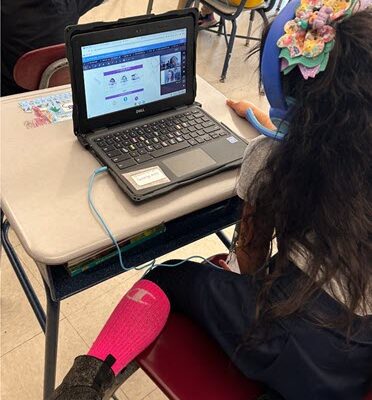
FALL RIVER – Fall River Public Schools announced an innovative new partnership with Ignite Reading to deliver virtual, one-to-one literacy tutoring for 300 first grade students in six schools this fall. Nationally, Ignite Reading’s students have recorded an average of over two weeks of reading progress per week, with no achievement gap for students of color, students with IEPs, multilingual learners, or students receiving free or reduced-price lunches. 

Ignite Reading officials joined Fall River leaders and students at Mary L. Fonseca Elementary today to showcase the nationally recognized program. The demonstration was followed by a Q&A session. Ignite Reading is now serving students in 60 schools across the commonwealth. 

“We’re thrilled to announce a new innovative collaboration with Ignite Reading. Given how participating students have bolstered their foundational reading skills in Massachusetts and nationally with Ignite Reading, we are optimistic that this program will supercharge literacy progress in Fall River,” said Stephanie Kennedy, Director of English Language Arts K-12 of Fall River Public Schools.

“Partnering with Ignite Reading has given us the opportunity to provide high-dose tutoring to our students in a way that would not otherwise be possible,” said Dr. Tracy Curley, Assistant Superintendent/Chief Academic Officer of Fall River Public Schools.

Ignite Reading pairs students with expert tutors who deliver daily, 15-minute, Science of Reading-based instruction to help them master the key foundational skills that equip them to become independent readers.The one-to-one virtual program is seamlessly integrated into the school day and takes the burden off teachers by providing individualized instruction for every student. 

The company is now teaching thousands of students to read across eight states with further plans to expand nationwide. In addition to Massachusetts, Ignite Reading is partnering with schools and districts to serve thousands of students in Arkansas, California, Colorado, Indiana, Mississippi, New York, and Oregon this fall.

“We’re excited to expand our collaboration with Fall River schools to equip hundreds of local students with enhanced literacy skills. Through Ignite Reading’s one-to-one tutoring model,  students nationwide are surpassing expected benchmarks, achieving more than two weeks of reading progress for every week in the program. In addition to improved literacy, we’re also witnessing a significant and positive social-emotional impact. It’s a privilege to serve Fall River’s exceptional students, families, and educational institutions,” said Jessica Reid Sliwerski, Founder & CEO of Ignite Reading.

About Ignite Reading 

Ignite Reading’s mission is to ensure that every student is a confident, independent reader by the end of first grade. The organization was co-founded by CEO Jessica Reid Sliwerski and Evan Marwell, Executive Chairman of Ignite and CEO of EducationSuperHighway. Ignite Reading pairs schools with a dedicated literacy specialist and a team of virtual reading tutors, all highly trained in the Science of Reading, who deliver 1:1 daily instruction to students focused on their specific decoding gaps. Ignite’s data-driven approach, provided by caring and skilled tutors, gives kids the know-how and confidence they need to thrive as fluent readers. The Ignite Reading program, delivered 15 minutes per day during a school’s literacy block, takes the burden of differentiated instruction off of teachers and has an impact immediately. For more information about Ignite Reading, visit: www.ignite-reading.com

About Fall River Public Schools

As an urban Gateway district in the Commonwealth of Massachusetts, the student population of the Fall River Public Schools (FRPS) is ethnically and socioeconomically diverse. Of the 10,987 scholars in Fall River Public Schools, 86% of students are identified as High Needs.  Of all students, 23.1% are English learners, 25.9% are students with disabilities, and 79.9% percent are economically disadvantaged.  Our student population is 44.1% white, 31.8% Hispanic, 11.9% African American,  8.7% multi-race/non-Hispanic, 3.3% Asian, and 0.2% Native American.

Teacher helps implement the science of reading ‘one bite at a time’

Indiana is in the midst of a statewide push to train more teachers in the science of reading with the goal of improving literacy rates.

This story was originally published by Chalkbeat. Sign up for their newsletters at ckbe.at/newsletters.

Indiana is in the midst of an enormous undertaking to improve literacy rates. The approach: Align state standards, curriculum, and teacher training programs with practices rooted in the science of reading, which emphasizes phonics to help students decode words.

Literacy coach Mika Frame has a memorable mantra for accomplishing big goals. 

“My current principal always tells me, ‘Eat an elephant one bite at a time,’” she said. “Through this saying, he always encourages me to seek change in our staff by taking small steps, as opposed to expecting my teachers to change all at once or in drastic measures.”

A K-2 literacy coach at Rose Hamilton Elementary School in Centerville, Frame is part of the first cohort of educators that trained in reading science practices as part of the Indiana Literacy Cadre. Now she co-teaches, analyzes student data to see who needs more help, and leads her colleagues through the state’s new requirements.

Frame told Chalkbeat about her work as Indiana looks to bring more literacy coaches like her to its schools.

What drew you to a career in education?

My favorite part of high school was when I was a cadet teacher and worked with elementary students. I still love working with children today. I enjoy the energy, enthusiasm, and curiosity of young learners. Witnessing the progress and achievements of students, seeing them overcome challenges, and helping them reach their potential brings me a deep sense of satisfaction.

What does your typical day look like?

My typical day at Rose Hamilton includes working alongside teachers in their classrooms. Co-teaching is my favorite aspect of working with my colleagues. An additional responsibility I have most days involves disaggregating learning data. This data often presents patterns and helps teachers identify subgroups of students who need additional interventions. Each month, I also lead professional learning community meetings and offer new ideas and strategies to our teachers. Finally, coordinating testing is an important part of my position; I help ensure testing protocols are executed with fidelity and testing deadlines are met.

What’s your favorite lesson to teach and why?

My favorite lessons to teach are phonics lessons. Phonics plays a vital role in children’s literacy development by providing them with the tools to decode words, read fluently, and comprehend written materials effectively. It sets the stage for their future academic success. Phonics empowers children to read independently and with confidence. When children can decode words accurately, they can read books and other written materials on their own. This opens up a world of knowledge and imagination. I love seeing children’s eyes light up when they start sounding out words. 

When did you first learn about the ideas of reading science? How have you been able to apply those recently with fellow educators or students?

I first learned in depth about the science of reading when I was accepted into the Literacy Cadre program. In the Summer of 2022, I attended a weeklong training that dove into the science of reading. I have been able to apply these strategies by leading professional learning community meetings. During this time, I’ve encouraged teachers in the building to present to one another about the science of reading instructional practices they are doing in their classrooms. 

Tell us about your own experience with school and how it affects your work today.

I grew up in Modoc, Indiana. My community was rural and consisted of approximately 160 people. I graduated with only 18 students in my class, and that included a few foreign exchange students. It was a close-knit community in which everyone knew each other. This background helps me understand that every single child matters, and no matter the size of the district, helping all students succeed academically and helping them reach their full potential is the ultimate goal in education.

What’s the best advice you’ve ever received, and how have you put it into practice?

My current principal always tells me, “Eat an elephant one bite at a time.” Through this saying, he always encourages me to seek change in our staff by taking small steps, as opposed to expecting my teachers to change all at once or in drastic measures. I have used this advice frequently as our school has been going through new initiatives in the last year. Our next step this coming school year is to look into a new phonics program. We are slowly looking into the programs we are using and making small changes, if needed. Again, small steps that lead to changes are important! 

What’s one thing you’ve read that has made you a better educator?

This past year I read “Shifting the Balance” by Jan Miller Burkins and Kari Yates with my colleagues in the literacy cohort. It really helped me understand the aspects of science of reading. After reading the book, my superintendent was kind enough to buy a set for my teachers, and I led a book study at Rose Hamilton. It was great to meet after school with the teachers and reflect on each chapter, as well as what we do or possibly could do better.

Chalkbeat is a nonprofit news organization covering public education.

Related: The intersection of the science of reading and edtech

4 essential resources for building research skills in high school

Strong research skills are valuable beyond high school and will serve students well as they enter a world of digital resources and information

Key points:

Right now is the perfect time to start a research project with your students, as it will help them develop skills they will use for the rest of their lives. While your students, who have grown up in the Information Age and think they already know everything, any classroom teacher knows that our students need help more than they think.

As a school librarian for the past 11 years, my primary focus has been on helping students become adept navigators of the sea of information they live in. By the time students reach me in high school, they are already juggling multiple social media accounts and unknowingly driving many business and political decisions through their media consumption.

Our students’ belief that everything they need to know is online can, without the right skillset, leave them prey to misinformation. So how do we teach our students to steer through the online ocean of data to be both effective researchers and responsible digital citizens?

Here are 4 must-have resources for teaching high school students how to research:

Digital encyclopedias like Britannica School or Credo Reference are still important, and vetted, sources of basic information. Each provides students with a credible resource and gives them helpful notation and citation tools. But don’t settle for just one. Take students on a tour of both databases and explore the differences. Britannica School is user-friendly and comprehensive, which makes it an ideal tool for building student confidence in their research skills. Even if your students are literal social media influencers, they may be apprehensive or overwhelmed navigating a database, and we do not want them to give up and turn to Google. They need to develop their research skills before they are ready to evaluate content from across the world wide web. The bold, colorful text features and differentiation of reading levels make Britannica School engaging and easy to use, and it is a trusted source of information.

Although both databases offer similar content, Credo Reference has a unique feature called Visual Exploration that you and your students will love. The database will retrieve your search results in the form of a mind map, which links your search term to related terms that are hyperlinked to vetted content. Articles related to the original search term appear alongside the mind map. Visual Exploration is an effective and interactive tool for teaching students about choosing search terms and narrowing their research topics. Credo Reference also has a series of short research tip videos for students on topics such as “what to do when your topic is too broad.” 

Upper-level courses require students to navigate and analyze more complex sources than a standard encyclopedia entry, which can often be just a list of facts. Whether you are teaching U.S. Government or A.P. Language and Composition, your students are learning to evaluate persuasive writing and identify propaganda, because these are key information literacy skills. Gale In Context: Opposing Viewpoints not only provides students with curated  sources and all the tools of an online encyclopedia but also introduces students to well-researched writing from various perspectives. A huge part of research is thinking critically about the credibility and intent of the source, and this database provides a safe space to analyze and examine issues from multiple angles. Gale In Context: Opposing Viewpoints is both visually appealing and has a unique feature for visual learners. The Topic Finder retrieves results as your choice of a tile or a wheel that displays terms at various sizes depending on the number of results for that term. For example, a Topic Finder search for “Artificial intelligence” displays “mental health” among the largest clusters of the tile or section of the wheel, which lets me know I can find significant content in the database related to A.I. and mental health. There is a curriculum search and an Educator Resources page with helpful tip sheets and worksheets, including one for students to create their own concept map.

Before you dive into an encyclopedia head first, you may want to go to Discovery Education Experience and gather some tools for teaching research effectively. You do not need to build a lesson from scratch. There’s a wealth of media within the platform to help you activate prior knowledge, develop assignments and create interactive lessons on any topic. The Discover Data channel, which is the result of a partnership between the Nielsen Foundation, Discovery Education, and the National Afterschool Association, has interactive, relevant lessons that you can adapt for your students. One of my favorites is the “Social Media and Misinformation” presentation. You can use it as an introduction to information literacy or assign the presentation as a self-paced lesson for students. In fact, you can use the Build an Activity feature with this or another presentation from Discovery Education to create an assignment and share it directly to Google Classroom, Microsoft Teams, Schoology or Canvas.

With these essentials in your toolbox, you will be able to equip your students with research skills that will help them unlock success in and out of the classroom.

Related: 4 tools to help students build post-COVID research skills

More States Are Screening for Dyslexia. We Need a Plan for What Happens Next.

22 September 2023 at 10:00

Researchers estimate that dyslexia affects one in five individuals. Yet, it is often misdiagnosed or missed entirely. Even more common than a misdiagnosis is the likelihood that a student with dyslexia will find themself in a classroom without the resources to become a successful reader. In fact, according to the International Dyslexia Association, only about 5 percent of students who have dyslexia are properly identified and given support.

Fortunately, we already have the tools to change these realities. For the last 18 years, I have trained teachers and paraprofessionals to effectively administer screening tools. I have walked teachers and administrators through how to use the screening data to inform their instruction. In addition to screening support, I have trained thousands of teachers across multiple states and districts to use structured literacy, an approach rooted in the science of reading. And I have seen the impact of this work firsthand, from boosting student confidence in the classroom to improving lackluster reading scores.

If states and districts commit to properly training teachers in the science of reading and leverage effective and efficient screening tools, we can help ensure all students with dyslexia learn how to read.

Screening Mandates Are Not Enough

In recent months, more states across the country have begun to mandate universal dyslexia screening for children in kindergarten through second grade. Last month, California joined the list of 40 other states that have legislation requiring dyslexia screenings in early education. But of these states, only 30 legally require an intervention for students with this extremely common learning disability. These universal screeners, mostly for students in kindergarten through second grade, also exclude a crucial group — students in third through fifth grade who have not been properly identified in a timely manner.

According to the National Center for Improving Literacy, a partnership between literacy experts, researchers and technical assistance providers focused on increasing evidence-based approaches to serving students with literacy-related disabilities, the term screening refers to a brief evaluation — no more than five minutes — to identify the risk of performing below a benchmark on a specified literacy outcome, such as segmenting words. These screenings serve as a risk indicator and not a formal diagnosis. They are just the first step in a process that prompts educators to do further diagnostic assessments to determine foundational skill gaps for students. Then if gaps are identified, students should receive a research-based reading intervention that is systematic and explicit in targeting the identified skill gaps.

The rise in legislation surrounding dyslexia screeners for students in kindergarten through second grade is a wonderful step in the right direction. Still, without training, support and resources to effectively provide interventions for these students, the impact of these screeners will end at that initial red flag. As students continue to struggle with reading nationally and dyslexia remains prevalent, the importance of research-based literacy training for all teachers should become a top priority.

How the Science of Reading Supports Students with Dyslexia

The National Reading Panel, a national panel formed to assess the effectiveness of different approaches to literacy instruction, has identified five pillars of literacy essential to every effective reading instruction program:

  • Phonemic Awareness — The ability to identify the different sounds that make up speech
  • Phonics — The ability to decode new words by matching sounds to letters
  • Fluency — The ability to read accurately and quickly
  • Vocabulary — The ability to recognize words and understand them
  • Comprehension — The ability to construct meaning from text

Programs with these foundational skills at their core are proven to support all students, including struggling readers and those with dyslexia. Research from the International Dyslexia Association, a nonprofit focused on professionals, advocates, individuals and families impacted by dyslexia, is clear that systematic, explicit instruction that is part of the science of reading is an approach that helps not only students with dyslexia, but all readers. As of July 2023, 32 states and Washington, D.C. have passed legislation mandating evidence-based literacy instruction — and this number continues to grow.

We Need to Prepare Teachers to Address Dyslexia

Unfortunately, a majority of teacher preparation programs do not include research-based literacy instruction. According to the National Council on Teacher Quality (NCTQ), only 25 percent of teacher preparation programs cover all five of the essential components of reading. Even more alarming is that these programs provide minimal instruction on how to teach students with diverse needs, such as those with dyslexia. Even with a high prevalence of struggling readers nationwide, NCTQ found that nearly 60 percent of teacher preparation programs spend less than two hours of instructional time teaching candidates to support struggling readers, and 81 percent of programs do not require a practice opportunity focused on this group of students.

Research shows that 90 percent of students could learn to read with teachers who employ scientifically-based approaches to literacy instruction. In order to give teachers all the resources they need to support struggling readers, states can’t stop with universal screeners. We need to train teachers in the best practices of literacy instruction. We know the science of how students learn to read. Our pre-service teachers deserve to learn that science in their teacher preparation programs.

A change of this size may seem daunting. And in order for it to succeed, we must also help educators who are already in the classroom. That’s why states must allocate time and resources to train teachers in the science of reading. Once teachers have the necessary knowledge to serve their students with dyslexia, they must be given the resources and support to implement effective interventions.

Over the last three years, our students and teachers have been through immense challenges. If they are going to succeed, they need a higher level of support from their administrators, districts and states to access tools, resources and training.

Districts Don’t Need to Wait for Mandates to Make an Impact

School districts don’t need to wait for state mandates to take the first step toward supporting struggling readers. They can respond to low reading scores by implementing dyslexia screeners and training teachers without mandates in place — and many districts have. I applaud those districts taking a proactive approach.

The most important thing educators, administrators and legislators everywhere can do is to stay in tune with the needs of their students. If one in five of our students struggle to learn to read, we must act with urgency. If we want all students to learn how to read, educators need more than screeners. And once teachers identify students with dyslexia, they need training to provide the most efficient and effective instruction possible. Our students can’t wait!

© Lithiumphoto / Shutterstock

More States Are Screening for Dyslexia. We Need a Plan for What Happens Next.

What students are reading

11 October 2023 at 11:33
Librarians and teachers can look to reading trends as a way to connect students with their next favorite book

Key points:

About five years ago, my New Year’s resolution was to read all the books on my bookshelf I’d never managed to crack. While that resolution was a complete failure (I still have unread books on my shelf), it reignited my love of reading.

Each year, I document my #BritReads reading journey on my social media channels. This year, I decided to bring #BritReads to life with my close family and friends. In lieu of a Christmas present, I’m buying each of them four books a year – books I’ve read or those that are at the top of my list to read. Rather than a one-size-fits-all #BritReads Book Club, I’m curating books just for each of them. For example, my Christmas movie-loving, hopeless-romantic childhood friend will not get my favorite thriller or whodunit!

Just like my little book club, as librarians and teachers, I know you’re looking to connect students with their next favorite book, which means you need to be ahead of the trends and know about the titles emerging as the next generation of books to remember. So, let’s take a look at what students are reading in school libraries and classrooms across the country. Here are the top requested titles according to trend reports in our industry:

In lower elementary, the most popular book (and my #BritReads pick for the little ones) is a picture book called The Smart Cookie by John Jory. It’s the fifth picture book in Jory’s series teaching life lessons using food, accompanied by The Cool Bean, which also tops the list. In The Smart Cookie, the cookie realizes that while school can be tough, with hard work, anyone can be smart in their own way.  From friendly food… to animals. In the nonfiction section, the Who Would Win series is also a hit.  Students love to learn about various species of animals like sharks, reptiles, and birds and select which species survives. 

In upper elementary, Dog Man, The Baby-Sitters Club, and the I Survived series continue to be perennial favorites. In the world of nonfiction, students are starting to learn about race and history through books like Unspeakable: The Tulsa Race Massacre, We Are Still Here!: Native American Truths Everyone Should Know, and Stamped (For Kids): Racism, Antiracism, and You. My #BritReads favorite for upper elementary school is a throwback to my childhood. I read every single book in The Baby-Sitters Club series as a child, so it’s heartwarming to see these Ann M. Martin characters as a part of young lives all over again.

In middle school, books about middle grade students navigating the world dominate the world of fiction, such as the Diary of a Wimpy Kid series and Jerry Craft’s New Kid. In nonfiction, students and teachers are gravitating toward true stories about normal people who accomplish extraordinary things such as I Am Malala, Hidden Figures, and Undefeated: Jim Thorp and the Carlisle Indian School Football Team. My #BritReads pick is Hidden Figures: The Untold True Story of Four African American Women Who Helped Launch our Nation into Space. I read the adult version as part of #BritReads21, but this one has been adapted for a younger audience, giving students an opportunity to learn about a group of women who were well ahead of their time!

As for high school and adult-level titles, many of the books that students are reading are required as part of the curriculum including classics like The Catcher in the Rye, Of Mice and Men, and A Raisin in the Sun. But the classics sit alongside modern fiction hits like The Hate U Give and The Hunger Games series. I was pleased to see I picked some winners for the first #BritReads Book Club mailing. Each of my journalist friends got a copy of Just Mercy by Bryan Stevenson, which happens to be on the top of the adult nonfiction list.  My #BritReads favorite, The Catcher in the Rye, is one of the inspirations behind my 5-month-old boy’s name – Holden!

Across all age levels, teachers and librarians continue to seek titles written by diverse authors featuring multi-cultural characters with social and emotional learning lessons. If it happens to be a part of a series, or graphic novel or Manga form…even better! You can check them all out on Titlewave.

❌
❌