Normal view

There are new articles available, click to refresh the page.
Before yesterdayMain stream

Fall River Announces Partnership With Ignite Reading’s Virtual, One-To-One Tutoring Program That’s Doubled Reading Growth For Students Nationwide

20 November 2023 at 20:14

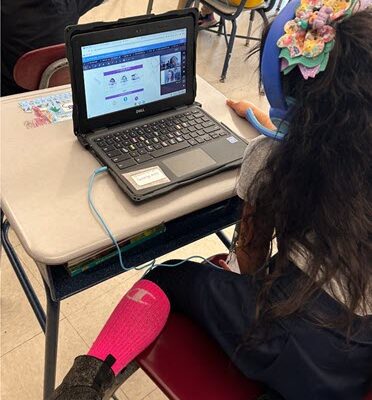
FALL RIVER – Fall River Public Schools announced an innovative new partnership with Ignite Reading to deliver virtual, one-to-one literacy tutoring for 300 first grade students in six schools this fall. Nationally, Ignite Reading’s students have recorded an average of over two weeks of reading progress per week, with no achievement gap for students of color, students with IEPs, multilingual learners, or students receiving free or reduced-price lunches. 

Ignite Reading officials joined Fall River leaders and students at Mary L. Fonseca Elementary today to showcase the nationally recognized program. The demonstration was followed by a Q&A session. Ignite Reading is now serving students in 60 schools across the commonwealth. 

“We’re thrilled to announce a new innovative collaboration with Ignite Reading. Given how participating students have bolstered their foundational reading skills in Massachusetts and nationally with Ignite Reading, we are optimistic that this program will supercharge literacy progress in Fall River,” said Stephanie Kennedy, Director of English Language Arts K-12 of Fall River Public Schools.

“Partnering with Ignite Reading has given us the opportunity to provide high-dose tutoring to our students in a way that would not otherwise be possible,” said Dr. Tracy Curley, Assistant Superintendent/Chief Academic Officer of Fall River Public Schools.

Ignite Reading pairs students with expert tutors who deliver daily, 15-minute, Science of Reading-based instruction to help them master the key foundational skills that equip them to become independent readers.The one-to-one virtual program is seamlessly integrated into the school day and takes the burden off teachers by providing individualized instruction for every student. 

The company is now teaching thousands of students to read across eight states with further plans to expand nationwide. In addition to Massachusetts, Ignite Reading is partnering with schools and districts to serve thousands of students in Arkansas, California, Colorado, Indiana, Mississippi, New York, and Oregon this fall.

“We’re excited to expand our collaboration with Fall River schools to equip hundreds of local students with enhanced literacy skills. Through Ignite Reading’s one-to-one tutoring model,  students nationwide are surpassing expected benchmarks, achieving more than two weeks of reading progress for every week in the program. In addition to improved literacy, we’re also witnessing a significant and positive social-emotional impact. It’s a privilege to serve Fall River’s exceptional students, families, and educational institutions,” said Jessica Reid Sliwerski, Founder & CEO of Ignite Reading.

About Ignite Reading 

Ignite Reading’s mission is to ensure that every student is a confident, independent reader by the end of first grade. The organization was co-founded by CEO Jessica Reid Sliwerski and Evan Marwell, Executive Chairman of Ignite and CEO of EducationSuperHighway. Ignite Reading pairs schools with a dedicated literacy specialist and a team of virtual reading tutors, all highly trained in the Science of Reading, who deliver 1:1 daily instruction to students focused on their specific decoding gaps. Ignite’s data-driven approach, provided by caring and skilled tutors, gives kids the know-how and confidence they need to thrive as fluent readers. The Ignite Reading program, delivered 15 minutes per day during a school’s literacy block, takes the burden of differentiated instruction off of teachers and has an impact immediately. For more information about Ignite Reading, visit: www.ignite-reading.com

About Fall River Public Schools

As an urban Gateway district in the Commonwealth of Massachusetts, the student population of the Fall River Public Schools (FRPS) is ethnically and socioeconomically diverse. Of the 10,987 scholars in Fall River Public Schools, 86% of students are identified as High Needs.  Of all students, 23.1% are English learners, 25.9% are students with disabilities, and 79.9% percent are economically disadvantaged.  Our student population is 44.1% white, 31.8% Hispanic, 11.9% African American,  8.7% multi-race/non-Hispanic, 3.3% Asian, and 0.2% Native American.
Leveraging the K-12 generative AI readiness checklist: A guide for district leadership

The rapid pace of generative AI development brings with it both great opportunities and exposure to risk for schools and district leaders.

Editor’s note: This story on how to manage academic integrity as generative AI moves into classrooms originally appeared on CoSN’s blog and is reposted here with permission.

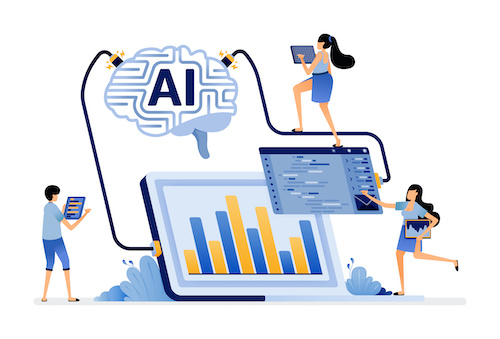
The rapid advances in artificial intelligence (AI) technology present both incredible opportunities and significant challenges for educational settings. Whether or not a school district is considering leveraging AI, the influence of this technology on educational ecosystems is undeniable. As AI increasingly becomes a part of our daily lives, district leaders have a responsibility to understand its impact in educational settings and make informed decisions accordingly. This is true whether the aim is active adoption or simply preparation for a future where AI tools become more prevalent in educational settings.

To ensure school districts are adequately prepared for the integration of generative AI into their instructional and operational systems, the Council of Great City Schools, CoSN – Consortium for School Networking, and Amazon Web Services have partnered to create the K-12 Gen AI Readiness Checklist Questionnaire. There are several ways in which district leadership can best use this checklist for assessing and enhancing their readiness for integrating generative AI technologies into both instructional and operational systems.

The first step should be to bring together a group of individuals that will form the district’s Generative AI Leadership Team. Who Should Be Involved?

  • Superintendents and District Leaders: As decision-makers, your insights into aligning AI adoption with overall goals and strategies are critical.
  • Chief Technology Officers and Chief Information Officers: You will be the primary users of the checklist, evaluating technical capabilities, limitations, and needs.
  • Cross-Functional Teams: The checklist addresses a wide array of considerations, making it essential for input from representatives of all departments involved, including academics, finance, and legal.

The Checklist covers readiness in Executive Leadership, Operational, Data, Technical, Security, Legal/Risk Management. Below are some ideas for how the Checklist can be leveraged in your school district.

Initial Assessment

Alignment with District Goals: Start by examining whether AI technologies align with your district’s mission, vision, and values.
Resource Inventory: Make sure you have designated teams or individuals who will be responsible for overseeing AI adoption.
Tactical Steps
Legal Review: Consult the legal department to ensure compliance with state laws or district rules concerning the use of AI technologies.
Policy Development: Establish clear policies around the responsible use of AI, keeping in mind to align them with existing federal guidelines and best practices.
Staff Training: Ascertain the training needs for different roles within the district and prepare a training roadmap.

Operational Readiness

Procurement Standards: Set forth clear standards for AI procurement, with a focus on compliance and ethical considerations.
Data Governance and Privacy: Make sure you have robust data governance policies in place and that you are compliant with privacy regulations.
Technical Readiness
Security Framework: Update your cybersecurity policies to include AI-specific considerations.
Identity and Access Management: Implement centralized role-based data access controls specifically for AI tools.
Monitoring: Develop processes to keep track of systems that use AI and how they are used.

Risk Management

Legal Remediation: Update terms and conditions to include AI-specific clauses and ensure the legal team has remediation plans.
Copyright Policy: Create or update the copyright policy to include content created using AI tools.
Continuous Review
Iterative Approach: The adoption of AI is not a one-off event but a continual process. Periodic reassessments should be conducted.

Making the Most of the Checklist

Customization: One of the key strengths of the checklist is that it is designed to be adaptable. Districts should customize it according to their unique needs and challenges.
Community Resource: The checklist is intended to evolve. Once it is made publicly available under a Creative Commons license, districts can not only modify it but also share their experiences and modifications, contributing to its value as a community resource.

The extremely rapid pace of gen AI development brings with it both great opportunities and exposure to risk. Creating a team to provide governance for the adoption of AI in educational settings is a critical step in guiding use and preventing abuse. The K-12 Gen AI Readiness Checklist provides a comprehensive framework to guide district leadership to engage in understanding a complex AI ecosystem and the numerous considerations that come with AI adoption. By strategically leveraging this checklist, school districts can navigate the complexities of AI technology while aligning with educational objectives and ensuring data privacy and security.

The goal is not just to blindly adopt new technology but to transform our education systems for the better, and this checklist is a strong step in that direction.

SETDA Launches Cybersecurity Resource Focused on Small, Rural, and Under-resourced Districts

18 October 2023 at 19:24

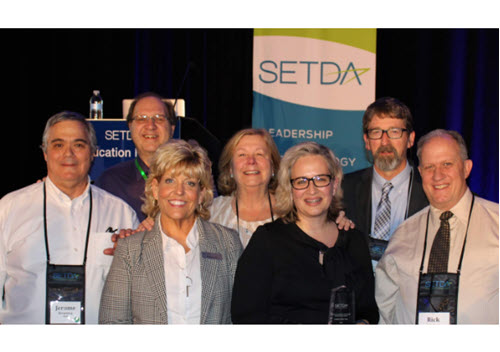
Washington, D.C. — Today, SETDA is pleased to announce the release of a cybersecurity resource focused on small, rural, and under-resourced districts. Developed by SETDA’s Cybersecurity & Privacy Collaborative—an active professional learning community consisting of state edtech leaders, affiliates, and corporate members—this resource is designed to identify essential resources, assess state-level K-12 cybersecurity advocacy initiatives, and craft policy recommendations to enhance cybersecurity readiness within these districts. 

In collaboration with Microsoft and the K12 Security Information eXchange (K12 SIX), this initiative underscores SETDA’s commitment to providing essential tools and guidance to support state educational agencies.

The publication, titled Small Districts, Big Hurdles: Cybersecurity Support for Small, Rural, and Under-resourced Districts, offers details on how state agencies and other support organizations are empowering their smallest districts to secure their data and networks. From detailing various funding sources to providing insights into statewide and regional partnerships and offering practical examples of cybersecurity training, the document is a must-read for everyone involved in helping districts improve their cybersecurity posture. It is the newest addition to SETDA’s Cybersecurity & Privacy Collection, available for access in their OER Commons site.

“As technology continues to reshape education, ensuring the safety and security of students’ data and school networks has never been more crucial. This publication is a testament to SETDA’s dedication to supporting state education agencies’ technology initiatives and equips state edtech leaders with the resources and tools needed to guide districts, especially those facing the greatest challenges,” said Julia Fallon, Executive Director, SETDA. “The Cybersecurity & Privacy Collaborative hopes that this document will help prevent breaches of student and educator data while offering strategies to support and improve cybersecurity readiness for small and rural schools.”

“The human impact of breaches is greater than lost time and money for districts, with potential life-long consequences for young people whose data may be compromised. Microsoft is committed to increasing access to cybersecurity tools to help schools address this challenge. I commend SEDTA for this focus on small, rural, and under-resourced districts ensuring that all students—regardless of location or context—can learn in safe and secure environments,” said Paige Johnson, Vice President Education Marketing, Microsoft.

About SETDA
SETDA is the principal association representing U.S. state and territorial educational technology and digital learning leaders. Through a broad array of programs and advocacy, SETDA builds member capacity and engages partners to empower the education community in leveraging technology for learning, teaching, and school operations. For more information, please visit www.setda.org.

Fixing the K-12 cybersecurity problem

CISA’s Secure by Design pledge commits manufacturers to improving K-12 cybersecurity and strengthening networks.

Key points:

In early September, the Cybersecurity and Infrastructure Security Agency (CISA) announced a voluntary pledge for K-12 education technology software manufacturers to commit to designing products with a greater focus on security. In the announcement, CISA mentioned that six leaders in the education software industry had already committed to the pledge: PowerSchool, ClassLink, Clever, GG4L, Instructure, and D2L.

“We need to address K-12 cybersecurity issues at its foundation by ensuring schools and administrators have access to technology and software that is safe and secure right out of the box,” said CISA director Jen Easterly. “I want to thank ClassLink, Clever, D2L, GG4L, Instructure, and PowerSchool, who have already signed this pledge and for their leadership in this area. We need all K-12 software manufacturers to help us improve cybersecurity for the education sector by committing to prioritize security as a critical element of product development.”

CISA’s principles for K-12 cybersecurity

This action brings a spotlight to the ongoing issue of K-12 cybersecurity. CISA’s goal is to persuade more K-12 software and hardware manufacturers to commit to its pledge. Signing the pledge demonstrates that the manufacturer is committing to three principles:

  • Taking ownership of customer security outcomes: Includes offering Single Sign On (SSO) and security audit logs and no extra charge
  • Embracing radical transparency and accountability: Includes publishing a secure by design roadmap, a vulnerability disclosure policy and security-relevant statistics and trends
  • Leading from the top by making secure technology a key priority for company leadership: Includes naming a C-level leader at the company who is charged with overseeing security

Secure by design explained

What does secure by design mean? In typical software design and manufacturing, the focus is on the product’s reason for being. For example, the developers of reading improvement software are focused on building a product that delivers measurable improvements to student reading speed and comprehension. The security of the software and its user data are an afterthought. Any security considerations are made late in the development process or bolted on afterward.

In contrast, a secure by design approach means that developers bake security into the design of the product from the beginning. This has proven to be a much more effective approach to protecting software than trying to patch security holes after the fact. Secure by design was popularized by the European Union’s General Data Protection Regulation (GDPR), which went into effect in May 2018. Today, this is a more common approach to software design, but it is relatively new to K-12 education.

Ongoing K-12 cybersecurity threats

While the K-12 education industry strives for improved protection in its schools, fresh examples of security holes continue to appear on a regular basis. Most recently, Prince George’s County Public Schools was the victim of a ransomware attack on August 14 that impacted about 4,500 user accounts, mostly staff, according to the district. Cybersecurity breaches such as this can have a detrimental impact on K-12 schools, threatening both reputation and financial well-being.

Unfortunately, successful ransomware attacks can hinge on exploiting a single vulnerability hidden among the dozens of software applications running in most school districts. By following CISA’s guidance and committing to a secure by design approach to software development, developers can further reduce potential vulnerabilities and keep staff and student data more secure.

Related: Education suffers the highest rate of ransomware attacks

Navigating generative AI: Promoting academic integrity

Educators should advocate for responsible generative AI usage that aligns with their values of academic integrity.

Editor’s note: This story on how to manage academic integrity as generative AI moves into classrooms originally appeared on CoSN’s blog and is reposted here with permission.

With AI dominating conversations among education leaders, the importance of managing expectations and academic integrity is now more critical than ever as the new school year commences. Most districts are realizing that straightforward banning of ChatGPT and other tools only keeps the students without home access and data plans from using A toolsets. Certainly, none of us want to create additional digital inequities. However, as students leverage generative AI for assignments and “Cheat detectors” prove ineffective in detecting AI-generated output, school administrators must take proactive measures to safeguard the authenticity of student assignments and promote ethical use.

Since AI-detection tools are being shown to fall short in detecting AI-generated output, it becomes crucial for school administrators to be proactive to ensure ethical use and safeguard the authenticity of student assignments. The best way to manage assignments and ethical use is to set expectations and put them front and center in the assignments themselves. Teachers need training on how to rework assignments to incorporate and evaluate the AI generated output.  Academic Integrity Statements are a good place to start with districts setting expectations for students. Academic Integrity Statements allow educators to put ethics first and teach essential tenets to students up front. They should be integrated into the framework of every project and report while emphasizing the importance of honest work and original thinking. By encouraging students to pledge their commitment to academic integrity, we instill in them a sense of responsibility and respect for the academic process. Can students just give this lip service? Yes, of course, But that does not reduce their importance. We also have a board approved RUPs (AUPs) that set expectations on tech use that may get circumvented. They set the standard, much like a speed limit sign does on a city street. As educational leaders, we must emphasize the significance of academic integrity, not just as a set of rules but as a core value that fosters a positive learning environment. By making it a focal point, we reinforce the notion that authentic learning experiences and personal growth come from genuine effort and creativity.

This may beg the question of the need for school board policies around Generative AI. Although this may initially seem like a good idea, The rapid pace of change in AI and the slow change of policy may indicate otherwise. I think that it may be better to couch AI management under administrative guidelines and let them fall under the RUP (AUP) or other existing policies. We found this to be true in our district as well with Social Media several years ago and issued Guidelines under our RUP.

The concerns surrounding Generative AI’s impact on academic integrity, among larger issues, have not gone unnoticed in the tech industry. Prominent voices, including Sam Altman of OpenAI, have urged AI regulation to ensure ethical and responsible use. As educational leaders, we must lead the call for action to protect the integrity of our academic institutions.

With at least 15 states already considering bills related to Generative AI and its potential impact on various industries, it’s not far-fetched to envision education as the next area of focus. As pioneers in the educational sector, we should proactively engage with policymakers and advocate for responsible AI usage that aligns with our values of integrity, fairness, and inclusivity. As we anticipate the evolving landscape of AI in education, it’s crucial to equip our schools and educators with the necessary knowledge and resources. Professional development programs should include training on identifying AI-generated content, how to adjust assignments to encourage prompt development/ evaluation, and best practices for fostering academic integrity.

As we embrace the digital age with Generative AI, promoting and managing academic integrity is a shared responsibility among our educational communities. We are taking steps like these to help ensure that our schools remain beacons of authentic learning in the digital age.

❌
❌