

Normal view

There are new articles available, click to refresh the page.
Before yesterdayMain stream

Using tech to teach emerging readers high frequency words

Emerging readers should be hearing, saying, reading, and writing high frequency words consistently within foundational lessons.

Key points:

If you were to poll an audience of educators–classroom teachers, literacy specialists, reading researchers, and university professors–about whether high frequency words should be taught in early elementary, the resounding answer would be YES. These words, after all, are important to students’ ultimate reading success.

The nuances of teaching high frequency words in early elementary would only arise around how these words should be taught.

Luckily, there is a plethora of best practice research and engaging, tech-enabled activities on teaching high frequency words to help teachers make it both a fun and interesting learning experience for young students.

Understanding high frequency words

Before teaching about high frequency words, it is important to understand how they differ from sight words. While these categories of words are often used interchangeably and can cross pollinate, high frequency words are words that appear most frequently in spoken and written language. Sight words, on the other hand, are those words that students recognize by sight–without the need to stop and decode the word–when reading.

For example, “the” is a high frequency word as well as a sight word for many people. “Email” is not a high frequency word, but is often a sight word. Classmates’ names often become sight words for students. Kindergarten students who are still emergent readers during the first semester will quickly learn their name by sight, as well as their classmates’ names (…and, they often get a great sense of satisfaction when recognizing and reading each other’s names!)

When it comes to choosing the actual words that are considered high frequency words, the educational community has embraced three different lists of words: the Dolch, Zeno, and Fry high frequency word lists. These lists have many shared words, and there is no research that says one list supersedes the other. Any of the lists or teaching a combination of the lists should still help produce successful readers.

Strategies for teaching emerging readers high frequency words

There are hundreds of ways to teach high frequency words and the majority of those ways fall into two instructional categories: memorization and phonics integration.

Both of these instructional strategies lead to students learning and quickly recalling many, many words–both high frequency words and sight words–with automaticity. This is called orthographic mapping, which is essentially a progression of warehousing words permanently in a student’s memory for immediate retrieval.

With memorization, teachers can create fun–and effective–learning opportunities for students as long as a few rules are applied. First, it is important to eliminate distractions so that the focus is on the high frequency word. Distractions can include other words printed around the target word, and having accompanying pictures with a word. For example, a picture of a girl in a swing holding her cat can be distracting when the target word is “with.”

It is also important for teachers to say the high frequency word clearly multiple times and to put the word in a sentence for contextual understanding. Providing students with the opportunity to write the word, so they are making the physical connection to the spoken word, is also important.  

There are a number of digital flashcard apps teachers can use to help students memorize high frequency words. The flashcards can also be shown to the whole class using projectors or interactive displays as part of a whole group activity.

Creating “sounds walls” in the classroom–whether on a bulletin board or digital display–highlighting four to five high frequency words is another great way to help students visualize, practice, and memorize target words. Each week, the words can be swapped out with new ones for them to learn.

Another strategy for teaching high frequency words is through integrating the words into phonics lessons. It will help if teachers pick high frequency words that integrate with the phonics skills they are covering. For example, when teaching the phonic element /s/, it can be valuable to include the high frequency word “said,” even if the vowel irregularity of /ai/ hasn’t been taught yet. If students are learning /s/ and maybe even /d/, they will be excited and motivated to apply this knowledge to learning and remembering a new word.

With either memorization or phonics integration, teachers can play a quiz game with students in which teams compete to come up with answers to questions about high frequency words. Or, they can have students participate in racetrack-style board games where two or more players move markers along the spaces of a path from start to finish. At each stop, the player must read a word and use it correctly in a sentence in order to stay on that space. Technology, whether through the use of apps or student devices, can easily be incorporated into both of these game-based activities to make the experiences even more engaging.

Regardless of which instructional strategy is used to teach high frequency words, it is important that students are immersed and active participants in the learning experience. This means that students should be hearing, saying, reading and writing high frequency words consistently within foundational lessons. These immersive opportunities are what make the words stick and what keep students engaged. And, it’s the ultimate mastery of high frequency words that will enable young students to grow into proficient readers. 
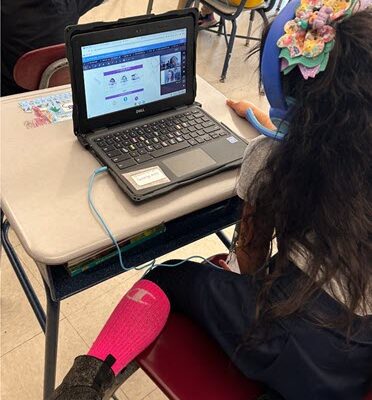
Fall River Announces Partnership With Ignite Reading’s Virtual, One-To-One Tutoring Program That’s Doubled Reading Growth For Students Nationwide

20 November 2023 at 20:14

FALL RIVER – Fall River Public Schools announced an innovative new partnership with Ignite Reading to deliver virtual, one-to-one literacy tutoring for 300 first grade students in six schools this fall. Nationally, Ignite Reading’s students have recorded an average of over two weeks of reading progress per week, with no achievement gap for students of color, students with IEPs, multilingual learners, or students receiving free or reduced-price lunches. 

Ignite Reading officials joined Fall River leaders and students at Mary L. Fonseca Elementary today to showcase the nationally recognized program. The demonstration was followed by a Q&A session. Ignite Reading is now serving students in 60 schools across the commonwealth. 

“We’re thrilled to announce a new innovative collaboration with Ignite Reading. Given how participating students have bolstered their foundational reading skills in Massachusetts and nationally with Ignite Reading, we are optimistic that this program will supercharge literacy progress in Fall River,” said Stephanie Kennedy, Director of English Language Arts K-12 of Fall River Public Schools.

“Partnering with Ignite Reading has given us the opportunity to provide high-dose tutoring to our students in a way that would not otherwise be possible,” said Dr. Tracy Curley, Assistant Superintendent/Chief Academic Officer of Fall River Public Schools.

Ignite Reading pairs students with expert tutors who deliver daily, 15-minute, Science of Reading-based instruction to help them master the key foundational skills that equip them to become independent readers.The one-to-one virtual program is seamlessly integrated into the school day and takes the burden off teachers by providing individualized instruction for every student. 

The company is now teaching thousands of students to read across eight states with further plans to expand nationwide. In addition to Massachusetts, Ignite Reading is partnering with schools and districts to serve thousands of students in Arkansas, California, Colorado, Indiana, Mississippi, New York, and Oregon this fall.

“We’re excited to expand our collaboration with Fall River schools to equip hundreds of local students with enhanced literacy skills. Through Ignite Reading’s one-to-one tutoring model,  students nationwide are surpassing expected benchmarks, achieving more than two weeks of reading progress for every week in the program. In addition to improved literacy, we’re also witnessing a significant and positive social-emotional impact. It’s a privilege to serve Fall River’s exceptional students, families, and educational institutions,” said Jessica Reid Sliwerski, Founder & CEO of Ignite Reading.

About Ignite Reading 

Ignite Reading’s mission is to ensure that every student is a confident, independent reader by the end of first grade. The organization was co-founded by CEO Jessica Reid Sliwerski and Evan Marwell, Executive Chairman of Ignite and CEO of EducationSuperHighway. Ignite Reading pairs schools with a dedicated literacy specialist and a team of virtual reading tutors, all highly trained in the Science of Reading, who deliver 1:1 daily instruction to students focused on their specific decoding gaps. Ignite’s data-driven approach, provided by caring and skilled tutors, gives kids the know-how and confidence they need to thrive as fluent readers. The Ignite Reading program, delivered 15 minutes per day during a school’s literacy block, takes the burden of differentiated instruction off of teachers and has an impact immediately. For more information about Ignite Reading, visit: www.ignite-reading.com

About Fall River Public Schools

As an urban Gateway district in the Commonwealth of Massachusetts, the student population of the Fall River Public Schools (FRPS) is ethnically and socioeconomically diverse. Of the 10,987 scholars in Fall River Public Schools, 86% of students are identified as High Needs.  Of all students, 23.1% are English learners, 25.9% are students with disabilities, and 79.9% percent are economically disadvantaged.  Our student population is 44.1% white, 31.8% Hispanic, 11.9% African American,  8.7% multi-race/non-Hispanic, 3.3% Asian, and 0.2% Native American.

Schoolwork shouldn’t double as screentime

16 November 2023 at 10:02
Learning on screens was the best could do during school closures--not a best practice in screen time that we should continue for students.

This story was originally published by Chalkbeat. Sign up for their newsletters at ckbe.at/newsletters.

Children get one childhood, and time is one of the most precious resources we have in schools. For these reasons, I am increasingly frustrated that I have next to no power to stop my own children from wasting their time in front of a computer screen.

That’s because screens are where they are expected to access and complete their schoolwork and homework. My children are assigned to watch online videos and answer questions about them in an online form. Their grades reflect their responses.  

No doubt, this assigned screen time probably comes from a good place. Teachers want to provide students with experiences they will enjoy. Why give students a reading that they may not do when you could give them a video they are more likely to watch?

Watch enough videos and students begin to believe that learning must be passively entertaining and that the best way to take in new information is through streaming content. The most compelling story is often not the most truthful one, but the one that is the most slickly produced. 

I don’t want that for my children. I want my children to enjoy the challenges of learning, to take in multiple sources, and to ask good questions about everything they engage with. I don’t want them on autopilot, screening their way through childhood. 

UNESCO recently published a book titled “An Ed-Tech Tragedy?” and it is sobering. This book spells out how pandemic school shutdowns resulted in massive learning losses. It also highlights the costs, in terms of mental health, of spending so much time on screens. 

For years, educational technologists have cast personalized online learning as an answer to what plagues education. But even when ed tech was needed most, these tools did not always rise to the occasion. They couldn’t take the place of teachers, peers, and classroom conversations. And our reliance on them has instilled terrible habits in teachers and students.

Parents were rightly frustrated and angry when their children were robbed of the opportunity to attend school because of pandemic lockdowns. It is not good for a child to be away from their peers and in front of screens. Key social, emotional, and intellectual skills are lost when this happens. That’s why we must not replicate the worst aspects of school lockdowns now that children are back in school. Children should spend time engaging their teacher and each other–making eye contact and appreciating what can only be learned through human presence–not retreating back into the safe, solitary spaces of their devices.

Their schoolwork should have them engaging with what is best in our culture, not what is most convenient or entertaining. This means reading challenging texts with students and doing the work of helping them develop their voices in relation to these texts. However, educators seem to be having a hard time remembering that distance learning was the best we could think to do during the lockdown, not a best practice that we should continue.

I am not afraid to mourn all that was lost because of the pandemic. Children suffered tremendously, and schools across the country will be dealing with the academic, social, and emotional fallout for years to come. My grieving process involves honoring my hopes and fears from the middle of the pandemic. I promised myself then that if we ever got back to normal, I wouldn’t take the physical presence of my students for granted. I would look at their unmasked faces and try to communicate how much I appreciated that we were together. 

Screens, and the illusion of engagement they offer, get in the way of this type of lived gratitude, and they distract us from what matters.

To be clear, teachers’ lives in schools are often tremendously difficult. Many educators are demoralized and under-appreciated, but an over-reliance on screens will not make the work of teaching more rewarding or valued. It’s human connections that make teaching an endlessly rewarding calling. I know this from my own classrooms and my experience training future teachers. 

As much as I may internally complain about having to pick up all the little Lego pieces, Magna-Tiles, and wooden blocks that my boys leave scattered around the house at the end of a long day, I know that this type of embodied play is the foundation of a good childhood. And as hard as it might be to listen–really listen–to the stories my daughters tell as they process their day at school (and not just let my mind wander to all the items on my to-do list), there is no greater gift we can give children than our fullest attention.

I am not a perfect parent or teacher, but I do know that I am at my best when I am present. And I know that screens keep me from offering my full presence. I wish I had more power to keep them out of schools because I know my children–and all of our children–deserve better.

For more news on teaching trends, visit eSN’s Innovative Teaching page.

Chalkbeat is a nonprofit news organization covering public education.

Teacher helps implement the science of reading ‘one bite at a time’

Indiana is in the midst of a statewide push to train more teachers in the science of reading with the goal of improving literacy rates.

This story was originally published by Chalkbeat. Sign up for their newsletters at ckbe.at/newsletters.

Indiana is in the midst of an enormous undertaking to improve literacy rates. The approach: Align state standards, curriculum, and teacher training programs with practices rooted in the science of reading, which emphasizes phonics to help students decode words.

Literacy coach Mika Frame has a memorable mantra for accomplishing big goals. 

“My current principal always tells me, ‘Eat an elephant one bite at a time,’” she said. “Through this saying, he always encourages me to seek change in our staff by taking small steps, as opposed to expecting my teachers to change all at once or in drastic measures.”

A K-2 literacy coach at Rose Hamilton Elementary School in Centerville, Frame is part of the first cohort of educators that trained in reading science practices as part of the Indiana Literacy Cadre. Now she co-teaches, analyzes student data to see who needs more help, and leads her colleagues through the state’s new requirements.

Frame told Chalkbeat about her work as Indiana looks to bring more literacy coaches like her to its schools.

What drew you to a career in education?

My favorite part of high school was when I was a cadet teacher and worked with elementary students. I still love working with children today. I enjoy the energy, enthusiasm, and curiosity of young learners. Witnessing the progress and achievements of students, seeing them overcome challenges, and helping them reach their potential brings me a deep sense of satisfaction.

What does your typical day look like?

My typical day at Rose Hamilton includes working alongside teachers in their classrooms. Co-teaching is my favorite aspect of working with my colleagues. An additional responsibility I have most days involves disaggregating learning data. This data often presents patterns and helps teachers identify subgroups of students who need additional interventions. Each month, I also lead professional learning community meetings and offer new ideas and strategies to our teachers. Finally, coordinating testing is an important part of my position; I help ensure testing protocols are executed with fidelity and testing deadlines are met.

What’s your favorite lesson to teach and why?

My favorite lessons to teach are phonics lessons. Phonics plays a vital role in children’s literacy development by providing them with the tools to decode words, read fluently, and comprehend written materials effectively. It sets the stage for their future academic success. Phonics empowers children to read independently and with confidence. When children can decode words accurately, they can read books and other written materials on their own. This opens up a world of knowledge and imagination. I love seeing children’s eyes light up when they start sounding out words. 

When did you first learn about the ideas of reading science? How have you been able to apply those recently with fellow educators or students?

I first learned in depth about the science of reading when I was accepted into the Literacy Cadre program. In the Summer of 2022, I attended a weeklong training that dove into the science of reading. I have been able to apply these strategies by leading professional learning community meetings. During this time, I’ve encouraged teachers in the building to present to one another about the science of reading instructional practices they are doing in their classrooms. 

Tell us about your own experience with school and how it affects your work today.

I grew up in Modoc, Indiana. My community was rural and consisted of approximately 160 people. I graduated with only 18 students in my class, and that included a few foreign exchange students. It was a close-knit community in which everyone knew each other. This background helps me understand that every single child matters, and no matter the size of the district, helping all students succeed academically and helping them reach their full potential is the ultimate goal in education.

What’s the best advice you’ve ever received, and how have you put it into practice?

My current principal always tells me, “Eat an elephant one bite at a time.” Through this saying, he always encourages me to seek change in our staff by taking small steps, as opposed to expecting my teachers to change all at once or in drastic measures. I have used this advice frequently as our school has been going through new initiatives in the last year. Our next step this coming school year is to look into a new phonics program. We are slowly looking into the programs we are using and making small changes, if needed. Again, small steps that lead to changes are important! 

What’s one thing you’ve read that has made you a better educator?

This past year I read “Shifting the Balance” by Jan Miller Burkins and Kari Yates with my colleagues in the literacy cohort. It really helped me understand the aspects of science of reading. After reading the book, my superintendent was kind enough to buy a set for my teachers, and I led a book study at Rose Hamilton. It was great to meet after school with the teachers and reflect on each chapter, as well as what we do or possibly could do better.

Chalkbeat is a nonprofit news organization covering public education.

Related: The intersection of the science of reading and edtech

5 strategies to ignite student engagement

Student engagement is about tapping into students' innate curiosity, creativity, and critical thinking skills--these strategies can help.

Key points:

When you think of education, what is the first thing that comes to mind? For some, it might be a pile of homework or a stack of books that need reading. Others may recall the flashcards they used to memorize specific formulas or expand their vocabulary. All these examples have a place in the learning ecosystem, but true education should be about so much more. Student learning should involve curiosity, discovery, and the opportunity to experiment with a variety of different solutions. To put it more simply: true education requires student engagement.

Every teacher hopes to ignite, empower, and engage the students who walk through their classroom door. Ample research has shown that student engagement is crucial to overall learning and long-term success. However, implementing this is easier said than done. To better ignite student curiosity and interest, teachers should consider trying one of these strategies that help make student engagement second nature:

  1. Mystery Box: Start your class by bringing in a mystery box with something hidden inside. Then, have students ask yes or no questions to figure out what is in the box. To ensure this activity stays relevant, it helps to have objects in the box that loosely ties to the content and have students draw the connection. For instance, an old horseshoe could be used in a lesson about the Pony Express, or a piece of amber for a unit on fossils.
  2. Taboo Tactics: There’s nothing more tempting than forbidden fruit—so use this strategy to make knowledge a mouthwatering apple. Before you teach new content, close the door. Tell them you don’t want anyone to find out that you’re teaching them this idea. The content should never actually be controversial, but adding an element of secrecy is enough to hold student interest.
  3. Make a Mascot: Task students with building a character that represents something you’re learning about. Have them explain the symbolism behind their construction as a means of probing their understanding. Be sure to add constraints as well, so students will need to think critically and creatively. For example, they could construct a mascot that represents how humans impact their environment using only 5 materials provided from a table.
  4. Build an Intellectually Safe Culture: Create a culture where students feel free to offer ideas and are encouraged to make mistakes. A simple change in the wording of a question can open up a comfortable space for students to offer solutions. Instead of asking, “What is the answer?” pose the question as “What is an answer?” This allows students to recognize that many solutions are possible.
  5. Engage in Project-Based Learning: Project-based learning (PBL) is a teaching method in which students learn by actively engaging in real-world and personally meaningful projects that – in ways both big and small – make the world a better place. Consider exploring Blue Apple projects which cover everything from environmental sustainability to responsible money management!

At its heart, student engagement is about tapping into their innate curiosity, creativity, and critical thinking skills. By giving students the space they need to ask questions and pursue ideas, teachers can equip them with a mindset that allows them to tackle any challenge that comes their way – both in the classroom and beyond.

What students are reading

11 October 2023 at 11:33
Librarians and teachers can look to reading trends as a way to connect students with their next favorite book

Key points:

About five years ago, my New Year’s resolution was to read all the books on my bookshelf I’d never managed to crack. While that resolution was a complete failure (I still have unread books on my shelf), it reignited my love of reading.

Each year, I document my #BritReads reading journey on my social media channels. This year, I decided to bring #BritReads to life with my close family and friends. In lieu of a Christmas present, I’m buying each of them four books a year – books I’ve read or those that are at the top of my list to read. Rather than a one-size-fits-all #BritReads Book Club, I’m curating books just for each of them. For example, my Christmas movie-loving, hopeless-romantic childhood friend will not get my favorite thriller or whodunit!

Just like my little book club, as librarians and teachers, I know you’re looking to connect students with their next favorite book, which means you need to be ahead of the trends and know about the titles emerging as the next generation of books to remember. So, let’s take a look at what students are reading in school libraries and classrooms across the country. Here are the top requested titles according to trend reports in our industry:

In lower elementary, the most popular book (and my #BritReads pick for the little ones) is a picture book called The Smart Cookie by John Jory. It’s the fifth picture book in Jory’s series teaching life lessons using food, accompanied by The Cool Bean, which also tops the list. In The Smart Cookie, the cookie realizes that while school can be tough, with hard work, anyone can be smart in their own way.  From friendly food… to animals. In the nonfiction section, the Who Would Win series is also a hit.  Students love to learn about various species of animals like sharks, reptiles, and birds and select which species survives. 

In upper elementary, Dog Man, The Baby-Sitters Club, and the I Survived series continue to be perennial favorites. In the world of nonfiction, students are starting to learn about race and history through books like Unspeakable: The Tulsa Race Massacre, We Are Still Here!: Native American Truths Everyone Should Know, and Stamped (For Kids): Racism, Antiracism, and You. My #BritReads favorite for upper elementary school is a throwback to my childhood. I read every single book in The Baby-Sitters Club series as a child, so it’s heartwarming to see these Ann M. Martin characters as a part of young lives all over again.

In middle school, books about middle grade students navigating the world dominate the world of fiction, such as the Diary of a Wimpy Kid series and Jerry Craft’s New Kid. In nonfiction, students and teachers are gravitating toward true stories about normal people who accomplish extraordinary things such as I Am Malala, Hidden Figures, and Undefeated: Jim Thorp and the Carlisle Indian School Football Team. My #BritReads pick is Hidden Figures: The Untold True Story of Four African American Women Who Helped Launch our Nation into Space. I read the adult version as part of #BritReads21, but this one has been adapted for a younger audience, giving students an opportunity to learn about a group of women who were well ahead of their time!

As for high school and adult-level titles, many of the books that students are reading are required as part of the curriculum including classics like The Catcher in the Rye, Of Mice and Men, and A Raisin in the Sun. But the classics sit alongside modern fiction hits like The Hate U Give and The Hunger Games series. I was pleased to see I picked some winners for the first #BritReads Book Club mailing. Each of my journalist friends got a copy of Just Mercy by Bryan Stevenson, which happens to be on the top of the adult nonfiction list.  My #BritReads favorite, The Catcher in the Rye, is one of the inspirations behind my 5-month-old boy’s name – Holden!

Across all age levels, teachers and librarians continue to seek titles written by diverse authors featuring multi-cultural characters with social and emotional learning lessons. If it happens to be a part of a series, or graphic novel or Manga form…even better! You can check them all out on Titlewave.

❌
❌