 Login
Login


Real Talk about AI

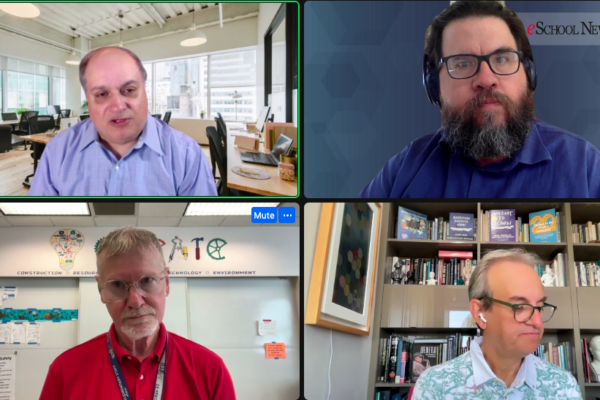
As the hoopla surrounding emerging AI technologies and their impact on education endures, we need to get past whether or not to use ChatGPT—Pandora’s box is officially open—and focus instead on how best to use it. Despite OpenAI recently releasing a guide for ChatGPT in the classroom that demonstrates how teachers can use the large language model software to enhance learning, Zarek Dozda, director of UChicago’s Data Science 4 Everyone, does not think it goes as far as it should to address educators’ concerns about the growth of this emerging tech in classrooms.
In this insightful conversation, Zarek breaks down several particulars he feels need to be addressed, including:
- More research – OpenAI’s guidance focuses on anecdotal evidence of ChatGPT in classrooms but has little to say about best practices when using ChatGPT as an educational tool.
- Focus on mechanics – Instead of highlighting education tactics that utilize ChatGPT, OpenAI should provide a more thorough explanation of large language models and how they work.
- Training for teachers – The specific teachers mentioned in OpenAI’s guidance should be applauded for embracing emerging tech, but there needs to be greater resources for teachers just trying to keep up with AI.
Data Science for Everyone is a coalition advancing data science education so that every K-12 student has the data literacy skills needed to succeed in our modern world. Equitable access to data science education is an opportunity to open doors to higher education, high-paying careers, and an engaged community. Created by the University of Chicago Center for RISC and organized in partnership with The Learning Agency and the Concord Consortium, the group supports a growing community that knows that the data revolution has transformed modern life and we need to prepare our students.
Other highlights from the conversation include:
Responsibility in AI Usage: Zarek emphasizes the importance of instilling responsible and efficient AI usage in students, preparing them for a future where digital skills are integral to various careers.
Changing Perceptions: The discussion challenges preconceived notions about AI, acknowledging shifts in attitudes among educators and students toward embracing technology as a valuable supplement to traditional teaching methods.
Educator Empowerment: Teachers are encouraged to view AI as an opportunity for professional development, using tools like ChatGPT 4 to create lesson plans and assessments, fostering a collaborative approach to interdisciplinary solutions.
Foundational Skills Remain Crucial: While AI tools advance, Zarek emphasizes the continued significance of foundational skills, asserting that students should still learn mathematics, coding, and critical thinking to understand and address AI-generated errors.
Balanced Implementation: Zarek advocates for a measured approach to AI integration, steering clear of extremes such as outright bans or complete reliance on AI for educational planning. Instead, a gradual introduction with teacher guidance is recommended.
Global Talent Race: The conversation concludes with a call for policymakers to recognize the urgency of upskilling educators, framing education as critical for future economic and international success in a rapidly evolving digital landscape.