
Normal view

There are new articles available, click to refresh the page.
Before yesterdayMain stream

Reaching edtech harmony in your classroom

Teachers and students thrive with a comprehensive classroom ecosystem--here's how to integrate essential tools like smart boards.

Key points:

In today’s dynamic educational landscape, technology has become an integral part of teaching and learning, but it presents a paradox. While diverse edtech products promise innovation, they simultaneously pose challenges. Educators, learners, instructional technology coaches, and IT/edtech staff are grappling with the complexities of managing an ever-expanding arsenal of disconnected digital tools. It’s important to understand the challenges more closely and how an integrated, interoperable, and effective educational technology ecosystem can meet the evolving landscape of learning for more efficient, impactful, and secure learning experiences.

There are several prominent shifts that are driving the future of learning, therefore making a comprehensive and interoperable ecosystem essential. First is the permanence of a remote and/or hybrid learning structure. Solutions like interactive displays, cloud whiteboarding, screen sharing, and video conferencing tools have helped schools embrace and succeed in this new learning format. Second is the need to create a 21st century learning environment that is accessible for all students, encourages engagement and collaboration, and can be more easily tailored for different learning levels and needs. For example, smart board tools such as text to speech, translation, or word prediction can help students overcome language barriers and unique challenges. For increased engagement and collaboration, teachers are relying on new teaching methods such as microlearning and gamification. Finally, there’s also a drive toward more community and outreach.

All these initiatives have meant an increase in digital tools and apps that must be properly monitored and managed. What’s more, they need to be interoperable and accessible not only on laptops and mobile devices but also on smart boards. According to Lightspeed’s Edtech App Report, which examined the use of edtech in more than 100 school districts during the 2021-2022 school year, there is an astounding number of apps in use. It found that districts surveyed use more than 2,000 apps and that 300 of those account for 99 percent of use. It also found that much of learning time is digital, with 56 percent of students actively engaged in digital learning for more than two hours per day. This highlights that while beneficial, the digital toolbox has become more complex and essential. It emphasizes the importance for a unified and interoperable ecosystem that can blend these diverse elements into a seamless and effective educational experience.

Another challenge is security. With more and more devices being introduced into classrooms, IT administrators will have to consider how to safeguard them in order to prevent possible security risks and data leaks. Outdated firmware and apps may create security loopholes that are vulnerable to attacks and data leaks. Keeping your system up-to-date is one of the best ways to ensure optimal device performance and data security.

In the realm of modern classrooms, one of the most notable advancements is the integration of smart board technology. Over the years, smart boards have evolved significantly from the early days of interactive whiteboards. However, it’s only recently that we’ve witnessed all-in-one solutions that effectively address contemporary trends in education as well as the challenges associated with managing these tools. Their use has become so significant that they actually lie at the heart of the ecosystem topic.

The key to this evolution lies in the operating systems that power smart boards, equipped with pre-installed software such as whiteboarding apps and web browsers. Some providers even offer the flexibility to download additional educational software from app stores, catering to the diverse needs of teachers. Smart boards have proven to be invaluable tools for educators seeking to foster active participation and enhance learning retention among students, especially with those that are compatible with their favorite interactive apps.

By combining a digital whiteboard with a wide array of educational apps, educators now have the capability to conduct entire lessons using just a smart board. This integrated approach allows teachers to seamlessly access digital content from their cloud storage or local drives, or download materials directly from the internet. Even when faced with non-digitized content, teachers have the option to wirelessly share their laptop screens or connect document cameras to the board. This technology represents a significant shift in modern education, offering educators a versatile and adaptable solution to meet the evolving needs of the classroom.

Smart boards play a vital role in meeting the app management and technology security needs of schools. As educational institutions introduce a growing number of devices into their classrooms, safeguarding these assets and protecting student and teacher data becomes a paramount concern. Smart boards rise to this challenge by implementing a range of robust security measures, ensuring a safe and secure educational environment. These measures include compliance with international data privacy standards such as the GDPR and CCPA, offering regular over-the-air (OTA) updates with the latest security patches, and leveraging secure cloud services hosted on trusted servers like Amazon and Google Firebase.

In today’s dynamic educational landscape, technology presents both promises and challenges. Educators, students, and IT professionals grapple with managing an ever-expanding array of disconnected digital tools, underscoring the need for an integrated, interoperable educational technology ecosystem. This ecosystem is vital to meet the evolving landscape of learning efficiently and effectively. Interactive classroom solutions, similar to smart boards, have the potential to play a pivotal role in shaping the future of education technology by seamlessly combining digital whiteboards with a wide array of educational apps. Educators can conduct entire lessons through such solutions, accessing digital content, sharing screens, and connecting document cameras effortlessly. Furthermore, data privacy and security are paramount, with a focus on compliance with international data privacy standards, timely security updates, and flexible network security options, including multi-factor authentication, password protection, compartmentalized user accounts, and secure user modes.

In the modern classroom, where technology has become indispensable, these solutions empower educators and institutions to navigate the complexities of the digital age with confidence, creating engaging, secure, and effective learning experiences for students.
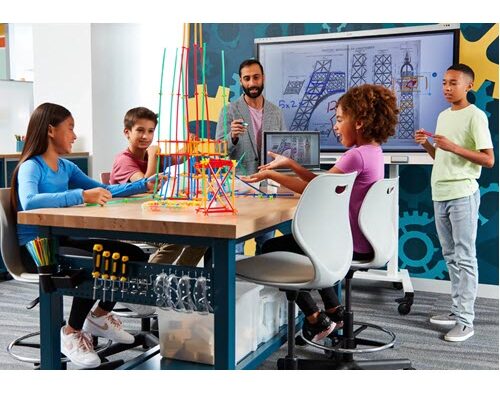

SMART Technologies Unveils the New Performance SMART Board® RX Series, Empowering Teachers and Students with Advanced Features to Enhance Inclusion

17 November 2023 at 21:08

CALGARY, AB – SMART Technologies is proud to announce the launch of the company’s latest innovation for education: the SMART Board® RX series. This revolutionary display is designed with accessibility in mind and provides teachers with the tools they need to make learning more engaging for students, while saving precious time for teachers, too. This performance display comes with optically bonded glass and a multi-color stylus for an effortless inking experience, as well as leading student device integration, putting it in a category of its own.  

At the heart of the SMART Board RX series are the features and functionality, purposefully designed to help make classroom time higher quality time and engage all students in inclusive and accessible learning experiences. Most notably, the RX series comes with SMART’s exclusive Tool Explorer® technology that enables all students – including those with diverse learning needs – to actively engage with content and easily communicate with their peers and teachers.  

Tool Explorer digitally recognizes blocks that come in pre-programmed sets with images such as emojis that can help enable social and emotional learning. The blocks are also programmable, giving teachers or students the ability to program any image onto a block.  Tool Explorer provides a unique way for students to communicate and participate – including those students who are non-verbal, those who struggle to hold a pen or to write, and those who require or simply prefer different methods of communication. Tool Explorer is only available with the SMART Board RX series.  

The SMART Board RX series is Google EDLA certified, giving users native access to the Google Play™ store, Google Classroom, Chrome™ Browser, and other Google services so that teachers can have all their favorite apps at their fingertips. It comes with a completely refreshed embedded experience – iQ 4.0. The new version of iQ is designed to simplify workflows for teachers and make lessons engaging for students. 

The RX series also includes SMART’s exclusive ability for continuous differentiation of all interaction types, which enables multiple users to intuitively write, erase, and touch at the same time, without interfering in each other’s work for a truly collaborative experience. 

“The SMART Board RX series represents a major leap forward in classroom technology,” said Nicholas Svensson, CEO of SMART Technologies. “Our goal was not just to create another interactive display but rather an investment that helps to create inclusive, accessible classrooms that will stand the test of time.” 

The SMART Board RX series offers an array of features, including:  

  • Android 13 for enhanced security and smooth performance, with expandable storage up to 576GB. 
  • Optically bonded glass which provides a smooth, precise inking experience and unmatched viewing clarity. 
  • Simultaneous Tool Differentiation so multiple students can intuitively collaborate at the display together.  
  • An all-new multi-color LED stylus for easier color switching and simple, intuitive inking with color built right into the pen.  
  • NFC and QR code-based sign-in with one-click sign-out for added security and convenience. 
  • Integrated sound bar with two 20W speakers and a 15W subwoofer. 
  • New environmental and air quality sensors including a particulate matter sensor and volatile organic compounds sensor. 
  • All the software educators need, for free. 

The SMART Board RX is designed to serve districts for years to come. The RX series has an energy-efficient design that is designed to be a sound investment for many years. Automatic over-the-air updates keep customers up to date with new features, patches, and operating system upgrades—keeping pace with market trends and new options and features without spending budget on a new display. Schools and districts can get more out of their technology investment and continue to deliver high-quality learning experiences for years to come. 

About SMART Technologies ULC  

SMART isn’t just a leading tech company, but a connections company working tirelessly to create and advance technology that helps teachers, learners, businesses, and teams make meaningful connections every single day. The original SMART Board® launched in 1991, and has continued to innovate through Lumio™, an award-winning cloud-based learning software. With a full range of products, including an impressive selection of easy-to-use interactive displays used by millions of businesses, educators and students around the world, SMART creates connections that matter. To learn more, visit www.smarttech.com

How meta creativity prepares students for the future

16 November 2023 at 11:00
We must evolve our definitions of creativity to higher orders to stay relevant, including successfully using AI in and out of the classroom.

Key points:

  • AI is changing education–and these changes can be beneficial if handled correctly
  • Meta creativity–routines that help us engage fully with the hardest parts of creativity–can help with AI integration
  • See related article: 5 positive ways students can use AI
  • For more news on AI and creativity, visit eSN’s Digital Learning page

Nearly 40 percent of teachers expect to use AI in their classrooms by the end of the 2023-2024 academic year. This use of AI at school will impact how students learn and use their creativity as innovation, which will be increasingly necessary in the future as even higher-order thinking skills become standard. There will be long-term effects if the methods of teaching creativity are not adjusted, but if educators embrace AI mindfully, there will be long-term benefits.

In my experience observing educators and students, I started to see a need for more moments of reflection. The education space and other industries are quickly evolving because of AI, but humans, especially young students, aren’t yet hard-wired to adapt at the same pace. In response, educators need to take more time and enlist the help of tools to begin planting the seeds of mindful creativity in relation to AI, which will be a critical skill as young children grow into tomorrow’s workforce.

Moving forward, meta creativity–routines that help us engage fully with the hardest parts of creativity–and even higher-order thinking should be on every educator’s mind when building an environment conducive to both creativity and AI use.

The relationship between AI and creativity

When most people think of creativity, they relate it to the ability to ideate and express original ideas. However, the AI era we live in suggests that we should change this definition since AI can be trained on more information and has demonstrated the ability to make stronger creative connections than humans. We must evolve our definitions of creativity to higher orders to stay relevant, including successfully using AI in and out of the classroom.

One of the most challenging parts of creativity is resisting the impulse to give up when you meet failure or criticism of your ideas, which students commonly face at school when working on group projects or receiving grades. Failure and criticism can lead to students abandoning their own ideas and relying too heavily on AI to be their brains, so to speak. If this is regularly done during school, students will likely continue this habit at their future jobs or other parts of life. To avoid this dependency on AI and other technology, students need stronger self-awareness and reflective routines to engage in the full complexity of creativity.

What is meta-creativity?

Remaining creatively relevant requires self-awareness, adaptability of thinking, and impulse control during the creative process. New routines that help humans engage fully with the most challenging parts of creativity must be introduced. One example of such a routine is mindful breathing when a student faces a setback when working on a creative project. This routine will help students calm down and refocus on the task they’re working on without losing too much progress.

Routines like this are considered meta-cognitive functions, which can serve as solutions for students and teachers trying to remain creative and engaged in the classroom using AI.

How to foster meta creativity

Reflective tools–educational instruments or techniques that encourage students and educators to reflect on their learning experiences and outcomes–are an excellent way for educators to foster meta-creativity in their students. These tools are designed to prompt and support higher-order skills such as critical thinking, self-awareness, and continuous improvement, which are critical for education and life beyond the classroom.

In addition, reflective tools can help educators adapt to today’s rapidly changing world while fostering stronger attention, connection, and intrinsic motivation within their students. By using these tools, educators are taking a step to remove the stigma that schools stunt creativity with their strict rules and routines.

American society is built on the foundation of innovation–that mindset is what starts and operates businesses, creates new products, and continuously sets new standards of excellence worldwide. But where does this innovation come from? The contrast between the constraining creativity in the traditional education system and the defiant, independent culture of regular society may create this innovative thinking, which now translates to higher-order skills and meta-creativity. In addition, the ability to make something from nothing is now the baseline of creativity, and even higher-order thinking will be necessary to excel at this.

While many believe schools are one of many factors diminishing basic creativity, I think schools provide constraints that can actually build up students’ meta-creative capabilities in the long run. After years of structured school days, students are craving a freedom that they never had before. And all the creative and mindful muscles they spent 12 years building are ready to be unleashed as they enter society outside school. Their eagerness to showcase their unique skills will position them to have a positive impact in whatever sector they choose to enter.

AI and other technology have changed how humans think and live. For the education space, specifically, teachers must create a learning environment where students can reach a new level of creativity that allows collaboration with AI and requires even higher-order thinking skills to flourish. This is what will prepare students for the rest of their lives.

While it might be an adjustment at first, implementing meta-creativity and engaging with the most challenging parts of the creative process will result in the best outcomes for educators and students as the era of AI continues to gain momentum.

The advent of AI

12 October 2023 at 23:12

What’s better than watching a lively and substantive conversation thread develop on LinkedIn as a result of your recent posting on the hottest topic in edtech today? Getting the participants to follow up with a real live conversation of their own. So it was that I was able to snag a Zoom session with Jerry Crisci, founding co-director of the Center for Innovation for the Scarsdale Public Schools in Scarsdale, NY; Mark Loundy, instructional technology specialist for the Cupertino Union School District, CA; and Gary Stager, a pioneer in 1:1 computing, online learning, and computer science for all students, to weigh in on their perspectives. 

In an inspired and somewhat provocative go around, we touch on topics including AI’s influence on the education sector, concerns about cheating, the need for educational reform, and the potential for AI to enhance learning. Give it a listen and maybe chime in yourself! To read more about Gary Stger’s work regarding AI click here; for Jerry Crisci, click here; and for Mark Loundy, click here.

.Three Key Takeaways:

  • AI in Education and Ethical Concerns: The panelists highlight the emergence of generative AI and its potential to transform education. However, ethical concerns are raised, particularly regarding the use of AI to detect cheating and plagiarism. The speakers argue that the focus should shift from using technology for enforcement to enhancing the quality of education itself.
  • Rethinking Education: All three advocate for a fundamental reevaluation of education, emphasizing the need to revise teaching methods and assessments. They stress the importance of preparing students for a future where AI can assist with procedural tasks, such as writing and calculations. This shift involves teaching students how to be effective learners and thinkers, rather than memorizing content.
  • AI as a Tool for Learning: AI is recognized as a powerful tool for expanding students’ horizons, allowing them to explore topics in depth. The conversation also suggests that AI can help students build systems and understand how AI operates, promoting critical thinking and problem-solving skills. Their emphasis is on enabling students to use AI as a resource to better understand the world.
❌
❌