
Normal view

There are new articles available, click to refresh the page.
Before yesterdayMain stream

Frontline Education and Vanco Announce Strategic Partnership

16 November 2023 at 18:47

Malvern, Pa. and Bloomington, Minn. (GLOBE NEWSWIRE) — Frontline Education, a leading provider of administration software purpose-built for educators in K-12, and Vanco, a leading solution for event planning, ticketing, fundraising and patron engagement, today announced an exclusive partnership that provides K-12 school districts with a seamless and secure way to sell tickets and manage registrations for school events, at no cost to the school districts.  

Vanco is a trusted provider of payment solutions tailored to meet the unique needs of K-12 schools and districts. With a focus on secure, efficient payment processing, Vanco enables educational organizations to streamline financial operations and improve the overall experience for families. Adding Vanco’s secure payment processing platform to Frontline’s comprehensive suite of solutions provides K-12 districts nationwide a powerful set of financial and business management capabilities.

“Our Vanco partnership brings K-12 school districts a secure payments solution for effortlessly administering events and transactions,” said Mark Friedman, Chief Marketing Officer at Frontline Education. “It’s exciting to empower schools to create memorable experiences for the communities they serve.”

Key benefits of the partnership include:

  • Efficient Payment Processing: The solution streamlines payment processing, enabling districts to securely manage event transactions, including fees, donations, and registrations, in an intuitive and user-friendly interface.
  • Real-time Financial Insights: Districts will have access to advanced reporting and analytics, providing administrators with valuable insights to make informed financial decisions.
  • Enhanced Security and Compliance: Vanco’s offering ensures that all financial transactions are conducted in a secure and compliant manner, providing peace of mind to districts and families alike.
  • Seamless User Experience: The solution provides a seamless experience for end-users, eliminating the need for duplicate data entry and reducing administrative overhead.

“Our collaboration with Frontline Education will bring our innovative, state-of-the-art event management platform to a broader audience, creating a synergy that will benefit both organizations and, more importantly, our customers – schools, parents and students,” said Faton Gjuka, Chief Revenue Officer at Vanco. 

For more information on the Frontline and Vanco partnership, or to start benefiting from the offering, please visit  here.

About Frontline

Frontline Education is a leading provider of school administration software, connecting solutions for student and special programs, business operations and human capital management with powerful analytics to empower educators. Frontline partners with school systems to deliver tools, data and insights that support greater efficiency and productivity, enabling school leaders to spend more time and resources executing strategies that drive educator effectiveness, student success and district excellence.

Frontline’s broad portfolio includes solutions for proactive recruiting and hiring, absence and time management, professional growth, student information systems, special education, special programs, Medicaid reimbursement, school health management, inventory control and asset management, payroll, benefits and financial management, and analytics solutions that help district leaders tap into their data to make more informed decisions for the benefit of their students and communities. Over 10,000 clients representing millions of educators, administrators and support personnel have partnered with Frontline Education in their efforts to develop the next generation of learners.

About Vanco 

Based in Bloomington, MN and Atlanta, GA, Vanco is the approachable, community-focused financial technology leader. Over 45,000 churches, schools, and community organizations trust Vanco to transform their giving, payment, and financial management experience so they can serve and inspire their communities to build a better tomorrow. Visit vancopayments.com to learn more.  

Leveraging the K-12 generative AI readiness checklist: A guide for district leadership

The rapid pace of generative AI development brings with it both great opportunities and exposure to risk for schools and district leaders.

Editor’s note: This story on how to manage academic integrity as generative AI moves into classrooms originally appeared on CoSN’s blog and is reposted here with permission.

The rapid advances in artificial intelligence (AI) technology present both incredible opportunities and significant challenges for educational settings. Whether or not a school district is considering leveraging AI, the influence of this technology on educational ecosystems is undeniable. As AI increasingly becomes a part of our daily lives, district leaders have a responsibility to understand its impact in educational settings and make informed decisions accordingly. This is true whether the aim is active adoption or simply preparation for a future where AI tools become more prevalent in educational settings.

To ensure school districts are adequately prepared for the integration of generative AI into their instructional and operational systems, the Council of Great City Schools, CoSN – Consortium for School Networking, and Amazon Web Services have partnered to create the K-12 Gen AI Readiness Checklist Questionnaire. There are several ways in which district leadership can best use this checklist for assessing and enhancing their readiness for integrating generative AI technologies into both instructional and operational systems.

The first step should be to bring together a group of individuals that will form the district’s Generative AI Leadership Team. Who Should Be Involved?

  • Superintendents and District Leaders: As decision-makers, your insights into aligning AI adoption with overall goals and strategies are critical.
  • Chief Technology Officers and Chief Information Officers: You will be the primary users of the checklist, evaluating technical capabilities, limitations, and needs.
  • Cross-Functional Teams: The checklist addresses a wide array of considerations, making it essential for input from representatives of all departments involved, including academics, finance, and legal.

The Checklist covers readiness in Executive Leadership, Operational, Data, Technical, Security, Legal/Risk Management. Below are some ideas for how the Checklist can be leveraged in your school district.

Initial Assessment

Alignment with District Goals: Start by examining whether AI technologies align with your district’s mission, vision, and values.
Resource Inventory: Make sure you have designated teams or individuals who will be responsible for overseeing AI adoption.
Tactical Steps
Legal Review: Consult the legal department to ensure compliance with state laws or district rules concerning the use of AI technologies.
Policy Development: Establish clear policies around the responsible use of AI, keeping in mind to align them with existing federal guidelines and best practices.
Staff Training: Ascertain the training needs for different roles within the district and prepare a training roadmap.

Operational Readiness

Procurement Standards: Set forth clear standards for AI procurement, with a focus on compliance and ethical considerations.
Data Governance and Privacy: Make sure you have robust data governance policies in place and that you are compliant with privacy regulations.
Technical Readiness
Security Framework: Update your cybersecurity policies to include AI-specific considerations.
Identity and Access Management: Implement centralized role-based data access controls specifically for AI tools.
Monitoring: Develop processes to keep track of systems that use AI and how they are used.

Risk Management

Legal Remediation: Update terms and conditions to include AI-specific clauses and ensure the legal team has remediation plans.
Copyright Policy: Create or update the copyright policy to include content created using AI tools.
Continuous Review
Iterative Approach: The adoption of AI is not a one-off event but a continual process. Periodic reassessments should be conducted.

Making the Most of the Checklist

Customization: One of the key strengths of the checklist is that it is designed to be adaptable. Districts should customize it according to their unique needs and challenges.
Community Resource: The checklist is intended to evolve. Once it is made publicly available under a Creative Commons license, districts can not only modify it but also share their experiences and modifications, contributing to its value as a community resource.

The extremely rapid pace of gen AI development brings with it both great opportunities and exposure to risk. Creating a team to provide governance for the adoption of AI in educational settings is a critical step in guiding use and preventing abuse. The K-12 Gen AI Readiness Checklist provides a comprehensive framework to guide district leadership to engage in understanding a complex AI ecosystem and the numerous considerations that come with AI adoption. By strategically leveraging this checklist, school districts can navigate the complexities of AI technology while aligning with educational objectives and ensuring data privacy and security.

The goal is not just to blindly adopt new technology but to transform our education systems for the better, and this checklist is a strong step in that direction.

SETDA Launches Cybersecurity Resource Focused on Small, Rural, and Under-resourced Districts

18 October 2023 at 19:24

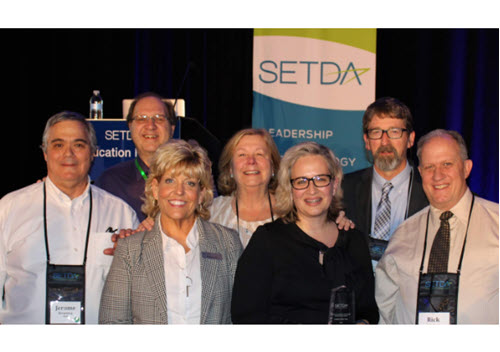
Washington, D.C. — Today, SETDA is pleased to announce the release of a cybersecurity resource focused on small, rural, and under-resourced districts. Developed by SETDA’s Cybersecurity & Privacy Collaborative—an active professional learning community consisting of state edtech leaders, affiliates, and corporate members—this resource is designed to identify essential resources, assess state-level K-12 cybersecurity advocacy initiatives, and craft policy recommendations to enhance cybersecurity readiness within these districts. 

In collaboration with Microsoft and the K12 Security Information eXchange (K12 SIX), this initiative underscores SETDA’s commitment to providing essential tools and guidance to support state educational agencies.

The publication, titled Small Districts, Big Hurdles: Cybersecurity Support for Small, Rural, and Under-resourced Districts, offers details on how state agencies and other support organizations are empowering their smallest districts to secure their data and networks. From detailing various funding sources to providing insights into statewide and regional partnerships and offering practical examples of cybersecurity training, the document is a must-read for everyone involved in helping districts improve their cybersecurity posture. It is the newest addition to SETDA’s Cybersecurity & Privacy Collection, available for access in their OER Commons site.

“As technology continues to reshape education, ensuring the safety and security of students’ data and school networks has never been more crucial. This publication is a testament to SETDA’s dedication to supporting state education agencies’ technology initiatives and equips state edtech leaders with the resources and tools needed to guide districts, especially those facing the greatest challenges,” said Julia Fallon, Executive Director, SETDA. “The Cybersecurity & Privacy Collaborative hopes that this document will help prevent breaches of student and educator data while offering strategies to support and improve cybersecurity readiness for small and rural schools.”

“The human impact of breaches is greater than lost time and money for districts, with potential life-long consequences for young people whose data may be compromised. Microsoft is committed to increasing access to cybersecurity tools to help schools address this challenge. I commend SEDTA for this focus on small, rural, and under-resourced districts ensuring that all students—regardless of location or context—can learn in safe and secure environments,” said Paige Johnson, Vice President Education Marketing, Microsoft.

About SETDA
SETDA is the principal association representing U.S. state and territorial educational technology and digital learning leaders. Through a broad array of programs and advocacy, SETDA builds member capacity and engages partners to empower the education community in leveraging technology for learning, teaching, and school operations. For more information, please visit www.setda.org.

Fixing the K-12 cybersecurity problem

CISA’s Secure by Design pledge commits manufacturers to improving K-12 cybersecurity and strengthening networks.

Key points:

In early September, the Cybersecurity and Infrastructure Security Agency (CISA) announced a voluntary pledge for K-12 education technology software manufacturers to commit to designing products with a greater focus on security. In the announcement, CISA mentioned that six leaders in the education software industry had already committed to the pledge: PowerSchool, ClassLink, Clever, GG4L, Instructure, and D2L.

“We need to address K-12 cybersecurity issues at its foundation by ensuring schools and administrators have access to technology and software that is safe and secure right out of the box,” said CISA director Jen Easterly. “I want to thank ClassLink, Clever, D2L, GG4L, Instructure, and PowerSchool, who have already signed this pledge and for their leadership in this area. We need all K-12 software manufacturers to help us improve cybersecurity for the education sector by committing to prioritize security as a critical element of product development.”

CISA’s principles for K-12 cybersecurity

This action brings a spotlight to the ongoing issue of K-12 cybersecurity. CISA’s goal is to persuade more K-12 software and hardware manufacturers to commit to its pledge. Signing the pledge demonstrates that the manufacturer is committing to three principles:

  • Taking ownership of customer security outcomes: Includes offering Single Sign On (SSO) and security audit logs and no extra charge
  • Embracing radical transparency and accountability: Includes publishing a secure by design roadmap, a vulnerability disclosure policy and security-relevant statistics and trends
  • Leading from the top by making secure technology a key priority for company leadership: Includes naming a C-level leader at the company who is charged with overseeing security

Secure by design explained

What does secure by design mean? In typical software design and manufacturing, the focus is on the product’s reason for being. For example, the developers of reading improvement software are focused on building a product that delivers measurable improvements to student reading speed and comprehension. The security of the software and its user data are an afterthought. Any security considerations are made late in the development process or bolted on afterward.

In contrast, a secure by design approach means that developers bake security into the design of the product from the beginning. This has proven to be a much more effective approach to protecting software than trying to patch security holes after the fact. Secure by design was popularized by the European Union’s General Data Protection Regulation (GDPR), which went into effect in May 2018. Today, this is a more common approach to software design, but it is relatively new to K-12 education.

Ongoing K-12 cybersecurity threats

While the K-12 education industry strives for improved protection in its schools, fresh examples of security holes continue to appear on a regular basis. Most recently, Prince George’s County Public Schools was the victim of a ransomware attack on August 14 that impacted about 4,500 user accounts, mostly staff, according to the district. Cybersecurity breaches such as this can have a detrimental impact on K-12 schools, threatening both reputation and financial well-being.

Unfortunately, successful ransomware attacks can hinge on exploiting a single vulnerability hidden among the dozens of software applications running in most school districts. By following CISA’s guidance and committing to a secure by design approach to software development, developers can further reduce potential vulnerabilities and keep staff and student data more secure.

Related: Education suffers the highest rate of ransomware attacks

❌
❌