Key points:
In today’s dynamic educational landscape, technology has become an integral part of teaching and learning, but it presents a paradox. While diverse edtech products promise innovation, they simultaneously pose challenges. Educators, learners, instructional technology coaches, and IT/edtech staff are grappling with the complexities of managing an ever-expanding arsenal of disconnected digital tools. It’s important to understand the challenges more closely and how an integrated, interoperable, and effective educational technology ecosystem can meet the evolving landscape of learning for more efficient, impactful, and secure learning experiences.
There are several prominent shifts that are driving the future of learning, therefore making a comprehensive and interoperable ecosystem essential. First is the permanence of a remote and/or hybrid learning structure. Solutions like interactive displays, cloud whiteboarding, screen sharing, and video conferencing tools have helped schools embrace and succeed in this new learning format. Second is the need to create a 21st century learning environment that is accessible for all students, encourages engagement and collaboration, and can be more easily tailored for different learning levels and needs. For example, smart board tools such as text to speech, translation, or word prediction can help students overcome language barriers and unique challenges. For increased engagement and collaboration, teachers are relying on new teaching methods such as microlearning and gamification. Finally, there’s also a drive toward more community and outreach.
All these initiatives have meant an increase in digital tools and apps that must be properly monitored and managed. What’s more, they need to be interoperable and accessible not only on laptops and mobile devices but also on smart boards. According to Lightspeed’s Edtech App Report, which examined the use of edtech in more than 100 school districts during the 2021-2022 school year, there is an astounding number of apps in use. It found that districts surveyed use more than 2,000 apps and that 300 of those account for 99 percent of use. It also found that much of learning time is digital, with 56 percent of students actively engaged in digital learning for more than two hours per day. This highlights that while beneficial, the digital toolbox has become more complex and essential. It emphasizes the importance for a unified and interoperable ecosystem that can blend these diverse elements into a seamless and effective educational experience.
Another challenge is security. With more and more devices being introduced into classrooms, IT administrators will have to consider how to safeguard them in order to prevent possible security risks and data leaks. Outdated firmware and apps may create security loopholes that are vulnerable to attacks and data leaks. Keeping your system up-to-date is one of the best ways to ensure optimal device performance and data security.
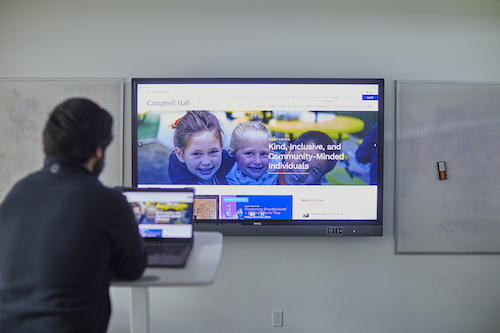
In the realm of modern classrooms, one of the most notable advancements is the integration of smart board technology. Over the years, smart boards have evolved significantly from the early days of interactive whiteboards. However, it’s only recently that we’ve witnessed all-in-one solutions that effectively address contemporary trends in education as well as the challenges associated with managing these tools. Their use has become so significant that they actually lie at the heart of the ecosystem topic.
The key to this evolution lies in the operating systems that power smart boards, equipped with pre-installed software such as whiteboarding apps and web browsers. Some providers even offer the flexibility to download additional educational software from app stores, catering to the diverse needs of teachers. Smart boards have proven to be invaluable tools for educators seeking to foster active participation and enhance learning retention among students, especially with those that are compatible with their favorite interactive apps.
By combining a digital whiteboard with a wide array of educational apps, educators now have the capability to conduct entire lessons using just a smart board. This integrated approach allows teachers to seamlessly access digital content from their cloud storage or local drives, or download materials directly from the internet. Even when faced with non-digitized content, teachers have the option to wirelessly share their laptop screens or connect document cameras to the board. This technology represents a significant shift in modern education, offering educators a versatile and adaptable solution to meet the evolving needs of the classroom.
Smart boards play a vital role in meeting the app management and technology security needs of schools. As educational institutions introduce a growing number of devices into their classrooms, safeguarding these assets and protecting student and teacher data becomes a paramount concern. Smart boards rise to this challenge by implementing a range of robust security measures, ensuring a safe and secure educational environment. These measures include compliance with international data privacy standards such as the GDPR and CCPA, offering regular over-the-air (OTA) updates with the latest security patches, and leveraging secure cloud services hosted on trusted servers like Amazon and Google Firebase.
In today’s dynamic educational landscape, technology presents both promises and challenges. Educators, students, and IT professionals grapple with managing an ever-expanding array of disconnected digital tools, underscoring the need for an integrated, interoperable educational technology ecosystem. This ecosystem is vital to meet the evolving landscape of learning efficiently and effectively. Interactive classroom solutions, similar to smart boards, have the potential to play a pivotal role in shaping the future of education technology by seamlessly combining digital whiteboards with a wide array of educational apps. Educators can conduct entire lessons through such solutions, accessing digital content, sharing screens, and connecting document cameras effortlessly. Furthermore, data privacy and security are paramount, with a focus on compliance with international data privacy standards, timely security updates, and flexible network security options, including multi-factor authentication, password protection, compartmentalized user accounts, and secure user modes.
In the modern classroom, where technology has become indispensable, these solutions empower educators and institutions to navigate the complexities of the digital age with confidence, creating engaging, secure, and effective learning experiences for students.
 Login
Login