
Normal view

There are new articles available, click to refresh the page.
Before yesterdayMain stream

Reaching edtech harmony in your classroom

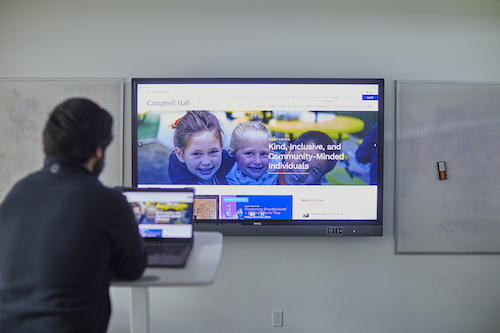
Teachers and students thrive with a comprehensive classroom ecosystem--here's how to integrate essential tools like smart boards.

Key points:

In today’s dynamic educational landscape, technology has become an integral part of teaching and learning, but it presents a paradox. While diverse edtech products promise innovation, they simultaneously pose challenges. Educators, learners, instructional technology coaches, and IT/edtech staff are grappling with the complexities of managing an ever-expanding arsenal of disconnected digital tools. It’s important to understand the challenges more closely and how an integrated, interoperable, and effective educational technology ecosystem can meet the evolving landscape of learning for more efficient, impactful, and secure learning experiences.

There are several prominent shifts that are driving the future of learning, therefore making a comprehensive and interoperable ecosystem essential. First is the permanence of a remote and/or hybrid learning structure. Solutions like interactive displays, cloud whiteboarding, screen sharing, and video conferencing tools have helped schools embrace and succeed in this new learning format. Second is the need to create a 21st century learning environment that is accessible for all students, encourages engagement and collaboration, and can be more easily tailored for different learning levels and needs. For example, smart board tools such as text to speech, translation, or word prediction can help students overcome language barriers and unique challenges. For increased engagement and collaboration, teachers are relying on new teaching methods such as microlearning and gamification. Finally, there’s also a drive toward more community and outreach.

All these initiatives have meant an increase in digital tools and apps that must be properly monitored and managed. What’s more, they need to be interoperable and accessible not only on laptops and mobile devices but also on smart boards. According to Lightspeed’s Edtech App Report, which examined the use of edtech in more than 100 school districts during the 2021-2022 school year, there is an astounding number of apps in use. It found that districts surveyed use more than 2,000 apps and that 300 of those account for 99 percent of use. It also found that much of learning time is digital, with 56 percent of students actively engaged in digital learning for more than two hours per day. This highlights that while beneficial, the digital toolbox has become more complex and essential. It emphasizes the importance for a unified and interoperable ecosystem that can blend these diverse elements into a seamless and effective educational experience.

Another challenge is security. With more and more devices being introduced into classrooms, IT administrators will have to consider how to safeguard them in order to prevent possible security risks and data leaks. Outdated firmware and apps may create security loopholes that are vulnerable to attacks and data leaks. Keeping your system up-to-date is one of the best ways to ensure optimal device performance and data security.

In the realm of modern classrooms, one of the most notable advancements is the integration of smart board technology. Over the years, smart boards have evolved significantly from the early days of interactive whiteboards. However, it’s only recently that we’ve witnessed all-in-one solutions that effectively address contemporary trends in education as well as the challenges associated with managing these tools. Their use has become so significant that they actually lie at the heart of the ecosystem topic.

The key to this evolution lies in the operating systems that power smart boards, equipped with pre-installed software such as whiteboarding apps and web browsers. Some providers even offer the flexibility to download additional educational software from app stores, catering to the diverse needs of teachers. Smart boards have proven to be invaluable tools for educators seeking to foster active participation and enhance learning retention among students, especially with those that are compatible with their favorite interactive apps.

By combining a digital whiteboard with a wide array of educational apps, educators now have the capability to conduct entire lessons using just a smart board. This integrated approach allows teachers to seamlessly access digital content from their cloud storage or local drives, or download materials directly from the internet. Even when faced with non-digitized content, teachers have the option to wirelessly share their laptop screens or connect document cameras to the board. This technology represents a significant shift in modern education, offering educators a versatile and adaptable solution to meet the evolving needs of the classroom.

Smart boards play a vital role in meeting the app management and technology security needs of schools. As educational institutions introduce a growing number of devices into their classrooms, safeguarding these assets and protecting student and teacher data becomes a paramount concern. Smart boards rise to this challenge by implementing a range of robust security measures, ensuring a safe and secure educational environment. These measures include compliance with international data privacy standards such as the GDPR and CCPA, offering regular over-the-air (OTA) updates with the latest security patches, and leveraging secure cloud services hosted on trusted servers like Amazon and Google Firebase.

In today’s dynamic educational landscape, technology presents both promises and challenges. Educators, students, and IT professionals grapple with managing an ever-expanding array of disconnected digital tools, underscoring the need for an integrated, interoperable educational technology ecosystem. This ecosystem is vital to meet the evolving landscape of learning efficiently and effectively. Interactive classroom solutions, similar to smart boards, have the potential to play a pivotal role in shaping the future of education technology by seamlessly combining digital whiteboards with a wide array of educational apps. Educators can conduct entire lessons through such solutions, accessing digital content, sharing screens, and connecting document cameras effortlessly. Furthermore, data privacy and security are paramount, with a focus on compliance with international data privacy standards, timely security updates, and flexible network security options, including multi-factor authentication, password protection, compartmentalized user accounts, and secure user modes.

In the modern classroom, where technology has become indispensable, these solutions empower educators and institutions to navigate the complexities of the digital age with confidence, creating engaging, secure, and effective learning experiences for students.


Using tech to teach emerging readers high frequency words

Emerging readers should be hearing, saying, reading, and writing high frequency words consistently within foundational lessons.

Key points:

If you were to poll an audience of educators–classroom teachers, literacy specialists, reading researchers, and university professors–about whether high frequency words should be taught in early elementary, the resounding answer would be YES. These words, after all, are important to students’ ultimate reading success.

The nuances of teaching high frequency words in early elementary would only arise around how these words should be taught.

Luckily, there is a plethora of best practice research and engaging, tech-enabled activities on teaching high frequency words to help teachers make it both a fun and interesting learning experience for young students.

Understanding high frequency words

Before teaching about high frequency words, it is important to understand how they differ from sight words. While these categories of words are often used interchangeably and can cross pollinate, high frequency words are words that appear most frequently in spoken and written language. Sight words, on the other hand, are those words that students recognize by sight–without the need to stop and decode the word–when reading.

For example, “the” is a high frequency word as well as a sight word for many people. “Email” is not a high frequency word, but is often a sight word. Classmates’ names often become sight words for students. Kindergarten students who are still emergent readers during the first semester will quickly learn their name by sight, as well as their classmates’ names (…and, they often get a great sense of satisfaction when recognizing and reading each other’s names!)

When it comes to choosing the actual words that are considered high frequency words, the educational community has embraced three different lists of words: the Dolch, Zeno, and Fry high frequency word lists. These lists have many shared words, and there is no research that says one list supersedes the other. Any of the lists or teaching a combination of the lists should still help produce successful readers.

Strategies for teaching emerging readers high frequency words

There are hundreds of ways to teach high frequency words and the majority of those ways fall into two instructional categories: memorization and phonics integration.

Both of these instructional strategies lead to students learning and quickly recalling many, many words–both high frequency words and sight words–with automaticity. This is called orthographic mapping, which is essentially a progression of warehousing words permanently in a student’s memory for immediate retrieval.

With memorization, teachers can create fun–and effective–learning opportunities for students as long as a few rules are applied. First, it is important to eliminate distractions so that the focus is on the high frequency word. Distractions can include other words printed around the target word, and having accompanying pictures with a word. For example, a picture of a girl in a swing holding her cat can be distracting when the target word is “with.”

It is also important for teachers to say the high frequency word clearly multiple times and to put the word in a sentence for contextual understanding. Providing students with the opportunity to write the word, so they are making the physical connection to the spoken word, is also important.  

There are a number of digital flashcard apps teachers can use to help students memorize high frequency words. The flashcards can also be shown to the whole class using projectors or interactive displays as part of a whole group activity.

Creating “sounds walls” in the classroom–whether on a bulletin board or digital display–highlighting four to five high frequency words is another great way to help students visualize, practice, and memorize target words. Each week, the words can be swapped out with new ones for them to learn.

Another strategy for teaching high frequency words is through integrating the words into phonics lessons. It will help if teachers pick high frequency words that integrate with the phonics skills they are covering. For example, when teaching the phonic element /s/, it can be valuable to include the high frequency word “said,” even if the vowel irregularity of /ai/ hasn’t been taught yet. If students are learning /s/ and maybe even /d/, they will be excited and motivated to apply this knowledge to learning and remembering a new word.

With either memorization or phonics integration, teachers can play a quiz game with students in which teams compete to come up with answers to questions about high frequency words. Or, they can have students participate in racetrack-style board games where two or more players move markers along the spaces of a path from start to finish. At each stop, the player must read a word and use it correctly in a sentence in order to stay on that space. Technology, whether through the use of apps or student devices, can easily be incorporated into both of these game-based activities to make the experiences even more engaging.

Regardless of which instructional strategy is used to teach high frequency words, it is important that students are immersed and active participants in the learning experience. This means that students should be hearing, saying, reading and writing high frequency words consistently within foundational lessons. These immersive opportunities are what make the words stick and what keep students engaged. And, it’s the ultimate mastery of high frequency words that will enable young students to grow into proficient readers. 

What students are reading

11 October 2023 at 11:33
Librarians and teachers can look to reading trends as a way to connect students with their next favorite book

Key points:

About five years ago, my New Year’s resolution was to read all the books on my bookshelf I’d never managed to crack. While that resolution was a complete failure (I still have unread books on my shelf), it reignited my love of reading.

Each year, I document my #BritReads reading journey on my social media channels. This year, I decided to bring #BritReads to life with my close family and friends. In lieu of a Christmas present, I’m buying each of them four books a year – books I’ve read or those that are at the top of my list to read. Rather than a one-size-fits-all #BritReads Book Club, I’m curating books just for each of them. For example, my Christmas movie-loving, hopeless-romantic childhood friend will not get my favorite thriller or whodunit!

Just like my little book club, as librarians and teachers, I know you’re looking to connect students with their next favorite book, which means you need to be ahead of the trends and know about the titles emerging as the next generation of books to remember. So, let’s take a look at what students are reading in school libraries and classrooms across the country. Here are the top requested titles according to trend reports in our industry:

In lower elementary, the most popular book (and my #BritReads pick for the little ones) is a picture book called The Smart Cookie by John Jory. It’s the fifth picture book in Jory’s series teaching life lessons using food, accompanied by The Cool Bean, which also tops the list. In The Smart Cookie, the cookie realizes that while school can be tough, with hard work, anyone can be smart in their own way.  From friendly food… to animals. In the nonfiction section, the Who Would Win series is also a hit.  Students love to learn about various species of animals like sharks, reptiles, and birds and select which species survives. 

In upper elementary, Dog Man, The Baby-Sitters Club, and the I Survived series continue to be perennial favorites. In the world of nonfiction, students are starting to learn about race and history through books like Unspeakable: The Tulsa Race Massacre, We Are Still Here!: Native American Truths Everyone Should Know, and Stamped (For Kids): Racism, Antiracism, and You. My #BritReads favorite for upper elementary school is a throwback to my childhood. I read every single book in The Baby-Sitters Club series as a child, so it’s heartwarming to see these Ann M. Martin characters as a part of young lives all over again.

In middle school, books about middle grade students navigating the world dominate the world of fiction, such as the Diary of a Wimpy Kid series and Jerry Craft’s New Kid. In nonfiction, students and teachers are gravitating toward true stories about normal people who accomplish extraordinary things such as I Am Malala, Hidden Figures, and Undefeated: Jim Thorp and the Carlisle Indian School Football Team. My #BritReads pick is Hidden Figures: The Untold True Story of Four African American Women Who Helped Launch our Nation into Space. I read the adult version as part of #BritReads21, but this one has been adapted for a younger audience, giving students an opportunity to learn about a group of women who were well ahead of their time!

As for high school and adult-level titles, many of the books that students are reading are required as part of the curriculum including classics like The Catcher in the Rye, Of Mice and Men, and A Raisin in the Sun. But the classics sit alongside modern fiction hits like The Hate U Give and The Hunger Games series. I was pleased to see I picked some winners for the first #BritReads Book Club mailing. Each of my journalist friends got a copy of Just Mercy by Bryan Stevenson, which happens to be on the top of the adult nonfiction list.  My #BritReads favorite, The Catcher in the Rye, is one of the inspirations behind my 5-month-old boy’s name – Holden!

Across all age levels, teachers and librarians continue to seek titles written by diverse authors featuring multi-cultural characters with social and emotional learning lessons. If it happens to be a part of a series, or graphic novel or Manga form…even better! You can check them all out on Titlewave.

How to keep hackers off your school attendance list with object storage

Object storage is a great partner for education as it enables versioning and object lock, rendering itself ransomware-proof.

Key points:

As the 2023-2024 school year commences, focus on education is accompanied by a pressing concern for better cybersecurity. Cybercriminals are poised to exploit educational institutions, seeking access to personal, financial, and health records. Recent incidents, such as New Haven School System’s $6 million breach and Prince George County schools attack, highlight potential risks facing schools today. There is a critical need for robust cybersecurity measures for protection against attacks, inclusive of a comprehensive plan to keep hackers at bay.

What’s sending hackers to schools for the ultimate ransomware field day? Educational institutions hold a wealth of valuable information but lack IT budgets and updated cybersecurity tools, making them prime targets. In a perfect world, ransomware could always be stopped at the “front door” before it enters a school’s network premises, but this is hardly the case. Detection and prevention measures such as monitoring network traffic, establishing strict permission guidelines, and implementing multi-factor authentication (MFA) to confirm identities are continuously evolving, but attackers are becoming increasingly sophisticated, often finding ways to bypass these defense measures.

Understanding why schools are prime targets is the first step to building a healthy cybersecurity ecosystem. The next step is looking at what tools are in place and considering how to optimize their performance and functionality–not only for security, but recoverability and restoration. Emphasizing backup as a key component of security strategy may be the low-effort, cost-effective solution schools need to achieve cyber-resiliency.

Stay aware: Students aren’t the only ones preparing to go back to school

We’ve witnessed an alarming surge in ransomware attacks on educational institutions. At least 120 schools have suffered a ransomware attack compared to 188 in all of 2022. Despite their crucial role in shaping the future, schools often grapple with small IT budgets, limited staff, and outdated technology, making them lucrative targets for threat actors.

With these obstacles in mind, schools are more likely to endure consequences of an attack stemming from human error from students and overly complex tech that IT staff are too strapped to manage properly. This often opens them up to the possibility of data theft, followed by extremely long recovery times. For instance, in April, Alabama-based Jefferson County Schools suffered prolonged disruptions from an attack that occurred during the end of spring break in March, and an incident at Colorado public schools in June led to data exposure of student mental health records.

Stay prepared to stay protected

A crucial part of staying ahead of ransomware is staying informed. Currently, there are types of ransomware that are intelligent enough to commit an acoustic attack by listening to your keystrokes and predicting what someone is typing with 95 percent accuracy. Hackers can listen in to text chats or leak sensitive information, which is tough to manage in a school setting given the multitude of devices and connectivity options.

Though backup typically falls second to other defense measures, its impact can be outstanding. Consider The New Haven School system, which tried to alleviate getting data back up and running by paying ransom to the attackers. The biggest concern here is there is no guarantee that stolen data will be returned post-payment.

Veeam’s 2023 Ransomware Trends Report found that while 59 percent of organizations paid the ransom and were able to recover data, 21 percent that paid the ransom still didn’t get their data back. Additionally, only 16 percent of organizations avoided paying ransom because they were able to recover from backups. The truth is, no security plan is foolproof, and schools should consider quality versus quantity when it comes to which tools to bring to the battle against cyber threats. While implementing standard security measures is highly encouraged, the reality is that nothing will keep schools completely void of ransomware attacks.

This is where data backup comes to the forefront of cybersecurity strategies. This includes conducting regular backups of school data and following the 3-2-1-1-0 strategy, comprised of three copies of data saved on two types of media, with one copy offsite and one copy offline. Should a disruption occur, this makes the difference in guaranteed availability. Incorporating strong security measures like these into backup and management practices boosts the overall resilience of a school’s data infrastructure.

Stay ahead with immutable backup storage

It’s worth noting, targeting primary data and backups is well within the realm of possibility as ransomware rises. Although criminal hackers actively target backups, these remain the best defense against ransomware. Schools must ensure they take regular backups that are immutable, stored off-site, or, ideally, both. Immutable backup storage is a type of data storage system designed to prevent unauthorized or accidental modifications, deletions, or alterations to backed-up data for a specified period. Therefore, once data is written or stored, it cannot be changed or deleted until the predefined retention period expires.

Object storage is a great partner for education as it enables versioning and object lock, rendering itself ransomware-proof. Schools should incorporate backups with hardened security and an appropriate level of redundancy for constrained IT. What’s more, it’s a simple, powerful, and secure tool that schools can use to guarantee recovery. It is generally affordable compared to file or block storage solutions, further accommodating a limited budget for school IT.

Back to school with better protection

To prepare for potential attacks, schools must establish clear roles and responsibilities for key stakeholders. With the value of data continually on the rise, it’s not a question of if a school will face an attack, but when. Cybersecurity awareness among students and staff is paramount in keeping our leaders of tomorrow and their data safe. Furthermore, aligning with the U.S. Department of Education’s Cybersecurity Resilience Efforts can provide additional resources and support.

Data should be stored in a separate system to ensure availability in case of disruption. Combat attacks on primary storage with built-in immunity as an extra layer of protection against tampering. Keep school in session with a low-effort and cost-efficient solution like on-premises object-based backup storage–a tool built for low maintenance and constrained IT.

❌
❌