
Normal view

There are new articles available, click to refresh the page.
Before yesterdayMain stream

5 essential digital learning reads

22 November 2023 at 11:00
Digital learning is an essential element in today's connected and evolving classrooms--here's what you need to know.

Key points:

  • Digital learning is a key part of students’ school experiences
  • As technology evolves, so, too, do students’ learning opportunities
  • See related article: Is AI the future of education?
  • For more news on edtech trends, visit eSN’s Digital Learning page

Digital learning is a critical component of what happens in today’s classrooms. Edtech tools, connected learning experiences, and 21st-century skills all play a role in preparing students for the future.

But digital learning trends and technologies change so quickly that sometimes, it’s difficult to know where to focus or where to invest funding, time, and resources.

Here are 5 must-read stories about digital learning trends and developments to help your school leadership team determine which digital learning resources and edtech tools can best benefit students:

1. Digital learning requires digital research skills: Right now is the perfect time to start a research project with your students, as it will help them develop skills they will use for the rest of their lives. While your students, who have grown up in the Information Age and think they already know everything, any classroom teacher knows that our students need help more than they think. Our students’ belief that everything they need to know is online can, without the right skillset, leave them prey to misinformation. Let’s teach our students to steer through the online ocean of data to be both effective researchers and responsible digital citizens.

2. Digital escape rooms merge creativity with student engagement and skill development: Escape rooms are engaging for people of all ages–they require durable skills such as creativity, critical thinking, determination, and the ability to work in groups to solve challenges. It makes sense that educators would craft their lessons around the concept of an escape room–and that’s just what high school educator Lynn Thomas has done. In this Q&A with eSchool News, Thomas details how she found inspiration to create escape room learning opportunities and the benefits she sees for her students–and she offers a look at a new ChatGPT challenge she’s created.

3. Esports can engage even the youngest of students, and these programs help students develop critical skills no matter what paths they pursue: Scholastic esports is rapidly growing, and many schools are starting to incorporate esports programs into their curriculum. The benefits of esports make a compelling case for creating a program: Research shows that students who participate in scholastic esports experience social and emotional benefits, increased academic achievement, and higher graduation rates. These positive learning outcomes make esports popular in secondary grades, with both students and educators advocating for the addition and growth of scholastic esports in their middle and high schools. But esports isn’t just for the older kids, and starting an esports program in early elementary school can be an effective way to lay the groundwork for esports participation as students make their way into higher grade levels.

4. In an AI-driven world, how can students maintain their own voices? Now, more than ever, students’ future success in an ever-changing world requires that they learn how to think critically and creatively while collaborating with others to solve complex problems. But the unwritten curriculum of most schools—instilling process perfectionism through rewarding flawless performance—is probably doing more harm than good. Against this backdrop, there’s a lurking concern that AI is just going to help students find mindless shortcuts for cheating their way to good grades. But that’s only a risk if schools and teachers hold a low bar for what they expect of their students.

5. Effective digital learning means educators must know how to leverage digital tools correctly: When properly integrated, AI can amplify the work of teachers, shrink equity and accessibility gaps, and provide unrestricted access to information. But for technology to make a meaningful change in K-12 education, we need to address the true source of the problem: broken instructional models. Even though countless technology tools have been introduced into the market, classroom practice looks eerily similar to how it did a hundred years ago. That’s because educators are still equipped with an antiquated model of teaching that isn’t designed to be responsive to students’ learning styles. By leveraging AI and technology to rethink traditional teaching methodologies, we can level-set our classrooms to more effectively empower educators and personalize student learning.

Reaching edtech harmony in your classroom

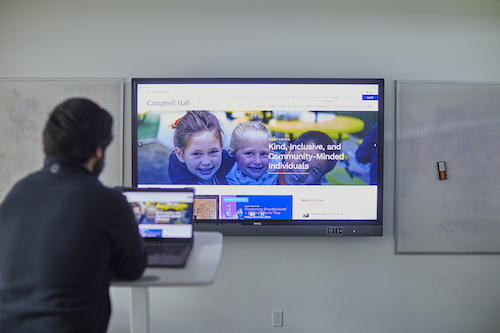
Teachers and students thrive with a comprehensive classroom ecosystem--here's how to integrate essential tools like smart boards.

Key points:

In today’s dynamic educational landscape, technology has become an integral part of teaching and learning, but it presents a paradox. While diverse edtech products promise innovation, they simultaneously pose challenges. Educators, learners, instructional technology coaches, and IT/edtech staff are grappling with the complexities of managing an ever-expanding arsenal of disconnected digital tools. It’s important to understand the challenges more closely and how an integrated, interoperable, and effective educational technology ecosystem can meet the evolving landscape of learning for more efficient, impactful, and secure learning experiences.

There are several prominent shifts that are driving the future of learning, therefore making a comprehensive and interoperable ecosystem essential. First is the permanence of a remote and/or hybrid learning structure. Solutions like interactive displays, cloud whiteboarding, screen sharing, and video conferencing tools have helped schools embrace and succeed in this new learning format. Second is the need to create a 21st century learning environment that is accessible for all students, encourages engagement and collaboration, and can be more easily tailored for different learning levels and needs. For example, smart board tools such as text to speech, translation, or word prediction can help students overcome language barriers and unique challenges. For increased engagement and collaboration, teachers are relying on new teaching methods such as microlearning and gamification. Finally, there’s also a drive toward more community and outreach.

All these initiatives have meant an increase in digital tools and apps that must be properly monitored and managed. What’s more, they need to be interoperable and accessible not only on laptops and mobile devices but also on smart boards. According to Lightspeed’s Edtech App Report, which examined the use of edtech in more than 100 school districts during the 2021-2022 school year, there is an astounding number of apps in use. It found that districts surveyed use more than 2,000 apps and that 300 of those account for 99 percent of use. It also found that much of learning time is digital, with 56 percent of students actively engaged in digital learning for more than two hours per day. This highlights that while beneficial, the digital toolbox has become more complex and essential. It emphasizes the importance for a unified and interoperable ecosystem that can blend these diverse elements into a seamless and effective educational experience.

Another challenge is security. With more and more devices being introduced into classrooms, IT administrators will have to consider how to safeguard them in order to prevent possible security risks and data leaks. Outdated firmware and apps may create security loopholes that are vulnerable to attacks and data leaks. Keeping your system up-to-date is one of the best ways to ensure optimal device performance and data security.

In the realm of modern classrooms, one of the most notable advancements is the integration of smart board technology. Over the years, smart boards have evolved significantly from the early days of interactive whiteboards. However, it’s only recently that we’ve witnessed all-in-one solutions that effectively address contemporary trends in education as well as the challenges associated with managing these tools. Their use has become so significant that they actually lie at the heart of the ecosystem topic.

The key to this evolution lies in the operating systems that power smart boards, equipped with pre-installed software such as whiteboarding apps and web browsers. Some providers even offer the flexibility to download additional educational software from app stores, catering to the diverse needs of teachers. Smart boards have proven to be invaluable tools for educators seeking to foster active participation and enhance learning retention among students, especially with those that are compatible with their favorite interactive apps.

By combining a digital whiteboard with a wide array of educational apps, educators now have the capability to conduct entire lessons using just a smart board. This integrated approach allows teachers to seamlessly access digital content from their cloud storage or local drives, or download materials directly from the internet. Even when faced with non-digitized content, teachers have the option to wirelessly share their laptop screens or connect document cameras to the board. This technology represents a significant shift in modern education, offering educators a versatile and adaptable solution to meet the evolving needs of the classroom.

Smart boards play a vital role in meeting the app management and technology security needs of schools. As educational institutions introduce a growing number of devices into their classrooms, safeguarding these assets and protecting student and teacher data becomes a paramount concern. Smart boards rise to this challenge by implementing a range of robust security measures, ensuring a safe and secure educational environment. These measures include compliance with international data privacy standards such as the GDPR and CCPA, offering regular over-the-air (OTA) updates with the latest security patches, and leveraging secure cloud services hosted on trusted servers like Amazon and Google Firebase.

In today’s dynamic educational landscape, technology presents both promises and challenges. Educators, students, and IT professionals grapple with managing an ever-expanding array of disconnected digital tools, underscoring the need for an integrated, interoperable educational technology ecosystem. This ecosystem is vital to meet the evolving landscape of learning efficiently and effectively. Interactive classroom solutions, similar to smart boards, have the potential to play a pivotal role in shaping the future of education technology by seamlessly combining digital whiteboards with a wide array of educational apps. Educators can conduct entire lessons through such solutions, accessing digital content, sharing screens, and connecting document cameras effortlessly. Furthermore, data privacy and security are paramount, with a focus on compliance with international data privacy standards, timely security updates, and flexible network security options, including multi-factor authentication, password protection, compartmentalized user accounts, and secure user modes.

In the modern classroom, where technology has become indispensable, these solutions empower educators and institutions to navigate the complexities of the digital age with confidence, creating engaging, secure, and effective learning experiences for students.

5 spooky Halloween videos for students of all ages

9 October 2023 at 12:00
Use these fun Halloween-themed TED-Ed Lessons and videos to engage students in classroom learning and capture their attention.

Key points:

  • TED-Ed Lessons are a great way to inject some fun into learning a new topic
  • During October, take advantage of creepy decorations and Halloween and use these videos to teach students some new facts
  • See related article: 9 TED-Ed Lessons about different holiday origins

It’s October, and for many students, that means pumpkins, scary decorations, and trick-or-treating on Halloween. What better way to celebrate October than to incorporate some fun and spooky videos to engage students, while also teaching them some fun facts?

Teachers with students of all ages can use TED-Ed Lessons to leverage October’s fun events (Friday the 13th in October, anyone?) and speak to students’ different interests.

The TED-Ed platform lets educators build lessons around any TED-Ed Original, TED Talk, or YouTube video. Once teachers find the video they want to use, they can use the TED-Ed Lessons editor to add questions, discussion prompts, and additional resources.

Use these TED-Ed Lessons and videos for brain breaks, to introduce new lessons, or to give students some fun and age-appropriate spooky experiences into your classroom:

1. Where do superstitions come from? Are you afraid of black cats? Would you open an umbrella indoors? How do you feel about the number 13? Whether or not you believe in them, you’re probably familiar with a few of these superstitions. But where did they come from? Stuart Vyse shares the weird and specific origins of some of our favorite superstitions.

2. Why is being scared so fun? At this very moment, people are lining up somewhere to scare themselves, be it with a thrill-ride or a horror movie. In fact, in October of 2015 alone, about 28 million people visited a haunted house in the US. But you might wonder: What could possibly be fun about being scared? Margee Kerr examines the biology and psychology behind what makes fear so fun.

3. The fascinating history of cemeteries: Spindly trees, rusted gates, crumbling stone, a solitary mourner: these things come to mind when we think of cemeteries. But not long ago, many burial grounds were lively places, with gardens and crowds of people — and for much of human history, we didn’t bury our dead at all. How did cemeteries become what they are today? Keith Eggener delves into our ever-evolving rituals for honoring the dead.

4. What can you learn from ancient skeletons? Ancient skeletons can tell us a great deal about the past, including the age, gender and even the social status of its former owner. But how can we know all of these details simply by examining some old, soil-caked bones? Farnaz Khatibi examines a fascinating branch of science known as biological anthropology.

5. A video that terrifies while it teaches? There’s a TED-Ed Lesson for that: Pick your poison: Blood hungry vampires. Zombies on a mission for your tasty brain. Creepy crawlies. No matter your (fictional or real) fright of choice, TED-Ed has a lesson for all of your Halloween needs. So pick out your favorite candy (more on that later), choose a few videos, and have a very happy Halloween.

❌
❌