Normal view

There are new articles available, click to refresh the page.
Before yesterdayMain stream

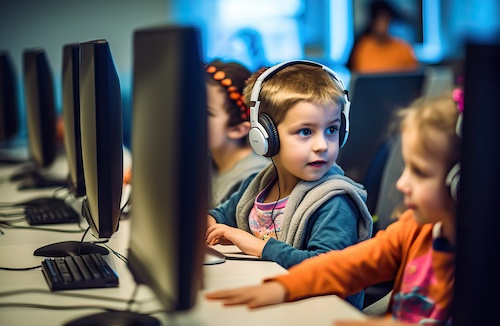
Using tech to teach emerging readers high frequency words

Emerging readers should be hearing, saying, reading, and writing high frequency words consistently within foundational lessons.

Key points:

If you were to poll an audience of educators–classroom teachers, literacy specialists, reading researchers, and university professors–about whether high frequency words should be taught in early elementary, the resounding answer would be YES. These words, after all, are important to students’ ultimate reading success.

The nuances of teaching high frequency words in early elementary would only arise around how these words should be taught.

Luckily, there is a plethora of best practice research and engaging, tech-enabled activities on teaching high frequency words to help teachers make it both a fun and interesting learning experience for young students.

Understanding high frequency words

Before teaching about high frequency words, it is important to understand how they differ from sight words. While these categories of words are often used interchangeably and can cross pollinate, high frequency words are words that appear most frequently in spoken and written language. Sight words, on the other hand, are those words that students recognize by sight–without the need to stop and decode the word–when reading.

For example, “the” is a high frequency word as well as a sight word for many people. “Email” is not a high frequency word, but is often a sight word. Classmates’ names often become sight words for students. Kindergarten students who are still emergent readers during the first semester will quickly learn their name by sight, as well as their classmates’ names (…and, they often get a great sense of satisfaction when recognizing and reading each other’s names!)

When it comes to choosing the actual words that are considered high frequency words, the educational community has embraced three different lists of words: the Dolch, Zeno, and Fry high frequency word lists. These lists have many shared words, and there is no research that says one list supersedes the other. Any of the lists or teaching a combination of the lists should still help produce successful readers.

Strategies for teaching emerging readers high frequency words

There are hundreds of ways to teach high frequency words and the majority of those ways fall into two instructional categories: memorization and phonics integration.

Both of these instructional strategies lead to students learning and quickly recalling many, many words–both high frequency words and sight words–with automaticity. This is called orthographic mapping, which is essentially a progression of warehousing words permanently in a student’s memory for immediate retrieval.

With memorization, teachers can create fun–and effective–learning opportunities for students as long as a few rules are applied. First, it is important to eliminate distractions so that the focus is on the high frequency word. Distractions can include other words printed around the target word, and having accompanying pictures with a word. For example, a picture of a girl in a swing holding her cat can be distracting when the target word is “with.”

It is also important for teachers to say the high frequency word clearly multiple times and to put the word in a sentence for contextual understanding. Providing students with the opportunity to write the word, so they are making the physical connection to the spoken word, is also important.  

There are a number of digital flashcard apps teachers can use to help students memorize high frequency words. The flashcards can also be shown to the whole class using projectors or interactive displays as part of a whole group activity.

Creating “sounds walls” in the classroom–whether on a bulletin board or digital display–highlighting four to five high frequency words is another great way to help students visualize, practice, and memorize target words. Each week, the words can be swapped out with new ones for them to learn.

Another strategy for teaching high frequency words is through integrating the words into phonics lessons. It will help if teachers pick high frequency words that integrate with the phonics skills they are covering. For example, when teaching the phonic element /s/, it can be valuable to include the high frequency word “said,” even if the vowel irregularity of /ai/ hasn’t been taught yet. If students are learning /s/ and maybe even /d/, they will be excited and motivated to apply this knowledge to learning and remembering a new word.

With either memorization or phonics integration, teachers can play a quiz game with students in which teams compete to come up with answers to questions about high frequency words. Or, they can have students participate in racetrack-style board games where two or more players move markers along the spaces of a path from start to finish. At each stop, the player must read a word and use it correctly in a sentence in order to stay on that space. Technology, whether through the use of apps or student devices, can easily be incorporated into both of these game-based activities to make the experiences even more engaging.

Regardless of which instructional strategy is used to teach high frequency words, it is important that students are immersed and active participants in the learning experience. This means that students should be hearing, saying, reading and writing high frequency words consistently within foundational lessons. These immersive opportunities are what make the words stick and what keep students engaged. And, it’s the ultimate mastery of high frequency words that will enable young students to grow into proficient readers. 
Schoolwork shouldn’t double as screentime

16 November 2023 at 10:02
Learning on screens was the best could do during school closures--not a best practice in screen time that we should continue for students.

This story was originally published by Chalkbeat. Sign up for their newsletters at ckbe.at/newsletters.

Children get one childhood, and time is one of the most precious resources we have in schools. For these reasons, I am increasingly frustrated that I have next to no power to stop my own children from wasting their time in front of a computer screen.

That’s because screens are where they are expected to access and complete their schoolwork and homework. My children are assigned to watch online videos and answer questions about them in an online form. Their grades reflect their responses.  

No doubt, this assigned screen time probably comes from a good place. Teachers want to provide students with experiences they will enjoy. Why give students a reading that they may not do when you could give them a video they are more likely to watch?

Watch enough videos and students begin to believe that learning must be passively entertaining and that the best way to take in new information is through streaming content. The most compelling story is often not the most truthful one, but the one that is the most slickly produced. 

I don’t want that for my children. I want my children to enjoy the challenges of learning, to take in multiple sources, and to ask good questions about everything they engage with. I don’t want them on autopilot, screening their way through childhood. 

UNESCO recently published a book titled “An Ed-Tech Tragedy?” and it is sobering. This book spells out how pandemic school shutdowns resulted in massive learning losses. It also highlights the costs, in terms of mental health, of spending so much time on screens. 

For years, educational technologists have cast personalized online learning as an answer to what plagues education. But even when ed tech was needed most, these tools did not always rise to the occasion. They couldn’t take the place of teachers, peers, and classroom conversations. And our reliance on them has instilled terrible habits in teachers and students.

Parents were rightly frustrated and angry when their children were robbed of the opportunity to attend school because of pandemic lockdowns. It is not good for a child to be away from their peers and in front of screens. Key social, emotional, and intellectual skills are lost when this happens. That’s why we must not replicate the worst aspects of school lockdowns now that children are back in school. Children should spend time engaging their teacher and each other–making eye contact and appreciating what can only be learned through human presence–not retreating back into the safe, solitary spaces of their devices.

Their schoolwork should have them engaging with what is best in our culture, not what is most convenient or entertaining. This means reading challenging texts with students and doing the work of helping them develop their voices in relation to these texts. However, educators seem to be having a hard time remembering that distance learning was the best we could think to do during the lockdown, not a best practice that we should continue.

I am not afraid to mourn all that was lost because of the pandemic. Children suffered tremendously, and schools across the country will be dealing with the academic, social, and emotional fallout for years to come. My grieving process involves honoring my hopes and fears from the middle of the pandemic. I promised myself then that if we ever got back to normal, I wouldn’t take the physical presence of my students for granted. I would look at their unmasked faces and try to communicate how much I appreciated that we were together. 

Screens, and the illusion of engagement they offer, get in the way of this type of lived gratitude, and they distract us from what matters.

To be clear, teachers’ lives in schools are often tremendously difficult. Many educators are demoralized and under-appreciated, but an over-reliance on screens will not make the work of teaching more rewarding or valued. It’s human connections that make teaching an endlessly rewarding calling. I know this from my own classrooms and my experience training future teachers. 

As much as I may internally complain about having to pick up all the little Lego pieces, Magna-Tiles, and wooden blocks that my boys leave scattered around the house at the end of a long day, I know that this type of embodied play is the foundation of a good childhood. And as hard as it might be to listen–really listen–to the stories my daughters tell as they process their day at school (and not just let my mind wander to all the items on my to-do list), there is no greater gift we can give children than our fullest attention.

I am not a perfect parent or teacher, but I do know that I am at my best when I am present. And I know that screens keep me from offering my full presence. I wish I had more power to keep them out of schools because I know my children–and all of our children–deserve better.

For more news on teaching trends, visit eSN’s Innovative Teaching page.

Chalkbeat is a nonprofit news organization covering public education.

Teacher helps implement the science of reading ‘one bite at a time’

Indiana is in the midst of a statewide push to train more teachers in the science of reading with the goal of improving literacy rates.

This story was originally published by Chalkbeat. Sign up for their newsletters at ckbe.at/newsletters.

Indiana is in the midst of an enormous undertaking to improve literacy rates. The approach: Align state standards, curriculum, and teacher training programs with practices rooted in the science of reading, which emphasizes phonics to help students decode words.

Literacy coach Mika Frame has a memorable mantra for accomplishing big goals. 

“My current principal always tells me, ‘Eat an elephant one bite at a time,’” she said. “Through this saying, he always encourages me to seek change in our staff by taking small steps, as opposed to expecting my teachers to change all at once or in drastic measures.”

A K-2 literacy coach at Rose Hamilton Elementary School in Centerville, Frame is part of the first cohort of educators that trained in reading science practices as part of the Indiana Literacy Cadre. Now she co-teaches, analyzes student data to see who needs more help, and leads her colleagues through the state’s new requirements.

Frame told Chalkbeat about her work as Indiana looks to bring more literacy coaches like her to its schools.

What drew you to a career in education?

My favorite part of high school was when I was a cadet teacher and worked with elementary students. I still love working with children today. I enjoy the energy, enthusiasm, and curiosity of young learners. Witnessing the progress and achievements of students, seeing them overcome challenges, and helping them reach their potential brings me a deep sense of satisfaction.

What does your typical day look like?

My typical day at Rose Hamilton includes working alongside teachers in their classrooms. Co-teaching is my favorite aspect of working with my colleagues. An additional responsibility I have most days involves disaggregating learning data. This data often presents patterns and helps teachers identify subgroups of students who need additional interventions. Each month, I also lead professional learning community meetings and offer new ideas and strategies to our teachers. Finally, coordinating testing is an important part of my position; I help ensure testing protocols are executed with fidelity and testing deadlines are met.

What’s your favorite lesson to teach and why?

My favorite lessons to teach are phonics lessons. Phonics plays a vital role in children’s literacy development by providing them with the tools to decode words, read fluently, and comprehend written materials effectively. It sets the stage for their future academic success. Phonics empowers children to read independently and with confidence. When children can decode words accurately, they can read books and other written materials on their own. This opens up a world of knowledge and imagination. I love seeing children’s eyes light up when they start sounding out words. 

When did you first learn about the ideas of reading science? How have you been able to apply those recently with fellow educators or students?

I first learned in depth about the science of reading when I was accepted into the Literacy Cadre program. In the Summer of 2022, I attended a weeklong training that dove into the science of reading. I have been able to apply these strategies by leading professional learning community meetings. During this time, I’ve encouraged teachers in the building to present to one another about the science of reading instructional practices they are doing in their classrooms. 

Tell us about your own experience with school and how it affects your work today.

I grew up in Modoc, Indiana. My community was rural and consisted of approximately 160 people. I graduated with only 18 students in my class, and that included a few foreign exchange students. It was a close-knit community in which everyone knew each other. This background helps me understand that every single child matters, and no matter the size of the district, helping all students succeed academically and helping them reach their full potential is the ultimate goal in education.

What’s the best advice you’ve ever received, and how have you put it into practice?

My current principal always tells me, “Eat an elephant one bite at a time.” Through this saying, he always encourages me to seek change in our staff by taking small steps, as opposed to expecting my teachers to change all at once or in drastic measures. I have used this advice frequently as our school has been going through new initiatives in the last year. Our next step this coming school year is to look into a new phonics program. We are slowly looking into the programs we are using and making small changes, if needed. Again, small steps that lead to changes are important! 

What’s one thing you’ve read that has made you a better educator?

This past year I read “Shifting the Balance” by Jan Miller Burkins and Kari Yates with my colleagues in the literacy cohort. It really helped me understand the aspects of science of reading. After reading the book, my superintendent was kind enough to buy a set for my teachers, and I led a book study at Rose Hamilton. It was great to meet after school with the teachers and reflect on each chapter, as well as what we do or possibly could do better.

Chalkbeat is a nonprofit news organization covering public education.

Related: The intersection of the science of reading and edtech

OpenAI releases ChatGPT teaching guide

19 October 2023 at 11:13
Teaching with ChatGPT doesn't have to be challenging--educators can embrace the AI tool and also show students how to create original work

Key points:

  • OpenAI, maker of ChatGPT, is releasing a guide to help educators incorporate the AI tool in their instruction
  • The guide includes use examples and answers frequently-asked questions
  • See related article: An AI to-do list for educators
  • Get the latest news on AI in education by visiting eSN’s Digital Learning page

Educators face myriad dilemmas in the wake of ChatGPT’s explosion, with some of the most popular including teaching with ChatGPT and how to address student use of AI chatbots in assignments.

OpenAI, the maker of ChatGPT, has released a new guide to help educators navigate the many ways AI can be used in teaching and learning. The guide contains examples of how some educators are teaching with ChatGPT, along with a series of frequently-asked questions that may help guide teachers as they seek to strike a balance between accepting AI’s presence and an over-reliance on such tools.

As outlined in OpenAI’s guide, here’s how some instructors are teaching with ChatGPT:

Role playing challenging conversations: Dr. Helen Crompton, Professor of Instructional Technology at Old Dominion University, encourages her education graduate students to use ChatGPT as a stand-in for a particular persona—like a debate partner who will point out weaknesses in their arguments, a recruiter who’s interviewing them for a job, or a new boss who might deliver feedback in a specific way. She says exploring information in a conversational setting helps students understand their material with added nuance and new perspective.

Building quizzes, tests, and lesson plans from curriculum materials: Fran Bellas, a professor at Universidade da Coruña in Spain, recommends teachers use ChatGPT as an assistant in crafting quizzes, exams and lesson plans for classes. He says to first share the curriculum to ChatGPT and then ask for things like fresh quiz and lesson plan ideas that use modern or culturally relevant examples. Bellas also turns to ChatGPT to help teachers make sure questions they write themselves are inclusive and accessible for the students’ learning level. “If you go to ChatGPT and ask it to create 5 question exams about electric circuits, the results are very fresh. You can take these ideas and make them your own.”

Reducing friction for non-English speakers: Dr. Anthony Kaziboni, the Head of Research at the University of Johannesburg, teaches students who mostly don’t speak English outside of the classroom. Kaziboni believes that command of English is a tremendous advantage in the academic world, and that misunderstandings of even small details of English grammar can hold back students from recognition and opportunity. He encourages his students to use ChatGPT for translation assistance, to improve their English writing, and to practice conversation.

Teaching students about critical thinking: Geetha Venugopal, a high school computer science teacher at the American International School in Chennai, India, likens teaching students about AI tools to teaching students how to use the internet responsibly. In her classroom, she advises students to remember that the answers that ChatGPT gives may not be credible and accurate all the time, and to think critically about whether they should trust the answer, and then confirm the information through other primary resources. The goal is to help them “understand the importance of constantly working on their original critical thinking, problem solving and creativity skills.”

Some of the common questions around teaching with ChatGPT include:

  1. How can educators respond to students presenting AI-generated content as their own?
  2. How can ChatGPT be used for assessment and feedback?
  3. How can educators get started with ChatGPT?

Related: Coming out of the AI closet: A scholar’s embrace of ChatGPT-4

5 models that prioritize learner-centered education

18 October 2023 at 12:00
Learner-centered education collaborates with learners to design learning experiences and pathways tailored to their interests and needs.

Key points:

School models are, for the most part, outdated–and very overdue for replacement. When students reach high school, research shows that close to 66 percent of students are disengaged. But even students who do successfully navigate their schooling emerge with only a specific (and often narrow) skillset that may or may not match their strengths or interests.

Conventional schooling often leaves students disillusioned, questioning their intelligence and value as it is framed by a system that needs an overhaul.

Learner-centered education can play a critical role in reshaping education systems, offering a more holistic approach to meeting learners’ needs and helping students find fulfillment in their academic accomplishments.

K-12 Value Networks: The Hidden Forces That Help or Hinder Learner-Centered Education, a report from the Clayton Christensen Institute and authored by CCI senior research fellow Thomas Arnett, offers insight into understanding why schools struggle to change their instructional models, along with tips to establish and support learner-centered education models.

Program leaders, sponsors, learners and their families, staff, community partners, and funders are all critical to the success of these learner-centered education models.

The report describes how five different learner-centered education models–The Met, Virtual Learning Academy Charter School, Iowa BIG, Village High School, and Embark Education–were able to launch and grow their models by assembling value networks congruent with their vision for learner-centered education.

1. The Met: The Metropolitan Regional Career and Technical Center, known as The Met, is a network of six small, public high schools located in Providence and Newport, Rhode Island. The hallmark of The Met’s learner-centered model is that its learners go out in their communities for two days out of the week to lead real-world projects as interns for partner organizations. For example, learners might work with a local bakery, a law firm, a tech company, or a recording studio.

When learners join the Met, they and their families work with an advisor to identify their strengths, needs, and interests, and then develop an individualized learning plan with an internship as its centerpiece. Learners are responsible for researching potential internship opportunities and communicating with partner sites to arrange their internships. Advisors coach them as they do their research and outreach to ensure that internships match their needs and interests.

2. Virtual Learning Academy Charter School: The Virtual Learning Academy Charter School (VLACS) is a statewide virtual school created in 2007 that serves K–12 learners throughout New Hampshire. The concept for the school came from the superintendent of the Exeter Region Cooperative School District, who saw an opportunity to take advantage of a new charter school law to apply for a statewide charter. Rather than create another conventional school, however, the superintendent recognized the distinctive value of using a virtual school model to offer a wide array of flexible, part-time and full-time learning options unavailable through brick-and-mortar campuses.

VLACS’s competency-based model is highly adaptable to learners’ needs and interests. It offers a range of options for learners to earn credits: through online courses, learner-designed projects, and out-of-school learning experiences such as internships and travel. Learners who take online courses move through those courses at their own pace and earn credit whenever they’re able to demonstrate mastery of designated competencies. For projects and other learning experiences, VLACS aligns these experiences with state learning standards and then measures learners’ mastery of standards using performance-based assessments.

3. Iowa BIG: A community conversation about the knowledge and skills young people need to become engaged and successful members of the community as adults was linked with an initiative to send 60 community leaders back to school alongside learners over a four-month period. Through this experience, the community leaders realized that most learners were disengaged in school. Partitioning content into discrete subjects and courses made the learning boring and the teaching hard. Meanwhile, the work learners did in school had little connection to real-world problems, careers, and citizenship. Then came the founding of Iowa BIG, a high school learning experience sponsored by four local districts that enables learners to earn core credits by doing authentic projects.

The typical day of an Iowa BIG learner is half conventional and half learner-centered. For part of the day—either the morning or the afternoon—learners attend their local high schools. Then for the other half of the day, they go to an Iowa BIG site for real-world learning experiences. The model works with partner companies and organizations across Cedar Rapids to conceptualize projects learners might complete. Learners then work with partners to co-design interdisciplinary projects that both align with the academic and life goals of the learner, as well as the business or nonprofit needs of the partner. Projects might include creating museum exhibits, helping optimize processes at a hospital, hydroponic farming, or developing a messaging campaign for an animal shelter.

4. Village High School: The Village diverges markedly from standard approaches to high school education. Its learners receive all of their core academic content–English, history, social studies, and math–through mastery-based online courses. This format eliminates the need for scheduled class times and allows learners to progress at their own pace and test out of modules that they already have expertise in. Online courses at Village High School create time and capacity for the most learner-centered features of its model: its array of in-person electives.

Often team-taught and generally in-person, these courses are inspired by teachers’ and learners’ own passions. They cover myriad different topics, often in an interdisciplinary format: from Adulting 101, Renewable Energy, and Beekeeping to Comparative Religions and International Relations. Many electives take advantage of the Village’s flexible format. For an elective on ceramics, learners spend an entire day every week working on ceramics projects; and one physical education elective takes learners out into the Colorado Rockies for hiking and rock climbing. The grading model in electives is also different–closer to a workplace evaluation than to conventional points earned on assignments and tests. Learners and teachers sit down together to discuss learners’ progress and work, and decide on a grade together.

5. Embark Education: Miguel Gonzalez, a career educator, launched Embark Education in 2019 out of a coffee shop and a bike shop in North Denver, CO. His goal was to create a learner-centered model at the intersection of authentic experiences and relationships. That goal translated into a private, tuition-free micro-school serving approximately 50 sixth- through eighth-grade learners. Embark’s two businesses, Pinwheel Coffee and Framework Cycles, enable learners to engage in projects that integrate academics with real-world questions. For example, while working on the practical skill of crafting the perfect cappuccino under the guidance of adult baristas, learners investigate the differing mathematical ratios of ingredients present in a latte versus a cappuccino, and the chemistry behind the extraction of caffeine from coffee beans.

These integrated “shop projects’’ include a combination of direct instruction within the three core academic disciplines (math, science, and humanities); personalized learner exploration; and practical work within the bike and coffee shops. They enable learners to master foundational academic skills while simultaneously experiencing the application of these skills in the world beyond the classroom. Learners’ projects for the businesses must contribute to the success of the businesses. For example, learners don’t work on problems that the businesses have already solved, such as having learners apply math and science to reinvent the latte. Instead, Embark’s leaders look for opportunities that leverage the unique advantage of having learners’ on site to make the businesses better than what they could do alone.

5 strategies to ignite student engagement

Student engagement is about tapping into students' innate curiosity, creativity, and critical thinking skills--these strategies can help.

Key points:

When you think of education, what is the first thing that comes to mind? For some, it might be a pile of homework or a stack of books that need reading. Others may recall the flashcards they used to memorize specific formulas or expand their vocabulary. All these examples have a place in the learning ecosystem, but true education should be about so much more. Student learning should involve curiosity, discovery, and the opportunity to experiment with a variety of different solutions. To put it more simply: true education requires student engagement.

Every teacher hopes to ignite, empower, and engage the students who walk through their classroom door. Ample research has shown that student engagement is crucial to overall learning and long-term success. However, implementing this is easier said than done. To better ignite student curiosity and interest, teachers should consider trying one of these strategies that help make student engagement second nature:

  1. Mystery Box: Start your class by bringing in a mystery box with something hidden inside. Then, have students ask yes or no questions to figure out what is in the box. To ensure this activity stays relevant, it helps to have objects in the box that loosely ties to the content and have students draw the connection. For instance, an old horseshoe could be used in a lesson about the Pony Express, or a piece of amber for a unit on fossils.
  2. Taboo Tactics: There’s nothing more tempting than forbidden fruit—so use this strategy to make knowledge a mouthwatering apple. Before you teach new content, close the door. Tell them you don’t want anyone to find out that you’re teaching them this idea. The content should never actually be controversial, but adding an element of secrecy is enough to hold student interest.
  3. Make a Mascot: Task students with building a character that represents something you’re learning about. Have them explain the symbolism behind their construction as a means of probing their understanding. Be sure to add constraints as well, so students will need to think critically and creatively. For example, they could construct a mascot that represents how humans impact their environment using only 5 materials provided from a table.
  4. Build an Intellectually Safe Culture: Create a culture where students feel free to offer ideas and are encouraged to make mistakes. A simple change in the wording of a question can open up a comfortable space for students to offer solutions. Instead of asking, “What is the answer?” pose the question as “What is an answer?” This allows students to recognize that many solutions are possible.
  5. Engage in Project-Based Learning: Project-based learning (PBL) is a teaching method in which students learn by actively engaging in real-world and personally meaningful projects that – in ways both big and small – make the world a better place. Consider exploring Blue Apple projects which cover everything from environmental sustainability to responsible money management!

At its heart, student engagement is about tapping into their innate curiosity, creativity, and critical thinking skills. By giving students the space they need to ask questions and pursue ideas, teachers can equip them with a mindset that allows them to tackle any challenge that comes their way – both in the classroom and beyond.

From pencils to pixels: Tech is shaping the future of education

New and advancing technology tools can support the future of education by boosting engagement through interactivity.

Key points:

Some of my most vivid school memories involve teachers struggling to use overhead projectors: placing a printed sheet on the glass and fumbling to align it properly to project an image onto the wall. Students would laugh as the teachers mumbled about the annoyances of technology. Now think about how far the classroom has come since then–schools stocked with iPads and tablets, interactive touchscreens, and even virtual reality headsets.

Undoubtedly, the pandemic accelerated the shift to technology adoption in schools. However, this push to digitize doesn’t just involve remote learning technologies, but also tools for in-person learning. As a result, the classroom is modernizing, and pixels are replacing pencils. But the tech is also much easier to implement and operate than that of days of yore. No more fumbling with transparent sheets and overhead projectors.

Let’s break down how these new technologies are working in practice and the ways they can support better educational outcomes.

Engagement and experimentation

Technology demonstrably helps keep students engaged in their lessons and facilitate better learning in a digital world. While some argue technology is a distraction in the classroom – which can certainly be true if it’s not implemented properly – it also helps students to be focused and engaged in lessons.

Some prominent tools include interactive touchscreens in classrooms that promote and support active learning, a strategy for engaging students in classroom activities with more hands-on activities. These touchscreens help bring learning alive, off the page and into the actual world. These touch screens can facilitate engagement across subjects, even in unlikely places. 

One noteworthy example is science education, specifically anatomy. In traditional lab classes, dissecting frogs and other animals can be challenging due to animal-welfare concerns and resource limitations. Interactive touchscreens, however, offer an alternative. Students can virtually dissect organisms, providing them with a deep understanding of anatomy without the need for physical specimens. This approach not only enhances engagement but also aligns with ethical considerations in education.

Why is engagement important? One study found that active learning significantly increases student performance in the classroom: Students were 1.5 times more likely to fail a class that was primarily lecture-based as opposed to interactive. When students can touch things and interact, as opposed to watching a teacher write notes on a chalkboard and copying it into their notebooks, test scores improve.

Information retention

What’s more, technology can help students retain information for the long term. Touchscreen and tablet technology enables students to actively explore and manipulate digital content, transforming abstract concepts into tangible and comprehensible experiences. The tactile nature of touchscreens allows learners to engage with subjects in a way that textbooks or traditional teaching methods cannot replicate, and that engagement also boosts retention.

Consider this: Research shows that an average learner forgets 70 percent of what they learned after 24 hours and 90 percent of what they learned after a week. But research demonstrates that students who engage with interactive content retain information more effectively via enhanced information processing, contributing to improved performance and better test scores.

Interactive learning can also elicit emotional responses, which in turn impacts retention. When students are emotionally engaged in a lesson or activity, it has been shown to enhance memory consolidation. Interactive technologies have the capacity to create emotionally resonant experiences, whether through gamification, simulations, or immersive storytelling. These emotionally charged experiences are then more likely to be remembered.

So, whether it’s complex mathematical concepts, historical events, or scientific principles, digital technologies offer a dynamic platform for enhancing memory retention and ensuring that learning extends beyond the classroom.

Adaptive learning

Adaptive learning technologies are another transformative aspect of accessibility in education and have the power to revolutionize the traditional classroom experience. This approach leverages artificial intelligence and data analysis to customize educational content for students, recognizing their unique strengths and weaknesses.

Adaptive learning technology provides insights into data to help teachers understand students’ learning processes and patterns. Adaptive learning systems can track data from a variety of sources, providing insights into student progress, engagement, and performance. Educators can then leverage those insights to create tailored, personalized learning experiences.

There are various new adaptive learning platforms, including Smart Sparrow and ScootPad. Teachers merely sign up and input data, or provide access to it, in order for the technology to do the more difficult analytical work. In other words, these platforms don’t necessarily require more time or effort from already overburdened teachers. Educators can also integrate adaptive learning with a centralized device management platform to collect and process all that data from multiple technologies. Teachers can then monitor how students are actually using their devices and how well they are performing.

Of course, it’s important to strike a balance between technology and traditional teaching methods, ensuring that technology supports educational goals rather than replacing human interaction and critical thinking. Technology is a powerful tool in education, but it is not a replacement for human teachers.

Companies go to high schools for career training

Vocational schools of the past contributed to inequity, but modern career training gives students a window into their options.

This story was originally published by Chalkbeat. Sign up for their newsletters at ckbe.at/newsletters.

Every now and then, Ayden Corbett has to explain to surprised homeowners what he’s doing in their front yard.

Since the second semester of his senior year of high school, he has responded to field calls as an employee of the largest underground utility locating company in North America — the Indianapolis-based U.S. Infrastructure Company (USIC). The white truck and multicolored flags marking the location of water, power, and telecommunications lines usually give it away. 

“You learn how to work with people,” he said. 

Corbett graduated in 2022 from a unique program at the Hinds Career Center in Elwood that trains high schoolers for the little-known underground utility locating industry. As demand for the profession skyrocketed during the work-from-home boom of the pandemic, USIC representatives approached the career center about creating a high school graduation pathway that would lead to a diploma, an industry certification, and a job offer.

While still uncommon in Indiana, partnerships between schools and private companies that lead students directly into employment in highly specific trades are growing — the Hinds Center program is the newest among four that have been started statewide.  

“Their goal is to have trained employees ready to enter the field; ours as a career center is to give students the workforce and soft skills to be employable in whatever they choose,” said Jim Pearson, director of the Hinds center. 

And creating more of these programs is a top priority for state education officials, who have been charged under a new state law with reworking high school requirements to encourage more students to work and earn credentials before they graduate. 

It’s part of an effort to counter Indiana’s declining college going rates by connecting high school students to in-demand and high-paying jobs without the need for postsecondary education. 

“Young people are really wanting a variety of options for leading to viable, successful futures. That’s not necessarily a four-year degree,” said Rachel Rosen, senior research associate at the Center for Effective Career and Technical Education at MRDC, a nonprofit, nonpartisan research organization. 

‘Employable in whatever they choose’

The underground utility graduation track at the Hinds Center is a slower version of the standard company training program, hosted inside a former sewing classroom that USIC equipped with a virtual reality system and a wall showing the typical utility connections on a home. The company also provides the two instructors, said Darrin Haynes, senior manager of career and technical education at USIC.

Students study the underground utility maps of Indiana cities like Westfield, where new home construction is booming, and learn to use the equipment that allows them to detect underground utility lines both through virtual reality and in the field. They spend part of the day at the center for career training, but also take traditional academic courses at their home high schools. 

USIC has hired 14 of the 16 graduates of the Elwood program over two years, and fielded calls from its competitors looking to hire students as well, Haynes said. As of this year, students will also earn college credit at Indiana Tech upon completing the pathway. 

One of the main draws of the track is the opportunity to start working during senior year, said Jacob Wright, another 2022 grad. Students who are at least 18 years old are paid the same rate as new hires to respond to calls to 811, the service that companies and homeowners are supposed to call before digging projects, according to Haynes. 

“You get a job out of high school, a (company) truck second semester, and you get paid to take calls,” said Wright. 

Programs should connect to college and career

Several other local graduation pathways in Indiana offer students direct links to local companies, including the RV construction pathway at Wa-Nee Community schools, and a now-defunct aviation sheet metal pathway at Decatur schools. 

The latter operated for a year before the pandemic created challenges for teaching and recruiting students, said Michael Gehrich, director of aviation at Vincennes University, which worked with Decatur schools on the pathway. 

Like the utility locating program, the aviation pathway sought to expose students to a local industry that’s in need of workers, with a lower barrier to entry than existing dual credit aviation programs that require additional college education, Gehrich said. 

Other similar programs can be found in New York City’s P-TECH schools, said Rosen, the researcher, which are six-year schools that partnered with companies to allow students to graduate with STEM skills, a high school diploma, and an associate’s degree. 

Where vocational schools of the past contributed to inequity by directing low-income and students of color into low-wage jobs, modern career training can give students a window into their options, Rosen said. 

“CTE in high school provides students an opportunity to explore what they don’t want to do as much as what they do want to do,” Rosen said. “We may see a failure because the student did not want to go into that field, but higher-resourced students have more opportunity to explore and make mistakes. If they wait till college to explore what they don’t like, there can be a real cost to doing that.”

The goal should be preparing students for a career with mobility, Rosen said. 

Haynes said underground utility locating offers that mobility. Graduates can work for municipalities instead, move into management and training roles at USIC, or request to be relocated to another state. 

The pathway opens a new option in a community where the college-going rate has dropped, said Haynes.

State data shows the rate for Madison County dropped 16 percentage points from 2015-2020, mirroring the state’s drop of 12 points in that time period

Though no students have yet changed their minds about the senior-level course, Pearson said one advantage of the career center is that it has the flexibility to redirect students to one of its other career paths.

Plans to expand in Indiana and other states

Pearson said the Hinds center is open to working with other companies to develop local graduation pathways and meet workforce needs — but that they would need to work closely with educators on curriculum and standards. 

The career center would aim to stay away from low-skill, low-pay tracks, but wouldn’t outright reject retail pathways, for example, if they led into supervision and management positions, Pearson said.

Haynes said that other companies interested in creating their own pipeline programs at local high schools need to commit to an upfront investment with a slow return. In addition to a workforce pipeline, one major benefit to USIC is that graduates have more time to absorb the training, and begin working with more experience, often making fewer mistakes than other new hires. 

Haynes said the company isn’t working with students who are using Indiana’s new career scholarship accounts, which give students money to take career training outside of their schools. Those students could apply for a job with the company and take the training there, he said.

The company plans to continue recruiting in high schools. Haynes said USIC has replicated the high school training program in Oklahoma and New York, and hopes to grow it further throughout Indiana and other states. 

“Most of our graduates have moved out, have a place of their own. They start their lives in a way that we all dream of when we’re teenagers,” said Haynes. “We’re putting them on a pathway to do that.”

Chalkbeat is a nonprofit news organization covering public education.

Related:
4 ways to enrich CTE programs
How our district engages students in a CTE program


What students are reading

11 October 2023 at 11:33
Librarians and teachers can look to reading trends as a way to connect students with their next favorite book

Key points:

About five years ago, my New Year’s resolution was to read all the books on my bookshelf I’d never managed to crack. While that resolution was a complete failure (I still have unread books on my shelf), it reignited my love of reading.

Each year, I document my #BritReads reading journey on my social media channels. This year, I decided to bring #BritReads to life with my close family and friends. In lieu of a Christmas present, I’m buying each of them four books a year – books I’ve read or those that are at the top of my list to read. Rather than a one-size-fits-all #BritReads Book Club, I’m curating books just for each of them. For example, my Christmas movie-loving, hopeless-romantic childhood friend will not get my favorite thriller or whodunit!

Just like my little book club, as librarians and teachers, I know you’re looking to connect students with their next favorite book, which means you need to be ahead of the trends and know about the titles emerging as the next generation of books to remember. So, let’s take a look at what students are reading in school libraries and classrooms across the country. Here are the top requested titles according to trend reports in our industry:

In lower elementary, the most popular book (and my #BritReads pick for the little ones) is a picture book called The Smart Cookie by John Jory. It’s the fifth picture book in Jory’s series teaching life lessons using food, accompanied by The Cool Bean, which also tops the list. In The Smart Cookie, the cookie realizes that while school can be tough, with hard work, anyone can be smart in their own way.  From friendly food… to animals. In the nonfiction section, the Who Would Win series is also a hit.  Students love to learn about various species of animals like sharks, reptiles, and birds and select which species survives. 

In upper elementary, Dog Man, The Baby-Sitters Club, and the I Survived series continue to be perennial favorites. In the world of nonfiction, students are starting to learn about race and history through books like Unspeakable: The Tulsa Race Massacre, We Are Still Here!: Native American Truths Everyone Should Know, and Stamped (For Kids): Racism, Antiracism, and You. My #BritReads favorite for upper elementary school is a throwback to my childhood. I read every single book in The Baby-Sitters Club series as a child, so it’s heartwarming to see these Ann M. Martin characters as a part of young lives all over again.

In middle school, books about middle grade students navigating the world dominate the world of fiction, such as the Diary of a Wimpy Kid series and Jerry Craft’s New Kid. In nonfiction, students and teachers are gravitating toward true stories about normal people who accomplish extraordinary things such as I Am Malala, Hidden Figures, and Undefeated: Jim Thorp and the Carlisle Indian School Football Team. My #BritReads pick is Hidden Figures: The Untold True Story of Four African American Women Who Helped Launch our Nation into Space. I read the adult version as part of #BritReads21, but this one has been adapted for a younger audience, giving students an opportunity to learn about a group of women who were well ahead of their time!

As for high school and adult-level titles, many of the books that students are reading are required as part of the curriculum including classics like The Catcher in the Rye, Of Mice and Men, and A Raisin in the Sun. But the classics sit alongside modern fiction hits like The Hate U Give and The Hunger Games series. I was pleased to see I picked some winners for the first #BritReads Book Club mailing. Each of my journalist friends got a copy of Just Mercy by Bryan Stevenson, which happens to be on the top of the adult nonfiction list.  My #BritReads favorite, The Catcher in the Rye, is one of the inspirations behind my 5-month-old boy’s name – Holden!

Across all age levels, teachers and librarians continue to seek titles written by diverse authors featuring multi-cultural characters with social and emotional learning lessons. If it happens to be a part of a series, or graphic novel or Manga form…even better! You can check them all out on Titlewave.

❌
❌