Chicago, IL – Acceleration Academies, the nation’s leading provider of tech-enabled flexible education, announced today that Kelli Campbell will assume the role of Chief Executive Officer to accelerate growth and broaden impact to school districts and students.
Campbell spent 17 years at Discovery Education, the global leader in standards-based digital content for K-12 school districts, and most recently served as President of the company. As a career EdTech executive, she brings a demonstrated history of success leading the sales and marketing, product development and operations functions for pioneering educational technology organizations.
“After thorough succession planning and a comprehensive search process, the board is pleased to have found the best individual to take Acceleration Academies into its next stage of growth and expansion,” said Steve King, co-founder of Daniels & King Ventures, the main funding source for Acceleration Academies. “Kelli has a track record of strong leadership in the EdTech industry, established relationships with K-12 school districts, and success in private equity value creation. We are confident that Kelli is the right leader to accelerate the company’s growth opportunities.”
The change in leadership comes as Acceleration Academies is rapidly expanding its school district partnerships nationwide to provide a flexible, supportive and personalized program for students who are not experiencing success in a traditional high school.
“As our organization has matured and we are serving a record number of students, we are excited to welcome additional leadership expertise to help us reach the next level. We must support our accelerated growth so that we can serve more students and school districts, while maintaining the efficacy and integrity of our model,” states current CEO and co-founder Steve Campbell.
Co-founders Steve Campbell and Dr. Joseph Wise will remain actively involved in the business.
“Acceleration Academies is an extraordinary company that is positively impacting the lives of young adults who struggle in a traditional school setting,” said Kelli Campbell, Acceleration Academies’ incoming CEO. “Throughout my career I have championed equity in education. Acceleration Academies provides the necessary supports to help remove obstacles so that students can not only graduate from high school but be prepared for post-secondary and job success. I am tremendously excited for the opportunity to support the mission and help expand the number of students that we serve.”
About Acceleration Academies
Founded in 2014, Acceleration Academies is a national leader in re-engaging young adults not experiencing success in a traditional high school setting. We partner with school districts across the U.S. to offer dropout recovery and re-engagement services, credit recovery and a flexible, personalized alternative for students (and former students) to earn a customary district issued high school diploma. Our hybrid learning model and Cognia-accredited web-based curriculum allows students to receive in-person support at academy locations and work online anytime from anywhere. Students receive a dedicated social and emotional support system to remove impediments that have caused them to struggle in a traditional setting. Currently, Acceleration Academies has more than 5,000 students enrolled in 19 academies in seven states.
For more news on digital learning tools, visit eSN’s Digital Learning page
In today’s dynamic educational landscape, technology has become an integral part of teaching and learning, but it presents a paradox. While diverse edtech products promise innovation, they simultaneously pose challenges. Educators, learners, instructional technology coaches, and IT/edtech staff are grappling with the complexities of managing an ever-expanding arsenal of disconnected digital tools. It’s important to understand the challenges more closely and how an integrated, interoperable, and effective educational technology ecosystem can meet the evolving landscape of learning for more efficient, impactful, and secure learning experiences.
There are several prominent shifts that are driving the future of learning, therefore making a comprehensive and interoperable ecosystem essential. First is the permanence of a remote and/or hybrid learning structure. Solutions like interactive displays, cloud whiteboarding, screen sharing, and video conferencing tools have helped schools embrace and succeed in this new learning format. Second is the need to create a 21st century learning environment that is accessible for all students, encourages engagement and collaboration, and can be more easily tailored for different learning levels and needs. For example, smart board tools such as text to speech, translation, or word prediction can help students overcome language barriers and unique challenges. For increased engagement and collaboration, teachers are relying on new teaching methods such as microlearning and gamification. Finally, there’s also a drive toward more community and outreach.
All these initiatives have meant an increase in digital tools and apps that must be properly monitored and managed. What’s more, they need to be interoperable and accessible not only on laptops and mobile devices but also on smart boards. According to Lightspeed’s Edtech App Report, which examined the use of edtech in more than 100 school districts during the 2021-2022 school year, there is an astounding number of apps in use. It found that districts surveyed use more than 2,000 apps and that 300 of those account for 99 percent of use. It also found that much of learning time is digital, with 56 percent of students actively engaged in digital learning for more than two hours per day. This highlights that while beneficial, the digital toolbox has become more complex and essential. It emphasizes the importance for a unified and interoperable ecosystem that can blend these diverse elements into a seamless and effective educational experience.
Another challenge is security. With more and more devices being introduced into classrooms, IT administrators will have to consider how to safeguard them in order to prevent possible security risks and data leaks. Outdated firmware and apps may create security loopholes that are vulnerable to attacks and data leaks. Keeping your system up-to-date is one of the best ways to ensure optimal device performance and data security.
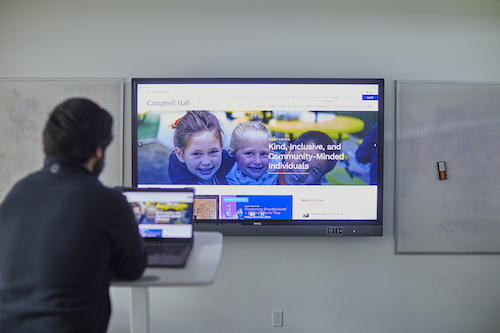
In the realm of modern classrooms, one of the most notable advancements is the integration of smart board technology. Over the years, smart boards have evolved significantly from the early days of interactive whiteboards. However, it’s only recently that we’ve witnessed all-in-one solutions that effectively address contemporary trends in education as well as the challenges associated with managing these tools. Their use has become so significant that they actually lie at the heart of the ecosystem topic.
The key to this evolution lies in the operating systems that power smart boards, equipped with pre-installed software such as whiteboarding apps and web browsers. Some providers even offer the flexibility to download additional educational software from app stores, catering to the diverse needs of teachers. Smart boards have proven to be invaluable tools for educators seeking to foster active participation and enhance learning retention among students, especially with those that are compatible with their favorite interactive apps.
By combining a digital whiteboard with a wide array of educational apps, educators now have the capability to conduct entire lessons using just a smart board. This integrated approach allows teachers to seamlessly access digital content from their cloud storage or local drives, or download materials directly from the internet. Even when faced with non-digitized content, teachers have the option to wirelessly share their laptop screens or connect document cameras to the board. This technology represents a significant shift in modern education, offering educators a versatile and adaptable solution to meet the evolving needs of the classroom.
Smart boards play a vital role in meeting the app management and technology security needs of schools. As educational institutions introduce a growing number of devices into their classrooms, safeguarding these assets and protecting student and teacher data becomes a paramount concern. Smart boards rise to this challenge by implementing a range of robust security measures, ensuring a safe and secure educational environment. These measures include compliance with international data privacy standards such as the GDPR and CCPA, offering regular over-the-air (OTA) updates with the latest security patches, and leveraging secure cloud services hosted on trusted servers like Amazon and Google Firebase.
In today’s dynamic educational landscape, technology presents both promises and challenges. Educators, students, and IT professionals grapple with managing an ever-expanding array of disconnected digital tools, underscoring the need for an integrated, interoperable educational technology ecosystem. This ecosystem is vital to meet the evolving landscape of learning efficiently and effectively. Interactive classroom solutions, similar to smart boards, have the potential to play a pivotal role in shaping the future of education technology by seamlessly combining digital whiteboards with a wide array of educational apps. Educators can conduct entire lessons through such solutions, accessing digital content, sharing screens, and connecting document cameras effortlessly. Furthermore, data privacy and security are paramount, with a focus on compliance with international data privacy standards, timely security updates, and flexible network security options, including multi-factor authentication, password protection, compartmentalized user accounts, and secure user modes.
In the modern classroom, where technology has become indispensable, these solutions empower educators and institutions to navigate the complexities of the digital age with confidence, creating engaging, secure, and effective learning experiences for students.
Editor’s note: This story on how to manage academic integrity as generative AI moves into classrooms originally appeared on CoSN’s blog and is reposted here with permission.
The rapid advances in artificial intelligence (AI) technology present both incredible opportunities and significant challenges for educational settings. Whether or not a school district is considering leveraging AI, the influence of this technology on educational ecosystems is undeniable. As AI increasingly becomes a part of our daily lives, district leaders have a responsibility to understand its impact in educational settings and make informed decisions accordingly. This is true whether the aim is active adoption or simply preparation for a future where AI tools become more prevalent in educational settings.
To ensure school districts are adequately prepared for the integration of generative AI into their instructional and operational systems, the Council of Great City Schools, CoSN – Consortium for School Networking, and Amazon Web Services have partnered to create the K-12 Gen AI Readiness Checklist Questionnaire. There are several ways in which district leadership can best use this checklist for assessing and enhancing their readiness for integrating generative AI technologies into both instructional and operational systems.
The first step should be to bring together a group of individuals that will form the district’s Generative AI Leadership Team. Who Should Be Involved?
Superintendents and District Leaders: As decision-makers, your insights into aligning AI adoption with overall goals and strategies are critical.
Chief Technology Officers and Chief Information Officers: You will be the primary users of the checklist, evaluating technical capabilities, limitations, and needs.
Cross-Functional Teams: The checklist addresses a wide array of considerations, making it essential for input from representatives of all departments involved, including academics, finance, and legal.
The Checklist covers readiness in Executive Leadership, Operational, Data, Technical, Security, Legal/Risk Management. Below are some ideas for how the Checklist can be leveraged in your school district.
Initial Assessment
Alignment with District Goals: Start by examining whether AI technologies align with your district’s mission, vision, and values. Resource Inventory: Make sure you have designated teams or individuals who will be responsible for overseeing AI adoption. Tactical Steps Legal Review: Consult the legal department to ensure compliance with state laws or district rules concerning the use of AI technologies. Policy Development: Establish clear policies around the responsible use of AI, keeping in mind to align them with existing federal guidelines and best practices. Staff Training: Ascertain the training needs for different roles within the district and prepare a training roadmap.
Operational Readiness
Procurement Standards: Set forth clear standards for AI procurement, with a focus on compliance and ethical considerations. Data Governance and Privacy: Make sure you have robust data governance policies in place and that you are compliant with privacy regulations. Technical Readiness Security Framework: Update your cybersecurity policies to include AI-specific considerations. Identity and Access Management: Implement centralized role-based data access controls specifically for AI tools. Monitoring: Develop processes to keep track of systems that use AI and how they are used.
Risk Management
Legal Remediation: Update terms and conditions to include AI-specific clauses and ensure the legal team has remediation plans. Copyright Policy: Create or update the copyright policy to include content created using AI tools. Continuous Review Iterative Approach: The adoption of AI is not a one-off event but a continual process. Periodic reassessments should be conducted.
Making the Most of the Checklist
Customization: One of the key strengths of the checklist is that it is designed to be adaptable. Districts should customize it according to their unique needs and challenges. Community Resource: The checklist is intended to evolve. Once it is made publicly available under a Creative Commons license, districts can not only modify it but also share their experiences and modifications, contributing to its value as a community resource.
The extremely rapid pace of gen AI development brings with it both great opportunities and exposure to risk. Creating a team to provide governance for the adoption of AI in educational settings is a critical step in guiding use and preventing abuse. The K-12 Gen AI Readiness Checklist provides a comprehensive framework to guide district leadership to engage in understanding a complex AI ecosystem and the numerous considerations that come with AI adoption. By strategically leveraging this checklist, school districts can navigate the complexities of AI technology while aligning with educational objectives and ensuring data privacy and security.
The goal is not just to blindly adopt new technology but to transform our education systems for the better, and this checklist is a strong step in that direction.
Get the latest news on K-12 cybersecurity by visiting eSN’s IT Leadership page
In early September, the Cybersecurity and Infrastructure Security Agency (CISA) announced a voluntary pledge for K-12 education technology software manufacturers to commit to designing products with a greater focus on security. In the announcement, CISA mentioned that six leaders in the education software industry had already committed to the pledge: PowerSchool, ClassLink, Clever, GG4L, Instructure, and D2L.
“We need to address K-12 cybersecurity issues at its foundation by ensuring schools and administrators have access to technology and software that is safe and secure right out of the box,” said CISA director Jen Easterly. “I want to thank ClassLink, Clever, D2L, GG4L, Instructure, and PowerSchool, who have already signed this pledge and for their leadership in this area. We need all K-12 software manufacturers to help us improve cybersecurity for the education sector by committing to prioritize security as a critical element of product development.”
CISA’s principles for K-12 cybersecurity
This action brings a spotlight to the ongoing issue of K-12 cybersecurity. CISA’s goal is to persuade more K-12 software and hardware manufacturers to commit to its pledge. Signing the pledge demonstrates that the manufacturer is committing to three principles:
Taking ownership of customer security outcomes: Includes offering Single Sign On (SSO) and security audit logs and no extra charge
Embracing radical transparency and accountability: Includes publishing a secure by design roadmap, a vulnerability disclosure policy and security-relevant statistics and trends
Leading from the top by making secure technology a key priority for company leadership: Includes naming a C-level leader at the company who is charged with overseeing security
Secure by design explained
What does secure by design mean? In typical software design and manufacturing, the focus is on the product’s reason for being. For example, the developers of reading improvement software are focused on building a product that delivers measurable improvements to student reading speed and comprehension. The security of the software and its user data are an afterthought. Any security considerations are made late in the development process or bolted on afterward.
In contrast, a secure by design approach means that developers bake security into the design of the product from the beginning. This has proven to be a much more effective approach to protecting software than trying to patch security holes after the fact. Secure by design was popularized by the European Union’s General Data Protection Regulation (GDPR), which went into effect in May 2018. Today, this is a more common approach to software design, but it is relatively new to K-12 education.
Ongoing K-12 cybersecurity threats
While the K-12 education industry strives for improved protection in its schools, fresh examples of security holes continue to appear on a regular basis. Most recently, Prince George’s County Public Schools was the victim of a ransomware attack on August 14 that impacted about 4,500 user accounts, mostly staff, according to the district. Cybersecurity breaches such as this can have a detrimental impact on K-12 schools, threatening both reputation and financial well-being.
Unfortunately, successful ransomware attacks can hinge on exploiting a single vulnerability hidden among the dozens of software applications running in most school districts. By following CISA’s guidance and committing to a secure by design approach to software development, developers can further reduce potential vulnerabilities and keep staff and student data more secure.
Study.com released new survey data last month that sheds light on parents’ evolving attitudes towards the role of schools as students head into the third school year post-pandemic. The education platform surveyed parents in California and Texas to understand their perspectives on their children’s education. Notably, 55 percent and 47 percent of parents in California and Texas, respectively, support extending the school year to provide students with increased learning time, and 46 percent of California parents and 43 percent of Texas parents favor the use of A.I. tools like ChatGPT for academic help in schools.
Across both states, a significant number of respondents believe in a shared responsibility between parents and schools to foster academic growth. Over a third assign a major or complete responsibility to schools in this regard. However, a large percentage of parents in California (28 percent) and Texas (27 percent) feel that schools are taking minimal or no responsibility post-pandemic to help their child catch-up academically. A significant number of parents demonstrated dedication to improving their child’s education through the utilization of district and schoolwide resources as well as support in the home:
37 percent of California parents and 41 percent of Texas parents have sought external educational support, such as tutoring or counseling, for their children.
In California, most parents have sought tutoring or study sessions (26 percent), homework help or after-school programs (23 percent), or educational online platforms (20 percent).
In Texas, most parents have sought tutoring or study sessions (31 percent), homework help or after-school programs (19 percent) educational online platforms (16 percent).
The enduring consequences of academic disruptions caused by the COVID-19 pandemic underpin the motivations driving parents to seek additional support tools for their children’s education. In both states, more than a third of parents reported a substantial negative impact on their child’s academic performance due to the pandemic and related social-emotional challenges.
46 percent of California parents and 40 percent of Texas parents say their child faced social-emotional challenges impacting their academics.
65 percent of California parents and 69 percent of Texas parents are very or somewhat concerned about the long-term impact of learning loss on their child’s academic, career, and socioeconomic success.
The third school year post-pandemic emerges as a pivotal moment for parents to incorporate effective learning resources into their children’s academic journeys, such as A.I. or tutoring, to help mitigate the wide-ranging negative effects of the pandemic.
“Despite most parents feeling like they have the resources available to assist their child, the majority of them struggle with specific subjects, especially math,” said Rachel Mead, Director of Tutoring at Study.com. “The start of the school year is an ideal time for parents to implement additional learning supports such as supplemental online resources or the formulation of a structured home learning plan.”
Teachers across Canada say it’s time to embrace new teaching models to better align with the realities, opportunities and challenges of today’s classroom and tomorrow’s workplace. In a new survey from Microsoft of over 500 Canadian teachers and school leaders, most said schools need to do more to adapt to the evolving needs of students. Teachers are calling for changes that make classrooms more engaging, inclusive and relevant for a new digital era.
New models for a new era of digital innovation
From AI to interconnected smart devices, teachers recognize that the rapid pace of technological innovation is changing the workforce students will be joining, but few classrooms are teaching the skills students need to succeed in the new digital world. In fact, ninety percent of teachers surveyed agree it’s important to teach students the digital skills they’ll need for modern life, but only half of teachers (52 percent) say students are taught in ways that are relevant to the skills they need for the future.
Strikingly, the survey revealed an overwhelming majority of teachers (79 percent) felt data literacy and digital citizenship were essential skills for today’s students, but these topics were only taught in 22 and 53 percent of classrooms respectively. While teachers have just begun to consider the implications of AI in education, 41 percent of teachers believe that students should learn about generative AI to better equip them for life outside school and in their careers. That number rose to 50 percent among teachers of grades 7-12.
“It’s crucial that we listen to teachers so we can better empower students in their learning and be prepared to contribute to Canada’s economic future” said Elka Walsh, Associate Vice President, Learning & Teaching, at Microsoft Canada. “We have a responsibility to address these gaps, reignite a love of learning, and help students thrive in a digital world.”
Digital tools more prevalent since the pandemic, but not used effectively
For many teachers, the pandemic spurred the adoption of digitally enhanced learning in the classroom. Eighty-two percent of teachers surveyed said their school’s use of digital tools started or increased with the pandemic. But only 35 percent of respondents said most teachers are equipped with the best digital tools to help them teach and a similar number (34 percent) said teachers receive the training needed to use these tools effectively. Six out of ten respondents said teaching methods should change to make the most of these tools. Among the most promising use cases for teachers, according to the survey, was time management. Eighty percent of teachers agree they need more tools to help them manage their time more productively – an unsurprising stat given that 86 percent of teachers rate their workload as high or very high.
The results also indicated a clear difference in approach to technology in the classroom between those schools with an established sustainable digital strategy and those without. When asked if students were more engaged when digital tools are used in the classroom, three quarters of respondents with a digital strategy agreed. Among teachers in schools without a digital strategy, fewer than half agreed technology helped to increase engagement.
Engagement and inclusion need a boost
It is apparent that teachers are struggling to keep students engaged, particularly when faced with the emotional and wellbeing challenges related to the pandemic. Only half of teachers surveyed (51 percent) said students are taught in ways that engage them and keep their interest and only a third (35 percent) agree schools are succeeding in helping to address students mental and emotional wellbeing.
Today’s teachers know inclusion and accessibility is crucial to help every student reach their potential. Ninety-five percent said inclusive and accessible teaching resources are somewhat or very important. But only 48 percent say current teaching methods are inclusive and only 46 percent feel students are taught in ways that are responsive to their individual needs. Teachers also want schools to do more to address the mental and emotional wellbeing of students (74 percent) and feel students are still emotionally challenged by the disruption of the pandemic (72 percent).
“Canada’s teachers are telling us we need revitalized learning models so their students don’t get left behind” said Marc Seaman, Vice President, Education Segment for Microsoft Canada. “New models are critical to improve outcomes for all students and prepare them for the digital future.”
The objective of this report is to inform and inspire the EdTech community – including educators, policymakers, entrepreneurs, and investors – by synthesizing the views of innovators who are active across a wide range of EdTech segments and educational institutions.
This report aims to provide insights and guidance for EdTech companies seeking to achieve product-market fit in a post-pandemic blended learning environment. It does so through a combination of qualitative interviews with EdTech leaders and quantitative data analysis to address the challenges and opportunities in the EdTech sector.
The report emphasizes the importance of EdTech in nurturing the intellect and character of future generations and highlights the significant impact it can have when it succeeds in its mission. Achieving product-market fit in EdTech is not just about creating a successful app or platform; it’s about equipping learners with the tools they need to thrive, understand the world critically, and face life’s challenges with resilience.
By providing a holistic understanding of EdTech’s transformative potential and the dynamics of the sector during the pandemic, the report aims to help EdTech companies make informed decisions and execute thoughtful strategies. It underlines the need for strategic planning and execution to ensure that EdTech products are aligned with the needs of learners and educators.
EdTech innovators must also navigate various challenges, including diverse educational needs, institutional norms, and cultural considerations. The education sector operates differently from the tech world, leading to potential tensions among stakeholders. Aligning timing and planning is essential to ensure that EdTech products meet the evolving needs of both learners and the broader community.
Practicality often trumps high-end features in the EdTech industry, as schools seek tools to address everyday challenges like grading and classroom management. As classroom sizes increase, there’s a growing demand for solutions that can manage larger groups and ease teacher workloads. The focus is on technologies that integrate seamlessly into education to enhance the learning process.
The shift to online and blended learning models, accelerated by the pandemic, is likely to continue. Institutions see these models as opportunities to reduce costs, increase enrollment, and provide flexibility to students. However, maintaining the quality of education and socio-emotional skill development remains crucial.
Accessibility, flexibility, and inclusivity are key considerations in EdTech. Accommodating diverse learning styles, facilitating asynchronous learning, and ensuring equitable access to tools are priorities. Personalizing education to individual student needs is a prominent trend.
Collaboration with educational institutions and the public sector is often essential for EdTech growth. Navigating bureaucratic procedures and bridging gaps can lead to successful partnerships.
EdTech should enhance the learning experience rather than replace it. While technology can amplify effective teaching, it cannot compensate for poor teaching. The human element, including social connections and mental well-being, remains vital in education.
Balancing analog and digital content is an ongoing conversation, but the pandemic emphasized digital access as a fundamental right. A surge in funding has led to the launch or expansion of many new platforms and tools, requiring those in the EdTech industry to assess their position in education budgets.
Preparing for profound changes in the EdTech ecosystem is crucial. Supporting educators, upskilling deployment teams, and ensuring organizations have the resources to sustain digital progress are integral to future growth. Additionally, the potential of AI to drive alternative assessment methods could reshape educational practices and outcomes.
This report will provide answers to the following questions:
How can EdTech providers best achieve product-market fit?
What are popular views on blended learning environments?
How has the pandemic impacted the reputation and viability of EdTech?
Which areas of EdTech are being overlooked?
What are the benefits and risks of gamification and other digital trends?
What strategies and trends signify potential growth trajectories for EdTech?
Just like educational technology is continually advancing, so are best practices for supporting teachers in classrooms. Professional development needs to be relevant, engaging, and personalized.
Megan Schlagel, a high school math teacher in St. Vrain Valley Schools in Longmont, Colo., is an award-winning educator who is dedicated to the continuous improvement of her teaching practices. As part of this dedication, Schlagel, as well as a number of her colleagues, are turning to innovative new approaches to support their learning. This includes the use of AI-powered teacher coaching via the AI Coach by Edthena platform.
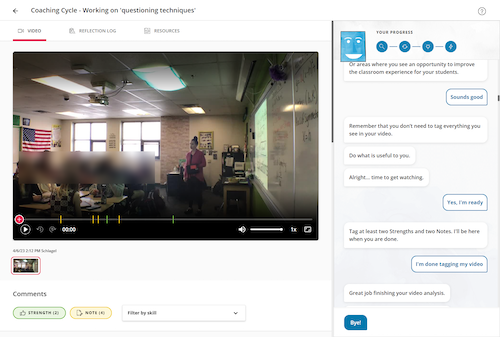
With the platform, teachers like Schlagel engage in personalized coaching cycles to further their development. The platform uses artificial intelligence to guide teachers through a self-coaching cycle aligned to common growth areas as they watch video of their classroom teaching in action.
We recently interviewed Schlagel about the use of this new technology and how her district prioritizes teacher development.
What were your first thoughts when you heard about using AI for professional learning? Why did you decide to try it?
Last year, I was a mentor to a first-year teacher at my school, and my mentee had to record a lesson of her teaching as part of the induction program. I decided to also record myself conducting a similar lesson, so we could go over the lessons together, discuss what works and what doesn’t, and set goals for improvement.
This was my first real introduction to video coaching. Admittedly, even as a mentor teacher, I was nervous to record myself. However, I quickly learned it wasn’t that bad seeing myself on screen and that this was a powerful way to reflect on my practice. My mentee and I both learned a lot.
So, when my district offered a new professional development course that would allow us to try out AI coaching, I signed up. I wasn’t sure exactly what I was getting into, but I was already benefiting from video coaching and wanted to see what the new AI aspect was all about. At the very least, I knew this opportunity would provide me more time for self-reflection.
How does the AI coaching process work?
During my first time using the AI Coach platform, I uploaded a video of one of my recent algebra lessons. Then, the platform’s computerized coach provided observation tips and asked me a number of questions to consider as I began to analyze my video. This helped me as I made a number of comments on the platform—both about areas I wanted to improve upon and areas I felt I was excelling in—as I watched my teaching play out.
The guidance from the virtual coach helped me think more critically about my practice (…and it also made me laugh – the coach can definitely be funny and sassy at times!).
This helped me set a goal for myself around increasing student discourse. I wanted to encourage my students to talk more in class, and the platform provided me with a number of instructional resources to help me get better at this skill.
At the end of the coaching cycle, after I incorporated these strategies in the classroom, I came back to the platform and reflected on what I learned. I thought about how these new strategies worked and created an action plan for my continued learning in the future.
How has AI-powered coaching impacted your teaching?
What surprised me most about the AI coaching process was that it opened my eyes to different things I could change (and might have missed) about my teaching. I was able to really reflect on how I was teaching and how my students were responding.
Sometimes it can be daunting—or even feel less genuine—when a coach or administrator comes in to conduct a formal observation. You may be worried about how your students are acting or unknowingly teach differently than normal.
But, with the AI Coach process, I feel less pressure because it really is just myself reflecting on my teaching alongside a computerized coach. This gives me more freedom to try out a new instructional strategy or take a risk with how I deliver a lesson, without having the feeling of being evaluated.
Continuous reflection is so important, and I’m a firm believer that the best teachers have to be reflective—if you aren’t reflecting on your practice, you aren’t growing!
How do you and your colleagues plan to use AI Coach by Edthena moving forward?
In addition to supplementing in-person coaching, I think AI coaching will continue to be a great support for mentor and mentee teachers alike.
In chats with my administrative team, I’ve also suggested using the AI Coach platform for our school’s yearly peer observations or self-reflection observations. Traditionally for the self-reflection observation, teachers write a paper detailing their teaching and how it can improve, but I think this type of video-based reflection can be more impactful and feel more genuine. And, it will allow teachers to receive the benefits of ongoing coaching which is really about reflecting inward and trying to constantly improve.
My school and district always do a great job of supporting teachers’ growth and encouraging us to take on new and innovative professional learning opportunities. The use of AI Coach is just another example of this!

 Login
Login