
❌

Reading view

There are new articles available, click to refresh the page.

Reaching edtech harmony in your classroom
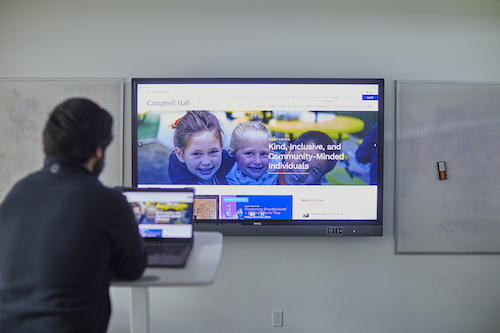
Teachers and students thrive with a comprehensive classroom ecosystem--here's how to integrate essential tools like smart boards.

Key points:

In today’s dynamic educational landscape, technology has become an integral part of teaching and learning, but it presents a paradox. While diverse edtech products promise innovation, they simultaneously pose challenges. Educators, learners, instructional technology coaches, and IT/edtech staff are grappling with the complexities of managing an ever-expanding arsenal of disconnected digital tools. It’s important to understand the challenges more closely and how an integrated, interoperable, and effective educational technology ecosystem can meet the evolving landscape of learning for more efficient, impactful, and secure learning experiences.

There are several prominent shifts that are driving the future of learning, therefore making a comprehensive and interoperable ecosystem essential. First is the permanence of a remote and/or hybrid learning structure. Solutions like interactive displays, cloud whiteboarding, screen sharing, and video conferencing tools have helped schools embrace and succeed in this new learning format. Second is the need to create a 21st century learning environment that is accessible for all students, encourages engagement and collaboration, and can be more easily tailored for different learning levels and needs. For example, smart board tools such as text to speech, translation, or word prediction can help students overcome language barriers and unique challenges. For increased engagement and collaboration, teachers are relying on new teaching methods such as microlearning and gamification. Finally, there’s also a drive toward more community and outreach.

All these initiatives have meant an increase in digital tools and apps that must be properly monitored and managed. What’s more, they need to be interoperable and accessible not only on laptops and mobile devices but also on smart boards. According to Lightspeed’s Edtech App Report, which examined the use of edtech in more than 100 school districts during the 2021-2022 school year, there is an astounding number of apps in use. It found that districts surveyed use more than 2,000 apps and that 300 of those account for 99 percent of use. It also found that much of learning time is digital, with 56 percent of students actively engaged in digital learning for more than two hours per day. This highlights that while beneficial, the digital toolbox has become more complex and essential. It emphasizes the importance for a unified and interoperable ecosystem that can blend these diverse elements into a seamless and effective educational experience.

Another challenge is security. With more and more devices being introduced into classrooms, IT administrators will have to consider how to safeguard them in order to prevent possible security risks and data leaks. Outdated firmware and apps may create security loopholes that are vulnerable to attacks and data leaks. Keeping your system up-to-date is one of the best ways to ensure optimal device performance and data security.

In the realm of modern classrooms, one of the most notable advancements is the integration of smart board technology. Over the years, smart boards have evolved significantly from the early days of interactive whiteboards. However, it’s only recently that we’ve witnessed all-in-one solutions that effectively address contemporary trends in education as well as the challenges associated with managing these tools. Their use has become so significant that they actually lie at the heart of the ecosystem topic.

The key to this evolution lies in the operating systems that power smart boards, equipped with pre-installed software such as whiteboarding apps and web browsers. Some providers even offer the flexibility to download additional educational software from app stores, catering to the diverse needs of teachers. Smart boards have proven to be invaluable tools for educators seeking to foster active participation and enhance learning retention among students, especially with those that are compatible with their favorite interactive apps.

By combining a digital whiteboard with a wide array of educational apps, educators now have the capability to conduct entire lessons using just a smart board. This integrated approach allows teachers to seamlessly access digital content from their cloud storage or local drives, or download materials directly from the internet. Even when faced with non-digitized content, teachers have the option to wirelessly share their laptop screens or connect document cameras to the board. This technology represents a significant shift in modern education, offering educators a versatile and adaptable solution to meet the evolving needs of the classroom.

Smart boards play a vital role in meeting the app management and technology security needs of schools. As educational institutions introduce a growing number of devices into their classrooms, safeguarding these assets and protecting student and teacher data becomes a paramount concern. Smart boards rise to this challenge by implementing a range of robust security measures, ensuring a safe and secure educational environment. These measures include compliance with international data privacy standards such as the GDPR and CCPA, offering regular over-the-air (OTA) updates with the latest security patches, and leveraging secure cloud services hosted on trusted servers like Amazon and Google Firebase.

In today’s dynamic educational landscape, technology presents both promises and challenges. Educators, students, and IT professionals grapple with managing an ever-expanding array of disconnected digital tools, underscoring the need for an integrated, interoperable educational technology ecosystem. This ecosystem is vital to meet the evolving landscape of learning efficiently and effectively. Interactive classroom solutions, similar to smart boards, have the potential to play a pivotal role in shaping the future of education technology by seamlessly combining digital whiteboards with a wide array of educational apps. Educators can conduct entire lessons through such solutions, accessing digital content, sharing screens, and connecting document cameras effortlessly. Furthermore, data privacy and security are paramount, with a focus on compliance with international data privacy standards, timely security updates, and flexible network security options, including multi-factor authentication, password protection, compartmentalized user accounts, and secure user modes.

In the modern classroom, where technology has become indispensable, these solutions empower educators and institutions to navigate the complexities of the digital age with confidence, creating engaging, secure, and effective learning experiences for students.


Using tech to teach emerging readers high frequency words

Emerging readers should be hearing, saying, reading, and writing high frequency words consistently within foundational lessons.

Key points:

If you were to poll an audience of educators–classroom teachers, literacy specialists, reading researchers, and university professors–about whether high frequency words should be taught in early elementary, the resounding answer would be YES. These words, after all, are important to students’ ultimate reading success.

The nuances of teaching high frequency words in early elementary would only arise around how these words should be taught.

Luckily, there is a plethora of best practice research and engaging, tech-enabled activities on teaching high frequency words to help teachers make it both a fun and interesting learning experience for young students.

Understanding high frequency words

Before teaching about high frequency words, it is important to understand how they differ from sight words. While these categories of words are often used interchangeably and can cross pollinate, high frequency words are words that appear most frequently in spoken and written language. Sight words, on the other hand, are those words that students recognize by sight–without the need to stop and decode the word–when reading.

For example, “the” is a high frequency word as well as a sight word for many people. “Email” is not a high frequency word, but is often a sight word. Classmates’ names often become sight words for students. Kindergarten students who are still emergent readers during the first semester will quickly learn their name by sight, as well as their classmates’ names (
and, they often get a great sense of satisfaction when recognizing and reading each other’s names!)

When it comes to choosing the actual words that are considered high frequency words, the educational community has embraced three different lists of words: the Dolch, Zeno, and Fry high frequency word lists. These lists have many shared words, and there is no research that says one list supersedes the other. Any of the lists or teaching a combination of the lists should still help produce successful readers.

Strategies for teaching emerging readers high frequency words

There are hundreds of ways to teach high frequency words and the majority of those ways fall into two instructional categories: memorization and phonics integration.

Both of these instructional strategies lead to students learning and quickly recalling many, many words–both high frequency words and sight words–with automaticity. This is called orthographic mapping, which is essentially a progression of warehousing words permanently in a student’s memory for immediate retrieval.

With memorization, teachers can create fun–and effective–learning opportunities for students as long as a few rules are applied. First, it is important to eliminate distractions so that the focus is on the high frequency word. Distractions can include other words printed around the target word, and having accompanying pictures with a word. For example, a picture of a girl in a swing holding her cat can be distracting when the target word is “with.”

It is also important for teachers to say the high frequency word clearly multiple times and to put the word in a sentence for contextual understanding. Providing students with the opportunity to write the word, so they are making the physical connection to the spoken word, is also important.  

There are a number of digital flashcard apps teachers can use to help students memorize high frequency words. The flashcards can also be shown to the whole class using projectors or interactive displays as part of a whole group activity.

Creating “sounds walls” in the classroom–whether on a bulletin board or digital display–highlighting four to five high frequency words is another great way to help students visualize, practice, and memorize target words. Each week, the words can be swapped out with new ones for them to learn.

Another strategy for teaching high frequency words is through integrating the words into phonics lessons. It will help if teachers pick high frequency words that integrate with the phonics skills they are covering. For example, when teaching the phonic element /s/, it can be valuable to include the high frequency word “said,” even if the vowel irregularity of /ai/ hasn’t been taught yet. If students are learning /s/ and maybe even /d/, they will be excited and motivated to apply this knowledge to learning and remembering a new word.

With either memorization or phonics integration, teachers can play a quiz game with students in which teams compete to come up with answers to questions about high frequency words. Or, they can have students participate in racetrack-style board games where two or more players move markers along the spaces of a path from start to finish. At each stop, the player must read a word and use it correctly in a sentence in order to stay on that space. Technology, whether through the use of apps or student devices, can easily be incorporated into both of these game-based activities to make the experiences even more engaging.

Regardless of which instructional strategy is used to teach high frequency words, it is important that students are immersed and active participants in the learning experience. This means that students should be hearing, saying, reading and writing high frequency words consistently within foundational lessons. These immersive opportunities are what make the words stick and what keep students engaged. And, it’s the ultimate mastery of high frequency words that will enable young students to grow into proficient readers. 

Most states don’t actually know if teachers are qualified to teach reading

Requiring stronger elementary teacher reading licensure tests can improve teacher preparedness and the quality of reading instruction.

Key points:

  • States are using inadequate elementary reading licensure tests
  • States should transition to stronger tests and test providers should clearly identify weaknesses in tests
  • See related article: Teacher Q&A: Strengthening PD with AI
  • For more news on teacher prep, visit eSN’s Educational Leadership page

Most states (29 states and the District of Columbia) use a weak elementary teacher reading licensure test, meaning that they do not effectively measure teachers’ knowledge of scientifically based reading instruction prior to entering the classroom, according to a new analysis from the National Council on Teacher Quality (NCTQ).

In fact, one state, Iowa, requires no reading licensure test at all. This shortcoming means that, every year, nearly 100,000 elementary teachers across the country enter classrooms with false assurances that they are ready to teach reading.

The data brief, False Assurances: Many states’ licensure tests don’t signal whether elementary teachers understand reading instruction, provides the most up-to-date analysis on the quality of elementary reading teacher licensure exams being used by each state.

More than 50 years of research has illuminated the most effective way to teach children to read. It requires systematic, explicit instruction in the five core components of the science of reading: phonemic awareness, phonics, fluency, vocabulary, and comprehension. Preparing teachers to teach these five components–known as scientifically-based reading instruction–can ensure more than 1 million additional students enter 4th grade able to read each year.

Unfortunately, far too often, states allow teachers into the classroom inadequately prepared to teach reading. Licensure exams, if rigorous and aligned to the science of reading, can serve as an important guardrail for making sure teachers have this critical knowledge. However, many licensure tests are weak in that they do not adequately assess teachers’ preparedness to teach reading. Far too many states are using these weak tests.

“Every child deserves great reading instruction, but far too many children aren’t receiving it,” said NCTQ President Heather Peske. “As part of a comprehensive strategy to improve reading instruction, states can help ensure teachers are prepared to teach reading effectively by requiring stronger licensure tests.”

Examining every elementary teacher reading licensure exam currently being used by states, NCTQ looked for evidence that the tests adequately address the five core components of reading. NCTQ also examined whether these tests devote undue attention to methods of reading instruction that have been debunked by research and
can hinder students from becoming strong readers, such as three-cueing.

Additionally, NCTQ checked whether these tests combine reading with other subjects. This is important because if subjects are combined, the teacher’s understanding of reading could be masked. Using these criteria, NCTQ determined whether tests were strong, acceptable, weak, or unacceptable.

Key national findings:

  • Of the 25 elementary teacher reading licensure tests in use by states, the majority (15) are weak. Just six exams are rated “strong” and four are rated “acceptable.”
  • Across these 15 weak licensure tests: Ten do not adequately address all five components of the science of reading and five combine reading with other subjects, such as social studies or science. (Note, one test fits into both categories listed above.) One includes too much emphasis on content contrary to research-based practices.
  • The majority of states (29 states and the District of Columbia) use “weak” tests that do not signal whether teachers have the knowledge they need to teach students to read.

“Teachers who aren’t prepared in the most effective instructional practices for teaching reading unknowingly enter classrooms ill-prepared to help students become successful readers,” said Peske. “This lack of preparation has a profound impact on students’ literacy skills and future prospects, especially among students of color and
those living in poverty.”

Roughly one-third of children in elementary classrooms across the country cannot read at even a basic level by the middle of the fourth grade. The situation is even bleaker for historically marginalized students, for whom inadequate reading instruction is yet another barrier to educational equity, with 56 percent of Black students, 50 percent of Hispanic students, 52 percent of students in poverty, 70 percent of students with disabilities, and 67 percent of English Learners reading below basic reading levels.

Students who are not proficient readers are four times more likely to drop out of high school, face lower lifetime earnings, and have higher rates of unemployment.

Recommendations

To address this pressing issue, the NCTQ recommends the following solutions.

State education leaders should:

  • Transition to a stronger reading licensure test: States select and approve the tests that their teachers must pass for licensure. Requiring a stronger test will likely lead to better reading instruction in elementary classrooms across the state as preparation programs will be motivated to align their courses with the components of reading addressed in a stronger test.
  • Require a strong reading test for anyone teaching students in the elementary grades. In some cases, states require reading tests for general education elementary teachers but not for special education teachers or for early childhood teachers who are licensed to teach lower elementary grades. These loopholes ultimately hurt the students who most need teachers capable of building a foundation in literacy.

Testing companies should:

  • Shore up weaknesses and clearly identify limitations in existing tests: Both major testing companies, ETS and Pearson, have strong and acceptable reading licensure tests on the market, but they also offer tests that omit numerous topics from the core components of reading, and that combine reading with other subjects, diluting the assessment’s ability to verify teachers’ reading knowledge.

This press release originally appeared online.

Opposez-vous à Chat Control !

Sur ce blog, nous transposons rĂ©guliĂšrement diffĂ©rents points de vue concernant les luttes pour les libertĂ©s numĂ©riques. Dans ce domaine, on constate souvent que les mouvements sociaux (solidariste, durabilistes, prĂ©figuratifs, etc.) ne prennent que trop rarement en compte les implications directes sur leurs propres luttes que peuvent avoir les outils de surveillance des États et des entreprises monopolistes. Cela rend toujours plus nĂ©cessaire une Ă©ducation populaire d’auto-dĂ©fense numĂ©rique
 Du cĂŽtĂ© des mouvements autonomes et anti-autoritaires, on ressent peu ou prou les mĂȘmes choses. Dans les groupes europĂ©ens, le sujet du capitalisme de surveillance est trop peu pris en compte. C’est du moins l’avis du groupe allemand Autonomie und SolidaritĂ€t qui, Ă  l’occasion du travail en cours au Parlement EuropĂ©en sur l’effrayant et imminent projet Chat Control (voir ici ou lĂ ), propose un appel gĂ©nĂ©ral Ă  la rĂ©sistance. L’heure est grave face Ă  un tel projet autoritaire (totalitaire !) de surveillance de masse.

Cet appel a été publié originellement en allemand sur Kontrapolis et en anglais sur Indymedia. (Trad. Fr. par Framatophe).

Opposez-vous à Chat Control !

Une minute s’il vous plaĂźt ! Chat Control ? C’est quoi ? Et pourquoi cela devrait-il nous intĂ©resser en tant qu’autonomes et anti-autoritaires ?

Chat Control est le projet de rĂšglement de l’Union EuropĂ©enne portant sur la prĂ©vention et la protection des enfants contre les abus sexuels. Il a Ă©tĂ© reportĂ© pour le moment, mais il risque d’ĂȘtre adoptĂ© prochainement1.

Ce projet de loi est une affaire assez grave pour plusieurs raisons2.

Avec Chat Control, les autoritĂ©s publiques seront autorisĂ©es Ă  scanner, analyser et lire automatiquement les contenus des communications privĂ©es en ligne de tous les utilisateur·ices. Cela se fera via une contrainte sur les fournisseurs de chat tels que Signal, Threema, Telegram, Skype, etc.3, soit par ce qu’on appelle une analyse cĂŽtĂ© client (Client Side Scanning). Les messages et les images seraient alors lus directement sur les terminaux ou les dispositifs de stockage des utilisateur·ices. Et cela avant mĂȘme qu’ils soient envoyĂ©s sous format chiffrĂ© ou aprĂšs leur rĂ©ception, une fois dĂ©chiffrĂ©s.

C’est prĂ©cisĂ©ment ce que l’UE souhaite atteindre, entre autres, avec Chat Control : rendre les communications chiffrĂ©es inutiles. Les services de renseignement, les ministĂšres de l’IntĂ©rieur, les autoritĂ©s policiĂšres, les groupes d’intĂ©rĂȘts privĂ©s et autres profiteurs du capitalisme de surveillance, ont en effet depuis longtemps du mal Ă  accepter que les gens puissent communiquer de maniĂšre chiffrĂ©e, anonyme et sans ĂȘtre lus par des tiers indĂ©sirables.

Pourtant, la communication chiffrĂ©e est trĂšs importante. Face aux rĂ©pressions de l’État, elle peut protĂ©ger les millitants, les opposant·es et les minoritĂ©s. Elle sert aussi Ă  protĂ©ger les sources et les lanceur·euses d’alerte, et rendre Ă©galement plus difficile la collecte de donnĂ©es par les entreprises.

Comme si l’intention d’interdire ou de fragiliser le chiffrement n’était pas dĂ©jĂ  assez grave, il y a encore pas mal d’autres choses qui nous inquiĂštent sĂ©rieusement avec Chat Control. Ainsi, l’introduction de systĂšmes de blocage rĂ©seau4 est Ă©galement en discussion. Plus grave encore, l’obligation de vĂ©rifier l’ñge et donc de s’identifier en ligne. Cela aussi fait explicitement partie du projet. Il s’agira de faire en sorte que l’accĂšs Ă  certains sites web, l’accĂšs aux contenus limitĂ©s selon l’ñge, l’utilisation et le tĂ©lĂ©chargement de certaines applications comme Messenger, ne soient possibles qu’avec une identification, par exemple avec une carte d’identitĂ© Ă©lectronique ou une identitĂ© numĂ©rique.

Voici l’accomplissement du vieux rĂȘve de tou·tes les Ministres de l’IntĂ©rieur et autres autoritaires du mĂȘme acabit. L’obligation d’utiliser des vrais noms sur Internet et la « neutralisation » des VPN5, TOR et autres services favorisant l’anonymat figurent depuis longtemps sur leurs listes de vƓux. Et ne nĂ©gligeons pas non plus la joie des grands groupes de pouvoir Ă  l’avenir identifier clairement les utilisateur·ices. L’UE se met volontiers Ă  leur service6. Tout comme le gouvernement allemand, Nancy Faser en tĂȘte, qui se distingue par ailleurs avec une politique populiste et autoritaire de droite.

Le « tchat controle » n’est pas la premiĂšre tentative mais une nouvelle, beaucoup plus vaste, d’imposer la surveillance de masse et la dĂ©sanonymisation totale d’Internet. Et elle a malheureusement de grandes chances de rĂ©ussir car la Commission EuropĂ©enne et la majoritĂ© du Parlement, ainsi que le Conseil, les gouvernements et les ministĂšres de l’IntĂ©rieur de tous les États membres y travaillent. Et ils voudraient mĂȘme des mesures encore plus dures comme Ă©tendre ce projet au scan de nos messages audios au lieu de scanner « seulement » nos communications textuelles7.

Dans le discours manipulateur, il existe dĂ©jĂ  des « propositions de compromis » avec lesquelles les États autoritaires souhaitent faire changer d’avis les critiques. Il s’agirait dans un premier temps, de limiter le type de contenus que les fournisseurs devront chercher, jusqu’à ce que les possibilitĂ©s techniques Ă©voluent. La surveillance du chiffrement devrait tout de mĂȘme avoir lieu. Il est Ă©vident que ce n’est qu’une tentative pour maquiller les problĂšmes8.

Comme toujours, la justification est particuliĂšrement fallacieuse ! On connaĂźt la chanson : la « lutte contre le terrorisme », les « copies pirates », les drogues, les armes etc. sont des constructions argumentaires par les politiques pour faire accepter des projets autoritaires et pour en discrĂ©diter toute rĂ©sistance dans l’opinion publique. Il n’en va pas autrement pour Chat Control. Cette fois-ci, l’UE a mĂȘme optĂ© pour un classique : la prĂ©tendue « protection des enfants et des adolescents » et la lutte contre l’exposition des mineurs aux contenus pornographiques. Qui voudrait s’y opposer ?

Stop Chat Control. Image librement inspirée de International-protest (Wikimedia)

Pourtant, mĂȘme des experts, provenant notamment d’associations de protection de l’enfance, affirment que Chat Control ne protĂ©gera pas les enfants et les adolescents9. En effet, il permettra Ă©galement de surveiller leurs communications confidentielles. Le projet peut mĂȘme conduire tout droit Ă  ce que des agents des autoritĂ©s aient accĂšs aux photos de nus et aux donnĂ©es confidentielles que des mineurs s’envoient entre eux
 Et ils pourront ensuite faire n’importe quoi avec. Le risque de faux positifs Ă  cause de l’emploi de l’IA est Ă©galement trĂšs important. Les gens pourraient avoir de gros problĂšmes Ă  cause d’une erreur technique. Mais l’UE ne s’en soucie pas car la protection des mineurs n’est pas le sujet ici.

Les domaines d’application ont dĂ©jĂ  Ă©tĂ© Ă©largis entre-temps
 Drogues, migration, etc. Tout doit ĂȘtre Ă©troitement surveillĂ©. Quelle sera la prochaine Ă©tape ? Une application contre les extrĂ©mistes politiques identifiĂ©s comme tels ?

Et puis, il y a aussi la trĂšs probable question de « l’extension des objectifs ». Nous connaissons dĂ©jĂ  suffisamment d’autres lois et mesures Ă©tatiques. Elles sont souvent introduites pour des raisons d’urgence. Ensuite, elles sont constamment Ă©tendues, diffĂ©rĂ©es, puis soudain elles sont utilisĂ©es Ă  des fins totalement diffĂ©rentes par les flics et les services de renseignement, selon leur humeur. L’extension de Chat Control se prĂȘte bien Ă  ce jeu. Les premiĂšres demandes ont dĂ©jĂ  Ă©tĂ© formulĂ©es10.

Dans une Europe oĂč : il y a des interdictions de manifester11 et des dĂ©tentions prĂ©ventives, des perquisitions pour des commentaires sur les « quĂ©quettes »12, des liens vers Linksunten/Indymedia13 ou des graffitis14, oĂč des enquĂȘtes par les services de renseignement pour adbusting dans l’armĂ©e allemande, ou bien des avis de recherche pour « sĂ©jour illĂ©gal » sont monnaie courante, dans une Europe oĂč les ultraconservateurs occupent des postes de pouvoir, appellent Ă  l’interdiction de l’avortement et Ă  la lutte contre les personnes queer et rĂ©fugiĂ©es15, oĂč des structures d’extrĂȘme-droite existent dans les administrations et la police16, dans cette Europe, une infrastructure de surveillance comme Chat Control, avec interdiction du chiffrement et permis de lecture de l’État sur tous les appareils, a de graves consĂ©quences pour la libertĂ© de tous les ĂȘtres humains17.

Des lois et des avancĂ©es similaires, la surveillance biomĂ©trique de masse18, l’utilisation d’IA Ă  cet Ă©gard comme Ă  Hambourg19, les identitĂ©s numĂ©riques20, le scoring21, la police prĂ©dictive22, et ainsi de suite sont en cours de dĂ©veloppement ou sont dĂ©jĂ  devenus des rĂ©alitĂ©s
 tout cela crĂ©e une infrastructure totale, centralisĂ©e et panoptique qui permet d’exercer un Ă©norme pouvoir et une rĂ©pression contre nous tous.

En tant qu’antiautoritaires, nous devrions nous dĂ©fendre, attirer l’attention et faire connaĂźtre ce sujet en dehors de l’activisme numĂ©rique germanophone ! Nous appelons donc Ă  protester et Ă  rĂ©sister contre Chat Control. Les alliances existantes comme Stop Chat Control23 pourraient ĂȘtre complĂ©tĂ©es par une critique autonome24. D’autres actions de protestation peuvent ĂȘtre imaginĂ©es, il n’y a pas de limites Ă  la crĂ©ativitĂ©. Les objectifs de telles actions de protestation pourraient Ă©ventuellement dĂ©couler de la thĂ©matique


Les anti-autoritaires résistent à Chat Control !

Nous apprécions les suggestions, les questions, les critiques et, dans le pire des cas, les louanges, et surtout la résistance !


  1. “Zeitplan fĂŒr Chatkontrolle ist vorerst geplatzt”, Netzpolitik.org, 20/09/2023. (NdT –) Il s’agit du rĂšglement CSAR, Ă©galement appelĂ© Chat Control. La Quadrature du Net en a fait une prĂ©sentation.↩
  2. “EU-Gesetzgebung einfach erklĂ€rt” Netzpolitik.org, 28/06/2023, “Das EU-Überwachungsmonster kommt wirklich, wenn wir nichts dagegen tun”, Netzpolitik.org, 11/05/2022 ;ChatKontrolle Stoppen ; “Kennen wir ansonsten nur aus autoritĂ€ren Staaten”, SĂŒddeutsche Zeitung, 10/08/2022.↩
  3. “NetzDG-Bußgeld : Justizminister Buschmann will Telegram mit Trick beikommen”, Heise Online, 28/01/2022.↩
  4. “Die RĂŒckkehr der Netzsperren”, Netzpolitik.org, 11/03/2021.↩
  5. “Online-Ausweis und VPN-Verbot : Streit ĂŒber AnonymitĂ€t im Netz kocht wieder hoch”, Heise Online, 08/10/2023.↩
  6. “EU-Ausschuss will Chatkontrolle krĂ€ftig stutzen”, Netzpolitik.org, 15/02/2023.↩
  7. “Live-Überwachung : Mehrheit der EU-Staaten drĂ€ngt auf Audio-Chatkontrolle”, Heise Online, 17/05/2023.↩
  8. “RatsprĂ€sidentschaft hĂ€lt an Chatkontrolle fest”, Netzpolitik.org, 12/10/2023.↩
  9. “Immer wieder Vorratsdatenspeicherung”, Netzpolitik.org, 23/06/23.↩
  10. “https://netzpolitik.org/2023/ueberwachung-politiker-fordern-ausweitung-der-chatkontrolle-auf-andere-inhalte/”, Netzpolitik.org, 06/10/2023.↩
  11. “Noch mehr Macht fĂŒr Beamte ist brandgefĂ€hrlich”, nd Jounralismus von Links, 13/09/2021 ; “Amnesty sieht Versammlungsfreiheit in Deutschland erstmals eingeschrĂ€nkt – auch in NRW”, Westdeutscher Rundfunk, 20/09/2023.↩
  12. “Unterhalb der Schwelle”, TAZ, 08/08/2022.↩
  13. “Die Suche nach einer verbotenen Vereinigung”, Netzpolitik.org, 03/08/2023.↩
  14. “Linksextreme Gruppen in NĂŒrnberg : Polizei durchsucht mehrere Wohnungen”, Nordbayern, 11/10/2023.↩
  15. “Sehnsucht nach dem Regenbogen-Monster”, TAZ, 28/07/2023.↩
  16. “Das Ende eines Whistleblowers”, TAZ, 01/10/2019.↩
  17. “Chatkontrolle : Mit Grundrechten unvereinbar”, Gesellschaft fĂŒr Freiheitsrechte ; “Sie betrifft die Rechte aller Internetnutzer”, Junge Welt, 15/09/2023.↩
  18. “Polizei verdoppelt Zahl identifizierter Personen jĂ€hrlich”, Netzpolitik.org, 03/06/2021 ; “Mehr Kameras an Bahnhöfen”, DeutschlandFunk, 22/12/2014 ; “Polizei bildet Hunderte Drohnenpiloten aus”, nd Jounralismus von Links, 04/01/2023.↩
  19. “Polizei Hamburg will ab Juli Verhalten automatisch scannen”, Netzpolitik.org, 19/06/2023.↩
  20. “Digitale IdentitĂ€t aller Menschen – Fortschritt oder globale Überwachung ?”, SWR, 28/08/2022.↩
  21. “Punkte fĂŒr das Karmakonto”, Jungle.World, 25/05/2022.↩
  22. “Überwachung : Interpol baut Big-Data-System Insight fĂŒr”vorhersagende Analysen”, Heise Online, 24/09/2023.↩
  23. “Chatkontrolle-BĂŒndnis fordert Bundesregierung zum Nein auf”, Netzpolitik.org, 18/09/2023 ; “Unser BĂŒndnis gegen die Chatkontrolle”, Digital Courage, 12/10/2022 ; Chatkontrolle Stoppen, Digital Gesellschaft ; “Aufruf Chatkontrolle stoppen”, Digital Courage, 10/10/2022.↩
  24. “Statement zum EU-VerschlĂŒsselungsverbot / Chatdurchleuchtungspflicht”, Enough 14, 15/05/2022.↩

What a Popular TikTok Channel Reveals About the Stress of College Admissions

Daniel Lim reads through the resumes of prospective college students with the excited patter of a color commentator at an NFL game. On his popular TikTok channel, the Duke University senior highlights the seemingly endless number of ultra-achieving students who fail to land acceptances at selective colleges, or, more often, who win some bids and lose others.

“This valedictorian with a near-perfect SAT score got rejected by every single Ivy League school he applied to,” he says in one recent video, in a tone of disbelief. “Let’s look at his application and see what happened.”

It turns out that this anonymous student Lim’s describing — with an SAT score of 1570, trophies in state and regional championships for gymnastics, experience in concert band since fourth grade and membership in honor societies — says that he was rejected from Harvard, Princeton, Stanford, MIT, Columbia, Yale, Cornell, Duke, Carnegie Mellon, and the University of Michigan. The student says he got into Penn State University and the University of Maryland.

Lim, who has more than 200,000 followers, says that nearly 2,000 high school students have sent him their college applications — along with the list of institutions they applied to and the results of their attempts — for him to share and riff on in his videos.

He’s part of a genre of social media trying to make sense of who gets into which selective college — and why — at a time when landing a ‘Yes’ from a selective college is harder than ever.

Statistics show it really is harder to get into college these days, if you’re trying to get into a selective one. If you look at the top 100 universities and the top 50 top liberal arts colleges, the median SAT score it takes to get in has risen significantly since about 35 years ago, according to an analysis a couple years ago in Education Next.

College counselors work to emphasize that finding the right college should be about discovering the right fit — and the fact is that most U.S. colleges, especially community colleges, admit most of the students who apply. But regardless, many students and families perceive selective colleges as the ticket to more opportunity. And at a time of rising college costs, students strive to get into state flagship universities that offer high-quality offerings at a fraction of the cost of private colleges, or to land at Ivy League schools with big endowments that can afford to offer more-generous financial aid than other institutions.

So the process has high stakes. And yet it can seem like a game.

And the rules of that game keep changing.

The pandemic led more colleges to make SAT scores optional, putting more emphasis on so-called “holistic” reviews of candidates. And admissions officials say there’s widespread misperceptions about how that process works.

“A lot of people think if a school has a 5 percent admit rate, they have a one in 20 chance of getting in, which is not what it is,” says Nathan Mathabane, associate director of college counseling at Woodside Priory School, in California, and a former admissions officer at Princeton University. “Some students will have an 80 or 90 percent chance of getting in and many students will have a 0 percent chance of getting in.”

And a landmark U.S. Supreme Court ruling this summer striking down the consideration of race in college admissions has thrown even more uncertainty into the process, as even colleges themselves seek to quickly change their processes to comply with the law.

So students are turning to TikTok and other social media platforms to fill the information void about whether, why and how they’ve got a shot at landing a spot at a selective college.

Another example that Mathabane points to is a Reddit channel called “chance me,” where applicants post their credentials and ask the internet to predict what their chances are of getting into the college that they think works best for them. And some of the comments end up being unkind, or come filled with misinformation about the process.

“I think it’s super toxic,” Mathabane says of the site. “I don't think there's anything that you're going to get from these sites that is going to improve your college search, full stop, and it probably will only stress you out more.”

But Lim argues that his videos, which he also posts on YouTube and Instagram, can help students feel less alone in a stressful process. And he says he can relate, from the stress of his own college search.

For this week’s EdSurge Podcast, we talk with Lim about what he’s learned from seeing so many college applications and from the reactions to his videos, and we hear from Mathabane about how admissions is changing.

Listen to the episode on Apple Podcasts, Overcast, Spotify, Stitcher or wherever you listen to podcasts, or use the player on this page.

What a Popular TikTok Channel Reveals About the Stress of College Admissions

Ludovia Suisse : le colloque scientifique lance son appel

L’explosion mĂ©diatique de l’intelligence artificielle (IA) et plus prĂ©cisĂ©ment des intelligences artificielles gĂ©nĂ©ratives (IAG), telles que ChatGPT, Dall·E, Midjourney, SwissGPT, Ernie Bot ou encore Google Bard, avec leur entrĂ©e fracassante dans les usages du grand public notamment, ont eu pour effet de gĂ©nĂ©rer, dans les dĂ©bats rĂ©cents, une profonde remise en question, tant au niveau des apprentissages en particulier que de l’éducation en gĂ©nĂ©ral, suggĂ©rant mĂȘme de possibles bouleversements concernant notre façon de penser (Romero et al. 2023). En consĂ©quence, la dĂ©finition et le rĂŽle de ces technologies Ă  l’école suscite des interrogations.

A l’instar du livre, de la tĂ©lĂ©vision ou de l’Internet, l’IA fait Ă©merger de nombreux questionnements, souvent teintĂ©s d’émotions, de la peur Ă  l’espoir, et touchant l’ensemble du systĂšme Ă©ducatif : « Que doivent aujourd’hui apprendre les Ă©lĂšves ? », « Pourquoi enseigner lorsque les rĂ©ponses, mĂȘmes complexes, sont Ă  portĂ©e de clic ? », « Les intelligences artificielles remplaceront-elles les enseignant·e·s demain ? », « Doit-on introduire un usage des IAG en classe ? » 
. .

Au-delĂ  des craintes et des fantasmes, il s’agit d’interroger l’intĂ©gration de l’IA et notamment ses usages dans l’éducation. Cela concerne en effet tant les enseignant·e·s, invité·e·s Ă  considĂ©rer cette technologie « comme un outil pĂ©dagogique ou comme un objet d’apprentissage » (Romero et al., 2023, p.94) que leurs Ă©lĂšves qui se trouvent aujourd’hui munis d’un nouvel outil pour apprendre, ou mieux apprendre (Alexandre et al., 2023), et rĂ©pondre ainsi aux contraintes de l’évaluation scolaire actuelle.

Par ailleurs, les questions Ă©thiques relatives aux usages de ces outils sont prĂ©gnantes au regard des multiples enjeux sociĂ©taux qu’ils soulĂšvent, entre collecte des donnĂ©es, respect de la vie privĂ©e, mais aussi exploitation de ces informations Ă  d’autres fins ou encore manque de diversitĂ© des Ă©quipes de conception qui amĂšnent Ă  des biais de conception algorithmique et Ă  de potentielles reproductions d’inĂ©galitĂ©s sociales, culturelles et scolaires (Collin et Marceau, 2021). A cet Ă©gard le dĂ©fi est particuliĂšrement grand car le potentiel, notamment en termes de « personnalisation » pourrait ĂȘtre extrĂȘmement prĂ©sent, mais reste en permanence Ă  la limite du « contrĂŽle » et pourrait basculer aisĂ©ment d’un cĂŽtĂ© ou de l’autre (BoissiĂšre et Bruillard, 2021). Par ailleurs, cela pose par essence une autre question : « Comment peut-on encore faire sociĂ©tĂ© s’il y a trop de diffĂ©renciation ? ».

Aujourd’hui, alors que la communautĂ© scientifique s’intĂ©resse de plus en plus Ă  l’utilisation de l’intelligence artificielle Ă  des fins Ă©ducatives (Chen et al, 2022), certaines exploitations en classe se mettent en place Ă  l’instar du traitement du langage naturel pour les langues (Miras, 2019), les robots pour l’enseignement de l’IA ou encore l’exploration des donnĂ©es Ă  des fins de prĂ©diction des performances des Ă©lĂšves (Baker, 2022). Ainsi, des systĂšmes d’évaluation automatique aux applications utilisĂ©es pour apprendre les langues en ligne, l’intelligence artificielle occupe une place de plus en plus importante au sein du domaine de l’éducation.

Enfin, ces outils posent la question de la crĂ©ativitĂ© et de sa reconnaissance. Une intelligence artificielle gĂ©nĂ©rative est-elle crĂ©ative ? GĂ©nĂšre-t-elle, ou soutient-elle la crĂ©ativitĂ© ? Et doit-on parler de crĂ©ativitĂ© ou de crĂ©ativitĂ© assistĂ©e (Ariani et al., 2023) ? Ils posent aussi la problĂ©matique de la collaboration, voire du partenariat existant, ou non, entre les humains et les machines, dans la perspective d’une attention particuliĂšre Ă  la « prĂ©servation de l’agentivitĂ© humaine » (Romero et al., 2023, p.83). Ceci soulevant alors la problĂ©matique du droit d’auteur, et de la nĂ©cessitĂ© ou non de citer ses sources, lorsque l’on utilise une IAG.


Pour connaĂźtre toutes les modalitĂ©s de soumission, tĂ©lĂ©chargez l’appel Ă  communication.

Plus d’infos sur ludovia.ch

L’article Ludovia Suisse : le colloque scientifique lance son appel est apparu en premier sur Ludomag.

Introducing Tynker Copilot – The First-Ever LLM-Powered Coding Companion for Young Coders

MOUNTAIN VIEW, California — Tynker, the leading game-based coding platform that has engaged over 100 million kids, proudly introduces “Tynker Copilot.” Leveraging the capabilities of Large Language Models (LLMs), Tynker Copilot empowers young innovators aged 6-12. It provides a seamless interface for these budding developers to transform their ideas into visual block code for apps and games. Additionally, when exploring existing projects, kids benefit from the tool’s ability to explain block code fragments, ensuring a deeper understanding. Tynker Copilot allows children to build confidence as they work with AI, laying a solid foundation for their future. With this launch, coding education takes a significant leap forward.

Large Language Models (LLMs) have excelled in text-based programming languages like Python and JavaScript. However, their application to visual block coding, the primary introduction to programming for many kids, had yet to be explored. Tynker is the first to bridge this gap. Our latest integration lets children quickly convert their ideas into block code, streamlining their initial coding experience.

Tynker introduction of the Copilot feature marks a significant industry milestone. Until now, the capabilities of LLMs have not been fully utilized for the younger age group. Tynker Copilot empowers children as young as 6 to input text commands like “Design a space-themed knock-knock joke” or “Teach me how to build a Fruit-ninja style game” and receive block code outputs with step-by-step instructions. Moreover, when debugging existing projects, students can submit block-code snippets and benefit from LLM-generated natural language explanations.

“Our ethos at Tynker is grounded in innovation and breaking boundaries,” stated Srinivas Mandyam, CEO of Tynker. “We’re exhilarated to channel the latest advancements in AI technology to serve our youngest learners, fostering an environment of curiosity and growth. While the potential for such a tool is vast, our prime objective remains to employ it as an empowering educational aid, not a shortcut.”

Developing Tynker Copilot posed challenges distinct from standard LLMs, which typically handle text-based code. Our focus was visual block coding tailored to kids’ unique programming preferences. With insights from millions of submissions in Tynker’s repository, ranging from pet dress-up games to platformer adventures and Minecraft mods, we fine-tuned Llama2. This rich, child-centric data helped us adapt the model to generate visual block coding programs, making Tynker Copilot a specialized tool designed around the creative tendencies of young coders.

“Bringing LLMs into Tynker’s dynamic visual block coding ecosystem presented unique challenges,” commented Kelvin Chong, CTO of Tynker. “We fine-tuned Llama2 with AI and ML techniques to align with young coders, supporting parallel scripts, visual actors, and kid-centric features such as Physics, AR, sound effects, and Minecraft modding. As coders grow, they’re naturally transitioned towards Python.”

All educators and home users will be notified when this innovative feature becomes generally available in the product. In the meantime, for more insights into its capabilities and to view examples of its potential use, visit the  Tynker blog

About Tynker

Tynker is a leading K-12 creative coding platform that empowers children worldwide to develop coding skills for designing animations, games, and a wide range of real-world applications. With a focus on critical thinking and problem-solving, Tynker’s acclaimed curriculum is used by 1 in 3 U.S. K-8 schools, 150,000 schools globally, and over 100 million kids across 150 countries. Partners include renowned brands like Apple, Google, Microsoft, and NASA. Accessible on computers and mobile apps, Tynker offers free and paid subscriptions. In 2021, Tynker was acquired by BYJU’S, the world’s largest edtech company. For more info, visit  www.tynker.com.

How to start solving your school bullying problem

To solve your school bullying problem, it will take a real commitment by leadership and parents to make a change to create a safe environment.

Key points:

Student bullying is a nationwide problem. Parents are outraged and demand that school administrators evaluate their campus security protocols to keep all students alive and safe.

A southern California school district agreed to pay $27 million to settle a lawsuit brought by the family of a 13-year-old boy who died after he was assaulted at school. On Sept. 16, 2019, two 14-year-old boys were videotaped attacking the victim outside classrooms at the school. One boy struck the teenager in the head from behind and he fell, hitting his head against a pillar. The boys then continued punching the boy, who died nine days later from a brain injury.

Last school year, a 14-year-old female student at a high school in New Jersey died by suicide two days after a video of her being viciously attacked by her bullies at school was uploaded online. The school district’s superintendent has resigned, and four girls have been criminally charged in connection with the assault.

Bullying at schools is pervasive across the country. According to a recent national survey report by the Boys and Girls Clubs of America, 130,000 kids and teens ages 9-18 reported some form of bullying.

This survey revealed that in the past year, 40 percent of youth said they were bullied on school property and 18 percent of youth say they have experienced cyberbullying. Unfortunately, 37 percent of youth say they have skipped a day of school in the last month.

Research has found that students who are bullied are more likely to experience depression and anxiety, have more health complaints, and skip or drop out of school.

Is there anything school administrators or parents can do to control this problem? The answer is yes, but it will take a real commitment by leadership and parents to make a change to create a safe environment.

Recommendations for school administrators

A comprehensive security risk assessment of each campus is needed and is designed to reduce incidents, pinpoint critical areas of vulnerability, and identify the school’s overall strengths and weaknesses. It also helps schools review existing crisis response plans to address and tackle problems such as bullying.

  1. Admit you have a bullying problem: To begin with, educators need to admit the situation occurs on their campuses.
  2. Provide training to teachers: Teachers and staff will need training on what bullying is, what the school’s policies and rules are, and how to enforce the rules.
  3. Work with parents: Schools must work with parents to help them understand that bullying is a severe problem and that they should talk with their children about it.
  4. Develop student awareness: Similarly, students must be made more aware of the effects that this problem can have on their classmates.
  5. Support LGBTQ students: Lesbian, gay, bisexual, transgender, queer, and questioning students should not be discriminated against due to their sexual orientation and their gender identity.
  6. Cyberbullying: Students need to be aware that cyberbullying includes sending, posting, or sharing negative, harmful, false, or mean content about someone else. Some cyberbullying crosses the line into unlawful or criminal behavior.
  7. Install security cameras: Cameras need to be installed, especially in areas where bullying is most likely to take place: hallways, near restrooms, inside the lunchroom, gymnasium, on the playground and on school buses.
  8. Having direct evidence is important: Many parents insist their child would never bully another student. However, when they are shown the video evidence, most promise to work with their child at home. The video also makes it easier for the school to enforce detentions and suspensions.
  9. Provide adult supervision: Keep an adult–ideally a teacher or administrator–in the lunchroom during mealtimes, on the playgrounds during recess and in the hallways during passing periods. Most bullies are cowards and will not act up when they know they are being watched.
  10. Set up an anonymous tip line: Have a tip line or other means of communication (text, online, etc.) that allows students, parents, teachers, staff and the community to anonymously report incidents.
  11. Empower teachers: Teachers have concerns that if they report bullying, they might face severe repercussions from their administration. There needs to be a mechanism for teachers to share information about incidents and concerns outside of the normal reporting structure.

It takes planning and the will to act, but bullying can be brought under control. It takes collaboration from all individuals in the school community.

My thoughts and prayers go out to families, friends, and the community who have been impacted by bullying.

Related: 5 ways bullying changed during the pandemic

What students are reading

Librarians and teachers can look to reading trends as a way to connect students with their next favorite book

Key points:

About five years ago, my New Year’s resolution was to read all the books on my bookshelf I’d never managed to crack. While that resolution was a complete failure (I still have unread books on my shelf), it reignited my love of reading.

Each year, I document my #BritReads reading journey on my social media channels. This year, I decided to bring #BritReads to life with my close family and friends. In lieu of a Christmas present, I’m buying each of them four books a year – books I’ve read or those that are at the top of my list to read. Rather than a one-size-fits-all #BritReads Book Club, I’m curating books just for each of them. For example, my Christmas movie-loving, hopeless-romantic childhood friend will not get my favorite thriller or whodunit!

Just like my little book club, as librarians and teachers, I know you’re looking to connect students with their next favorite book, which means you need to be ahead of the trends and know about the titles emerging as the next generation of books to remember. So, let’s take a look at what students are reading in school libraries and classrooms across the country. Here are the top requested titles according to trend reports in our industry:

In lower elementary, the most popular book (and my #BritReads pick for the little ones) is a picture book called The Smart Cookie by John Jory. It’s the fifth picture book in Jory’s series teaching life lessons using food, accompanied by The Cool Bean, which also tops the list. In The Smart Cookie, the cookie realizes that while school can be tough, with hard work, anyone can be smart in their own way.  From friendly food
 to animals. In the nonfiction section, the Who Would Win series is also a hit.  Students love to learn about various species of animals like sharks, reptiles, and birds and select which species survives. 

In upper elementary, Dog Man, The Baby-Sitters Club, and the I Survived series continue to be perennial favorites. In the world of nonfiction, students are starting to learn about race and history through books like Unspeakable: The Tulsa Race Massacre, We Are Still Here!: Native American Truths Everyone Should Know, and Stamped (For Kids): Racism, Antiracism, and You. My #BritReads favorite for upper elementary school is a throwback to my childhood. I read every single book in The Baby-Sitters Club series as a child, so it’s heartwarming to see these Ann M. Martin characters as a part of young lives all over again.

In middle school, books about middle grade students navigating the world dominate the world of fiction, such as the Diary of a Wimpy Kid series and Jerry Craft’s New Kid. In nonfiction, students and teachers are gravitating toward true stories about normal people who accomplish extraordinary things such as I Am Malala, Hidden Figures, and Undefeated: Jim Thorp and the Carlisle Indian School Football Team. My #BritReads pick is Hidden Figures: The Untold True Story of Four African American Women Who Helped Launch our Nation into Space. I read the adult version as part of #BritReads21, but this one has been adapted for a younger audience, giving students an opportunity to learn about a group of women who were well ahead of their time!

As for high school and adult-level titles, many of the books that students are reading are required as part of the curriculum including classics like The Catcher in the Rye, Of Mice and Men, and A Raisin in the Sun. But the classics sit alongside modern fiction hits like The Hate U Give and The Hunger Games series. I was pleased to see I picked some winners for the first #BritReads Book Club mailing. Each of my journalist friends got a copy of Just Mercy by Bryan Stevenson, which happens to be on the top of the adult nonfiction list.  My #BritReads favorite, The Catcher in the Rye, is one of the inspirations behind my 5-month-old boy’s name – Holden!

Across all age levels, teachers and librarians continue to seek titles written by diverse authors featuring multi-cultural characters with social and emotional learning lessons. If it happens to be a part of a series, or graphic novel or Manga form
even better! You can check them all out on Titlewave.

How to keep hackers off your school attendance list with object storage

Object storage is a great partner for education as it enables versioning and object lock, rendering itself ransomware-proof.

Key points:

As the 2023-2024 school year commences, focus on education is accompanied by a pressing concern for better cybersecurity. Cybercriminals are poised to exploit educational institutions, seeking access to personal, financial, and health records. Recent incidents, such as New Haven School System’s $6 million breach and Prince George County schools attack, highlight potential risks facing schools today. There is a critical need for robust cybersecurity measures for protection against attacks, inclusive of a comprehensive plan to keep hackers at bay.

What’s sending hackers to schools for the ultimate ransomware field day? Educational institutions hold a wealth of valuable information but lack IT budgets and updated cybersecurity tools, making them prime targets. In a perfect world, ransomware could always be stopped at the “front door” before it enters a school’s network premises, but this is hardly the case. Detection and prevention measures such as monitoring network traffic, establishing strict permission guidelines, and implementing multi-factor authentication (MFA) to confirm identities are continuously evolving, but attackers are becoming increasingly sophisticated, often finding ways to bypass these defense measures.

Understanding why schools are prime targets is the first step to building a healthy cybersecurity ecosystem. The next step is looking at what tools are in place and considering how to optimize their performance and functionality–not only for security, but recoverability and restoration. Emphasizing backup as a key component of security strategy may be the low-effort, cost-effective solution schools need to achieve cyber-resiliency.

Stay aware: Students aren’t the only ones preparing to go back to school

We’ve witnessed an alarming surge in ransomware attacks on educational institutions. At least 120 schools have suffered a ransomware attack compared to 188 in all of 2022. Despite their crucial role in shaping the future, schools often grapple with small IT budgets, limited staff, and outdated technology, making them lucrative targets for threat actors.

With these obstacles in mind, schools are more likely to endure consequences of an attack stemming from human error from students and overly complex tech that IT staff are too strapped to manage properly. This often opens them up to the possibility of data theft, followed by extremely long recovery times. For instance, in April, Alabama-based Jefferson County Schools suffered prolonged disruptions from an attack that occurred during the end of spring break in March, and an incident at Colorado public schools in June led to data exposure of student mental health records.

Stay prepared to stay protected

A crucial part of staying ahead of ransomware is staying informed. Currently, there are types of ransomware that are intelligent enough to commit an acoustic attack by listening to your keystrokes and predicting what someone is typing with 95 percent accuracy. Hackers can listen in to text chats or leak sensitive information, which is tough to manage in a school setting given the multitude of devices and connectivity options.

Though backup typically falls second to other defense measures, its impact can be outstanding. Consider The New Haven School system, which tried to alleviate getting data back up and running by paying ransom to the attackers. The biggest concern here is there is no guarantee that stolen data will be returned post-payment.

Veeam’s 2023 Ransomware Trends Report found that while 59 percent of organizations paid the ransom and were able to recover data, 21 percent that paid the ransom still didn’t get their data back. Additionally, only 16 percent of organizations avoided paying ransom because they were able to recover from backups. The truth is, no security plan is foolproof, and schools should consider quality versus quantity when it comes to which tools to bring to the battle against cyber threats. While implementing standard security measures is highly encouraged, the reality is that nothing will keep schools completely void of ransomware attacks.

This is where data backup comes to the forefront of cybersecurity strategies. This includes conducting regular backups of school data and following the 3-2-1-1-0 strategy, comprised of three copies of data saved on two types of media, with one copy offsite and one copy offline. Should a disruption occur, this makes the difference in guaranteed availability. Incorporating strong security measures like these into backup and management practices boosts the overall resilience of a school’s data infrastructure.

Stay ahead with immutable backup storage

It’s worth noting, targeting primary data and backups is well within the realm of possibility as ransomware rises. Although criminal hackers actively target backups, these remain the best defense against ransomware. Schools must ensure they take regular backups that are immutable, stored off-site, or, ideally, both. Immutable backup storage is a type of data storage system designed to prevent unauthorized or accidental modifications, deletions, or alterations to backed-up data for a specified period. Therefore, once data is written or stored, it cannot be changed or deleted until the predefined retention period expires.

Object storage is a great partner for education as it enables versioning and object lock, rendering itself ransomware-proof. Schools should incorporate backups with hardened security and an appropriate level of redundancy for constrained IT. What’s more, it’s a simple, powerful, and secure tool that schools can use to guarantee recovery. It is generally affordable compared to file or block storage solutions, further accommodating a limited budget for school IT.

Back to school with better protection

To prepare for potential attacks, schools must establish clear roles and responsibilities for key stakeholders. With the value of data continually on the rise, it’s not a question of if a school will face an attack, but when. Cybersecurity awareness among students and staff is paramount in keeping our leaders of tomorrow and their data safe. Furthermore, aligning with the U.S. Department of Education’s Cybersecurity Resilience Efforts can provide additional resources and support.

Data should be stored in a separate system to ensure availability in case of disruption. Combat attacks on primary storage with built-in immunity as an extra layer of protection against tampering. Keep school in session with a low-effort and cost-efficient solution like on-premises object-based backup storage–a tool built for low maintenance and constrained IT.

❌